
Sign up to save your podcasts
Or



This from Simon and Schuster: "Anna Porter was born in Budapest, Hungary, during the Second World War and escaped with her mother at the end of the 1956 revolution to New Zealand, where she graduated with an MA from Christchurch University. Like so many young Kiwis, after graduation she travelled to London, England, where she had her first taste of publishing. In 1968, she arrived in Canada, and was soon swept up in the cultural explosion of the 1970s. At McClelland & Stewart, run by the flamboyant Jack McClelland, she quickly found herself at the heart of Canadian publishing. In 1982, she founded Key Porter Books and published such national figures as Farley Mowat, Jean Chrétien, Conrad Black, and Allan Fotheringham. She went on to write both fiction and nonfiction works, including the award-winning Kasztner's Train and The Ghosts of Europe, and has published four mystery novels."
We met at the Kingston Writers Festival to talk about her new book, In Other Words, In so doing we touched on blessed lives, absent fathers, grandfathers' stories, Transylvanian dragons, broad swords, New Zealand, education and intense boredom, Collier MacMillan, Robert Graves, communist engineers, Frank Newfeld, Jack McClelland, caring about writers, Canadian culture, colourful language, editors at sales conferences, gimmicks, publishing 100 books a year, mini-skirts and go-go boots, the Canadian establishment, meeting fascinating writers, The Temptation of Big Bear, typos, Bob Fulford, Al Purdy, Margaret Atwood, Conrad Black and Allan Fotheringham; collectible books, Persia, and Iran, Elements of Destiny.
Ian S. MacNiven's authorized biography of Lawrence Durrell was a New York Times Notable Book for 1998. He has edited two collections of Durrell's correspondence (with Richard Aldington and Henry Miller), is the author of numerous articles on literary modernism, and has directed and spoken at conferences on three continents. He is also a past president of the D. H. Lawrence Society of North America and of the International Lawrence Durrell Society. MacNiven resides on the west bank of the Hudson, outside the town of Athens, New York, and this is where we met to talk about Literchoor is my Beat, (FSG, 2014) his biography of New Directions founder and publisher James Laughlin .
We also talk about steel, silver spoons, the Choate School, poetry, Gertrude Stein, Modernism, Ezra Pound, prodigious correspondence, the Gotham Book Mart, short stories, New Directions, Harvard, T.S. Eliot, loyalty, William Carlos Williams, office affairs, fine printing, anthologies, the New Classics Series, Delmore Schwartz, Prospectives USA magazine, translations, The Beats, Thomas Merton, Dylan Thomas, mental illness and the bi-polar curse, intuition and recognizing excellence, and childhoods in Suriname.
Adrian King Edwards is the proprietor of The Word Bookstore near McGill University in Montreal; has been for more than 40 years.
I met with him at his home to talk books, second-hand versus used, the John Schulman scandal in Pittsburgh, trust, stories, longevity, authors' obscure childrens' books, policemen checking the spices, David McKnight's collection of Canadian literary periodicals, Canadian poetry, letterpress books, changing values, changing definitions of rare, Glenn Goluska, clean organized bookstores, the aging bookseller population, Wescott Books and the student rush.
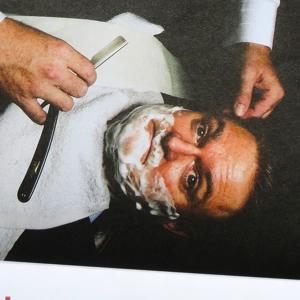
Through his work as a writer, editor, and photographer, Terence Byrnes came to know and to photograph many Montreal-based writers throughout their careers. "For ten years, he photographed them in places where they felt at home, but not always at ease. 'Most contemporary literary portraits,' Byrnes says, 'are as highly burnished as Playboy nudes or as homespun as family snapshots. When I made these images, I was an interloper the writers had to react to."
Closer to Home: The Author and the Author Portrait (Vehicule Press, 2008) "fixes its gaze on writers as we seldom see them. These photographs, and the stories that accompany them, were captured where the writers live, work, or play. The result is a series of portraits that take us inside writers' lives and inside the process of making portraits—all served with a touch of refined literary gossip."
Sounds like what we did when I met Terry at his home in Montreal to discuss the book. Among other things we talked about status, 'the thinker' gesture, authority and value, books and bricks, Susan Gillis, photographic crews from Toronto, the proliferation of imagery, the convergence of moving and still images, the diminishing role of the professional photographer, eyes, romanticizing crocks, impressions of presence, Roméo Dallaire, interest curiosity and light, postures, the Montreal Review of Books, Photoshop, negative ego, Annie Leibovitz, trust, Avedon in Texas and caring, achieving control over the world, noticing, Ishmael Reed, Robert Frank, contradiction and great art, sexual harassment at Concordia University, Stephen Fry, and selfies.
Bill Samuel is the grandson of the founder of Foyles bookstore and was long-time Vice-Chairman of the company. Samantha J Rayner captures the spirit of the enterprise when she writes "[Foyles] emphasised that trial and error was an integral part of learning what makes for success. Foyles is not just a bookshop – they have tried all sorts of enterprises to generate more revenue: sheet music, musical instruments, literary lunches, book clubs, film production and even aeroplanes!"
I met with Bill in his office at Foyles on Charing Cross Road in London to talk about the history of his family's world-famous enterprise.
Update: Foyles was bought by Waterstones on September 6, 2018
Priscila Uppal, poet, author, and English professor at York University, challenges traditional psychological and anthropological models of mourning in her new book We Are What We Mourn: The Contemporary English-Canadian Elegy, suggesting that Canadians mourn differently.
Traditional models define successful mourning in terms of detachment from the loved one who has died; the ability to cut the strings of grief, and to step into the roles of mothers and fathers vacated by the dead. To become unnecessarily identified with grief and death is, according to traditional views, to fail at mourning. To succeed - to maintain health- one must 'move on;' accept that the dead are gone; celebrate the fact that they are in heaven. All of this Uppal debunks.
After reading thousands of Canadian elegies she concludes that mourning, at least in late 20th century Canada, is not about forgetting, but about claiming identity. You are, she says, what you mourn. And we, apparently, mourn our parents in elegies to a much greater extent than do others in the U.S. and U.K., for example, who tend to mark the death of youth more frequently with this poetic form.
Many immigrants to Canada didn't know their parents very well; didn't know their countries of origin, didn't learn much about their traditions. In order to take over the roles their parents played - to learn about themselves - many have used mourning as a way to create and recreate the past; as a means to carry on into the future. Art - the elegy - is used as a way to attached to the past, and to connect and incorporate it into the present. What you mourn - what it is you are upset about losing - will determine, according to Uppal, how you see history.
We talk about all of these topics, why and how the work of mourning has so drastically changed in Canada during the latter half of the twentieth century, why the contemporary English-Canadian elegy emphasizes connection rather than separation between the living and the dead.
Priscila died at age 43 on September 5, 2018
Robert Lecker is a Canadian scholar, author, and Greenshields Professor of English at McGill University in Montreal, where he specializes in Canadian literature. He has held a number of prominent positions in the Canadian publishing industry throughout his career. He co-founded ECW Press in 1977, he co-edited the Canadian literary journal Essays on Canadian Writing between 1975 and 2004, he has edited several anthologies of Canadian and international literature, and he currently heads a literary agency in Montreal, the Robert Lecker Agency.
I met Robert in his office at McGill. Among other things we talked about the role of the literary agent, gatekeeping, stamps of approval, how writers should pitch their works to agents, the creative process and saleability, getting the reader to want to turn the first page, literary agents as sales people, art being a collaborative exercise, Matie Molinaro, Doris Hedges, Canada's best writers looking abroad for agents, the importance of the Canada Council, the authors' platform, the New Canadian Library, historically insufficient Canadian copyright laws, Canada's demographic and distribution disadvantages, subsidiary rights, and agents as "editors."
Hugh McGuire has been building tools and communities to bring books onto the open web since about 2005. He's the founder of LibriVox.org (free public domain audiobooks, made by volunteers from around the world), Pressbooks (an open source book publishing platform built on WordPress). He's also Executive Director of the Rebus Foundation, a non-profit that is building the infrastructure to support books on the open web, by: building a new collaborative model for creating and publishing Open Educational Resources (OER), and building an open platform for scholarly reading. He lives and works in Montreal.
Hugh is the co-editor, with Brian O'Leary, of Book: A Futurist's Manifesto — Essays from the bleeding edge of publishing (O'Reilly) and has talked about the future of publishing around the world, his work has appeared in various places in print, bits and audio, including: the New York Times, Forbes, the LA Times, BBC Radio, the New Yorker, CBC Radio, NPR, Techcrunch, Pando Daily and now, The Biblio File.
We talk here about LibriVox's free audio books representing the ideas of the early internet, collaborative communities, bringing the book onto the internet and doing more than just selling them, PressBooks open source software, open textbooks in higher ed, new models of publishing, the Rebus Foundation rebuilding a new open publishing ecosystem, web-based collaboration, open reading platforms, academic publishing, the cost of textbooks skyrocketing, open textbook publishing, the Internet Archive, Brewster Kale, making all the world's information available for free, the value of low-cost education, crappy current literary fiction, eliminating online distractions and replacing Facebook and Twitter.
Series: Biblio File in France
Kickshaws is a private press founded in Paris in 1979 by John Crombie, and Sheila Bourne who often produces artwork for the books. Together they have hand-printed more than 150 small books. The design, typography and materials used to create Kickshaws publications are unusual. As a result it's difficult to define exactly what they are. Among other things, they display a wide range of type-faces and designs, letterpress printing in multiple colours, and unusual formats and bindings, including plastic comb-bindings that enable the pages of a book to be turned in different sequences. As for content, most of the books contain Crombie's poetry or fiction or his translations of French humorist/absurdist writers. These including Samuel Beckett, Alphonse Allais and Pierre Henri Cami. The artwork includes drawings, linocuts and images printed from a variety of different materials including string and wallpaper. Kickshaws publishes books in both French and English.
I met with John at his atelier in Charité-sur-Loire, south of Paris. Subjects covered include children's books, UNESCO, Edward Gorey, origins of the word 'Kickshaws', French humorists, Raymond Queneau, One Hundred Thousand Billion Poems, Bertram Rota, Charlene Garry and the Basilisk Press, enthusiasm, multi-choice stories, combining inks, using wallpaper, life intersecting with work, Montparnasse and the Marché de la Poésie in Paris
Series: Biblio File in France
Maylis Besserie is a French radio broadcaster. She works for France Culture, the French national cultural radio station of the Radio France group, where she has produced documentaries and live programming about cultural issues since 2003. Over the years she has interviewed many artists and authors. She currently produces a summer program called la grande table d'été.
I met Maylis at her home in Paris. We talked, among other things, about the perfect author interview, pre-packaged answers, specific questions about the text, the writing process, life habits, finding out what moves a writer, how success changes authors, Michel Houellebecq, dead words, special connections, noticing details in the writing across different books, Oliver Twist, the ability of writers to see, immersing yourself in the authors's words and work, using your emotions, provoking; Irish writers, asking about other arts, dealing with who you are, using surprise; voice and emotion, writer problems, lists of key words, being alive and intense, avoiding personal questions, appearance, pregnancy, audience feedback, and the skill of putting into meaningful language things that readers can't.
From the publisher's feed