
Sign up to save your podcasts
Or

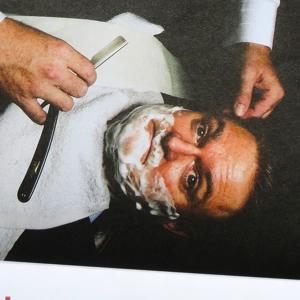


James Daunt calls him "the best of the best in U.K. publishing, constantly challenging the industry to move on when it drags its feet." Listen to my conversation with Andrew Franklin to learn why.
Andrew is founder and, until recently, publisher of Profile Books, an award-winning British independent publishing house which launched in 1996. Best-selling authors on its list include Mary Beard, Margaret Macmillan, Simon Garfield (Just my Type), and Lynne Truss, whose Eats, Shoots, Leaves (2003) sold more than three million copies worldwide and won Book of the Year at the British Book Awards in 2004. Serpent’s Tail, founded by Pete Ayrton in 1986, became an imprint of Profile in 2007. It publishes distinctive, award-winning international fiction. Viper Books, a crime imprint, was added in 2019. I met with Andrew at Profile's offices in London. We talk about, among other things, how much he made off Eats, Shoots, Leaves; selling paperbacks at Hatchards; Tim Waterstone; my tee-shirt; admiration as a key component of successful publishing; conviction and effort, judgement and horse-racing; taste and fashion; tee-shirt designer briefs; "content before commerce;" risk; rom-com; Hilary Mantel; the importance of style versus substance; Goethe; marketing, distribution and sales; taking books seriously; getting the right books into the right hands; freedom of the press; Butler to the World; non-conformism; and Mary Beard's Emperor of Rome. You might want to pay special attention to how Andrew speaks about Mary Beard and her book. And Margaret Macmillan for that matter. The enthusiasm, vigour, conviction. Belief.
They're trademarks of all great publishers.
Here’s how the Carcanet Press website describes him: Michael Schmidt FRSL, poet, scholar, critic and translator, was born in Mexico in 1947; he studied at Harvard and at Wadham College, Oxford, before settling in England. Among his many publications are several collections of poems and a novel, The Colonist (1981), about a boy’s childhood in Mexico. He is general editor of PN Review and founder as well as managing director of Carcanet Press."
Michael has been applying his judgement publishing poetry and fiction for more than fifty years “discovering” and rediscovering, along the way, many of the greatest writers of our age.
We met at the Carcanet offices in Manchester to talk about, among others things, what he does; Germans in Mexico; the love of poetry; The Harvard Advocate; magazines as good tools for book editors; the importance of the past; the difference between editing books and magazines; poets John Ashbery and Edgell Rickword; writers starting on the left; generous patrons: Baron Robert Gavron; prosody; syllabics; leaving room for the reader; overproduction being a straight path to bankruptcy; an education at Oxford; Milton; the Understanding Poetry anthology; writing letters; the centrality of politics; notions of balance and continuity; principles of permanence and change; the difference between taste and judgement; catalysts; the Yiddish saying: “One word is not enough, two is too many.” Changing literary culture; Wallace Stevens; enhancing, extending and revitalizing the language…all this in tandem with a chorus of Manchester trams piping in, in the background, throughout the conversation.
Andrew Nash is Reader in Book History at the Institute of English Studies, University of London (a leading book history scholar in other words) and Director of the London Rare Books School.
We sat down in the stacks at the Mark Longman "Books about Books" Library at the University of Reading (well, actually the Museum of English Rural Life in Reading which is somehow connected to the University and its publishers' archives collections) to talk about a course Andrew teaches at the London Rare Book School on how to use/work with publishers' archives.
Though this topic may sound a tad niche, even for this podcast, it's not. Andrew makes the convincing case that publishers' archives are in fact of interest to many scholars, and have value precisely because they can be studied from many different economic, social, and cultural perspectives. Publishers' archives yield, among other things, fascinating, detailed information about how knowledge and "culture" is "made public" in society. They're not just about author-publisher correspondences, though these in themselves are justly recognized and valued as essential documents of cultural heritage, no, they're about providing scholars, and the world at large, with rich source documentation, from which all of us can better understand...yes, everything!
Archives referenced during our conversation include those of Allen & Unwin, Chatto and Windus, Longmans, John Murray, George Routledge, and The Hogarth Press.
Sir Tim Waterstone revolutionized bookselling in Britain and changed the country's cultural landscape. He also wrote a memoir, called The Face Pressed Against a Window (Atlantic, 2019). We met at The Garrick Club in London to talk about the book, and about how he accomplished what he accomplished. Topics covered in our conversation include Tim's troubled relationship with his father, his eight children, the creative strategy behind growing the Waterstones empire (starting in 1982); an epiphany in Cambridge’s Heffers Bookshop; Waterstones' "happy" family; W.H. Smith, James Daunt, author support, a combative attitude; offering a huge range of titles for sale and staying open longer hours; Miss Santoro's bookshop in Crowborough; seeing a market and making accessible an unprecedented selection of literature; the brilliance of the John Sandoe Bookshop in Chelsea; the "perfect stock, perfect staff, perfect control" mantra, bookstores as literary festivals, and the importance of book sales per square foot.
I was in Ireland recently to interview two of the best novelists on the face of the planet. John Banville, in Dublin, and David Mitchell, in Cork. As a cost-cutting measure I decided to ask them both the same questions: What do you do? How do you do it? Why do you do it? And: Why does it matter? I got diametrically opposed answers.
So much for my cherished ambition of capturing definitive, unified explanations of what the best novelists (in this case) do, and how they do it at the dawn of the 21st century. David Mitchell is compelled to make narrative. Better and better narrative. He are his novels, in order:
Ghostwritten (1999)
Number9Dream (2001)
Cloud Atlas (2004)
Black Swan Green (2006)
The Thousand Autumns of Jacob de Zoet (2010)
The Bone Clocks (2014)
Slade House (2015)
Utopia Avenue (2020)
Ghostwritten takes place all over the world - ‘from Okinawa to Mongolia to New York City’ and is told in interconnecting stories by nine different narrators. It won the John Llewellyn Rhys Prize (best work of British literature written by an author under 35) and was shortlisted for the Guardian First Book Award. number9dream and Cloud Atlas were both shortlisted for the Man Booker Prize. In 2003 David was selected as one of Granta's Best of Young British Novelists.’ In 2007 Time magazine included him among their 100 Most Influential People in The World. In 2018 he won the Sunday Times Award for Literary Excellence, given in recognition of a writer's entire body of work.
In other words, David is a best practitioner. He lives about an hour's drive from Cork. We met downtown for a taste of the city and a bite to eat. The better part of our afternoon was spent chatting about love and literature, and searching for a quiet place where we could clock our Biblio File best-practitioner conversation. Lovely, colourful city Cork. Tad noisy. We don’t talk much about specific books but we do attempt an "understanding" of the novel writing process in light of how David has gone about creating his wonderful Balzacian oeuvre.
Stay tuned for the Biblio File Back-story.
Early on in this conversation there's a dead patch. The mic didn't pick up the glorious seagull call that comes reverberating down the chimney into the room John Banville and I were sitting in. John Banville is an Irish novelist, short-story writer, and screenwriter who hates his own work. He's won a ton of prizes ("hundreds") including the Booker in 2005 for The Sea. He's currently waiting on the Nobel. John published his first novel, Nightspawn, in 1971, and his first book, a collection of short-stories called Long Lankin, in 1970. In addition to the "literary" work he's also written a string of popular crime novels. We met at his home in Howth; Howth, as you’ll know, is located near that meadow in Ulysses where James Joyce has Molly Bloom saying: "…the sun shines for you he said the day we were lying among the rhododendrons on Howth head in the grey tweed suit and his straw hat the day I got him to propose to me yes like now yes 16 years ago my God after that long kiss I near lost my breath yes he said I was a flower of the mountains yes so we are flowers all a woman’s body yes that was one true thing he said in his life and the sun shines for you today yes…" "…I was a Flower of the mountains yes when I put the rose in my hair like the Andalusian girls used or shall I wear a red yes and how he kissed me under the Moorish wall and I thought well as well him as another and then I asked him with my eyes to ask again yes and then he asked me would I yes to say yes my mountain flower and first I put my arms around him and yes and drew him down to me so he could feel my breasts all perfume yes and his heart was going like mad and yes I said yes I will yes." John mentions what a curse it is to have Joyce, and Yeats (who, as you’ll also know, wooed Maude Gonne on Howth Head), et al, writing like this, constantly looming in the rearview mirror; I follow on with the regular drill, asking John: what he does, how he does it, why he does it, and why it matters.
Last year I interviewed Margaret Atwood about "the role" of the writer. No such thing she informed me. So we talked about the "non-role." Combatative she is. Just like Tim Parks. He talks with me here about the other end of the spectrum, the reader. How to be a better one. I want him to be prescriptive, he won’t be. But he does provide a lot of excellent insights, despite the resistence.
Tim is an author, essayist, and translator. He was born in Manchester in 1954, grew up in London, and studied at Cambridge and Harvard. Not sure where or if he graduated from anywhere, but no matter. He's written 19 novels including Europa, Destiny, and most recently Hotel Milano, plus numerous works of non-fiction, including Where I'm Reading From, which we reference during our conversation. He's a regular contributor to the London Review of Books and the New York Review of Books. Aside from his own writing he has translated works by Moravia, Pavese, Calvino, Machiavelli and Leopardi from Italian into English.
He's a very astute reader. A best practitioner I'd say, which makes him eligible to be a Biblio File podcast guest - given that our mission is to interview the best in the world of books. I invited him to talk about how "best" to go about reading a book. We talk about Borges's essays - notably one on James Joyce's perfect reader; an author's manner of addressing the reader, what the reader brings to the text, having an open attitude about what you read; Thomas Hardy; D.H. Lawrence as one of Hardy's best readers; Mortimer Adler; being argumentative, and more.
Marta Sylvestrova is a curator and art critic, and has headed the graphic design department at the Moravian Gallery in Brno, Czech Republic, since 1986. She is a graduate of Masaryk University where she studied art history, and has, over the years, been involved in the organizing of many Brno Biennieles. They feature and evaluate graphic designs from around the world every two years, alternating for many years, between celebration of book jacket design and poster design. It closed, somewhat controversially, in 2018,
I went to Brno to talk to Marta about this controversy, but also, primarily, to talk about a big, beautiful four kilogram exhibition catalogue she edited 20 years ago entitled Czech Film Posters of the 20th Century, published in 2004 by the Moravian Gallery.
Nic Bottomley is a bookseller, and co-owner with his wife Juliette of Mr B's Emporium of Reading Delights, an independent bookshop based in Bath that has twice been named UK Independent Bookshop of the Year. Prior to setting up shop Nic was a capital markets lawyer. He currently serves as Executive Chair of the Booksellers Association of UK and Ireland. We spoke via Zoom about his innovative "Reading Spas," about approaching customers, and reading related to passions and careers; other topics discussed include: themed displays, arrogant book selection, whether or not the bookselling model is broken, the Elliott Bay Bookstore in Seattle, honeymoons, butchery novels, work-related reading lists, paying attention to detail, biblio-therapy, work ethics, a bookshop's personality, "the browse," and way more.
From the publisher's feed