
Sign up to save your podcasts
Or

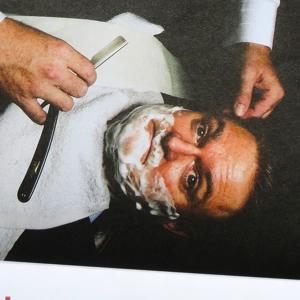


Nam Le has won the £60,000 Dylan Thomas Prize. It recognizes the best young writer in the English-speaking world, with the goal of ensuring that the inspirational nature of Dylan's writing lives on. I met with him in Toronto at the IFOA. This is part two of a series of interviews conducted with three acclaimed short storywriters: Rebecca Rosenblum, Nam Le, and Anne Enright. In each case we riff off those qualities which Flannery O'Connor thought best constituted a good short story.
Nam is author of The Boat, a collection of 'stories that take us from the slums of Colombia to the streets of Tehran; from New York City to Iowa City; from a fishing village in Australia to a floundering vessel in the South China Sea, in a masterful display of literary virtuosity and feeling.'
We talk, among other things, about never condescending to the reader, the prose having to be smarter than its author: tapping into things seen, but a just beyond their ken; gaps and allowing the reader to put their experiences into them; getting into the consciousness of characters; relinquishing ego; the difficulty of writing short stories — and the greatness of those who can do it well; spring-boarding detail and gearing it for expansion; and affecting paradoxical senses of recognition, wonder and redemption.
Joseph Boyden won The 2008 Giller Prize for his novel Through Black Spruce. We talk here about the novel, and the psychic distance Joseph requires to write novels about Northern Ontario and the Cree; the similarities between North and South, James Bay and New Orleans; snowmobiling over vast amounts of snow-covered bush, isolation in the wilderness; bridges between communities, oral culture, First Nation humour, respect for myths and legends, and soapboxes. Please excuse the abrupt ending!
Friends of the Tompkins County Public Library, founded in 1946, is a not-for-profit organization for people interested in books and libraries. Its purpose is to stimulate public interest in the library, purchase library materials, and support other cultural and educational programs in Tompkins County. Each year since inception the Friends have held a book sale in Ithaca New York.
It now ranks among the ten largest (250,000 to 300,000 books, CDs, records, etc. per year) in the United States
Beryl Barr was in charge of the Book Sale when we met. I asked her to give listeners her top ten tips on how best to run a used book sale.
Listen to my interview with Aleksandar Hemon on his National Book Award nominated novel The Lazarus Project here, and at The Quarterly Conversation.
David Carruthers, owner/proprietor of St. Armand Papers in Montreal takes us through the process of how he produces paper that is used in the letterpress printing of books. We talk about pure fibre rags, old jute coffee bags, cover stock, denim and blue paper, beaters, pulp, and vat-like structures for pulp, and machines that take 95% of the moisture out of the pulp and flatten it so that it can be stored in sheets that look and feel like blotting paper and then treated with substances such as potato starch, clay and/or chalk, depending upon the end use of the paper.
We also talk about opacity, smooth laid paper, end leafs, machine grain and bookmarks.
I first heard about Michael Lista in a workshop conducted by Meeka Walsh, Editor of Border Crossings magazine. She raved about him: "Michael is a remarkably gifted young poet who lives in Montreal. He has a special interest in the points of intersection between science and poetics."
These points live dramatically in the person of Louis Slotin, a scientist from Winnipeg involved in the Manhattan project and development of the atomic bomb, and Lista's desire to capture a day in his life. On May 21, 1946, Slotin conducted a dangerous experiment referred to by his fellow scientists as "tickling the dragon's tail." Using a framework of existing poems, in the way that James Joyce used Homer's Odyssey, Lista has borderline plagiarized them in a collection which documents this May day. The book will be entitled Bloom. Anansi will publish it.
"Out of admiration for the virtuosity of Slotin's achievements - with the attendant hubris and arrogance necessary to take risks and make anything new - and taking on those qualities in his own work, Lista's poems do glitter, but more lastingly than that word would suggest. Dazzle too has a showiness I don't mean to imply but the wit is so apparent. At the same time the tone is held and is exactly what the subject requires in this poetic construction."
Revisiting my Salon des Refuses experience, I am reminded of how rarely one encounters great literary work, in poetry especially. Pablo Neruda, Ted Hughes, Robin Robertson…I knew immediately upon first reading their poems that something extraordinary was happening. Their words rubbed up against my experience and sensibilities in ways that satisfied like few others.
I felt something of this while reading the handful of poems Michael sent me in advance of our conversation. We talk here about the suicidal dangers of emulating Joyce's Ulysses, and the book's un-approachability; punning, the multiple meanings of 'bloom'; epiphanies, coincidences, translation, sex and physics, life and death.
This is part one of a series of interviews conducted with three acclaimed short storywriters: Rebecca Rosenblum, Nam Le, and Anne Enright. In each case we riff off those qualities which Flannery O'Connor thought best constituted a good short story.
We start with Rebecca Rosenblum, author of Once, " a collection of sixteen stories portraying the constricted and confused lives of the rootless twenty-somethings — students, office techies, waitresses, warehouse labourers, street hustlers — who inhabit them. These are stories grounded in the all-too-real comedy and tragedy of jobs and friendships and romances, books and buses and bodies." This debut collection won The Metcalf Rooke Award.
Patricia K. Macarthy is author of The Crimson Series, three books, to date, about vampires. We talk here about what makes Vampires so appealing to so many people, about their being symbolic of man's desire for supremacy, women's desire to be consumed, about the fringe elements of society, the attraction of eternal youth and immortality, confidence, the perfect villian whose weapon is seduction, alpha males, power, the lack of conscience, film, Halloween, the draw of fantasy, the defiance of death and the preciousness of time.
During our conversation reference is made to poems by Byron and Goethe. Both example early literary treatment of Vampires [see vampires (and vampire fiction)]. The Vampire Female: "The Bride of Corinth" (1797) by: Johann Wolfgang von Goethe
(1) Once a stranger youth to Corinth came,
Who in Athens lived, but hoped that he
From a certain townsman there might claim,
As his father's friend, kind courtesy.
(2) Son and daughter, they
Had been wont to say
Should thereafter bride and bridegroom be.
But can he that boon so highly prized,
Save tis dearly bought, now hope to get?
They are Christians and have been baptized,
He and all of his are heathens yet.
(3) For a newborn creed,
Like some loathsome weed,
Love and truth to root out oft will threat.
Father, daughter, all had gone to rest,
And the mother only watches late;
She receives with courtesy the guest,
And conducts him to the room of state.
The Giaour by Lord Byron was first published in 1813 and the first in his Oriental romance series. It proved to be a great success, consolidating Byron's reputation critically and commercially. Here's how it starts:
No breath of air to break the wave
That rolls below the Athenian's grave,
That tomb which, gleaming o'er the cliff,
First greets the homeward-veering skiff,
High o'er the land he saved in vain;
When shall such hero live again?
Copyright © 2008 by Nigel Beale. www.nigelbeale.com
Please listen here:
Margaret Visser is a writer/broadcaster who lives in Toronto, Barcelona, and France. Her subject matter is the history, anthropology, and mythology of everyday life.
Born in South Africa, she attended school in Zambia, Zimbabwe, France (the Sorbonne) and Canada. She taught Greek and Latin at York University for 18 years.
Her books include Much Depends on Dinner, The Rituals of Dinner, The Way We Are, and The Geometry of Love; all have been best sellers. Many have won awards. Her most recent work is called The Gift of Thanks, published by HarperCollins. It asks: What do we really mean by Thank you? What are the implications of gratitude, and why are we so enraged when we meet its opposite?
In this conversation Visser tells us, among other things, that gratitude involves thinking, that gift giving takes the place of war, that apparently simple actions and behavior are in fact surprisingly complex, and that gratitude and gift giving is natural because humans beings are innate imitators. Oh yes. And we also talk about sexual gratification!
This from Random House: "Miriam Toews…was born in 1964 in the small Mennonite town of Steinbach, Manitoba. She left at eighteen, living in Montreal and London and touring Europe before coming back to Manitoba, where she earned a B.A. in film studies at the University of Manitoba. Later she packed up with her children and partner and moved to Halifax to attend the University of King's College, where she received a bachelor's degree in journalism. Upon returning to Winnipeg with her family in 1991, she freelanced at the CBC, making radio documentaries. When her youngest daughter started nursery school, Toews decided it was time to try writing a novel."
She's written four to date, including A Complicated Kindness which won the GG's Award for Best Fiction in 2004. We talk here about her latest The Flying Troutmans, about her father's struggle with depression and the stigma that still surrounds mental illness, about road trips and siblings, the definition of love, the film Little Miss Sunshine, writing novels with movie deals in mind, trust, abandonment and Winnipeg, Manitoba.
From the publisher's feed