
Sign up to save your podcasts
Or



The Mouth of Greed — Brahmā and the Birth of Covetousness
Episode Summary: In this episode, we return to the Śrīmad‑Bhāgavata‑Mahāpurāṇa (Third Canto) to examine a startling anatomical mapping of vice. According to the text, the craving that corrodes human society—greed (lobha)—did not begin as a human mistake, but as a direct emanation from the mouth of the creator, Brahmā.
Host George Anthony Paul subjects this "Oral Birth of Greed" to a rigorous theological prosecution. If the same organ that articulates the "Word" also births the desire to possess and exploit, what does that say about the moral stability of the universe? We explore the "Compromised Creator" paradox: Can a deity judge a vice that he himself authored? Finally, we contrast this conflicted demiurge with the God of the Bible—the God who is "Light" (1 John 1:5) and whose Incarnate Word, Jesus Christ, used His lips not to drip greed, but to preach the self-sacrificial love that heals it.
Key Topics Covered:
References in this Episode:
Birth 14. Anger: From Between Brahma’s Eyebrows
In this episode, we explore the anatomical mapping of moral failings within the Puranic creation story. According to the Śrīmad‑Bhāgavata‑Mahāpurāṇa, anger is not a choice made by a created being, but a "body-part power" that emanates from the space between the eyebrows of the creator, Brahmā.
We subject this "Eyebrow-Anger" to a rigorous scientific and theological prosecution. From a biological standpoint, we examine the disconnect between the glabella (the skin and muscle between the brows) and the actual neurobiological seats of emotion in the brain. Theologically, we deconstruct the "Unstable Creator" paradox: If anger and lust are built-in "secretions" of the creator's own body, can he truly be the absolute standard for purity? We contrast this internally conflicted architect with the God of the Bible, whose anger is always a holy response to injustice rather than a byproduct of a troubled inner life.
Key Topics Covered:
References in this Episode:
Birth 13. Lust: From Brahma’s Heart
In this episode, we explore one of the most revealing anatomical mappings in the Puranic creation cycle: the birth of Lust. According to the Śrīmad‑Bhāgavata‑Mahāpurāṇa, core human vices are not introduced as external accidents, but as primary emanations from specific organs of the creator, Brahmā. Specifically, lust and desire are said to arise directly from his heart.
We subject this "Desire-as-an-Organ-Emanation" to a rigorous scientific and theological prosecution. From a neurobiological perspective, we examine how the heart—a muscular pump—is conflated with the limbic system’s role in human desire. Theologically, we deconstruct the "Conflicted Demiurge" paradox: If the heart of the creator is the seedbed of lust, can he serve as an untainted standard of righteousness? We contrast this internally conflicted architect with the God of the Bible, in whom there is "no darkness at all."
Key Topics Covered:
References in this Episode:
Birth 12: Asuras — Born from Brahma’s Loins
In the continuing investigation of Puranic origins, we examine one of the most logically and biologically taxing narratives in the Śrīmad-Bhāgavatam: the birth of the Asuras. According to the third canto, these beings—defined by greed, intoxication, and a desire to overthrow the divine order—manifest not from an act of creative wisdom, but from the loins and generative region of the creator, Brahmā.
This episode subjects this "Pelvic Generation" to a rigorous scientific and theological prosecution. We explore the genetic impossibility of a male pelvic region spawning a distinct species without maternal mtDNA, the "Embryological Vacuum" of instant adult manifestation, and the profound "Conflicted Demiurge" paradox. If the architect of the universe involuntarily secretes his own enemies from his lower anatomy, can he truly be the ultimate standard for moral and rational unity? We contrast this conflicted source with the holy, self-consistent God of the Bible.
Key Topics Covered:
References in this Episode:
Birth 11: Demons — Born from Brahma’s Buttocks
In one of the most jarring accounts in the Śrīmad‑Bhāgavatam, we encounter a creation story that blurs the line between personhood and waste. This episode examines the birth of the yakṣas and rākṣasas—demonic beings defined by lust and violence—who proceed not from a divine word or a holy act, but from the buttocks of the creator, Brahmā.
We subject this "Excretory Generation" to a rigorous scientific and theological prosecution. From the genetic impossibility of rectal tissue producing a multi-cellular species to the "Mitochondrial Dead End" of a motherless, anal birth, we expose the biological absurdity of this narrative. We also deconstruct the "Leaky Creator" paradox: Can a being whose own anatomy is a fountain for demonic lust serve as an ultimate standard for holiness? Finally, we contrast this "Rear-End of Creation" with the Holy Incarnation of Jesus Christ, who enters history to cleanse shame rather than to excrete it.
Key Topics Covered:
References in this Episode:
Birth 10: The Obsidian Abomination — Mahākālī from the Tamas Guṇa
Episode Summary: In this episode, we investigate the darkest chapter of the Shaktism tradition: the manifestation of Mahākālī. According to the Devī‑Māhātmya and Devī Bhāgavata Purāṇa, Mahākālī is the personification of the tamas-guṇa—the quality of darkness, inertia, ignorance, and destruction. Described as "black like collyrium" with lolling tongues, fangs, and garlands of severed heads, she represents the "lowest" mode of nature raised to a divine status.
We subject this "Obsidian Abomination" to a rigorous scientific and theological prosecution. How can an abstract philosophical category like "darkness" or "ignorance" generate the complex genomic information required for a multi-headed, multi-armed biological organism? We explore the "Mitochondrial Dead End" of her motherless emergence and the anatomical impossibilities of her terrifying form. Finally, we contrast this deified personification of terror with the Biblical God, who is "Light, and in Him is no darkness at all."
Key Topics Covered:
References in this Episode:
Birth 9: The Crimson Commodity — Mahālakṣmī from the Rajas Guṇa
n this episode, we investigate the origins of Mahālakṣmī, often hailed as the goddess of wealth and beauty. According to the Devī‑Māhātmya and Devī‑Bhāgavata Purāṇa, she is not an absolute first cause, but a "rajasic emanation"—a personified slice of the primordial Great Goddess's quality of passion, desire, and activity (rajas-guṇa).
We subject this "biological alchemy" to a rigorous scientific and theological prosecution. How can a non-material psychological tendency like "passion" solidify into a carbon-based, four-armed organism? We explore the massive genetic information gap, the "Mitochondrial Dead End," and the profound theological tension of worshiping a deity born from the very quality (rajas) that many Eastern traditions claim keeps the soul trapped in the cycle of suffering and attachment.
Key Topics Covered:
References in this Episode:
Birth 8: The Intellectual Emanation — Mahāsarasvatī from the Sattva Guṇa
In this episode, we investigate a birth narrative that is as abstract as it is scientifically baffling. According to the Devi Māhātmya and the Devi Bhāgavata Purāṇa, the goddess Mahāsarasvatī is not a self-existent creator, but a "metaphysical secretion"—an emanation of the sattva guṇa (the quality of purity and light) from the primordial Mahālakṣmī.
We subject this "Biochemistry of an Attribute" to a rigorous prosecution. How does a non-material quality like "purity" condense into a multi-limbed, carbon-based organism capable of playing a lute? We explore the massive genetic and thermodynamic gap between a psychological category and a functioning biological genome. We also discuss the theological implications of a "fragmented" deity and contrast this "Intellectual Emanation" with the personal, unified, and accessible Wisdom of God found in Jesus Christ.
Key Topics Covered:
References in this Episode:
The Daughter‑Wife — Sarasvatī/Gāyatrī from Brahmā’s Body
Episode Summary: In the final and perhaps most controversial installment of our "Births of the Gods" series, we examine the narrative of "Auto-Bifurcation." According to the Manusmṛti, Matsya Purāṇa, and Śrīmad‑Bhāgavatam, Brahmā—feeling lonely and desiring to populate the world—literally split his own body in half to create a female counterpart, variously identified as Sarasvatī, Gāyatrī, or Satārūpā.
This episode explores the disturbing scriptural accounts of Brahmā becoming sexually captivated by his own "daughter" (the female half of his own substance), resulting in the sprout of multiple heads to keep her in his lustful gaze. We subject this narrative to a biological and genetic prosecution, investigating the "Genetic Clone Trap" and the "mDNA Void." We also discuss the internal moral rebuke found within the Hindu texts themselves and contrast this lust-driven "split" with the holy, purposeful Incarnation of Jesus Christ.
Key Topics Covered:
References in this Episode:
he Luminous Nothing—Adi Parashakti and the Shoonya Bindu
Episode Summary: In this episode, we reach the pinnacle of the Shaktism tradition to examine the origin of Adi Parashakti, the "Primordial Power." According to the Devi Bhagavata Purana, before the universe began, there was a total void (Shoonya), from which a singular point of light (Bindu) emerged to manifest as the Goddess. While she is hailed as the "Mother of All" who assigns roles to Brahma, Vishnu, and Shiva, we subject this "emergence from nothing" to a rigorous scientific, logical, and theological prosecution.
How can a carbon-based, multi-limbed biological entity—described in the Lalita Sahasranama with thousands of heads and arms—be synthesized from a massless photon? We explore the massive genetic information gap in this narrative, the "Mitochondrial Dead End," and the internal scriptural wars where Vaishnavites and Shaivites claim the Goddess is merely a subordinate byproduct of their own male deities. We contrast this "Luminous Accident" with the self-existent "I AM" of the Bible.
Key Topics Covered:
References in this Episode:
From the publisher's feed
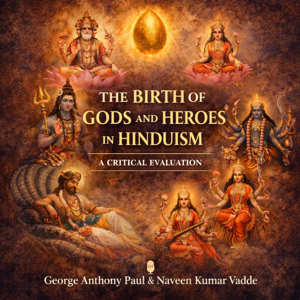
The Birth of Gods and Heroes in Hinduism: A Critical Evaluation
Explore the fascinating origins of gods, goddesses, and legendary heroes in Hinduism with George Anthony Paul and…
Through thoughtful analysis and historical context, the hosts uncover the symbolism, cultural significance, and theological insights behind these ancient narratives. Whether you’re a curious seeker, a student of mythology, or a believer looking for deeper understanding, this podcast offers a comprehensive and engaging exploration of Hindu stories of gods and sacred traditions.
Dive in, question, and discover the extraordinary stories that shaped one of the world’s oldest spiritual traditions.