
Sign up to save your podcasts
Or

By Sol Good Media


3.6
1414 ratings


The podcast currently has 85 episodes available.
The most played episodes among Podcast App listeners.
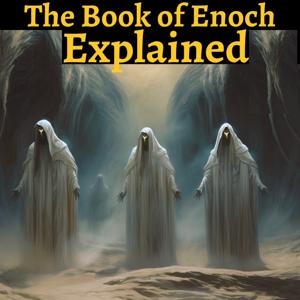
The Book of Enoch by Explained delves into the ancient text attributed to Enoch, the great-grandfather of Noah, offering profound insights into themes of divine judgment, the nature of sin, and the interplay between humanity and the celestial realm. This remarkable work explores the consequences of moral decay and the importance of righteousness, resonating with contemporary concerns about ethical behavior and accountability. Its vivid imagery and symbolic narratives serve as a timeless reminder of the cosmic struggle between good and evil, urging listeners to reflect on their own choices and the broader implications of their actions. As a foundational piece of apocryphal literature, The Book of Enoch continues to captivate audiences with its rich theological concepts and its exploration of humanity's relationship with the divine, making it an enduring subject of interest and contemplation.

Booker T. Washington was one of the first nationally recognized African American leaders after the Civil War. He was born to a slave woman in Virginia, who then took him as a young boy to West Virginia after the emancipation. Booker became a leader in education heading the Tuskegee Institute for more than 30 years and working with other universities. He advocated a moderate approach to elevating the African Americans through education and business, but worked behind the scenes to change discriminatory laws and practices, and became an adviser to the White House. He authored 14 books, and many articles and speeches, including his autobiography, Up from Slavery. - Summary by Larry Wilson
“Galloped on with no stopping, but merely to change horses until five o’clock in the evening—very tired indeed, but . . . saw fresh horses in the corral, and resolved to push on. At half-past seven, after having galloped a hundred and fifty-three miles, and been fourteen hours and a half on horseback got to the post—quite exhausted—I could scarcely speak . . . an hour before daylight was awakened by the Gaucho, got up, had some mate, mounted my horse, and as I galloped along felt pleased that the sun should find me at my work. . .” Later in life nicknamed “Galloping Head,” for his exploits on the Argentine pampas, Sir Frances Head Bond, went to the Argentine in 1825 as mining supervisor for the Rio Plata Mining Association, a group of English speculators whose ill-planed and financially disastrous idea it was to send Cornish miners to re-open old gold and silver mines in the former Spanish colonies. His “Rough Notes,” often written in a staccato style that is surprisingly fresh, show a gusty, resourceful adventurer— riding across the Andes on mules who sank into snow above their knees at every step, obliging the riders to balance their feet on the mules’ ears; clambering down 250 feet of notched sticks to inspect a silver mine; foraging bluntly for food for his men in a land of scarcity: “We found they had got dry peaches and live goats. We put some of the former in a pot to boil . . . and because I was very hungry, I put a pistol to (the goat’s) ear, and in a short time he was roasting on the burning embers.” Sir Bond Head later served as lieutenant-governor of Upper Canada 1835-1837. (Summary by Sue Anderson)
"Colour of Life" is a captivating collection of essays by English poet and author Alice Meynell, where each piece embodies a dream-like quality that invites listeners to ponder the nuances of life through her keen observations. With a remarkable ability to convey profound ideas in few words, Meynell's essays resonate with timeless themes of beauty, perception, and the intricacies of human experience. This collection offers a reflective journey that encourages introspection, making it a valuable listen for those seeking to connect with the subtleties of existence. The enduring nature of her insights continues to inspire and provoke thought, reminding us of the richness found in the world around us.
"Life At The Zoo: Notes And Traditions Of The Regent's Park Gardens" by Charles John Cornish offers a captivating glimpse into the history of the world's oldest scientific zoo, established in London in 1828. Originally intended for the scientific study of animals, the zoo has evolved into a beloved public attraction since its opening to the public in 1847. Cornish, a noted naturalist, shares insights into the zoo's early days and its significance in the realm of zoological study. This book remains relevant today as it reflects our enduring fascination with wildlife and the importance of conservation, reminding us of the rich traditions that shape our understanding of the natural world.
The podcast currently has 85 episodes available.

227,942 Listeners

5,969 Listeners

1,270 Listeners

46,151 Listeners

285 Listeners

4,292 Listeners

5,232 Listeners

694 Listeners

68 Listeners

8,318 Listeners

16,087 Listeners
408 Listeners

367 Listeners

807 Listeners
13 Listeners