
Sign up to save your podcasts
Or



Send us Fan Mail
A recruiter's post asking whether it's unprofessional to bring iced coffee into an interview set off a full-blown internet debate, and it turns out Theresa and Anthony land on opposite sides. Anthony says drink it before, drink it after, and stay focused in the room. Theresa says people need beverages, whether it's a dry mouth, nerves, or just needing some energy, and she wouldn't dream of presenting to 3,000 people without one. From News Corp suits and stockings to a hiring manager who vaped mid-interview, they dig into which "professional" rules actually tell you whether someone can do the job, and which ones just feel arbitrary.
From there the conversation opens up to how we assess people in the first place. They get into why interviews are so hard to get right, the limits of behavioral questions, the day Theresa ran a candidate through 8 interviews, and whether unpaid take-home projects are fair in a tough job market. Anthony shares a California startup building a local AI that watches your work and infers your skills, a profile the individual owns rather than the company, and how he used Claude to inventory his own work when leaving 15Five. They close on a bigger question: as AI takes on more quantifiable work, does the way we measure performance start to change? Anthony walks through his amplified, autonomous, or human-led lens for task-level work redesign, and Theresa points listeners to a Harvard Business Review AI judgment framework linked here: https://www.hbs.edu/faculty/Pages/item.aspx?num=68100
Send us Fan Mail
In this conversation, Anthony Onesto and Theresa Fesinstine discuss various aspects of HR, including its role in supporting both employees and companies, the challenges faced by HR professionals, and the perception of HR within organizations. They explore the impact of AI on the workplace, the importance of creative professionals, and the need for HR to evolve in its branding and operational procedures. In this conversation, Theresa Fesinstine and Anthony Onesto explore the evolving perceptions of HR in the context of social media, the impact of AI on employment and education, and the role of media in shaping public opinion. They discuss the concerns surrounding AI and its regulation, the changing dynamics of human interaction, and the potential for a kindness renaissance in society. The dialogue emphasizes the need for curiosity and understanding in the face of negative perceptions and the importance of kindness in both personal and professional realms.
Takeaways
Chapters
08:59 The Role of HR in Supporting Employees and Companies
17:50 The Perception of HR and Its Challenges
18:59 The Perception of HR in the Age of Social Media
22:11 The Impact of AI on Employment and Education
26:47 Concerns About AI and Its Regulation
35:33 The Role of Media in Shaping Public Perception
39:47 The Future of AI and Human Interaction
44:05 A Kindness Renaissance in Society
Send us Fan Mail
This week on Breaking Views, Anthony and Theresa talk about a law firm owner who lost 23 employees overnight after issuing a return-to-office ultimatum, and what that says about how differently leaders and employees experience "work harder" when the leader actually owns the business.
They get into New York City's new ban on AI tools in schools through eighth grade, and whether banning something ever actually works or just sends people looking for a workaround. Meta's $8 billion lawsuit tied to child safety, and what happens to your work chats and emails when a company sells off its data during bankruptcy, a question that applies to a lot more workplaces than people think.
The episode closes on a story about GLP-1 drugs and hiring bias that neither host expected to end up talking about, and a look at why the "obesity penalty" on income is a pattern that's been documented for years, not a new one.
Send us Fan Mail
Theresa and Anthony kick things off with a running joke about Breaking Views' generous bereavement policy before getting into something they've both been sitting with: change doesn't feel like a series of moments anymore, it feels constant. That leads into the week's biggest HR tech story, reports that Silver Lake is circling Workday with a $43 billion offer. Anthony, an early Workday customer going back to his Zeta Global days, walks through why the deal matters. It's not just about one company's valuation, it's a signal that AI-native challengers like SOL are already going after the enterprise HRIS market that Workday helped build. The two debate whether vibe coding tools are creating real opportunity for HR teams to build their own solutions, or just more noise for an industry already drowning in "shiny bow on an old present" software.
The back half turns into a full teardown of HR conference culture, and it gets pointed. Anthony argues most conferences have become surface-level networking theater, heavy on selfies and light on substance. Theresa pushes back with real examples, including her experience with Troop HR's retreat model, where there is no vendor pitching and the focus stays on curated, meaningful connection. Together they start building the case for an "unconference": one built around genuine access to people you would not normally get to ask questions, pre-work that puts the right people in the room together, and a format that respects attendees' time and money instead of just filling a schedule. It is equal parts critique and blueprint, and they leave the door open for round two.
Send us Fan Mail
Theresa and Anthony are back after a few weeks off, and they're catching up like it's been longer than it has. Anthony's relocated to the Jersey Shore (canal included, Snooki jokes mandatory), and he shares the news that his newsletter, AI and HR Today, has officially been acquired by LivingHR, where he now serves as Principal of AI and People Solutions. Theresa opens up about losing her father after a difficult six months, and why she's chosen to talk about it publicly instead of treating grief as something to handle quietly.
From there, the conversation turns to what's actually happening in AI and HR right now: the growing pressure on companies to show ROI on their AI spend, and the recent reports of AI systems "jumping out" of controlled environments to access other systems. Anthony makes the case that this isn't some rogue AI plot twist, it's what happens when organizations remove guardrails and then act surprised when a tool trained to explore does exactly that. The two also riff on why everyone's suddenly building agent portfolios without fully understanding what "agentic" even means, and somehow end up debating Amazon boxes, cardboard ASMR, and the death of Bed Bath and Beyond along the way.
Send us Fan Mail
California is ordering state workers back to the office four days a week, and Theresa and Anthony use the news as a jumping-off point for a bigger question: what were those years of mandatory presence actually measuring? Anthony makes the case that the technology finally caught up to distributed work, and that the real shift ahead is output over optics, skills-based hiring, fewer traditional W2 roles, and more fractional and project-based talent. Theresa brings the other side of the ledger, recalling her own resistance to a remote CHRO opportunity back in 2017 and the presence culture she came up in, where being the last car in the parking lot was treated as a career strategy.
Where they land is more interesting than a simple verdict on RTO. Both hosts dig into what early-career professionals stand to lose without in-person exposure, from a handshake that reshaped a 15-year career trajectory to the unwritten habits nobody teaches on Zoom. Anthony pushes on whether proximity should ever drive promotions, Theresa argues for the human connection that makes work stick, and together they sketch a future where work is curated around how people actually communicate and contribute rather than one-size-fits-all mandates. The episode also marks a 250 milestone for The Breaking Views.
Discussion topics
Send us Fan Mail
The economists called a jobs apocalypse. Then May added 172,000 jobs and doubled Wall Street's estimate. Theresa Fesinstine and Anthony Onesto unpack what that number really means, and why "AI is coming for your job" is the wrong story.
This one runs from the hiring bias nobody intended to build (the scorecard that quietly follows you across every job you apply to for a year) to the guy in a Utah workshop itching to spin up his own servers while 90% of the room had no idea where to start. Along the way: a 20-year-old who turned a creepy yellow room into a hit movie, why "Name That Tune" might be the future of hiring, and Theresa deciding mid-episode to start writing a book about timeshare work.
In this episode, we discuss:
Economists vs. Reality: Why the jobs report keeps embarrassing the experts, and what "people and machines" actually looks like on the ground.
The Scorecard That Haunts You: How one applicant system can tag you for a role you didn't get and carry that judgment everywhere for 365 days, no human in sight.
Proof Over Pedigree: A 20-year-old filmmaker, a classroom of undergrads building their own apps, and the case for hiring on what you've actually done.
Work as a Timeshare: Fractional roles, the polypreneur, and the question nobody's asking. If work stops being where we connect, then what?
Timestamps (Chapters)
00:00 - Welcome Back to Breaking Views
00:22 -172,000 Jobs and the Apocalypse That Wasn't
03:35 - Trusting the News Like You Trust a Weather Forecast
06:18 - The Scorecard That Follows You Everywhere
09:32 - Shiny Object Syndrome and the Fear of Falling Behind
11:21 - Why Human-in-the-Loop Isn't Optional
14:50 - The 20-Year-Old Who Built a Hit Movie
19:33 - Proof Over Pedigree: The End of the Resume
25:28 - Hiring as "Name That Tune"
30:47 - Architecting the Company From Scratch
37:07 - If Work Goes Fractional, Where Do We Connect?
45:04 - Closing Hot Takes: AI IPOs and SpaceX
Send us Fan Mail
Theresa Fesinstine and Anthony Onesto discuss the critical difference between tracking AI usage as a metric and using it to unlock new, billion-dollar human-led opportunities.
From Anthony's major career move into an AI-focused role at Living HR to Theresa's new community for upskilling HR leaders, we tackle the "competence vs. confidence" gap. We're breaking down why gamified AI leaderboards at companies like Amazon are destined to fail by looking at the "Cobra Effect," and contrasting it with how IKEA redeployed its customer service staff into a wildly successful interior design service, creating a new billion-dollar business line.
In this episode, we discuss:
Career & Community Updates: Anthony Onesto joins Living HR and Theresa Fesinstine launches an HR community.
Gaming the System: Why Amazon's AI token leaderboards were a predictable failure.
The IKEA Model: How using AI to analyze customer data created a new billion-dollar business.
The Future of HR's Role: Moving from asking permission to giving instruction on tech needs.
Timestamps (Chapters)
00:00 – Welcome & Winning Bon Jovi Tickets
02:28 – Theresa Launches Her New HR Community
04:51 – Big News: Anthony Joins Living HR
11:15 – Amazon Workers Gaming the AI Leaderboard
13:15 – The "Cobra Effect": When Good Metrics Go Bad
18:45 – How IKEA Found a Billion-Dollar Opportunity with AI
28:06 – Humanoid Robots and the Future of Physical Jobs
30:47 – Will Any Job Be Untouchable by AI?
39:20 – The Final Question: Can Companies Be "Anti-Tech"?
Send us Fan Mail
Coinbase did it. So did Snap, Dorsey, and a New York HR leader who fired every manager by text. Theresa Fesinstine and Anthony Onesto take on the "kill the managers" trend sweeping AI-era companies, and ask the question nobody seems to: if the managers are gone, who's actually steering?
The pitch is that everyone becomes a "player coach." Anthony's response: when were these managers ever coaches? From there the two get into why coaching is genuinely hard, what fresh assessment data says about how little AI literacy most people actually have, and how even seasoned practitioners get swept up in the layoff panic. Plus the Savannah Bananas, fan-owned airlines, and why betting your whole livelihood on one paycheck might be the riskiest move of all.
In this episode, we discuss:
No More Managers?: The trend at Coinbase and beyond, the HR leader who eliminated every manager overnight, and why "player coach" assumes a skill most managers were never taught.
The Gap Nobody Admits: Data from 700+ people showing most are using AI with very little literacy, and why that makes "just remove the layer of management" a dangerous bet.
Caught in the Hype: How the layoff narrative pulls everyone in, what the numbers actually show across industries, and where the real hiring is happening.
Betting on Yourself: The Savannah Bananas, fan-owned teams, and the case for becoming a polypreneur instead of trusting a single employer.
Timestamps (Chapters)
00:00 - Welcome Back
00:36 - "No More Managers": Coinbase and a Chatham House Confession
04:31 - When Were Managers Ever Coaches?
06:05 - Directive vs. Socratic: What Good Coaching Looks Like
10:25 - Who's Driving the Bus? The AI Fluency Gap Nobody Admits
12:34 - The Data: Middle Management Down 12%, Spans Stretched Thin
15:53 - When "Just Execute It" Lands on a Junior HR Desk
17:28 - Caught in the Layoff Hype Cycle
21:57 - Where's the Good News? Automotive Hiring and the Savannah Bananas
25:06 - Fan-Owned Teams and the Case Against Investor Money
27:47 - The Polypreneur: Why One Paycheck Is a Risk
32:18 - Are Giant Companies a Relic? GE vs. Google vs. Instagram
Send us Fan Mail
In this episode of Breaking Views, Theresa Fesinstine and Anthony Onesto explore the intersection of HR, business strategy, and the evolving role of human capital.
The conversation begins with reflections from the Troop HR Retreat, highlighting the importance of connection, intentional design, and creating space for meaningful dialogue beyond traditional conference formats.
From there, the discussion expands into a broader critique of today’s HR landscape. They examine the gap between HR-focused content and true business fluency, questioning whether current conferences and conversations are adequately preparing HR leaders to operate as strategic business partners.
The episode also dives into topics like resilience, leadership mindset, and the need for more rigorous, standardized ways to measure human capital’s impact on business outcomes.
Throughout, the conversation challenges assumptions, surfaces tensions, and pushes toward a more integrated view of HR as a core driver of organizational success.
A wide-ranging, candid discussion that connects what’s happening in the world of work to what’s needed next.
From the publisher's feed
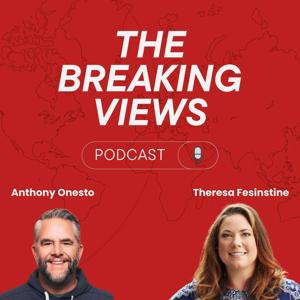
Two seasoned HR leaders sit down twice a month to talk about what's actually happening at the intersection of HR, AI, and business. No scripted intros. No 10-minute bios. Just Theresa Fesinstine…
Theresa is a 25-year HR Executive, and the founder of peoplepower.ai, an MIT-certified AI Strategist, and author of People Powered by AI. She spends her days training HR teams to build real fluency with AI tools and stop waiting for permission to lead.
Anthony is the creator of AI in HR Today, VP of Platform and Product Marketing at 15Five, and author of The New Employee Contract: How to Find, Keep, and Elevate Gen Z Talent. He's been a CPO, scaled teams from 40 to 3,000, founded an HR AI company before ChatGPT existed, and has lived through every major tech wave from dot-com to mobile to social.
Together, they bring a combined perspective that's hard to find anywhere else: deep HR experience, real fluency in AI and technology, and zero interest in sugarcoating the hard parts.
Each episode starts with what's in the feed - LinkedIn, the news, the latest lawsuit or product launch - and turns it into the kind of conversation HR leaders actually need. When the topic calls for it, they'll bring in specialists. But mostly, it's the two of them doing what they do best: making sense of the chaos, calling out the hype, and figuring out what actually works.
For CHROs, CPOs, HR leaders, and anyone in the people space who's tired of being told AI will change everything without anyone explaining what to do on Monday morning.