
Sign up to save your podcasts
Or

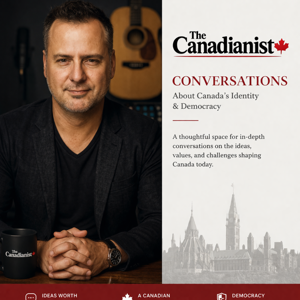


In this episode, Christopher M. Michaud breaks down why so many Canadians feel frustrated, underrepresented, and disconnected from the system, even though the country itself remains stable.
The problem isn’t collapse. It’s misalignment.
As Canada has grown more complex, our voting system hasn’t kept up. The result is a system where millions of votes are effectively wasted, governments are formed without majority support, and more Canadians are left feeling politically homeless.
This episode cuts through the noise and gets to the core issue: how we vote, and why it needs to change.
Christopher lays out a clear, practical solution using Mixed-Member Proportional representation, a system designed to reflect the true will of the electorate, not just the largest minority.
If you’ve ever felt like your vote doesn’t count, this episode explains why, and what can be done about it.
This episode is part of a larger series where I’m sharing my books here on the podcast, not as a detour, but as context. If we want to understand what’s happening in Canada today, we need to understand how we got here.
Driven Wealth: The Rise and Fall and Future of the North American Auto Dream is the first in that series.
New book episodes drop Tuesdays and Fridays at 10 a.m., while regular episodes of The Canadianist continue throughout the week, woven in alongside this series.
In Part I, we go back to the beginning, from the earliest days of the automobile through to the end of the Second World War. This is where the foundation is built, where a scattered, experimental industry becomes a coordinated industrial system, and where wartime production helps shape the structures that will go on to create the modern middle class.
This is the starting point of the story.
In this episode of The Canadianist, Christopher M. Michaud revisits the Freedom Convoy conversation, not from headlines or social media, but from lived experience at ground zero in downtown Ottawa.
As talk of a possible resurgence begins to circulate, this episode asks a simple but essential question: what are people actually fighting for today?
With COVID restrictions gone and original grievances resolved, the word “freedom” remains central, but what does it really mean?
Drawing on firsthand experience and conversations with people from around the world, including newcomers from Egypt, Mexico, Ukraine, Iran, and Jamaica, Christopher explores how freedom is understood in very different ways, and why that matters in Canada right now.
This is not about taking sides. It’s about understanding the difference between protest and occupation, frustration and oppression, and asking whether our political system is part of the problem.
If Canadians feel unheard, is it time to rethink how we represent them?
This episode connects the emotional temperature of the country to a deeper structural issue: representation, and the case for electoral reform.
Hello friends, fellow Canadians.
In this episode, I take a closer look at Pierre Poilievre and the question that keeps coming up after another Conservative loss.
Is the problem that Canadians aren’t hearing the message, or that they are?
After four straight election losses for the Conservative Party of Canada, it’s becoming harder to argue this is about reach. The message has been consistent, repeated, and widely broadcast.
So why isn’t it converting?
I break down why repetition doesn’t equal persuasion, why speaking to your base isn’t the same as building a majority, and what it means when voters leave other parties and still don’t choose you.
We also look at the shift toward U.S. podcast appearances and what that says about engagement with Canadian media, and whether avoiding tough questions is helping or hurting.
At a certain point, the issue isn’t how far the message travels.
It’s whether it lands.
Pierre Poilievre’s nearly two-and-a-half-hour appearance on Joe Rogan’s podcast offered a rare look beyond the clips and into how he frames himself, his ideas, and the country.
In this episode, we break down what was said, and just as importantly, what wasn’t.
From his use of the phrase “prime minister in waiting,” to his portrayal of the oil sands, to the version of Canada presented to a global audience, the conversation reveals a message that is disciplined and effective, but also narrow in scope.
We also examine one area where he’s on solid ground, Canada’s difficulty in getting major projects built, and why that issue resonates across political lines.
But the larger question remains. What happens when political messaging reinforces a base, but doesn’t clearly reach beyond it?
At a time when Canada’s political landscape is increasingly polarized, this conversation raises a deeper issue about what’s missing in the middle, and why that matters for the country’s future.
A floor crossing in Ottawa might seem like routine parliamentary drama. But sometimes small events reveal bigger shifts beneath the surface.
This week, Nunavut MP Lori Idlout crossed the floor from the NDP to join the Liberal caucus, bringing the government to within two seats of a majority in the House of Commons. With three byelections approaching in April, the possibility of a Liberal majority government is suddenly very real.
At the same time, the New Democratic Party has fallen to just six seats, a remarkable decline for a party that once served as Canada’s Official Opposition. The moment comes during the NDP’s leadership race, raising deeper questions about the party’s future and its place in federal politics.
In this episode of The Canadianist, Christopher M. Michaud looks beyond the mechanics of the floor crossing and examines what the numbers in Ottawa are revealing about Canada’s evolving political landscape.
Is Canada drifting toward a de facto two-party system dominated by the Liberals and Conservatives? And if so, what happens to the growing number of Canadians who feel politically homeless between those two camps?
Sometimes the most important political stories aren’t the headlines themselves, but what they signal about the direction of the country.
This episode explores the widening space between Canada’s political poles, and the possibility that something new may eventually rise to fill it.
In this episode of our _Canada Today_ series, Christopher M. Michaud explores one of Canada’s most overlooked strengths: our strategic geography.We’re one of the only nations on Earth with access to three oceans, the Atlantic, the Pacific, and the Arctic. That’s not just a geographic detail. It’s a strategic advantage that could define Canada’s role in the 21st century.As Arctic routes open, global supply chains shift, and geopolitical tensions rise, Canada’s position on the map becomes more than scenery. It becomes leverage.This episode builds on our previous conversation about Canada as a potential resource superpower and connects the dots between what we have and where we are. Ports, trade diversification, Arctic sovereignty, infrastructure, and global access all come into focus.Are we thinking big enough about our country’s structural advantages? Or are we still acting smaller than the map suggests?This is Canada Today.Strategic Geography and Global Access
In this installment of _The New Canadiana_, Christopher M. Michaud reflects on a conversation with a technologist who offered a simple but unsettling observation: shame is disappearing from public life.Social media has empowered voices across the country. It has expanded reach and lowered barriers. But it has also weakened restraint. The quiet voice that once asked, “What would my family think?” doesn’t seem as loud anymore.Drawing from his time living in Ottawa, listening to staffers, politicians, diplomats, lobbyists, and everyday Canadians in the back seat of his car, Christopher explores something deeper than outrage.Fatigue.Not radicalism. Not revolution. Fatigue.Beneath the shouting and the algorithms, many Canadians aren’t looking to tear the country apart. They’re simply tired of the constant tug-of-war.This episode asks whether moderation, accountability, and balance still have a place in a megaphone culture.Part of _The New Canadiana_, a series of real conversations about what it feels like to live in Canada right now.Continue the conversation at http://thecanadianist.news.Learn more about the United Canadian Centrists at http://uccparty.ca.
The New Canadiana | Canada at the CrossroadsIn this episode of _The New Canadiana_, Christopher M. Michaud continues his journey behind the wheel, driving rideshare to listen to Canadians where they actually live, work, and think.This time, the conversations move beyond frustration into something deeper. A young mother from Jamaica navigating immigration limbo with a Canadian-born child. A civil litigator questioning how enforcement, media amplification, and due process intersect in an era of politicized headlines. And a hard look at the reality that roughly 1.4 million temporary permits are set to expire in 2026, with nearly 2.9 million across 2025 and 2026 combined.Compassion and enforcement. Structure and humanity.Growth and capacity.Canada isn’t collapsing, but it is recalculating.How do we enforce the rules without losing our humanity? How do we align immigration, housing, demographics, and the rise of AI into one coherent strategy?This episode doesn’t pick sides. It holds the tension.Different stories. Same country.If this resonates with you, continue the conversation at http://thecanadianist.news and learn more about the United Canadian Centrists at http://uccparty.ca.
What does Canada feel like right now, not from headlines, not from politicians, but from the front seat of a car?In this episode of _The New Canadiana_, I share three real conversations from my rideshare shifts in Toronto. Three people. Three generations. Three very different life stories. All navigating the same country at a pivotal moment.A millennial newcomer from Singapore questioning what she sees on our streets and wondering how a wealthy nation can feel so disorderly.A Gen X operating room nurse from Guyana recalculating her future after 25 years in Canada, as rising costs, sudden changes to Ontario’s OSAP student aid program, and her husband’s plant closure force difficult conversations at home.A Gen Z finance professional who cannot imagine buying a home without family support and is already feeling the early tremors of artificial intelligence in the workplace.None of them are extreme. None of them are angry. They are thoughtful. They are pragmatic. And they are quietly reassessing what life in Canada means today.This isn’t outrage politics. It’s lived experience.This is Canada as it’s being experienced right now.For more conversations like this and the latest stories from around the country, visit http://thecanadianist.news.To learn more about the United Canadian Centrists and our vision for Canada’s future, visit http://uccparty.ca.
From the publisher's feed
The Canadianist Network is the home of original podcasts, interviews, commentary and filmed programming from The Canadianist.
Our growing lineup covers politics, current affairs,…
The Canadianist Network is part of a larger Canadian media platform. The Canadianist News provides original reporting, analysis and local coverage. The Canadianist Radio brings together live programming, conversation, entertainment and music. The Canadianist Network is where those voices, stories and programs remain available to watch and hear on demand.
The Canadianist News covers the country. The Canadianist Radio sounds like the country. The Canadianist Network brings the conversation together.