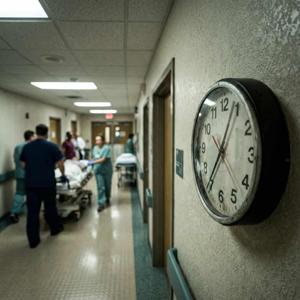
A retired chiropractor in his sixties pulls off a rural Southern highway with sudden neck pain, dizziness, nausea, vomiting, and numbness on one side. He’s brought to a community ED, triaged as a mid-acuity patient, and worked up by a nurse practitioner. The supervising emergency physician — the doctor whose name is on the chart — never sees him, never speaks with him, and is off shift within the hour. Hours later, the patient is discharged. What follows is a vertebral artery dissection, a brainstem stroke, and an audit trail showing the supervising physician’s attestation took eleven seconds.
In this episode, Bryan walks through the clinical timeline of a posterior-circulation catastrophe that looked, on the surface, like a migraine. Sarah unpacks how supervisory attestations, audit trails, and NP-physician oversight rules become the spine of the plaintiff’s case. And Michael brings the frontline clinical perspective: the symptom cluster that should never close the differential, why “unremarkable exam” is a phrase that ages badly, and what an attending can do on the next shift to make sure an eleven-second click never becomes the most damaging line in the chart.
Educational purposes only. Not legal advice. Not medical advice.
This Substack is reader-supported. To receive new posts and support my work, consider becoming a free or paid subscriber.
Thanks for reading! This post is public so feel free to share it.
This is a public episode. If you'd like to discuss this with other subscribers or get access to bonus episodes, visit thecharteddefense.substack.com/subscribe