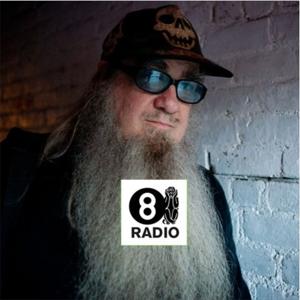
Recorded 9.17.18
Clayton is joined again by longtime friend, and nyc tattoo innovator, Wes Wood.
Wes's previous interview with Clayton: https://soundcloud.com/clayton-patterson-show/the-clayton-patterson-show-w-wes-wood
Wes Wood -- a pivotal figure in the history of tattooing, particularly in New York City.
"When New York City repealed the ban on tattooing, they looked to Wes Wood to help lay the foundation for the new health codes. As owner of Unimax Supply Company, an international provider of all things body art, Wes is well versed in mechanics, sterilization procedures and wound healing. Thirty-six years had passed since the city falsely claimed that there had been a hepatitis outbreak linked to tattooing.
Growing up on Long Island in the ’50s, Wes went to school, participated in two sports a year, learned an instrument (he played the tenor sax with the Emeralds on Dick Clark’s American Bandstand in 1959) and joined a couple of clubs. “Things were very structured then,” explains Wes. “It was a different kind of life.” After earning a degree in English, a brief stint as a Merchant Marine and a few years as co-owner of a successful printing business, Wes caught tattoo fever. After learning to tattoo, he became quite interested in how the equipment was made. Though he had little prior experience as a machinist, he was quite comfortable making things by hand. Learning the basics of machine-building, tube- and needle-making from a friend, creating Unimax was a natural transition. Supplies were difficult to come by and Wes saw a great opportunity to fill the need. “We were the first that I know of to offer pre-sterilized needles and equipment,” he recalls. Unimax quickly grew beyond its humble beginnings in Wes’ apartment. Following a brief stay in a basement on the Lower East Side, the company found its home at 503 Broadway, where the core of the business still operates today.
In 1990, Wes decided to open a shop, Canal Street Tattoo, in an office space on the second floor at 365 Canal Street. “I wanted a place to demonstrate that the machines and needles we made were of good quality” says Wes. He was tattooing occasionally, until Anil Gupta, who was just beginning his career, joined the team. However, once Anil was ready to work on his own, Wes no longer needed to tattoo. Canal Street soon became Kaleidoscope, to better represent Anil’s fine-art contributions to the studio. The shop, by the way, operated openly even though it was still illegal to tattoo within the city limits.
In 1997, Wes entered his next venture with Sean Vasquez, who was working at Kaleidoscope, and opened Sacred Body Art Emporium on Broadway in SoHo. Sacred was a true emporium offering everything imaginable related to all forms of body art. Just a few months later, Sacred moved to 365 Canal Street just downstairs from Kaleidoscope. Occupying the street level, second floor and even the basement, Sacred became what might have been the largest tattoo parlor in history. It was so grand it even spawned a sister shop, Bowery Tattoo.
Wes also played an important role in the organization of the first New York City Tattoo Convention. Steve Bonge, Clayton Patterson and Butch Garcia, the convention organizers, found Wes to be their liaison with the Health Department. He worked with the agency to create a temporary licensing for visiting artists and guaranteed safe practices and proper sterilization."
TEXT FROM : misterroadtripper.wordpress.com/2010/11/0…wes-wood/
"The Clayton Patterson Show" is live Mondays @ 6pm on 8ball Radio online at 8ballradio.nyc
"The Clayton Patterson Show" is produced by Weston Priest & Adam Oyunge