
Sign up to save your podcasts
Or

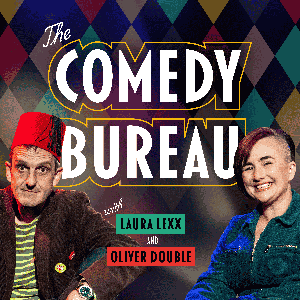


Welcome back to The Comedy Bureau! The office is now open for a fantastic second series with ten upcoming episodes all about different fascinating niche aspects of comedy.
In this episode we are discussing jesters and myth busting some of the assumptions you might have about the role of jesters in medieval courts in England.
In a Comedy Bureau first, Laura takes the lead on the research and tells Oliver Double all about jesters. In the process she learns what a fine art research is and how editing is key... as she hasn't finessed editing yet this is (we think) our longest episode to date. But, that's just more podcast for you.
We look at the very earliest records of jesters, what they did, what they were paid and how the role developed as courts and tastes changed.
Our main source for this episode was the fantastic book "Fools and Jesters at the English Court" by John Soulworth - very worth a read and incredibly easy to read too. Full details are here:
Soulworth, John (1998) Fools and Jesters at the English Court, The History Press Ltd
Our other sources for this episode were:
Otto, Beatrice K (2007) Fools Are Everywhere, The University of Chicago Press
American Journal of Sociology (1949) The Fool As A Social Type - Orrin E Klapp - https://www.jstor.org/stable/90026123
History Extra Magazine - Karen Maitland “What Was Life Like For a Court Jester” - https://www.historyextra.com/period/medieval/what-was-life-like-for-a-court-jester/
Douglass, Mary (1975) “Implicit meanings - essays in anthropology” University College London, Routledge & Kegan Paul Ltd
In this episode Laura mentions a few comedians and things that may be of interest:
Nick Page, here's Nick's website: https://nickpagecomedy.co.uk/
Mr Methane, she was right, he was on BGT, his website is here: https://www.mrmethane.com/
Mischief Theatre, can be found here: https://www.mischiefcomedy.com/
We really hope you're glad to see us back in your feed with our comedy nerdery specialist podcast. If you are enjoying what we're putting out, please take a moment to spread the word and give us a glowing review. See you next week!
In this very special between series Working From Home episode, we welcome another guest to The Comedy Bureau. Wayne is based in LA, and is basically the Comedy Bureau’s American cousin, we think. We’re so glad to have him on the show.
He started performing comedy in New York, in the 1980s before moving to LA to continue performing comedy and from there he’s gone on to do almost everything it’s possible to do in comedy. From acting, to late night shows, to improv to voice over… absolutely incredible.
But the most Bureau related of all Wayne’s very noteworthy achievements, is his book - The History of StandUp from Mark Twain to Dave Chappelle.
And, after our episode on the first stand-up comedian, Wayne got in touch and said would we be interested in hearing about Artemus Ward. And we are!
Wayne tells us all about Artemus Ward - an American columnist who got the idea to begin performing his writing after seeing his own writing performed by someone else in a minstrel show. We explore how this contains the beginnings of comedy and who it has influenced in the modern world of comedy before branching off into more general discussions of the differences between the US and UK comedy scene.
We really hope you enjoy this episode as much as we did, and remember to let us know if you have anything you want to hear us discuss. You can reach out to us at [email protected].
Wayne's book is The History of Stand Up Comedy: From Mark Twain to Dave Chappelle, and can be bought here: https://www.amazon.com/History-Stand-Up-Mark-Twain-Chappelle/dp/B08YRP1R2G/ref=tmm_pap_swatch_0?_encoding=UTF8&qid=&sr=
The other book Olly shows off in this episode is "The Victorian Clown" by Jacky Bratton and Ann Featherstone (Cambridge University Press, 2006), and can be found here: https://www.waterstones.com/book/the-victorian-clown/jacky-bratton/ann-featherstone/9780521816663
Merry Christmas from everyone at The Comedy Bureau! To celebrate the season of rest and love we are bringing you a very special episode recorded away from the famous offices of The Comedy Bureau. We went on a wonderful nerdy day out to The University of Kent, specifically to The Special Collections, to look at their incredible archives.
As it is Christmas, we thought what better subject than Pantomime! Joining us for the episode, as The Comedy Bureau’s first ever guest is Ben Roddy. Ben is an acclaimed actor, who has appeared in shows like Call The Midwife and films such as Absolutely Fabulous The Movie. However he's best known for his theatre performances. The reason we so badly wanted him to be included in our festive edition is that Ben is also a brilliant panto dame. He has been the resident dame at The Marlowe Theatre’s panto since… well, watch the episode and Olly will tell you!
You can find Ben on instagram at @BenRoddyActor, and he's represented by Nancy Hudson Associates.
In this episode we discuss the history, origins and development of pantomime. We also chat about the current state of panto - how financially important it is for most theatres and how it has changed over time with cultural developments.
We are truly grateful to the team at The Special Collections archive, especially Karen Brayshaw, for retrieving so many fascinating items for us to look at.
We will be back in 2026 with Series 2 - thank you for listening or watching so far. Please do like, subscribe and give us a good rating to help us grow. We really appreciate your support.
The Dave Lee mentioned at the beginning of the episode but not elaborated on is the comedian and actor Dave Lee (MBE) who performed in pantomimes in Kent for a large stretch of his career as well as appearing on television.
Ben mentions the Dame of Elaine C Smith, and he and Karen were absolutely right - Elaine is appearing in The Little Mermaid at The King’s Theatre, Glasgow from 22nd November 2025 to 4th January 2026.
Laura briefly mentions the Alternative Comedy Memorial Society in passing, if that name tickles your fancy and you want to learn more then check them out here: https://noblefailure.org/
Here are some links to both The Stand Up Comedy Archive and the David Drummond Pantomime Collection - both housed at The University of Kent and available for viewing by the general public.
https://www.kent.ac.uk/library/special-collections/british-stand-up-comedy-archive
https://www.kent.ac.uk/library/special-collections/theatre-and-performance-collections/david-drummond-pantomime-collection
This episode was edited by Lucas Orme. The music (including festive jingle bells) was by Oliver Double.
The offices of The Comedy Bureau are currently closed, with strict instructions from the caretaker not to disturb a single leaf on the peace lily until we begin series 2. However, we have had so much feedback from all of you since you listened to series 1 that we felt we really ought to address some of your concerns, enquiries and suggestions.
We begin by delving into the mailbag and looking at a suggestion from stand-up comedian and Fubar Radio host Andrew White. Andrew, and many others, suggested that Why Did The Chicken Cross The Road is NOT a meta joke as proposed by Olly, but actually a joke about death... Oliver Double debunks this theory.
We then look at a question from Mrs Double concerning the theory that laughter is based on respiratory system - and if that's true then could birds be feasibly considered to laugh? Would you like an episode all about bird laugher? Let us know.
We then field subjects like the origins of The Royal Variety Performance and Why is toilet humour so funny? Each of those will probably get a full in-office episode when we finally wrest the keys back from the caretaker and have full access to the files.
For the main part of our episode, we turn our attention to none other than Mr Greg Jenner. Greg Jenner is an acclaimed author, podcaster and writer who got in touch to nominate Samuel Foote for the list of potential first ever stand up comedians. And when Greg Jenner gives you a suggestion you simply have to follow it up... so here we go!
For all things Greg Jenner, begin at his website: https://www.gregjenner.com/
If you're in the market for a new comedian and want to seek out some Andrew White, his website can be found here: https://www.standupandrew.com/
If you would like to get in touch with us about anything you have heard on the podcast you can email us [email protected] - we would love to hear from you.
Our sources for this episode were:
Mr Foote's Other Leg by Ian Kelly
Mr Foote's Other Leg - Wikipedia https://share.google/qCYjfHUnO9vsMbLeV
Popular Performance, edited by Adam Ainsworth, Oliver Double and Louise Peacock
Popular Performance: : Adam Ainsworth: Methuen Drama - Bloomsbury https://share.google/4S45exvbLg281gzu2
If you’re a fan of standup comedy then you will be absolutely familiar with the stereotypical depiction of stand up happening in the basement of a club in front of a bare brick wall. But why are you so familiar with it? Why is that the signature style for stand up comedy?
In the final episode of this series, comedian Laura Lexx and academic Oliver Double discuss the specific circumstances that led to stand up and bricks becoming linked. From basement clubs like The Hungry i to The Improv to televised stand up shows and the bricks becoming iconic – we chart the way bricks and stand up came together out of folk and into our collective memory.
This is the last in the series from The Comedy Bureau and we really hope you have enjoyed these 10 episodes all about different niche facets of comedy. If you have had a good time PLEASE let us know, and let us know if you would appreciate a second series. We are a tiny enterprise – everything you have seen and heard is entirely self-motivated and self-funded and we rely on your sharing, enthusiasm, reviews and downloads to keep going. If you can review, rate, like, subscribe and share we will be incredibly grateful.
If you have ideas for future episodes you would like to see or questions on what you’ve already seen please let us know in the comments! You can follow us on social media The.Comedy.Bureau and you can email us [email protected]
We hope to see you for a second series very soon. All the best, Laura and Olly x
Our sources for this episode were:
• Friedman, Budd & Whetsell, Tripp (2017), “The Improv: An Oral History of the Comedy Club that Revolutionised Stand-Up”, BenBella Books"
• Gerald Nachman, Seriously Funny: The Rebel Comedians of the 1950s and 1960s (New York: Pantheon, 2003).
• Budd Friedman with Tripp Whetsell, The Improv: An Oral History of the Comedy Club that Revolutionized Stand-Up (Dallas, Texas: Benbella Books, 2017).
• Kliph Nesteroff, The Comedians: Drunks, Thieves, Scoundrel and the History of American Comedy (New York: Grove Press, 2015).
Podcast cover art by Adam Richardson
Artwork for The Comedy Bureau is by Matthew Grant at Tiny Worlds Workshop @tinyworldsworkshop.
Our video editor and credit sequence designer is Lucas Orme.
Music was devised and performed by Olly Double.
Huge thanks to the whole team at Podspike for invaluable advice and help launching and marketing the show.
All media enquiries via Julian Hall [email protected]
What an exceptional episode we have for you today… in 2023 Laura Lexx appeared on Celebrity Mastermind with her specialist subject being The History of Alternative Comedy. One of the most helpful books she read was Alternative Comedy: 1979 and the Reinvention of British Stand-Up by none other than Dr Oliver Double.
Cut to 2025 and she’s just a girl sitting before a lecturer begging him to tell her everything he knows about 1979 and the pivotal moment in comedy history that lead to what we now think of as mainstream comedy.
Our sources for this episode were:
• Rough Theatre Plays (1977), Open Head Press
• Double, Oliver & Lockyer, Sharon (2022) “Alternative Comedy Now and Then”, Critical Perspectives
• And Olly’s massive brain… he didn’t pull from so many books for this one because he’s a font of knowledge but if you want further reading, the books stacked on Olly’s desk are a great place to start.
The Comedy Store is still going strong - if you want to go and see a show at this legendary London venue then seek them out: https://london.thecomedystore.co.uk/
Podcast cover art by Adam Richardson
Artwork for The Comedy Bureau is by Matthew Grant at Tiny Worlds Workshop @tinyworldsworkshop.
Our video editor and credit sequence designer is Lucas Orme.
Music was devised and performed by Olly Double.
Huge thanks to the whole team at Podspike for invaluable advice and help launching and marketing the show.
All media enquiries via Julian Hall [email protected]
Stand-up comedian Laura Lexx brings this case file to the table to address one of the top questions she’s presented with when telling strangers what she does for a living… “Oh but you can’t say anything these days…” Or can you?
Academic Oliver Double sits down with Laura to discuss a history of censorship in stage comedy in the UK and USA. From the early years of front cloth comics and monologists, through the legal battles of Lenny Bruce, to the brilliant Billy Connolly. In this episode Laura and Oliver debate the common perception that speech has become less free and that we are far more monitored now on what we say than ever before.
Is this true? In what ways is speech in comedy monitored and censored? Crucially, is this criticism from a point of authority or the now amplified voices of the many but much less powerful general public?
Do you agree with Laura’s argument that it is not cancellation but capitalism that affects your bookings once the general public falls out with you? Let us know your thoughts in the comments below.
Our Sources for this episode are:
• Burgis, Ben (2021), “Cancelling Comedians While The World Burns, A Critique of the Contemporary Left”, Zer0 Books
• Bruce, Lenny (1975), “How To Talk Dirty and Influence People”, Harper Collins Distribution Services
• Goldman, Albert (from the journalism of Lawrence Schiller), 1974, “Ladies and Gentlemen, Lenny Bruce!!”, Random House
• Thomas, William Karl (1989), “Lenny Bruce - The Making of a Prophet”, Media Maestro
• Collins, Ronald K.L. (2002), “The Trials of Lenny Bruce”, Sourcebooks, Inc
• Lenny Bruce audio CD: Lenny Bruce, The Historic 1962 Concert When Lenny Was Busted, from Viper’s Nest
• Index on Censorship: 1 Nov 2000, Volume 29.06 Index on Censorship can be found here: https://www.indexoncensorship.org/
• Here is a link to the article about Billy Connolly from 2004: https://www.theguardian.com/stage/2004/nov/28/theatre.billyconnolly
Comedians Laura and Olly mention in this episode, just on the off chance you’ve not heard of them, are:
• Nish Kumar - @mrnishkumar
• Ross Noble - @mrrossnoble
• Sajeela Kershi - @sajeelakershi
Podcast cover art by Adam Richardson
Artwork for The Comedy Bureau is by Matthew Grant at Tiny Worlds Workshop @tinyworldsworkshop.
Our video editor and credit sequence designer is Lucas Orme.
Music was devised and performed by Olly Double.
Huge thanks to the whole team at Podspike for invaluable advice and help launching and marketing the show.
All media enquiries via Julian Hall [email protected]
Finishing up our mini-series in Comic Theory, this week Laura and Olly turn their attention to Superiority Theory.
This is the idea that people laugh because the stimulus made them feel better than or good in some way. They enter the chat with a brief discussion on status, particularly in double acts between a higher status straight man and a lower status funny guy.
Then we move on to the theorists and philosophers and we head right right back all the way to the words and explanations of Aristotle, Hobbes, Lorenz and Mintz as we explore the theory that laughter is inherently about superiority or aggression. Do we laugh to feel better about ourselves in comparison to others? Or, perhaps, in comparison to how we felt moments before the joke? Is all joking necessitated on a status imbalance and where does modern comedy fit in?
Laura and Olly round off this week’s chat with an analysis of Punching Up and Punching Down – a look at the importance of aiming your joke, no matter the subject, in the right direction.
We hope you have enjoyed these three episodes on joke theory, next week we will be moving on to a new subject, but nonetheless remaining very much in the weeds.
Subscribe now so you never miss an episode. See you then!
Our sources for this episode are:
• John Morreall (1987), The Philosophy of Laughter and Humor, Albany, NY: SUNY Press.
• Lorenz, Konrad (1966), “On Aggression”, Taylor & Francis Ltd
• Carroll, Noel (2014), “Humour a Very Short Introduction”, OUP Oxford
• Quirk, Sophie, (2018), “The Politics of British Stand-Up Comedy - The New Alternative”, Palgrave Studies in Comedy, Springer Nature Switzerland
• Barbara, Rashi & Chilana, Richa (2022), “Punching Up in Stand-Up Comedy - Speaking Truth to Power”, Routledge India Mintz,
• Lawrence E. (1985), “Standup Comedy as Social and Cultural Mediation”, American Quarterly"
Podcast cover art by Adam Richardson
Artwork for The Comedy Bureau is by Matthew Grant at Tiny Worlds Workshop @tinyworldsworkshop.
Our video editor and credit sequence designer is Lucas Orme.
Music was devised and performed by Olly Double.
Huge thanks to the whole team at Podspike for invaluable advice and help launching and marketing the show.
All media enquiries via Julian Hall [email protected]
podfollow.com/the-comedy-bureau
This week, The Comedy Bureau team continue their mini series looking at popular comic theories. Last week they explored Incongruity, and this week they move on to Relief Theory (sometimes called Release Theory).
The offices have an oniony scent this week due to some delicious sandwiches (shout out to Lavash in Brighton) but that doesn’t stop Oliver Double and Laura Lexx getting nerdy. They begin with Kant, and work through several theories of the purpose and physiology of laughter. From Kant, Freud and other philosophers and psychologists right through to modern day academics. They discuss laughter as a fluid running through the body, as an oscillation of the gut and as the answer to all of our structural racism issues.
Today’s episode ends with a discussion between Laura and Olly on the nature of jokes as a tool to boost agreement or dissension in groups. Is joking used to lance complicated feelings and stop bad feelings spilling out into the world or are they in actual fact for binding people and reinforcing a world view? Do we use laughter to dispel feelings that have been building up that could otherwise come out in harmful behaviour, or is it actually the complete opposite?
The sources we used in this episode are:
• John Morreall (1987), The Philosophy of Laughter and Humor, Albany, NY: SUNY Press.
• Martin, Steve “a Comic’s Life: Born Standing Up”, (2008) Simon & Schuster Ltd
• Freud, Sigmund (1976) The Pelican Freud Library Vol 6, “Jokes and their Relation to the Unconscious”, Penguin Books Ltd
• Comedy Studies, Volume 3, Issue 1 (2012) - “Max Miller Plays With Freud’s Obstacle: Innuendo and performance technique in variety comedy” Oliver Double
• Jacobson, Howard (1997) “Seriously Funny: From The Ridiculous to the Sublime”, Penguin Books Ltd"
Podcast cover art by Adam Richardson
Artwork for The Comedy Bureau is by Matthew Grant at Tiny Worlds Workshop @tinyworldsworkshop.
Our video editor and credit sequence designer is Lucas Orme.
Music was devised and performed by Olly Double.
Huge thanks to the whole team at Podspike for invaluable advice and help launching and marketing the show.
All media enquiries via Julian Hall [email protected]
Welcome back to the offices of The Comedy Bureau, staffed by comedian Laura Lexx and tame historian and comic lecturer Olly Double!
This week Laura and Olly decide to knuckle down and really focus on something that keeps rearing its head during their discussions of other aspects of comedy… comic theory. Why are things funny? What is funny? What is humour EXACTLY?
Now, it’s sort of another one of those impossible questions to answer and so Olly has the task of describing some of the popular comic theories to Laura. Even trying to describe all the theories would be a vaguely impossible task and so we have narrowed it down to just three options…
In this first episode of a three-part series on comic theory they focus in on Incongruity Theory. We’ve been kind to you in the first four episodes but this is where the show takes a hard turn down Nerd Avenue and then proceeds at a cautious 20mph all the way to Detail House.
We begin our comic theory exploration series with Koestler’s theory of bisociation and discuss how a lot of jokes revolve around using two planes of idea and then merging the two for a point of laughter. In the next two episodes in our comic theory series we will be looking at the Relief Theory and the Superiority Theory so don’t miss those coming up in the next few weeks.
In this episode our sources were:
• Koestler, Arthur (1970) “The Act of Creation”, Pan McMillan
• Morreall, John (1987), The Philosophy of Laughter and Humor, Albany, NY: SUNY Press
• Carroll, Noel (2014), “Humour a Very Short Introduction”, Oxford University Press
Comedians Laura mentioned in this show are:
Paul F Taylor - @paulyftaylor
Podcast cover art by Adam Richardson
Artwork for The Comedy Bureau is by Matthew Grant at Tiny Worlds Workshop @tinyworldsworkshop.
Our video editor and credit sequence designer is Lucas Orme.
Music was devised and performed by Olly Double.
Huge thanks to the whole team at Podspike for invaluable advice and help launching and marketing the show.
All media enquiries via Julian Hall [email protected]
From the publisher's feed