
Sign up to save your podcasts
Or

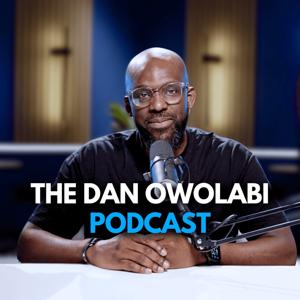


Most leaders are disciplined at work and falling apart everywhere else. In this episode, we expose the biggest myth holding leaders back: that discipline is a personality trait you're either born with or you're not.The truth? Discipline isn't something you feel. It's something you design. And if you've ever been laser-focused at the office but checked out at the dinner table, this conversation is for you. Stop waiting to feel disciplined. Start designing it.
Why do smart leaders still make destructive decisions?
In this episode, Dan Owolabi explores a hard truth about leadership: many of our worst behaviors do not come from ignorance. They come from emotional survival strategies disguised as logic.
Leadership has a way of revealing what is still unhealed, still insecure, still fear-driven, and still under construction. It does not create those issues out of nowhere. It exposes them.
This episode unpacks why high-capacity, intelligent, capable leaders can still self-sabotage through fear, control, avoidance, defensiveness, perfectionism, and the need to preserve image over integrity.
In this conversation, Dan breaks down:
why leadership pressure reveals what is really driving you
the difference between fear-based leadership and faith-based leadership
how unresolved wounds quietly shape decisions, culture, and trust
why success does not heal insecurity, but often amplifies it
how emotional survival strategies can masquerade as wisdom
the warning signs of emotional decision-making, including urgency,
defensiveness, and the need to be right
why emotional intelligence may be the real ceiling on your leadership growth
This episode is for leaders, entrepreneurs, founders, executives, pastors, and builders who want to lead with clarity, conviction, and integrity instead of fear.
Because the real danger in leadership is not always incompetence.
Sometimes it is intelligence mixed with insecurity.
Sometimes it is gifting mixed with fear.
Sometimes it is influence without healing.
And if those things go unaddressed, your people will eventually feel what you refuse to face.
In this episode, Dan Owolabi explores the difference between wise courage and reckless self-belief. Because not every bold move is faithful, and not every risk is leadership.
Some bets are rooted in preparation, alignment, and responsibility. Others are driven by ego, presumption, immaturity, or the desire to appear strong before we are actually ready.
This conversation unpacks the tension between faith and foolishness, courage and recklessness, confidence and true capacity.
In this episode, Dan breaks down:
why “bet on yourself” is only good advice when rightly framed
the difference between faith and presumption
why some risks produce growth while others produce damage
why capacity matters more than hype
why preparation must come before the leap
how leaders can evaluate whether a self-bet is wise or dangerous
the signals that you are ready for risk — and the signals that you are not
why courage is not ego in motion, but responsibility in motion
This is for leaders, entrepreneurs, founders, builders, and anyone facing a major decision that requires sacrifice, risk, and trust.
Because the real question is not whether you should bet on yourself.
The real question is whether you are prepared, aligned, and called to make that bet in the first place.
What if the thing many leaders praise most—urgency—is the very thing destroying their organizations?
In this episode, Dan Owolabi breaks down one of the most dangerous leadership myths in modern business: the belief that constant hustle, endless urgency, and nonstop motion are signs of real leadership.
They’re not.
Too many leaders confuse activity with progress, pressure with purpose, and grinding with vision. The result is a culture of exhaustion, reactive decision-making, unclear direction, and teams that are always moving but never meaningfully building.
This episode explores why urgency creates motion, but vision creates sustainability.
Dan unpacks:
why grinding is not the same as building
how urgency destroys clarity and long-term trust
why some organizations scale but never stabilize
how panic becomes culture when leaders lack healthy rhythms
what sustainable leadership actually looks like in practice
how leaders can build from vision instead of constantly reacting to crisis
This conversation is for leaders, entrepreneurs, founders, executives, and anyone trying to build something that lasts without destroying themselves and the people around them in the process.
If you’ve ever felt like you’re working harder than ever but getting further from clarity, this episode is for you.
If you’re leading but no one is following… you’re just out for a walk.
This episode is about becoming the kind of leader people actually trust—not because of your title, résumé, or expertise, but because of your consistency and emotional congruence.
We start with a powerful example from Tom Brady’s first days with the Tampa Bay Buccaneers: before he ever took a snap, he began building trust the way real leaders do—through connection, consistency, and presence. And that foundation changed everything.
In this video, we break down:
Authority vs Influence: titles can get compliance, but trust earns loyalty
Why credibility is emotional before it’s intellectual
How transparency creates commitment (people follow leaders who don’t pretend)
How authenticity builds momentum (emotional honesty unlocks buy-in)
Consistency as the foundation of trust (predictability creates psychological safety)
How to become an anchor in chaos when everything feels unstable
We also use two very prominent examples to show the difference between leading with authority vs leading with influence—and how to build credibility without forcing it.
If you want people to follow you without having to demand it, this is the blueprint.
What if the greatest threat to your leadership isn’t incompetence… but isolation?
In Episode 4 of The Dan Owolabi Podcast, we explore one of the most untalked about and undefined realities of leadership: the loneliness of being in charge.
Leadership isolates.
Isolation distorts perception.
Distorted perception increases risk.
As authority increases, honesty often decreases. Promotions come with an invisible tax: more power, fewer unfiltered voices. More influence, less authentic feedback. More visibility, less real community.
In this episode, Dan unpacks:
Why power naturally reduces honest feedback
The “feedback funnel” that filters reality the higher you rise
The emotional cost of always being “strong”
Why 50% of CEOs report loneliness — and how it impacts performance
How isolation warps decision-making and creates blind spots
The powerful accountability metaphor of the “three-lock mailbox”
Why every leader needs both an organizational team and a personal village
How Branches Worldwide builds relational ecosystems that protect leaders from isolation
Featuring stories from John Maxwell and leadership research from Arthur C. Brooks, James Kouzes, and Barry Posner, this 45-minute conversation challenges the hidden assumptions behind success and authority.
If you lead anything — a company, a church, a team, a family — this episode is for you.
Because solitude can strengthen you.
But isolation can slowly erode you.
The Psychology of Influence
Why people follow some leaders—and resist others
People don’t follow authority. They follow emotional safety wrapped in meaning.
In this episode, Dan Owolabi breaks down the real reason influence works: it’s not your title, your speeches, or even your vision—people follow the emotional weather system you create around them.
We often say people follow vision… but what they actually follow is a relationship and a leader they believe is safe and credible. As Kouzes & Posner put it: “People have to believe in their leaders before they will willingly follow them.”
The 3 subconscious questions every follower asks you:
1) Are you safe?
How great leaders reduce threat, stop escalation, and create “safety cues” that unlock trust.
2) Are you real? (Relational congruence)
Followers aren’t asking “Are you authoritative?”—they’re watching for “Are you authentic?” Are you the same person in every room?
3) Do you see me?
Why people work harder for leaders who make them feel understood, valued, and called upward.
We also get into:
Why trust is built in moments, not speeches
How micro-interactions shape credibility
Why consistency beats charisma (charisma gets attention; consistency keeps followers)
The neuroscience of resistance: how dominance + threat flips the “foe switch” and shuts down people’s best thinking
The difference between persuasion vs manipulation—and how to build influence without controlling people
The Apple comparison: how the best brands win trust through safety, consistency, and user experience
Dan also shares a personal story of getting removed from leadership—because he didn’t understand the psychology behind influence.
If you lead a team, run a business, manage people, or want to grow your influence without becoming performative or manipulative… this episode is for you.
Quick question for you:
What do you think matters more in leadership—being loved or being respected?
Subscribe for weekly episodes on leadership, identity, influence, decision-making, and building a life that wins at work and thrives at home.
In this episode, Dan talks about problems that arise in the lives of leaders... that don't ever really get talked about.
From the publisher's feed