
Sign up to save your podcasts
Or



Five dialysis patients went to a clinic expecting the treatment that kept them alive. Instead, they became victims of one of the most disturbing healthcare murders in modern American history.
In this episode of The Dark Side of Healthcare, Heather Skousen (MBA, Healthcare Administration) and co-host Dena Diamond along with guest Holly Todd, examine the shocking case of Kimberly Clark Saenz, the Texas dialysis nurse convicted of injecting bleach into patients' dialysis lines, killing five people and seriously injuring five others.
But this episode isn't just about one killer.
It's about the healthcare system that allowed her to remain employed despite multiple prior terminations, the regulatory gaps surrounding outpatient dialysis clinics, the limitations of nursing background checks, and the structural failures that put medically fragile patients at risk.
This podcast focuses on systems, accountability, and prevention. While Kimberly Saenz was ultimately convicted and sentenced to life without parole, the larger question remains:
How many opportunities existed to stop this before five patients lost their lives?
If you enjoy thoughtful discussions about healthcare, patient safety, healthcare fraud, medical ethics, and the structural forces that shape our healthcare system, subscribe to The Dark Side of Healthcare.
Kimberly Clark Saenz (case overview)
Texas Court of Appeals – Kimberly Clark Saenz v. State of Texas
CBS News – Kimberly Saenz sentenced to life in prison
Lufkin Daily Sentinel – Trial coverage
USC Schaeffer Institute – How Regulatory Failures Have Crippled Dialysis Care
National Council of State Boards of Nursing (Nursys)
CMS Medicare Care Compare (Find & Compare Dialysis Facilities)
The Dark Side of Healthcare explores the intersection of healthcare, crime, fraud, ethics, and patient safety. Our goal is not simply to tell true crime stories, but to examine what allowed them to happen—and what healthcare leaders, policymakers, providers, and patients can do to prevent them from happening again.
Dr. Death: The System That Built a Monster | The Dark Side of Healthcare
Most people know the story of Dr. Christopher Duntsch, the Dallas neurosurgeon known as "Dr. Death," whose catastrophic surgeries left dozens of patients permanently injured and claimed multiple lives. But this episode asks a different question:
How did the healthcare system allow it to happen?
In this episode of The Dark Side of Healthcare, hosts Heather Skousen and Dena Diamond, joined by guest Holly, move beyond the true-crime headlines to examine the institutional failures that allowed Duntsch to continue operating despite repeated warning signs. Rather than focusing only on the crimes, we investigate the credentialing process, peer review, medical licensing, malpractice law, and the regulatory gaps that failed to protect patients.
• The rise and fall of Christopher Duntsch ("Dr. Death")
This isn't simply the story of one dangerous physician.
It's the story of the healthcare systems that were supposed to stop him—and why they didn't.
If you're a healthcare leader, this episode challenges you to examine your own organization's patient safety processes. If you're a patient, it will give you practical tools for advocating for yourself before entrusting your care to any provider.
Because patient safety doesn't begin in the operating room.
It begins long before the first incision.
• Wikipedia – Christopher Duntsch (background, education, practice history)
• Oxygen True Crime – Everything We Know About Christopher Duntsch (trial details and surgeon testimony)
• Schlachter Law – The Remarkable Case of Dr. Christopher Duntsch (credentialing failures and Baylor reference letter)
• PAAMSS – Dr. Death: System Failures (credentialing loopholes and National Practitioner Data Bank reporting)
• WFAA Investigates – Dr. Death Highlights Loopholes Putting Patients at Risk
• Texas Observer – Anatomy of a Tragedy (Texas tort reform and legal accountability)
• KXAN Investigations – Texas Governor Signs Major Patient Safety Bill (HB 1998 reforms)
• Seyfarth Shaw – Texas Lawmakers Enact New Laws Reforming Texas Medical Board Disciplinary Authority
• Health Journalism – Dr. Death Reform Law Shows the Importance of Investigating State Licensing Boards
• PSQH – The National Practitioner Data Bank at 25 (underreporting and NPDB limitations)
🎙 The Dark Side of Healthcare explores healthcare crime, fraud, regulation, ethics, patient safety, and the structural failures that affect patients every day.
If you enjoyed this episode, please subscribe, leave a review, and share it with others. Every conversation helps bring greater transparency and accountability to healthcare.
The Dark Side of Healthcare – Episode 6: The Kickback Machine: How Pharma and Device Companies Buy Physician Behavior
How much influence does money have over medical decision-making?
In this episode of The Dark Side of Healthcare, Heather Skousen, Dena Diamond, and guest Holly examine one of the most controversial—and least understood—financial structures in American healthcare: the relationships between pharmaceutical companies, medical device manufacturers, and physicians.
From speaker programs and consulting agreements to device representatives in operating rooms, we explore how legal financial arrangements can shape prescribing patterns, referral behavior, and treatment decisions. We also break down the federal laws designed to prevent these conflicts—including the Anti-Kickback Statute and Stark Law—and why billions of dollars in settlements have failed to stop the underlying system.
This episode examines:
This conversation is not about accusing physicians of corruption. The vast majority of physicians are committed to providing excellent patient care. Instead, it's an examination of the financial incentive structures that surround clinical decision-making and how those incentives can influence even well-intentioned professionals.
If you've ever wondered whether financial incentives influence healthcare decisions, this episode provides the legal framework, research, and real-world examples to help you better understand one of the most powerful—and controversial—forces shaping American medicine today.
Resources discussed in this episode:
The Dark Side of Healthcare investigates the fraud, greed, power, and systemic failures that affect patients, providers, and taxpayers—using evidence, public records, and expert analysis to separate fact from fiction.
#Healthcare #MedicalEthics #HealthcareFraud #PharmaceuticalIndustry #MedicalDevices #PhysicianPayments #OpenPayments #FalseClaimsAct #StarkLaw #AntiKickbackStatute #PatientAdvocacy #HealthcarePolicy #TheDarkSideOfHealthcare
THE CANCER DOCTOR: HOW FARID FATA POISONED HUNDREDS AND THE SYSTEM THAT LET HIM
Imagine being told you have cancer.
Imagine enduring chemotherapy, injections, scans, and years of treatment—only to discover you never needed any of it.
In this episode of The Dark Side of Healthcare, Heather Skousen, Dena Diamond, and Holly Todd examine the shocking case of Dr. Farid Fata, a Detroit-area oncologist who fraudulently diagnosed and treated patients in order to generate millions of dollars in healthcare reimbursements.
Between 2009 and 2013, Fata administered unnecessary chemotherapy, unnecessary infusions, and unnecessary cancer treatments to hundreds of patients. He ultimately pleaded guilty to healthcare fraud, money laundering, and conspiracy charges, and received a 45-year federal prison sentence—the longest sentence ever imposed for Medicare fraud at the time.
But this episode is not simply about one corrupt physician.
It is about the healthcare systems that failed to stop him.
Together, the hosts examine Medicare's "pay first, audit later" payment model, gaps in physician oversight, hospital credentialing limitations, financial incentives within oncology reimbursement, barriers to obtaining second opinions, and the critical role a whistleblower played in exposing the scheme.
The discussion also explores what reforms have occurred since the case, what vulnerabilities still exist, and what patients can do to protect themselves when facing serious medical diagnoses.
This is a story about fraud, trust, accountability, and the consequences of a system that assumed a physician was telling the truth.
Sources and patient resources referenced in this episode are included in the show notes below.
COURT DOCUMENTS & GOVERNMENT LEGAL RECORDS
[1] United States v. Farid Fata. Case No. 2:13-cr-20600. U.S. District Court, Eastern District of Michigan.
[2] U.S. Department of Justice. "Michigan Oncologist Sentenced to 45 Years in Prison for $34 Million Medicare Fraud Scheme." July 10, 2015.
[3] U.S. Department of Justice. "Michigan Oncologist Pleads Guilty to $34 Million Medicare Fraud Scheme." September 5, 2014.
[4] Farid Fata sentencing statement. July 10, 2015.
CONGRESSIONAL & GOVERNMENT REPORTS
[5] U.S. Senate Finance Committee. "Misdiagnosed: The Role of Medicare in Preventing and Detecting Fraud by Physicians." September 2015.
[6] Office of Inspector General (OIG). "Vulnerabilities in Medicare's Claims Review Process."
[7] Government Accountability Office (GAO). Medicare Part B Drug Payments.
[8] Centers for Medicare & Medicaid Services (CMS). Fraud Prevention System Annual Report.
[9] Medicare Payment Advisory Commission (MedPAC). Part B Drug Payment Policy Issues.
[10] FBI Detroit Field Office. Farid Fata Case Summary.
JOURNALISM & LONG-FORM REPORTING
[11] Kaplan, Sheila. The New York Times, July 10, 2015.
[12] Rosen, Meghan. Detroit Free Press / USA Today Network.
[13] Baldas, Tresa. Detroit Free Press, July 10, 2015.
MEDICAL & POLICY RESEARCH
[14] Bach, Peter B. New England Journal of Medicine.
[15] Federation of State Medical Boards (FSMB).
[16] Lown Institute. Physician Discipline in the United States.
[17] Edmondson, Amy C. The Fearless Organization.
[18] Agency for Healthcare Research and Quality (AHRQ).
[19] The Joint Commission Medical Staff Credentialing Standards.
[20] National Association Medical Staff Services (NAMSS).
LEGISLATION & REGULATORY STANDARDS
[21] False Claims Act.
[22] HIPAA Privacy Rule.
[23] Improving Seniors' Timely Access to Care Act.
[24] CMS Conditions of Participation.
RESOURCES FOR LISTENERS:
Your Right to Access Medical Records:
Getting a Second Opinion on a Cancer Diagnosis:
American Society of Clinical Oncology Patient Resources:
Report Medicare Fraud:
Report Healthcare Fraud:
False Claims Act Whistleblower Information:
National Practitioner Data Bank:
Find Your State Medical Board:
THE ANGEL OF DEATH: CHARLES CULLEN AND THE SYSTEM THAT LET HIM KILL
Charles Cullen was a nurse.
Over a sixteen-year career spanning nine hospitals in New Jersey and Pennsylvania, he murdered patients entrusted to his care. He ultimately confessed to multiple murders, was sentenced to eighteen consecutive life terms, and may have been responsible for far more deaths than prosecutors were ever able to prove.
But this episode isn't just about Charles Cullen.
It's about the healthcare system that failed to stop him.
In this episode of The Dark Side of Healthcare, Heather Skousen, Dena Diamond, and Holly Todd examine one of the most disturbing healthcare crimes in modern history and the institutional failures that allowed it to continue for more than a decade.
Together, they explore the warning signs that were missed, the hospitals that failed to report concerns, the gaps in nursing oversight, the legal and cultural barriers to whistleblowing, and the fragmented systems that allowed Cullen to move from facility to facility despite repeated red flags.
The discussion also examines the victims, the healthcare professionals who eventually helped expose the truth, and the reforms that followed his arrest.
This is not simply the story of a serial killer.
It is the story of what happens when organizations prioritize self-protection over patient safety, when critical information remains siloed, and when no one has the authority—or the willingness—to connect the dots.
Sources, listener resources, and patient safety information referenced in this episode are included in the show notes below.
PRIMARY SOURCES & OFFICIAL DOCUMENTS
[1] New Jersey Office of the Attorney General. Report on the Investigation of Charles Cullen. Trenton, NJ, 2004.
[2] Somerset County Prosecutor's Office. Press release and charging documents, December 2003.
[3] NJ Superior Court. Sentencing records, State v. Charles Cullen, 2004 and 2006.
[4] N.J.S.A. 45:11-26. New Jersey Nurse Practice Act, reporting provisions.
[5] N.J.A.C. 13:45A. New Jersey Administrative Code, healthcare practitioner reporting requirements.
[6] New Jersey P.L. 2004, c.113.
[7] Health Care Quality Improvement Act of 1986.
[8] National Practitioner Data Bank Annual Reports.
BOOKS & LONG-FORM JOURNALISM
[9] Graeber, Charles. The Good Nurse: A True Story of Medicine, Madness, and Murder.
[10] Ramsland, Katherine. Inside the Minds of Healthcare Serial Killers.
[11] McFadden, Robert D. The New York Times, December 13, 2003.
[12] Associated Press coverage, December 2003.
[13] Philadelphia Inquirer sentencing coverage, 2006.
PEER-REVIEWED RESEARCH & MEDICAL LITERATURE
[14] Yorker, Beatrice Crofts, et al. "Serial Murder by Healthcare Professionals."
[15] Leape, Lucian L., et al. New England Journal of Medicine.
[16] To Err Is Human: Building a Safer Health System.
[17] Leape, Lucian L., et al. JAMA.
[18] Edmondson, Amy C. Administrative Science Quarterly.
[19] Edmondson, Amy C. The Fearless Organization.
POLICY, REGULATORY & GOVERNMENT REPORTS
[20] U.S. Government Accountability Office (GAO).
[21] GAO-05-79.
[22] The Joint Commission Sentinel Event Alert #45.
[23] Joint Commission Sentinel Event Standards.
[24] Agency for Healthcare Research and Quality (AHRQ).
[25] Centers for Medicare and Medicaid Services (CMS).
[26] Institute for Safe Medication Practices (ISMP).
[27] Nurse Licensure Compact (NLC).
ORGANIZATIONAL THEORY & ADDITIONAL SCHOLARSHIP
[28] Reason, James T. Human Error.
[29] Reason, James T. British Medical Journal.
[30] Vaughan, Diane. The Challenger Launch Decision.
[31] Sage, William M. Columbia Law Review.
[32] Liang, Bryan A. Journal of Health Law.
[33] Dworkin, Terry Morehead, and Janet P. Near.
MEDIA & DOCUMENTARY
[34] The Good Nurse (Netflix, 2022).
Resources for Listeners
National Practitioner Data Bank:
Nurse Licensure Compact:
The Joint Commission:
Institute for Safe Medication Practices:
Patient Advocate Foundation:
OSHA Whistleblower Protection Programs:
Agency for Healthcare Research and Quality:
THE LAW THEY PASSED AND THE LOOPHOLES THEY BUILT: THE NO SURPRISES ACT
In 2022, the No Surprises Act took effect with a simple goal: protect patients from unexpected medical bills.
For many patients, it worked.
But what happens when industries begin finding ways around the very protections lawmakers intended to create?
In Episode 3 of The Dark Side of Healthcare, Heather Skousen, Dena Diamond, and Holly Todd examine one of the most significant healthcare reform laws in recent history and the growing list of loopholes, exemptions, and unintended consequences that have emerged since its implementation.
The discussion explores how surprise billing worked before the law, what protections the No Surprises Act actually provides, and why many patients remain vulnerable despite federal reforms. Topics include consent forms that can waive surprise billing protections, the exclusion of ground ambulance services from the law, and the rapid growth of the Independent Dispute Resolution (IDR) process designed to settle payment disputes between providers and insurers.
The episode also examines how private equity-backed healthcare organizations, insurers, and regulators have responded to the law, along with the downstream impact on healthcare costs, provider networks, and patient access to care.
Whether you're a patient, healthcare leader, provider, or simply someone trying to understand your rights when unexpected medical bills appear, this episode provides practical information on how the law works—and where it still falls short.
Sources and patient resources referenced in this episode are included in the show notes below.
Sources and Links:
BMJ Study (August 2025) – Impact of the No Surprises Act on Out-of-Pocket Spending
Consumer Financial Protection Bureau (CFPB) – Patient Rights and Surprise Billing Protections
Centers for Medicare & Medicaid Services (CMS) – No Surprises Act Guidance and Enforcement Resources
Federal Independent Dispute Resolution (IDR) Process Information
Ground Ambulance and Patient Billing Research
Colorado Ground Ambulance Protection Legislation (2025)
Industry and Arbitration Data Related to Independent Dispute Resolution Utilization
Private Equity and Healthcare Arbitration Reporting
No Surprises Act Consumer Information:
Submit a No Surprises Act Complaint:
Consumer Financial Protection Bureau:
If you believe you received a surprise bill that should be protected under the No Surprises Act, contact your health plan first and then file a complaint with CMS if the issue is not resolved. Patients have rights under federal law, but those protections only work when people know they exist.
THE MEDICARE ADVANTAGE TRAP: OVERBILLING WASHINGTON, UNDERPAYING YOU
More than half of all Medicare beneficiaries are now enrolled in Medicare Advantage plans. But how many truly understand how these plans work?
In Episode 2 of The Dark Side of Healthcare, Heather Skousen, Dena Diamond, and Holly Todd examine one of the fastest-growing and most controversial sectors in American healthcare.
Together, they explore the business model behind Medicare Advantage, the billions of dollars in federal fraud settlements involving risk-score manipulation, and the growing concerns surrounding marketing practices aimed at seniors. They discuss how Medicare Advantage plans are paid, why risk scores matter, and how some of the nation's largest healthcare organizations have faced allegations that they inflated patient diagnoses to collect higher payments from the federal government.
The conversation also examines what many seniors discover only after enrolling: prior authorizations, network restrictions, coverage limitations, and the challenges of returning to traditional Medicare after switching plans.
Most importantly, the episode provides practical information for patients and families currently navigating Medicare decisions, including questions to ask before enrolling and what options are available when medically necessary care is denied.
Whether you're approaching Medicare age, helping a parent make healthcare decisions, or simply trying to understand where taxpayer dollars are going, this episode offers an inside look at a system that now impacts millions of Americans.
Sources and Medicare appeal resources referenced in this episode are included in the show notes below.
Source Links:
Kaiser Permanente $556 Million Settlement — KFF Health News (January 15, 2026)
Kaiser Permanente $556 Million Settlement — STAT News (January 14, 2026)
Kaiser Permanente $556 Million Settlement — Fierce Healthcare
DOJ False Claims Act Settlements FY2023 — Official DOJ Press Release
Healthcare Dive — FCA Healthcare Settlements 2023 (including Cigna $172M)
Senate Finance Committee — "Deceptive Marketing Practices Flourish in Medicare Advantage" Report (November 2022)
Senate Finance Committee — Press Release on Deceptive Marketing Report (November 2022)
Senate Finance Committee — Marketing Middlemen Investigation (March 25, 2025)
Senate Finance Committee — Full Marketing Middlemen Report PDF (March 2025)
Resources:
For the official Medicare appeals starting point:
For the external/independent review specifically (Part C IRE):
For the new Part C IRE contractor (updated as of May 2026):
Here are a few audio links of additional material worth listening to:
DENY FIRST, ASK NEVER: THE PRIOR AUTHORIZATION MACHINE
Prior authorization was originally created to ensure appropriate care. Today, many patients, providers, and healthcare leaders argue it has become something very different.
In the premiere episode of The Dark Side of Healthcare, Heather Skousen who has over 20 years of experience in healthcare administration is joined by insurance and prior authorization specialist Dena Diamond and true-crime enthusiast Holly Todd to examine one of the most controversial systems in American healthcare.
Together, they explore:
This episode is not about politics. It is about understanding how healthcare systems operate, where they break down, and how those failures affect patients, providers, and healthcare organizations every day.
Whether you're a patient, caregiver, clinician, healthcare leader, or simply someone trying to understand why obtaining care can be so difficult, this episode provides an inside look at one of the most powerful—and least understood—forces in modern healthcare.
Sources and Medicare appeal resources referenced in this episode are included in the show notes below.
Show Notes:
Sources
Resources:
For the official Medicare appeals starting point:
For the external/independent review specifically (Part C IRE):
For the new Part C IRE contractor (updated as of May 2026):
Here are a few audio links of additional material worth listening to:
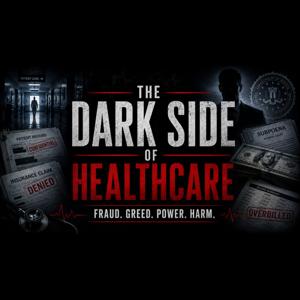
The Dark Side of Healthcare explores the hidden systems, incentives, and failures that shape modern healthcare. Join Heather Skousen, Dena Diamond, and Holly Todd as they investigate the stories behind insurance denials, healthcare fraud, corporate misconduct, and the policies that impact patients long before they ever see a doctor.
From the publisher's feed
The Dark Side of Healthcare
Healthcare is built on trust.
Patients trust providers with their lives. Families trust healthcare organizations to do the right thing. Communities trust the systems designed to protect them.
But what happens when those systems fail?
Hosted by Heather Skousen, MBA, a healthcare executive with more than 20 years of leadership experience and a Bachelor's degree in Criminal Justice, alongside Dena Diamond, a healthcare revenue cycle specialist with more than 18 years of experience in insurance benefits, prior authorization, and patient access, The Dark Side of Healthcare examines the stories that reveal the hidden vulnerabilities within healthcare.
Through investigative storytelling, case reviews, and candid discussion, we explore fraud, corruption, patient harm, abuse of power, regulatory failures, insurance barriers, healthcare policy, leadership breakdowns, and crimes that intersect with healthcare.
Some episodes involve healthcare-related murders and other criminal acts. But this is not a traditional true crime podcast. We are less interested in the perpetrator than we are in the system that allowed the event to occur.
What warning signs were missed?
What safeguards failed?
Who was responsible for oversight?
What organizational, financial, cultural, or regulatory factors created the conditions that made the tragedy possible?
Each episode brings together three distinct perspectives. Heather provides insight from healthcare leadership and operations. Dena offers expertise from the front lines of insurance, prior authorization, and revenue cycle management. Completing the panel is our resident true-crime enthusiast, Holly, who is intentionally not told the case beforehand. Hearing the details in real time alongside the audience, she asks the questions many listeners are already thinking and provides an authentic outside perspective on complex healthcare issues.
Together, we go beyond the headlines to examine not only what happened, but why it happened, what should have prevented it, and what lessons healthcare professionals, policymakers, patients, and organizations can learn from it.
Whether you work in healthcare, advocate for patients, study criminal justice, or simply want to better understand the system that impacts all of us, The Dark Side of Healthcare offers a deeper look at the stories most people never hear—and the lessons we cannot afford to ignore.
Fraud. Greed. Power. Harm.
Because the most important question isn't what happened. It's why it happened—and what should have stopped it.