
Sign up to save your podcasts
Or



Seventy-five years after the foundation of the United Nations, host Anne McElvoy and Daniel Franklin, The Economist’s diplomatic editor, ask Secretary-General Guterres whether the organisation still works. The dysfunctional relationship between its three dominant powers, America, China and Russia, has dangerous consequences—does the UN need to reinvent itself to work with them? And could the WHO’s relationship with China have undermined its efforts to stop the spread of the coronavirus?
Please subscribe to The Economist for full access to print, digital and audio editions: www.economist.com/podcastoffer
Hosted on Acast. See acast.com/privacy for more information.
How can business be braver on race? Anne McElvoy asks Mellody Hobson, co-CEO of Ariel Investments, whether investors should divest from companies that don’t do enough to address racial inequality. Hobson also explains the challenges of managing diverse views, in particular when it comes to investing in the tobacco industry. And, what does she learn from Lenin?
Please subscribe to The Economist for full access to print, digital and audio editions:
www.economist.com/podcastoffer
Hosted on Acast. See acast.com/privacy for more information.
The seismic shock of the coronavirus pandemic has revealed the fragility of an interconnected world. Anne McElvoy and economist Jeffrey Sachs debate whether globalisation is still worth the risks—and whether liberal economists should bear some of the blame. And could the end of American leadership on the world stage help President Donald Trump’s re-election effort?
Please subscribe to The Economist for full access to print, digital and audio editions:
www.economist.com/podcastoffer
Hosted on Acast. See acast.com/privacy for more information.
Valerie Jarrett was President Obama's longest serving senior adviser, with responsibility for criminal justice and police reform. In the wake of the killing of George Floyd and protests across the country, Anne McElvoy asks whether this moment could be a turning point on racial equality in America and which changes to policing would have the most effect. Also, how does the outcry affect President Trump’s chances of reelection—and how does she assess Joe Biden's record on race?
Please subscribe to The Economist for full access to print, digital and audio editions:
www.economist.com/podcastoffer
Hosted on Acast. See acast.com/privacy for more information.
America’s independent restaurants face a future in which half their tables stand empty. Anne McElvoy asks award-winning chef and restaurateur Marcus Samuelsson how restaurants can reinvent their business models to survive. They talk about converting chic eateries into community kitchens in the covid-19 crisis and why he thinks Joe Biden deserves a chance. Also, what does Mr Samuelsson make of racial tensions following the fatal police brutality case in Minnesota? And he takes Anne McElvoy on a culinary tour from chicken stew in his native Ethiopia via Swedish lingonberry vodka to red-velvet cake in Harlem.
For more on the pandemic, see The Economist's coronavirus hub.
Please subscribe to The Economist for full access to print, digital and audio editions:
www.economist.com/radiooffer
Hosted on Acast. See acast.com/privacy for more information.
The writer of “The Wire” and “The Deuce” takes a break from the dark side of real life to explore an alternative history in which Franklin D Roosevelt lost the 1940 presidential election to an anti-Semitic isolationist—on a platform to lead America towards fascism. As the country prepares for a very different election, Anne McElvoy asks David Simon about the roots of anti-immigrant feeling in America and whether individuals can change the course of history. Plus, when does a storyteller need to learn to let go? And they swap lockdown binge-watching favourites from the streaming archives.
For more on the pandemic, see The Economist's coronavirus hub.
Please subscribe to The Economist for full access to print, digital and audio editions:
www.economist.com/radiooffer
Hosted on Acast. See acast.com/privacy for more information.
Liberty is curtailed around the world during the global pandemic. With the costs of lockdown mounting, Americans are divided over how far and how fast to reopen. Anne McElvoy asks Dan Crenshaw, a rising star in the Republican ranks in Congress, whether the coronavirus is forcing conservatives to embrace a new era of big government. As his own state of Texas eases restrictions, the congressman argues Americans are ready to accept the risks. Plus, is a post-oil future possible for the Lone-Star State? And why, though born in Scotland, he could still have the White House in his sights.
For more on the pandemic, see The Economist's coronavirus hub.
Please subscribe to The Economist for full access to print, digital and audio editions:
www.economist.com/radiooffer
Hosted on Acast. See acast.com/privacy for more information.
Seventy-five years after the end of the second world war in Europe, armed forces around the world have been mobilised to fight a new common enemy. Anne McElvoy asks General Sir Nick Carter, Britain's chief of the defence staff, what lessons past wars hold for conquering the coronavirus. He explains the work of the secretive 77 Brigade in fighting disinformation and his view on rumours about the origins of the coronavirus. Plus, why neither NATO nor Russia is "taking its foot off the gas” during the pandemic. And, how he will be commemorating VE Day virtually.
For more on the pandemic, see The Economist's coronavirus hub.
Please subscribe to The Economist for full access to print, digital and audio editions:
www.economist.com/radiooffer
Hosted on Acast. See acast.com/privacy for more information.
In a year of plagues, power struggles and star-crossed lovers divided by lockdown, Anne McElvoy asks James Shapiro, author of “Shakespeare in a Divided America”, what the bard would make of it all. Shakespeare is claimed by Americans of all political stripes. But how can a lad from 16th-century Stratford-upon-Avon illuminate the past and future of the republic now? Plus, what the president might teach the professor about Shakespeare’s work. And, Shapiro prescribes a verse for the trials and tribulations of 2020.
For more on the pandemic, see The Economist's coronavirus hub.
Please subscribe to The Economist for full access to print, digital and audio editions: www.economist.com/radiooffer
Hosted on Acast. See acast.com/privacy for more information.
As billions of people remain in lockdown to stem the coronavirus, Anne McElvoy asks the Chilean author whether imagination is the cure for isolation. Allende, who lives in California, talks about why she loves her adopted home and her hopes for the political future of Latin America. Plus, long lunches, hard truths with Pablo Neruda, and the urgent beauty of falling in love and getting married again in her seventies.
For more on the pandemic, see The Economist's coronavirus hub.
Please subscribe to The Economist for full access to print, digital and audio editions: www.economist.com/radiooffer
Hosted on Acast. See acast.com/privacy for more information.
From the publisher's feed
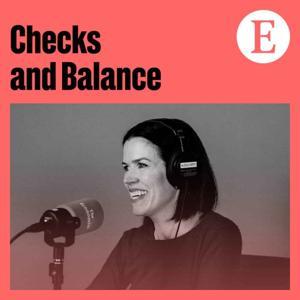
One question posed to a high-profile newsmaker, followed up with lively debate. Anne McElvoy hosts The Economist's chat show. Recent guests include Henry Kissinger, Chris Patten and Maggie…
Sign up for Economist Podcasts+ at www.economist.com/podcastsplus
If you’re already a subscriber to The Economist, you’ll have full access to all our shows as part of your subscription.

7,618 Listeners

4,112 Listeners
926 Listeners
285 Listeners
583 Listeners
134 Listeners

111,865 Listeners
108 Listeners
2,540 Listeners

47 Listeners
1,077 Listeners
1,409 Listeners
135 Listeners
115 Listeners

102 Listeners
37 Listeners
470 Listeners
894 Listeners

371 Listeners
500 Listeners

78 Listeners
139 Listeners
72 Listeners

100 Listeners

261 Listeners