
Sign up to save your podcasts
Or

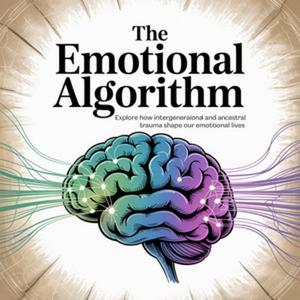


Welcome to Generational Healing , an episode about the invisible threads that connect us to the people who came before us. Sometimes the reactions we have today feel bigger than the moment in front of us. A small criticism lands like a deep wound. A conflict feels like danger. Certain fears seem to appear without warning. In those moments, it can help to remember that not every emotional pattern begins with us. Some of what we carry may be shaped by intergenerational trauma, ancestral trauma, and the survival strategies passed down through families over time.
The first thing to understand is that trauma is not only an event; it is also a pattern the nervous system learns. When people experience chronic stress, loss, violence, displacement, poverty, or emotional neglect, their bodies adapt to stay safe. Those adaptations can look like hypervigilance, emotional shutdown, perfectionism, people-pleasing, or difficulty trusting others. Over time, these responses can become family habits. Children do not just hear stories from their parents and grandparents; they also absorb tone, tension, silence, and the way emotions are handled. This is one reason generational healing matters so much: it helps us notice which patterns are protective and which ones are no longer serving us.
Neuroscience gives us a useful lens here. The brain and body are constantly scanning for safety. The amygdala helps detect threat, while the prefrontal cortex supports reflection and regulation. When a person has lived through trauma, the brain can become quicker to sound the alarm and slower to calm down. That means an emotional reaction may be less about the present moment and more about a nervous system remembering the past. This is not weakness, and it is not a character flaw. It is the biology of adaptation. Understanding this can reduce shame and open the door to compassion, which is often the first step in healing inherited patterns.
Another important piece of generational healing is emotional psychology. Many families teach coping without ever naming it as coping. A parent who never learned how to express grief may teach a child to stay strong and stay quiet. A grandparent who survived instability may pass down the belief that rest is unsafe or that asking for help is selfish. These beliefs can become emotional rules that shape identity for decades. Healing begins when we start asking honest questions: What did my family need to survive? What did they have to suppress? And which of those strategies am I still living by, even though my life is different now?
The encouraging part is that patterns can change. Healing does not mean rejecting our ancestors or blaming the people who raised us. It means honoring the pain that shaped them while choosing something more conscious for ourselves. Practices like therapy, mindfulness, breathwork, journaling, somatic awareness, and safe relationships can help regulate the nervous system and create new responses. Every time we pause before reacting, name a feeling, or choose connection over defense, we are interrupting an old cycle. That is generational healing in action.
And perhaps that is the most hopeful truth of all: what was inherited can be transformed. We may not be able to rewrite the past, but we can change what gets carried forward. Healing one person can ripple through an entire family line. When we learn to understand our emotions, soften our defenses, and respond with more awareness, we are not only helping ourselves. We are creating a different emotional legacy for the generations that come next.
When people hear the phrase trauma science, they often think of dramatic events, crisis, or the kind of pain that is easy to name. But trauma is not only about what happened to us directly. It can also live in the body, shape our emotions, and influence the way we respond to the world long after the original experience has passed. In this episode, we’re looking at how intergenerational trauma, ancestral trauma, and emotional psychology connect with what neuroscience is learning about the brain, the nervous system, and healing.
One of the most important ideas in trauma science is that trauma is not just a memory; it is a pattern. When a person experiences overwhelming stress, the brain and body adapt for survival. That can mean becoming hyper-alert, shutting down emotionally, or reacting strongly to situations that feel even remotely similar to past danger. These responses are not signs of weakness. They are learned survival strategies. The brain’s job is to protect us, and sometimes it keeps using old protective wiring even when the original threat is gone.
This is where emotional psychology helps us understand the deeper layer. Emotions are not random waves that appear out of nowhere. They are signals, shaped by experience, attachment, and meaning. If someone grows up in an environment where fear, silence, or instability is common, their emotional system may learn that safety is unpredictable. Over time, that can affect self-worth, relationships, and the ability to regulate feelings. In trauma science, we begin to see that emotional patterns are often intelligent adaptations to earlier environments, not personal flaws.
Intergenerational trauma adds another powerful dimension. Families do not only pass down stories and traditions; they can also pass down stress responses, beliefs, and coping styles. A parent who learned to survive by staying guarded may unintentionally teach a child that vulnerability is unsafe. A family that lived through war, displacement, discrimination, or chronic poverty may carry a heightened sense of vigilance across generations. The science suggests that trauma can be transmitted through behavior, relationships, and possibly even biological mechanisms related to stress regulation. That means healing is not only personal. It can be generational.
So what does healing inherited patterns actually look like? It starts with awareness. Naming a pattern reduces shame and creates space for choice. Then comes regulation: learning how to calm the nervous system through breath, movement, rest, therapy, connection, and mindful attention. Healing also means telling the truth about what happened, especially in families where pain was minimized or hidden. When people begin to understand their responses through the lens of trauma science, they often feel less broken and more compassionate toward themselves. That compassion is not the end of the process; it is the beginning.
The hopeful message is that trauma is powerful, but it is not destiny. Brains can change. Nervous systems can relearn safety. Relationships can become corrective experiences. And patterns that were once inherited unconsciously can be transformed with intention, support, and time. The science of trauma reminds us that healing is not about erasing the past. It is about helping the body and mind discover that the past does not have to control the present. And that possibility, in itself, is profoundly healing.
Some beliefs feel like they were chosen. Others feel like they arrived with us, already familiar, already heavy. In this episode, we’re talking about inherited beliefs: the ideas, fears, and emotional rules we absorb from our families, our cultures, and sometimes even from generations we never met. These beliefs can shape how we love, how we cope, how we speak to ourselves, and what we think is possible. And while they may begin as survival strategies, they can quietly become limits.
One of the most important things to understand is that inherited beliefs are often rooted in protection. If a family lived through poverty, war, displacement, addiction, violence, or chronic instability, certain emotional messages may have been passed down not as philosophy, but as survival advice. “Don’t trust people.” “Stay quiet.” “Work harder than everyone else.” “Feelings are dangerous.” These beliefs can make sense in the context they came from. The problem is that they often outlive the danger they were designed to manage.
Neuroscience helps explain why these patterns can feel so automatic. Our brains are built to detect threat and seek safety, and emotional memory is powerful. Repeated experiences wire the nervous system to expect certain outcomes. Over time, the brain learns shortcuts: what to fear, what to avoid, what to hide, and what to believe about ourselves. That means inherited beliefs are not just ideas floating around in the mind. They can live in the body as tension, vigilance, shutdown, or overachievement. When someone says, “I don’t know why I react this way,” the answer is often layered in both personal history and ancestral experience.
Intergenerational trauma adds another dimension. Trauma does not always end with the person who lived through it. It can echo through parenting styles, family silence, emotional unavailability, and relationship patterns. A parent who was never comforted may struggle to comfort. A grandparent who had to suppress emotion to survive may teach, without words, that vulnerability is unsafe. Children then grow up interpreting these behaviors as truth. They may internalize inherited beliefs like “my needs are too much,” “love must be earned,” or “I have to stay small to stay safe.”
Healing begins with noticing. Noticing which beliefs are actually yours, and which ones were handed to you. Noticing the moments your body braces before your mind can explain why. Noticing the difference between a real present-day threat and an old emotional script. This is where therapy, reflection, and somatic awareness can be so powerful. When we bring compassion to these patterns, we stop treating them as personal flaws and start seeing them as learned adaptations. And what was learned can be unlearned.
That doesn’t mean the work is quick or easy. Releasing inherited beliefs can feel like disloyalty at first, especially if your family system equated suffering with strength or silence with love. But healing is not betrayal. It is continuation with awareness. It is saying, “I understand why this was passed to me, and I choose something different now.” That choice can interrupt patterns that have lasted for generations.
If you’ve been carrying inherited beliefs that keep you small, ashamed, or afraid, know this: they are not your identity. They are information. And with care, curiosity, and support, you can begin to write a new emotional inheritance—one grounded in safety, truth, and self-trust.
We often think of stress as something that begins and ends with our own experience. A difficult job, a painful relationship, a season of uncertainty. But what if some of the pressure we carry did not start with us? What if part of our emotional life has been shaped by the fears, losses, and survival strategies of the people who came before us? That is the heart of inherited stress: the idea that trauma can echo across generations, influencing how we react, connect, and cope today.
One important place to start is the body. Emotional pain is not just a thought or a memory; it is also a physiological experience. When someone lives through chronic danger, loss, or instability, the nervous system learns to stay alert. Over time, that state of vigilance can become a default setting. In families and communities shaped by war, displacement, poverty, discrimination, or abuse, children may grow up absorbing that alertness even if they never lived through the original event. They may inherit the tone of the household: tension, silence, overprotection, or emotional distance. The body remembers patterns, even when the story is not fully spoken.
Neuroscience helps explain why this matters. Our brains are built for survival, and they adapt quickly to repeated experiences. If early life is marked by unpredictability, the brain may become more sensitive to threat and less able to settle into calm. That can show up as anxiety, irritability, shutdown, or difficulty trusting safety when it appears. The good news is that the brain is also flexible. Through relationships, reflection, and new experiences, it can form different pathways. In other words, inherited stress is real, but it is not a life sentence.
Another layer is emotional psychology. Many inherited patterns are not passed down as dramatic stories; they are transmitted through habits, beliefs, and unspoken rules. A family might teach, without meaning to, that emotions are dangerous, that rest is laziness, or that asking for help is weakness. A child raised in that environment may become highly self-reliant, perfectionistic, or disconnected from their own needs. These patterns often begin as intelligent adaptations. They helped someone survive. But what once protected a family may later limit intimacy, joy, and self-understanding. Healing begins when we notice the difference between what is truly ours and what was learned for survival.
So how do we work with inherited stress? First, with compassion. It is hard to change what we judge. When we understand that some of our reactions are inherited responses to old pain, we can meet ourselves with more patience. Second, with curiosity. Practices like therapy, journaling, body awareness, and family history work can reveal patterns that were previously invisible. And third, with new experiences of safety. Supportive relationships, consistent routines, mindfulness, movement, and restorative rest all help the nervous system learn that the present is not the past.
Inherited stress may have roots in generations before us, but healing can also travel forward. Every time we name a pattern, soften a reaction, or choose a different response, we interrupt the cycle. We do not erase the past, but we can change what it becomes in us. That is the quiet power of healing: not just understanding where we came from, but deciding what we carry next.
When we talk about human behavior, it can be tempting to think of it as something entirely personal, like a collection of choices, habits, and reactions that belong only to us. But the truth is often more layered than that. So much of what we call “who we are” is shaped not only by our own experiences, but by the emotional worlds we inherit, the family systems we grow up in, and even the stress patterns passed down across generations. In this episode, we’re exploring how intergenerational trauma, ancestral trauma, emotional psychology, and the neuroscience of emotions all connect to influence human behavior, and what healing can look like when we begin to understand those hidden layers.
One of the most important ideas to understand is that trauma doesn’t just live in memory; it can live in the body and in the nervous system. When a person experiences chronic stress, neglect, violence, or instability, the brain adapts to survive. Over time, those survival adaptations can become default patterns: hypervigilance, emotional shutdown, people-pleasing, perfectionism, or difficulty trusting others. These are not random personality flaws. They are often intelligent responses to earlier pain. And when those responses are repeated in families over time, they can become part of the emotional inheritance that shapes human behavior across generations.
This is where intergenerational and ancestral trauma come into focus. Families don’t just pass down eye color or a last name; they also pass down beliefs, coping strategies, and emotional expectations. A parent who never learned how to regulate fear may unconsciously teach a child that the world is unsafe. A grandparent who survived scarcity may pass on anxiety around money, control, or loss. In some cases, the original trauma may be far in the past, but its effects continue through stories, silence, and patterns of relating. Ancestral trauma reminds us that human behavior is not only individual psychology; it is also shaped by collective history, culture, migration, loss, and survival.
Neuroscience helps explain why these patterns can feel so hard to change. The brain is built to detect danger and preserve safety, and emotional experiences leave strong neural pathways. When a certain situation reminds the nervous system of past pain, the brain can react before the conscious mind has time to analyze what is happening. That is why someone may know, logically, that they are safe, yet still feel panic, shutdown, or anger. Emotional psychology shows us that feelings are not just reactions; they are signals. They tell us what the nervous system has learned, what it fears, and what it needs. Understanding this can bring compassion to human behavior that once seemed confusing or self-defeating.
Healing inherited patterns begins with awareness, but it does not end there. It means noticing your triggers without shame, learning how your body responds to stress, and creating new experiences of safety, connection, and choice. Therapy, mindfulness, breathwork, somatic practices, journaling, and healthy relationships can all help rewire old patterns over time. Just as trauma can be passed down, so can healing. Every time someone responds with more awareness, more regulation, and more compassion, they interrupt the cycle. That is how human behavior changes: not through blame, but through understanding, practice, and care.
At the heart of this conversation is a hopeful truth. You are not only the product of what hurt you. You are also the beginning of what can heal. When we understand the deeper roots of human behavior, we make room for empathy, responsibility, and transformation. And sometimes, that is where real freedom begins.
When we talk about behavior science, we’re really talking about the hidden logic behind what people do, feel, and repeat. In this episode, we’re looking at a question that reaches far beyond individual habits: how do intergenerational trauma and ancestral trauma shape the emotional patterns we carry, often without realizing it? The answer sits at the intersection of emotional psychology, neuroscience, and the deeply human drive to survive. What looks like a personality trait, a family rule, or even a “just the way I am” response may actually be part of a pattern passed down through generations.
One of the most important ideas in behavior science is that behavior is adaptive. That means many of the reactions we label as problematic were once protective. If a parent, grandparent, or even earlier ancestor lived through war, displacement, abuse, poverty, or chronic instability, the nervous system learned to stay alert. Over time, those survival strategies can become family patterns: emotional shutdown, hypervigilance, people-pleasing, perfectionism, or difficulty trusting others. These responses are not random. They are the body’s way of trying to prevent pain based on what it has learned from the past.
Neuroscience helps explain why these patterns can feel so automatic. The brain is built to detect threat quickly, and emotional memory is stored not just as a story, but as a bodily experience. When something in the present resembles an old danger, the amygdala can trigger a strong emotional response before the thinking brain has time to catch up. That’s why someone may react intensely to criticism, silence, conflict, or abandonment even when the current situation seems small. In many cases, the emotional reaction is larger than the moment because it is carrying the weight of earlier experiences, including those shaped by family history.
Another key piece of behavior science is the role of learning through relationships. Children absorb more than instructions; they absorb emotional tone, coping styles, and unspoken beliefs. If a family system avoids grief, suppresses anger, or treats vulnerability as weakness, those lessons can become embedded in how a person relates to themselves and others. This is where ancestral trauma becomes especially important. Even when a person does not know the full story of what their family endured, they may still inherit the emotional consequences: fear of scarcity, shame around needs, or a constant sense that safety can disappear at any moment. Healing begins when these patterns are named instead of normalized.
The hopeful part of behavior science is that patterns can change. The brain is plastic, which means it can build new pathways through awareness, repetition, and supportive relationships. Healing inherited patterns often starts with noticing triggers, slowing down reactions, and asking, “What does this response protect?” From there, practices like therapy, mindfulness, body-based regulation, journaling, and compassionate self-inquiry can help separate the past from the present. We may not choose the trauma that shaped our family line, but we can choose how we respond to it now. And that choice, repeated over time, becomes a new legacy.
At its core, this episode is a reminder that behavior science is not just about explaining what people do. It’s about understanding why they do it, with enough curiosity to honor survival and enough compassion to support change. When we look at trauma through the lens of neuroscience and emotional psychology, we stop seeing patterns as personal failures and start seeing them as invitations. Invitations to heal, to reconnect, and to create something different for the generations that come after us.
When we talk about healing inherited pain, we’re really talking about the meeting point between memory, biology, and meaning. That’s where cognitive science comes in. Cognitive science helps us understand how the mind interprets experience, how the brain stores emotional patterns, and why some reactions seem to travel through families long before they’re ever spoken aloud. In this episode, we explore how ancestral trauma and intergenerational trauma can shape the way we think, feel, and respond to the world—and how awareness can begin to change that pattern.
One of the most important ideas in cognitive science is that the brain is not just a recording device. It is an active meaning-maker. Every day, it scans for danger, predicts outcomes, and filters reality through past experience. If someone grows up in a family shaped by fear, silence, instability, or loss, their nervous system may learn that the world is unpredictable even when life later becomes safer. This is why inherited emotional patterns can feel automatic. The brain is trying to protect us using old information.
That protection system becomes even more interesting when we look at the neuroscience of emotions. Emotions are not random waves that simply pass through us; they are deeply tied to attention, memory, and bodily state. Stress hormones, threat detection, and survival responses all influence how we interpret a situation. If a parent or grandparent lived through war, displacement, abuse, poverty, or chronic discrimination, their coping strategies may have been shaped by survival. Those strategies can be passed down through behavior, attachment style, and even the emotional climate of a household. A child may not know the story, but they can still absorb the tension.
Cognitive science also shows us that thoughts and emotions constantly shape each other. A person who has inherited a pattern of hypervigilance may interpret neutral events as dangerous. A small conflict may feel like abandonment. A delay in response may feel like rejection. These are not signs of weakness; they are signs of a brain trying to make sense of the world through learned prediction. The good news is that prediction can be updated. When we bring awareness to these patterns, we create space between stimulus and response. That space is where healing begins.
Healing inherited patterns is not about denying the past. It is about recognizing that the past may still be living in the body and mind. Practices like therapy, mindfulness, somatic work, journaling, and supportive relationships help the nervous system experience new outcomes. Over time, repeated experiences of safety can teach the brain that not every memory is a warning. In cognitive science terms, this is learning. In human terms, it is liberation. We begin to separate what belongs to us from what was handed down.
Ultimately, cognitive science gives us a compassionate framework for understanding trauma. It reminds us that our reactions make sense in context, and that healing is possible because the brain is adaptable. We are not doomed to repeat every inherited pattern. With insight, care, and consistent practice, we can interrupt cycles that once felt inevitable. And in doing so, we honor both the pain we carry and the future we are capable of creating.
Mental health is often discussed as something personal, something that lives entirely inside our own minds. But when we look more closely, we begin to see that our emotional lives are shaped not only by our individual experiences, but also by the stories, stresses, and survival strategies passed down through generations. In this episode, we explore how intergenerational trauma and ancestral trauma can influence mental health, why the body and brain hold onto emotional patterns, and what healing can look like when we understand that some of our struggles may not have started with us.
One of the most important ideas in emotional psychology is that trauma does not only live in memory. It also lives in the nervous system. When a person experiences chronic stress, fear, neglect, or instability, the brain learns to stay alert. Over time, that state can become the default. For many people, this is not just a response to their own childhood or adult experiences. It can also reflect patterns inherited from parents and grandparents who lived through hardship, displacement, violence, poverty, or silence. Mental health is deeply affected by these learned survival responses, even when we do not fully understand where they came from.
Neuroscience helps explain why inherited emotional patterns can feel so powerful. The brain is constantly scanning for safety, and the emotional centers of the brain are closely connected to the body’s stress response. If earlier generations had to suppress emotions to survive, avoid conflict to stay safe, or remain hypervigilant in dangerous environments, those behaviors can be modeled, reinforced, and passed down in families. Children learn not only from what is said, but from what is felt in the home. A family system shaped by fear may teach a child to expect danger. A family system shaped by grief may teach emotional shutdown. These patterns can become part of a person’s mental health landscape long before they have words for it.
Another key piece of healing is recognizing that inherited pain often shows up as self-blame. People may think, “Why am I like this?” or “Why do I react so strongly?” But many emotional responses are not signs of weakness. They are signs that the nervous system has learned to protect itself. When we approach mental health with compassion instead of judgment, we create room for change. Therapy, mindfulness, somatic practices, and supportive relationships can help the brain and body relearn safety. Naming the pattern is often the first step in loosening its grip. Once we understand that a reaction may be protective rather than personal failure, healing becomes more possible.
Healing inherited patterns does not mean erasing the past. It means making space for choice where there once was only survival. It means noticing what we carry, honoring where it came from, and asking what we want to pass forward instead. Mental health improves when we can hold both truth and tenderness: the truth that trauma can echo across generations, and the tenderness that says those echoes can soften with awareness, support, and care. We may not be able to change what was handed down, but we can change how it lives in us. And that, in itself, is a powerful form of healing.
Emotional distress is something most of us recognize before we can fully explain it. It might show up as anxiety that seems to come from nowhere, a heaviness that lingers after a difficult conversation, or a reaction that feels bigger than the moment itself. In this episode, we’re looking at emotional distress through a wider lens: not just as a personal struggle, but as a possible echo of intergenerational trauma, ancestral trauma, and the patterns we inherit from the people who came before us.
One of the most important things to understand is that emotional distress is not a sign of weakness. From a psychological perspective, it is often the mind and body’s way of signaling that something feels unsafe, unresolved, or overwhelming. The nervous system is constantly scanning for threat, and when it senses danger, it can shift into fight, flight, freeze, or fawn. Sometimes those responses are appropriate to the present moment. Other times, they are shaped by older experiences, including family patterns that were passed down through stories, silence, and survival strategies.
This is where the neuroscience of emotions becomes especially helpful. Emotions are not just abstract feelings; they are deeply connected to the brain, body, and nervous system. The amygdala helps detect threat, the prefrontal cortex helps us regulate and reason, and the body stores the physical imprint of stress through hormones like cortisol and adrenaline. When someone has lived through trauma, or grown up around people who never had the chance to heal theirs, the brain can become more sensitive to danger. That means emotional distress can appear even when life on the outside seems calm. The body may still be reacting to old patterns, old pain, or old fear.
Intergenerational trauma helps explain why some emotional struggles seem to repeat across families. A parent who learned to suppress grief may raise a child who struggles to name feelings. A grandparent who survived scarcity may pass down anxiety around safety, money, or control. These patterns are not about blame. They are about adaptation. Every generation does its best to survive with the tools it has. But what helps us survive does not always help us thrive. Healing begins when we notice the pattern without judging it, and then gently ask whether it still belongs in our lives.
So what does healing inherited patterns actually look like? It often starts with awareness. Naming emotional distress can reduce its power, especially when we stop telling ourselves we are “too sensitive” or “overreacting.” From there, practices that support regulation can make a real difference: mindful breathing, grounding exercises, therapy, journaling, and safe relationships that allow honesty without shame. Healing is not always dramatic. Sometimes it is the quiet act of pausing before reacting, or choosing a different response than the one we inherited. Over time, these small choices help teach the nervous system that it is safe to feel, safe to rest, and safe to change.
Emotional distress can be painful, but it can also be informative. It may be pointing us toward unmet needs, unresolved grief, or family patterns that are ready to be transformed. When we approach it with curiosity instead of fear, we create space for healing that reaches beyond the individual and into the family line. And that kind of healing is powerful. It does not erase the past, but it can change what gets carried forward.
Welcome to today’s episode on the psychological impact of intergenerational trauma and inherited emotional patterns. This is a topic that touches many lives, even when the original events happened long before we were born. Sometimes we notice it as anxiety that seems to come from nowhere, a deep fear of loss, difficulty trusting others, or a sense that we are carrying emotions that do not fully belong to us. In this episode, we’ll explore how ancestral trauma can shape our inner world, what neuroscience tells us about emotional inheritance, and how healing becomes possible when we begin to understand these patterns with compassion.
One of the first things to understand is that trauma does not only live in memory. It also lives in the nervous system. When a person experiences prolonged stress, fear, or instability, their brain and body adapt to survive. Over time, those survival responses can become default settings. If those responses are passed down through family systems, children may grow up in homes shaped by hypervigilance, emotional suppression, or unpredictable reactions. Even if they never experienced the original trauma themselves, they may absorb its emotional atmosphere. This is one reason the psychological impact of ancestral pain can feel so confusing: the mind senses danger, even when there is no obvious threat in the present moment.
Another important piece is the role of emotional learning. From early childhood, we learn not just from what is said, but from what is modeled. If caregivers were raised in environments where vulnerability was unsafe, they may teach children—directly or indirectly—that feelings should be hidden, needs should be minimized, and survival comes before connection. These lessons can become deeply embedded beliefs: “I must stay strong,” “I can’t depend on anyone,” or “My emotions are too much.” Over time, these beliefs shape identity, relationships, and self-worth. The psychological impact is often seen in patterns of shame, people-pleasing, emotional numbness, or chronic self-doubt.
Neuroscience helps explain why these patterns are so persistent. The brain is built to detect patterns and predict outcomes based on past experience. When a family history includes trauma, the brain may become wired to expect danger, rejection, or instability. The amygdala, which helps detect threat, can become overactive, while the prefrontal cortex—the part of the brain involved in reflection and regulation—may struggle to calm the system during stress. This does not mean a person is broken. It means their nervous system has learned to protect them. Healing begins when we recognize that these responses were once adaptive, even if they are now limiting.
The hopeful part is that inherited patterns can be transformed. Healing often starts with awareness: noticing triggers, naming emotions, and tracing recurring beliefs back to their roots. Therapy, somatic practices, mindfulness, journaling, and safe relationships can all help the nervous system learn that the present is not the past. When we create space for grief, compassion, and truth-telling, we begin to interrupt cycles that may have lasted for generations. In that way, healing is not only personal. It becomes an act of repair for the family line, and for the future.
So if you have ever wondered why certain emotions feel bigger than your current circumstances, you are not alone. The psychological impact of intergenerational trauma can be profound, but it is not permanent. With understanding, support, and patience, inherited pain can be met with new patterns of safety, connection, and resilience. And sometimes, that is where healing truly begins.
From the publisher's feed