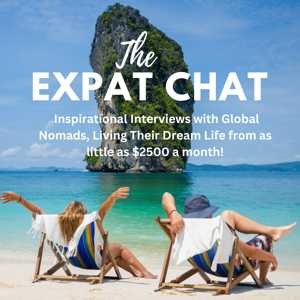
The Expat Chat

The Expat Chat

Download on the App Store

The Expat Chat episodes

  • You're Never Too Late to Start an Online Business

     If the harsh Minnesota winters get a little too much for you after a while there is always an alternative. Betsy and Pete Wuebker were ordinary 50 somethings living a suburban lifestyle and working the corporate job – in Pete’s case in a stressful marketing position. Deciding they needed to supplement their income with retirement on the horizon they took to online marketing as a means of building a business and soon realized after a period of time that they were doing well enough to throw in their day jobs.

    With freedom now an option they moved to Hawaii, a place still dear to their heart, but after a trip to the Winter Olympics in Sochi, Russia in 2014 they decided that a life of travel was what they needed most.

    They’ve been on the road since last year using housesitting as one of their primary means of reducing costs while their online income from various sources keeps them in the manner to which they are accustomed.

    You can check out their blog at http://passingthru.com

    What I learned from Betsy and Pete:

    1. You’re never too late to start an online business. These guys were into their 50’s before they started to learn how to make money online. From a standing start they’ve built a thriving little business that enables them to live their travel lifestyle on their terms.
    2. Have a plan and a vision for your online income. They treat it as a serious business and regularly hold meetings to plan and strategize. Like many others they don’t rely on one income but they do like to bring traffic back through their blog – a central spot where they can build a good following before sending people out to their various income methods.
    3. Their secret to picking up housesitting gigs is to build a good rapport with the home owner. They let their seniority work in their favor – showing themselves as the ideal prospects to look after anyone’s home. They have followed Nat and Jodie’s recipe at the Housesitting Academy which has helped them get more housesits than they might have otherwise.
    4. 41 min
    5. My Lifestyle Experiment - Every 6 Months in a New Place

      How many habits do you live by? Most of us are inundated with things we do without really thinking. Chris Backe sees life very much as an experiment where you question every option you have – including where you want to live.

      Since leaving Kentucky in 2008 Chris has lived in South Korea as an English teacher and over the last three years has taken to trialing life for 6 months at a time in a variety of places including Bangkok, Chiang Mai, Khon Kaen, and Krabi in Thailand. He is currently settled in Medellin, Colombia where he will spend a few months before trying another Colombian destination then heading for Ecuador – and who knows where else!

      If you’d like to find out more about Chris and his social experiment plus check out his impressive range of books he has written on the countries he has visited check out his blog at www.oneweirdglobe.com

      What I learned from Chris’s interview:

      1. Life can be an experiment. 6 months in each place is ideal if you want to find out what a place has to offer but not find yourself in a rut. It depends on the size of the city/country that you choose however with some places (Seoul being a personal favorite of his) needing longer to see everything worth seeing.
      2. Renting furnished in Medellin can be a lot dearer than unfurnished. If you plan on staying more than 12 months then buying your own furniture is a good idea
      3. Facebook groups are one of the best sources of information before considering a move. Chris finds this to be far more reliable than any information he might pick up elsewhere (including the media). Old perceptions (like many people have of Colombia) seldom ring true.
      4. 44 min
      5. In Search of the Perfect Climate - Chasing 82 Degrees in Costa Rica

        Dan and Cindy Gaskell left the comfort of Wichita Kansas for the climate of Costa Rica only a few months ago. Their website 82 Degree Quest refers to their search for the perfect climate but in many ways it is a metaphor of their search for the perfect life. So far they have found it in Gracia a mountainous city that gives them ideal living conditions with everything they could need

        Dan and Cindy did a lot of research talking to others before they moved and they believe hearing others talk about their Costa Rica experiences is critical for anyone considering the move themselves. With that in mind they set up their 82 Degree Quest podcast (link here) last month to talk to fellow Costa Rican “gringos” about their experience of living in the country that has been called the friendliest on earth.

        You can check out the website and get the link to their podcast here.

        What I learned from talking to Dan and Cindy:

        1. 90 days is the limit for a visitor’s visa but you only have to cross the border and return immediately – there is no time frame required before you return – unlike other countries that you might visit in Central and South America. It pays to keep this in mind when choosing your location – you don’t want to have to make a long trek every 3 months to meet requirements.
        2. Once you start the process of applying for residency which can take up to a couple of years you no longer need to do border runs – a definite plus.
        3. You do need to think about income if moving to Costa Rica as you aren’t able to work there as a visitor. In the Gaskells case they are living off savings and can comfortably survive for under $US1700 per month – their targeted budget.
        4. 40 min
        5. A Mountain Workplace - How the Internet Can Let You Ski Twice a Week

          You can’t get further contrast than moving from the beaches of Sydney to the mountains of Canada – for Kate Wan the shift was a continuation of an expat lifestyle based around her husband’s career in the mining industry.

          Having traveled extensively during their younger days the couple have experienced the expat lifestyle in both the US and Canada. For Kate the move overseas provided an opportunity to start her own business which now operates in 3 different countries – but it’s not all about work. Kate has created a business based around work life balance in one of the most beautiful places in the world – and manages to find time to ski a couple of times per week during the winter.

          She has written for Huffington post among others and will shortly be releasing a book that has already picked up awards ahead of its launch. You can find out more about her journey via her Facebook page at https://www.facebook.com/tradesecretsbusinessconsultants

          What I learned from Kate’s interview:

          1. Sometimes being an expat can empower you to try things you might not otherwise do. For Kate she was able to start a new business from scratch without the pressure of expectation (or failure in front of her peers) while her husband provided income security for her.
          2. Work/Life balance is so often talked about but seldom followed through on. Sometimes it’s about setting yourself up in the right environment that will make you happy and give you the chance to escape when you need to. Working an online lifestyle in a place as pretty as Rossland British Columbia is a natural cure for any overworking disease. Where would your dream working location be?
          3.  

            34 min
          4. Life as a Luxury Travel Writer

            Fancy life as a luxury travel writer? Would you like to be whisked around the world, all expenses paid being wined and dined in some of the world’s most celebrated restaurants, resorts and hotels?

            For Leah Walker it is a dream come true. The Texan girl gave up her former career as a teacher to become a fulltime travel writer only a few years ago. She now writes articles for prestigious publications such as Bonjour Paris, Luxe Beat Magazine and Forbes Travel Guide to name a few.

            Despite the glamour and perks that come with the job (she was heading off the next day to Austria to interview caste members of the Sound of Music in celebration of the movies 50th anniversary) Leah’s job is not easy or her real life as glamorous as her alter ego writer gets to portray.

            During our interview she shares the realities of travel writing and what you need to be prepared for if you plan on following in her footsteps.

            You can follow Leah more closely via her blog at http://leahtravels.com

            What I learned from Leah’s interview:

            1. Travel writing may look glamorous but it’s hard work and means writing on the move. It’s important to realize the difference between the image that is portrayed in articles and the real life of a travel writer, who seldom gets to live at that standard in their home life. That said it offers many opportunities and as Leah says herself – it’s not the worst job she has had!
            2. Sometimes the best travel experiences are the unexpected and the free. Leah’s opportunity to stand atop the roofs of Paris was a delightful surprise as well as her special dinner out. Even when shipped around the world to exotic locations and 5 star adventures she always takes time out to get into the street and discover the real world of the places she goes.
            3. Travel is still all about people. They are her best memories of many of the places she has been and again emphasizes that you don’t need to be living luxury to be getting the best out of your travel experiences.
            4. 42 min
            5. Travel With Teens - Our Round the World Adventure

              If you are a digital expert who talks to their clients about being location independent it certainly helps if you can show them by example! That’s precisely what Michelle Frost and her husband Simon did when they embarked on a long term trip around the world with their 3 teenage children.

              The Frosts left Australia just over 12 months ago and have traveled through Asia and Europe spending long periods of time in different locations living much like the locals. They have successfully home schooled their children with the support of their school back home who felt the children would be richer for the experiences they would encounter.

              We caught up with the Frosts in their current location of Formello, Italy where they had just spent the day delivering the olives they had picked to the factory to be pressed – ah the joys of travel!

              You can find out more about them and their journey via their blog at http://upsticksandgo.com or get their tips and advice on being a digital nomad and building your audience at http://mission-mojo.com/ and http://michoninternational.com

              What I learned from speaking with Michelle and Simon:

              1. We’ve said it before but kids really are a reason to travel. Their relationship has strengthened as a result of spending quality time together and creating memories that they will never forget
              2. I liked Simons take on safety – as he says everyone basically wants to be happy so why would they gain from hurting you? You still need to be wary for the 0.0001% who aren’t but most people you pass are just like you
              3. I didn’t realize the reciprocal medical benefits between Australia and the UK and Italy meaning your medicare card in Australia can be used for healthcare in these countries – that’s definitely a benefit
              4. If you plan on transitioning back to normal life (even if temporarily as the Frosts are) then you need to rebuild your income stream for the higher costs of living you might encounter back home. They have spent the last couple of months building up their digital business so they can recommit to it more fully when they return.
              5. 48 min
              6. Wwoof Your Way Around the World - How To Be a Travel Volunteer

                Ever heard of Wwoofing? No it doesn’t involve howling at the moon! Wwoof is a means of swapping work for travel where you trade a couple of hours per day in return for accommodation and meals on an organic farm. Today’s guests have successfully wwoofed their way around the world in a variety of countries but in recent years as their desire to live a backpacking life has diminished they have switched to housesitting as a means of reducing their travel costs.

                Cheryl MacDonald and Lisa Chavis spend around 8 months of the year overseas while still generating income online working in their respective areas of expertise. For the four months back home they up the rate of earnings and plan their next adventure. Their lifestyle has enabled them to see much of the globe while controlling their living costs and topping up their income during the months they are back in the US.

                We spoke with Cheryl and Lisa where they shared their experiences of Wwoofing and talked about the perceived boundaries that make people stop living the type of lifestyle they now have. You can find out more about their adventures on their website http://whatboundariestravel.com

                What I learned from talking to Cheryl and Lisa:

                1. Wwoof provides an opportunity to swap work for travel in over 100 countries worldwide. You can choose your destination and generally only have to give up a few hours per day of your time – but it’s not luxury living and suits the backpack fraternity best. As 40 somethings however they enjoyed the experience and didn’t feel out of place with the younger travelers they encountered.
                2. Earning from your old skills is always an option. Who would have thought a pharmacist could still make money while traveling? For Lisa she is able to top up her income checking medical records and doing some medical writing p roving that almost any skill or career can provide you with money while you travel.
                3. Ask the right questions. These two are a glass half full couple! They ask how they can do things not complain about why they can’t and it has opened many doors for them.
                4. 40 min
                5. How To Make $20,000 Per Month From a Location Independent Business

                  One of the benefits of living an expat lifestyle is that you can save a fortune living in some wonderful countries that offer a high quality of life for cents on the dollar compared to the western world. But who says you have to sacrifice income and live on the smell of an oily rag? Today’s guest has combined the best of lifestyle with building an online business that last month provided him with over $22000 in largely passive income.

                  Johnny FD (the FD stands for fighting and diving - his two Thai passions) left Los Angeles and a corporate job with Honeywell to enjoy an overseas holiday in Thailand. Loving the experience he returned to his cubicle intent on relocating – after all he knew he could live on $600 per month while there. Depending on savings for the first twelve months he took a dive course to be an instructor but knew he needed an alternative if he didn’t want to turn his passion into a chore. He investigated online income options and created an e-book that generated sales but a coffee meeting with an entrepreneur who made money from drop shipping convinced Johnny that there were more opportunities on the internet than he had investigated.

                  Three years on and he now has several successful online stores but is earning just over half of his money from affiliate marketing. He hasn’t lost his passion for work but now focuses on building his income rather than trading time for money – his income occurs whether he works or not

                  In this interview Johnny shares the story of how he got started and some tips on how to determine an online income that works for you. You can follow his exact recipe via his blog http://www.johnnyfd.com


                  What I learned from talking with Johnny:

                  1. Living an expat lifestyle doesn’t mean doing without. Johnny still lives comfortably on considerably less than he’d spend back in the US but his strong income gives him peace of mind and the chance to build investment savings while he relaxes on the beach.
                  2. Online income can be erratic – you can’t guarantee it’s consistency but it pays to have more than one string to your bow. Johnny had initially built his income from drop shipping (the process of selling online where the manufacturer sends the goods direct to the buyer and you don’t have to handle it) but now gets just over half his income from affiliate marketing (promoting other people’s products)
                  3. Johnny does much of his own work because he enjoys it with limited use of outsourcers. His income however is largely not connected to the time he puts in – most of the time he does spend is on growing his business and adding other forms of income.
                  4. Get help from others. When he was learning he would regularly take entrepreneurs out for coffee and pick their brains and he doesn’t stop learning now just because he has achieved success.
                  5. 49 min
                  6. Leaving Hollywood: Why I Learnt to Sail Charters at 50

                    Fancy a lifestyle hanging out with Hollywood A-listers? Life in the movie industry had its pluses but for Brit Gillie Hutchinson the birth of her child in her mid-30’s meant a slower less glamorous life was necessary. She returned to her roots in the fashion industry working for the Countess of Carnarvon at Highclere Castle – a location better known as the setting for Downtown Abbey. To all intents and purposes she seemed to have the perfect career selling fashion for a recognized brand and swapping Hollywood for the landed gentry but for Gillie she never really felt at home.

                    A 2002 holiday to Gibsons in British Columbia changed everything with her husband and her returning with the deed to a new holiday home. 4 years of visits and they had had enough of just being holidaymakers – and in 2008 the family of 3 moved to Canada permanently. Her husband’s job in computer software was able to provide for them – but left Gillie wondering what to do. Well what else do you do when you have a view of a harbor? Gillie bought a boat and took up sailing and now spends her time giving sailing lessons and skippering charter boats in places as diverse as New Zealand, Croatia and the Mediterranean. You can find out more about her experiences in British Columbia and her various sailing tours on www.ladysail.com

                    What I learned from Gillies interview:

                    1. You’re never too old to make a new start. Not only did Gillie move locations she developed a brand new career in sailing with no previous experience. At the age of 50 when most feel they are set in their ways she took on a new lifestyle of adventure she would never have imagined
                    2. The experience of her 12 year old son relocating was not a cause for concern – he has blossomed in his new environment. Sometimes we fear things for our kids that they don’t worry about themselves.
                    3. Owning stuff is not the recipe to happiness – we hear this so often with people we speak to, they are generally happier not chasing after the next trophy to add to the show and tell cabinet.
                    4. Don’t have regrets – as Gillie says you can always go back to your old life – but you might just find that you don’t want to.
                    5. 38 min
                    6. Blogging for Profit: Funding My Family Travels From A Base in Penang

                      If others can make money online why can’t I? That’s the question that Sharon Gourlay asked herself in 2013. With her kids still of pre-school age she knew she had a window of opportunity to give up her job, build an online income and move overseas, enjoying the world while living off her digital income.

                      Within 12 months Sharon had started to get results – she has since built her online business up to $5000 per month and growing while she enjoys living in Penang (very affordably) and traveling the world from her base with her family of 4 (also very affordably).

                      In this interview Sharon shares the story of how she built her blog, how she finds living in Penang, and gives some tips on how to monetize a travel blog which she also shares via her website www.digitalnomadwannabe.com

                      What I learned from Sharon’s interview:

                      1. You can build a blog worth $5000 per month. We know from our interview with Yeison and Samantha that this is possible. Sharon did it by having a plan as to how she hoped to earn it and working hard on targeting to her market.
                      2. SEO is important. Sharon focused on this part of building her blog, knowing that it would take time but would give her strong long term benefits so that she could eventually just focus her time on maintaining her business
                      3. Invest in learning what you need to learn. Sharon spent all the initial money she made from her blog on educating herself further
                      4. Diversify your income. Sharon has been closed down by an affiliate company so it only emphasizes that you don’t want to rely entirely on any one source of income – you never know when Facebook, Google or someone else will decide they don’t like what you are doing – and remember; with many of these large companies you are considered guilty until you prove you are innocent.
                      5. Write quality content. Too often when looking to earn online income or build traffic it becomes a focus about looking for tricks to build your business. As Sharon rightly says it isn’t just about the number of website visitors but whether you are getting the right visitors who will take action. Don’t become fixated on page views either.
                      6. Look at Norwegian airlines for budget flights. I just priced a fare from Bangkok to Oslo at $US152. They also offer transatlantic deals – may be well worth a look
                      7. You can travel Europe on under $100 per day as a family of four, its all about traveling slow and looking for affordable food and accommodation. Crack those nuts and the cost can drop substantially.
                      8. 39 min

                      About The Expat Chat

                      From the publisher's feed

                      The Expat Chat is a weekday podcast where we interview inspiring expats who have thrown off the constraints of western congestion to enjoy their dream lifestyle in other parts of the world. If you…

                      More shows like The Expat Chat

                      The Ancients by History Hit

                      The Ancients

                      3,380 Listeners