
Sign up to save your podcasts
Or




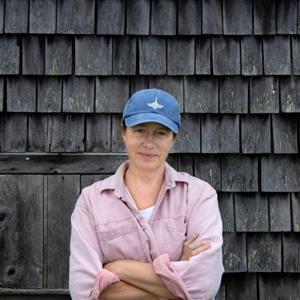
Elizabeth "Ely" Rosales Aguilar has built Raíz Chocolate from her San Diego home kitchen, turning a childhood love of chocolate into a small but thriving business. She carefully sources Mexican cacao and crafts silky bars and rich drinking chocolates, like champurrado, using recipes passed down for generations. Her work is precise and deliberate, highlighting skill, patience and artistry while remaining deeply rooted in tradition.
From bean sourcing to finished bars, Ely keeps her process transparent and small-scale, with an emphasis on preserving natural flavors — a sharp contrast to mainstream chocolate production. The name Raíz, which means "source" or “root” in Spanish, reflects that commitment to honoring cacao’s origins and the heritage behind each recipe.
California's home kitchen and cottage food laws allowed her to turn that passion into a legitimate career, offering an alternative to mass-produced chocolate. Her story blends resilience, entrepreneurship and cultural heritage, showing how craft, intention and tradition can transform a home kitchen into a business that delivers exceptional flavor while preserving the legacy of Mexican chocolate-making.
Guests:
Sources:
Risograph printing was built for efficiency — a fast, economical way to make thousands of identical copies for offices, churches and schools. It was never meant to be expressive or personal. After newer technology pushed the machine into obsolescence, artists began discovering risography — drawn to its unpredictability, physicality and limits. From a squatted bank in the Netherlands to DIY print spaces across Europe and the U.S., Risograph printing became a tool for people working outside traditional art and publishing systems.
In San Diego, that lineage comes into focus at Burn All Books — a space that is part shop, part press and part gathering place. There, Risograph printing isn't just about what gets made, but how: through shared labor, in-person collaboration and a commitment to keeping artists connected in an increasingly expensive and isolating city.
"You need a network of people who want to help you. That's something cobbled together very slowly over a long period of time. I just feel like so much of our success, to me, has felt like a combination of flukes and really wonderful favors and opportunities," said Manda Bernal, who cofounded Burn All Books with her husband Nick.
Guests:
Sources:
We’re dropping a special minisode during our season break with one request: Help shape Season 2 of The Finest by taking our anonymous survey at KPBS.org/TheFinestSurvey. Your feedback helps guide what stories we cover next — and it enters you in a raffle to win an exclusive The Finest T-shirt. We’ll draw winners before the Season 2 premiere on Jan. 15. Plus, KPBS Racial Justice and Social Equity Reporter Katie Hyson, a self-proclaimed The Finest fan, takes the survey live on the show.
For many people who are incarcerated, a single book can be life-changing – a rare source of freedom and connection in a system built on isolation. That was true for Cherish Burtson, who discovered during her time in federal prison that reading could be a source of survival. Books became her escape, her education and a starting point to rebuild her life. But getting books behind bars isn't easy. Across the United States, correctional systems routinely ban or reject thousands of titles each year, reflecting deeper struggles over punishment, control and compassion. According to PEN America, correctional facilities in all 50 states contribute to the nation's largest book ban, censoring more books than schools and libraries combined. This episode follows a group of San Diego volunteers working to get books past prison walls. It explores how the simple act of reading can restore a sense of humanity in even the harshest conditions — and what it says about who we are when we decide who gets to read.
Guests:
Sources:
Alice Barnett's music once echoed across America — her songs were performed on national radio, reviewed in major newspapers and sung in concert halls from New York to Los Angeles. But over time, her name slipped from memory. In this episode, San Diego musician and researcher Katina Mitchell brings Alice's story back into focus, tracing her journey from a gifted young composer in Illinois to an internationally recognized artist who made her home in San Diego. Through archival letters, fragile sheet music and rare recordings, Katina reconstructs a life devoted to music and performs pieces that haven't been widely heard in decades. With insight from cultural scholars, we look at how fame fades, why some artists are remembered while others vanish and what it takes to restore a legacy. The result is both a rediscovery of a remarkable composer and a reflection on the delicate ways art outlasts the people who create it.
Guests:
Sources:
"Dispatch From Paradise" writer Cora Lee went searching for ghosts in Presidio Park, but her exploration of San Diego's supernatural underbelly didn't stop there. She visited San Diego's many mysterious cults in person, meeting members and observing their practices, and explored a long-running family dynasty of fortune tellers that has sometimes drawn law enforcement and media attention. In this Halloween episode, we follow Cora through the city's paranormal scene, from haunted hillsides and psychic shops to the strange and sprawling world of alternative spiritual communities. Along the way, religious studies professor Joseph Laycock helps unpack why belief in ghosts, aliens and spirits persists and what our search for "presence" reveals about being human. It's part spooky story, part San Diego history and part philosophical journey into why some mysteries endure — and why, deep down, we might not want them to end.
Guests:
Sources:
San Diego's rising rock trio Slacker helped launch the pilot phase of the new KPBS Music Series with a live performance — loud, joyful and a little chaotic in the best way, but played with real precision and skill. Dressed in button-down shirts and ties, the band tore through their songs on the KPBS patio as the lunchtime crowd cheered. We sat down with the band right after their set to talk about where their music comes from — the friendships (and burritos) that built it and the feelings behind their biggest songs. They also share how they recorded their debut album in a legendary San Diego studio using a bass guitar once played by one of the city's most famous bands. It's a story about finding connection, growing together and turning shared experiences into music that feels personal, powerful and magical.
San Diego's Cameron Mofid set out on an audacious quest: to break the record for being the youngest person to visit every country in the world. His journey took him to 195 nations, from peaceful capitals to conflict zones few dare to enter. Along the way, he faced moments of danger and discovery, including assuming a fake identity in Yemen to navigating a terrorist threat in Somalia and making a buzzer-beater, last-minute entry into North Korea.
But for Cameron, the record was only part of the story. His travels became a powerful lesson in privilege, perspective and humanity — and inspired him to give back. He launched Humanity Effect, a nonprofit that has built multiple schools in Nigeria. In this episode, Cameron reflects on the risks he took and the barriers he overcame. He shares the truths he discovered about the world, explores what it means to connect across borders and why these lessons matter for all of us.
Guest:
Sources:
For our 20th episode, The Finest team reflects on our season so far — the episodes that made the biggest impact, what still lingers with us months later and a taste of the gems left on the cutting-room floor. From Our Lady of Guadalupe to birding and romantasy books, we revisit comments from fans (and critics) and how these stories continue to resonate. Julia and Anthony also share a quick list of our favorite things in San Diego right now, from soup dumplings to hidden trails. Plus, we call up one of our first guests, indie musician Julianna Zachariou, to reflect on her experience over the past six months after a clip of our interview went viral on social media. What does it mean when a million people hear a piece of your story?
" I had never had anything with that much reach. It felt necessary and helpful, and a lot of people found it to be helpful," Julianna said. "I also wish that the thing that had taken off was something I had made and not how much I had made off of a thing that I had made."
In this episode, we dig deeper into some of the stories we've shared recently, explore how listeners have reacted and take a behind-the-scenes look with The Finest crew.
Guests:
Our current favorite San Diego things:
The Finest episodes discussed:
Mentioned in this episode:
Sources:
From the publisher's feed

38,012 Listeners

38,702 Listeners

95 Listeners

111,865 Listeners

56,449 Listeners

6,375 Listeners

15,904 Listeners
6,178 Listeners