
Sign up to save your podcasts
Or

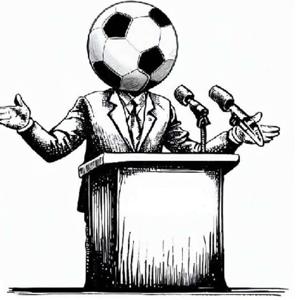


Women’s football is booming, but can it grow without losing what makes it special? Ahead of the 2027 Women’s World Cup in Brazil, Guy Burton and Francesco Belcastro talk to Lydia Crudge, founder of Lunar Insights and former head of women’s sport research at Nike, about how the game is developing from England and Barcelona to Morocco, Saudi Arabia and South America. They discuss what makes women’s football fandom different, why playing football as a woman is still a political act, the barriers that remain on and off the pitch, and why brands like Nike and Barclays could change the game, or risk spoiling it. Plus: FootPol is now on YouTube at its own channel, with a new shirt from Francesco’s collection every episode.
The FootPol Podcast is back for Season 4 – and this time you can watch as well as listen!
In this Football and Politics season opener, co-hosts Francesco Belcastro and Guy Burton introduce the new FootPol format, with every episode now available as both a podcast and a video on YouTube.
New episodes will be released every other Monday, with occasional Insta-FootPol episodes tackling football and political stories that demand a more immediate response.
So what can you expect from Season 4? We’ll be looking at the politics, business and culture of football, including football jerseys as political symbols, the business of women’s football, football clubs and energy companies, community ownership and investment, and the impact of the World Cup on football and politics in Latin America.
But there is plenty to discuss right now.
Francesco and Guy look back at some of the biggest football and politics stories of the summer, including the growing tensions between FIFA and UEFA, FIFA president Gianni Infantino’s prospects for re-election, and the political fallout from the war in Gaza – including the controversy surrounding Israel’s Nations League matches against Ireland.
They also discuss the Women’s Africa Cup of Nations in Morocco, including the politics surrounding the tournament, before turning to the latest developments involving Manchester City and the club’s relationship with the UAE. What do these issues tell us about Emirati investment in British football and the wider UK-UAE relationship?
Finally, we return to the Gulf and football, looking at Saudi Arabia’s investment in the sport, the changing priorities of Saudi economic diversification and what this could mean for the country’s ambitions – including its preparations to host the 2034 FIFA World Cup.
And that’s only the start.
FootPol Podcast explores the relationship between football, politics, power, business and society. We’re interested not just in what happens on the pitch, but in what football tells us about the world around it – and how politics, money and power shape the game.
🎧 Listen to FootPol Podcast wherever you get your podcasts.
📺 Watch FootPol on YouTube for the new video version.
New episodes every other Monday, with occasional Insta-FootPol episodes when the football-politics world refuses to wait.
On Tuesday 28 July, FIFA posted plans to create a $20 billion commercial subsidiary, opening the door to outside investors taking minority stakes in the organisation's most valuable commercial assets, including the FIFA World Cup. In our latest Insta-FootPol Podcast episode, we unpack what the proposal actually involves, why UEFA and other critics are sounding the alarm, how it compares with the failed European Super League, and what it could mean for football governance, national associations, fans and the future commercialisation of the global game. Is this a once-in-a-generation opportunity to invest in football or the beginning of a fundamental shift in who the world's most popular sport ultimately serves?
How political was the 2026 FIFA World Cup? In our final episode of Season 3, FootPol Podcast co-hosts Guy Burton and Francesco Belcastro look back on a tournament that was as much about politics as football. From US visa restrictions, the treatment of Iran and FIFA's ticketing and resale system to the expansion to 48 teams, the growing role of diaspora players representing countries such as Cabo Verde, Curaçao and Morocco, and controversies surrounding Folarin Balogun, Palestinian flags and killings, Argentina's Las Malvinas banner and racist attacks on Kylian Mbappé, they ask whether football can ever truly be separated from politics. Along the way, they examine FIFA's consistency on issues ranging from LGBTQ+ inclusion to accountability when players face allegations of rape or sexual abuse, and what the tournament revealed about the governance of the global game.
The episode also reflects on some of the highlights from Season 3 and points listeners towards the FootPol back catalogue while the podcast takes its summer break. Thank you for listening this season—we'll be back in September with more conversations exploring where football and politics collide.
What should FIFA look like after the 2026 World Cup?
In this week's FootPol Podcast, we speak with sports consultant Gaby Bracamonte about her provocative article, "Make FIFA Great Again," and what football's governing body must do if it is to regain trust and legitimacy.
Recorded during the group stage of the 2026 FIFA World Cup, before several of the tournament's biggest controversies emerged, the conversation captures the issues already shaping the competition—from the fan experience inside the stadiums to the governance challenges facing FIFA itself.
Drawing on her experience of attending matches across the United States, Gaby discusses the atmosphere at the tournament, the impact of dynamic ticket pricing on supporters, and the wider politics surrounding the World Cup.
The conversation then turns to FIFA. Why does the organisation continue to attract criticism? Who should hold it accountable? And what reforms are needed to improve the governance of world football?
Although recorded before the later controversies that dominated headlines, the discussion proved remarkably prescient. As the tournament unfolded, many of the questions raised about accountability, leadership and the stewardship of the global game became even more pressing.
As the 2026 World Cup comes to an end, this episode looks beyond the action on the pitch to examine the institutions that shape football—and why the future of the world's most popular sport depends as much on governance as on what happens during the 90 minutes.
Read Gaby Bracamonte's article, "Make FIFA Great Again," here.
Marie-Louise Eta’s appointment at FC Union Berlin in the Bundesliga in April made history as she became the first woman to take charge of a men’s team in one of Europe’s top five leagues. But the reality behind the headline is more complex than the milestone suggests. In this episode, we examine her coaching pathway, the institutional context of her appointment and the sexist backlash that followed. With sports psychologist Claire-Marie Roberts, we explore whether coaching is meaningfully gendered, how women already operate across men’s football structures and why “firsts” can distort more than they reveal. The discussion moves beyond individual achievement to the deeper structures shaping both the men’s and women’s games: resources, pathways, media narratives and the persistent tendency to treat women in elite men’s football as exceptions rather than professionals.
What if football is following the same path as social media: hook the users, lock them in, then squeeze them for everything they're worth? In this episode, we talk to Mark O'Neill, a doctoral researcher at Westminster University, about the “enshittification” of football—how the relentless pursuit of revenue is reshaping the game, from ticket prices and fan culture to player welfare and the never-ending expansion of competitions. As clubs chase global audiences and governing bodies create more matches, are loyal supporters being treated less as a community and more as a captive market? We explore whether football is slowly consuming the very authenticity that made it the world's most popular sport—and whether new regulation and supporter power can stop the rot before the game becomes little more than content.
The 2026 World Cup is already generating political heat long before kick-off. In this episode, Francesco is joined by Tamir Bar-On and Danyel Reiche, sport and politics experts and editors of a new special issue in Soccer & Society on the World Cup 2026 to unpack what the tournament reveals about global football and world politics. From the first-ever tri-nation hosting arrangement across the United States, Mexico and Canada to debates over security, migration and soaring ticket prices, from Trump's personal ambitions to the growing global reach of the tournament through its expanded 48-team format, this episode covers all the main Footpol themes!
With the 2026 World Cup just weeks away, France once again enters the tournament as one of football’s superpowers — but what does the French national team actually represent in modern France? In this gripping episode, co-hosts Guy Burton and Francesco Belcastro sit down with Bangor University's Senior Lecturer in French (Studies), Jonathan Ervine, to unpack the explosive intersection of football, politics, identity, race, religion and nationalism in French society. From the myth of the 1998 “Black-Blanc-Beur” champions to the rise of the far right, the tensions of secularism, and the political symbolism of stars like Kylian Mbappé and Zinedine Zidane, this episode reveals why French football is about far more than what happens on the pitch.
The discussion explores immigration, the banlieues, anti-racism campaigns, homophobia in Ligue 1, the hijab controversy in women’s football, Ramadan debates and the growing pressure on players to speak out politically. The hosts also look ahead to France’s World Cup chances, Didier Deschamps’ expected departure and why Zidane’s likely appointment could become one of the most politically charged moments in recent French sporting history. Essential listening for anyone following the 2026 World Cup, European politics or the deeper forces shaping global football today.
Jonthan's various publications associated with French football include "Negotiating Breton Celtic identity on and off the pitch: contemporary football in Brittany" (with Paddy Hoey), "Football and antisemitism in France: visibility and invisibility," "France - Les Bleus and the Republic: Diversity, Difference and Discrimination" and "Nicolas Anelka and the Quenelle Gesture: A Study of the Complexities of Protest in Contemporary Football."
As Curaçao prepares for its first-ever FIFA World Cup appearance, the latest episode of the FootPol podcast goes far beyond football. Host Guy Burton is joined by historians and researchers Karym Leito and Margo Groenewoud to unpack how a small Caribbean island with deep colonial ties to the Netherlands built a national team capable of reaching football’s biggest stage. The conversation explores Curaçao’s layered political status, stark social inequalities behind the tourist façade, and the decisive role of the diaspora in transforming the national side through players developed in Dutch academies. From missionary-founded clubs and fiercely local football identities to debates over women’s football, infrastructure and who truly benefits from World Cup success, the episode reveals how sport has become entangled with questions of migration, belonging and national identity. Against the backdrop of the island’s euphoric “Blue Wave” celebrations ahead of clashes with Germany, Ecuador and Ivory Coast, the discussion asks a larger question: what does World Cup qualification actually mean for Curaçao beyond the spectacle itself? This episode also concludes FootPol’s World Cup debutants mini-series, following previous episodes on Jordan, Uzbekistan and Cape Verde.
From the publisher's feed
The podcast that brings together football and politics. We'll be exploring the relationship between the two, both inside and outside the game.
The podcast covers "Big Politics" like…