
Sign up to save your podcasts
Or

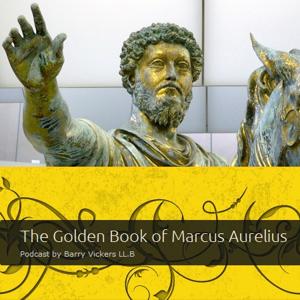


Hello again everyone. I was very pleased to have visited Rome last week, and thought you might enjoy some of the photographs that I took in, and outside the Capitoline Museum. The Equestrian Statue of Marcus, which I was very much looking forward to seeing can be found in the museum, and I was not disappointed; it is breathtaking. There is also a copy of it in the square just outside the front that sits atop a pedestal designed by Michelangelo. I also have posted photographs of some very nice reliefs in the museum depicting Marcus displaying the virtues of clemency, triumph and sacrifice. If you think the statue of triumph looks a little unbalanced, it might interest you to know that it is because his son Commodus was originally depicted in the chariot beside Marcus, but was later removed after Commodus was condemned to the damnatio memoriae whereby images of the disgraced would be forever destroyed. If you are interested in Marcus and in Rome, I’d recommend a visit to the Capitoline Museum. Enjoy!
http://goo.gl/L7NWlY
In the final episode, Marcus covers a range of areas, declaring with certainty that the Gods exist, that we are all one collective soul, and gives us a nice perspective on our lives measured against the vastness of eternity, and draws the conclusion that death is the natural order of the universe.
http://goo.gl/L7NWlY
Bust of Marcus Aurelius in the Istanbul Archaeological Museum (Photograph G. Dall’Orto)
In this penultimate book, Marcus discloses the 4 dispositions of the mind to be aware of and rectify, and he also gives us 10 heads or contemplations /maxims to live according to (9 of his own, and 1 that he borrows form Hercules):
http://goo.gl/L7NWlY
Courtesy of Kandschwar, this is a picture of Marcus supporting the Kaiserbrücke (Emperor Bridge), in Mainz, Germany.
Marcus explores the idea of Truth, Modesty and Goodness. He encourages us to teach others as kinsmen (or to die), and where appropriate, to collect ourselves. He also shares a joke:
“What is it that is slow, and yet quick? Merry, and yet grave?
http://goo.gl/L7NWlY
The Column of Marcus Aurelius, in Piazza Colonna, Rome, Italy. Marcus has been replaced at its top by St Paul.
Marcus explores and substantiates his assertion that injustice is against nature, also the sin of omission (for example failing to teach someone their error is our sin), and that we are all naturally reasonable creatures, but that we forget this. He believes it is our actions and what we do that matters, and in our deeds we must recognise that we are part of a society. He also alludes to a personal dislike of politicians:
http://goo.gl/L7NWlY
This photo of The Arch of Marcus Aurelius is courtesy of TripAdvisor. According to Girl Solo in Arabia (http://girlsoloinarabia.typepad.com), built in 163 AD in the Greek style, this arch straddles the decumanus maximus and the cardo-maximus in the ancient Roman city of Oea which is now Tripoli. Besides Roman columns re-used in newer buildings in the medina, this is the only existing Roman monument in the city.
Some 1500 years before Sir Isaac Newton undertook his exploration of light, Marcus was also trying to understand it. His conclusions (for me) evoke echoes of the jurisprudence of the light of natural reason of Thomas Aquinas, and also reminds me of a famous Bradford quote about light where he speaks about evangelism:
“Thus out of small beginnings greater things have been produced by His hand that made all things of nothing, and gives being to all things that are; and, as one small candle may light a thousand, so the light here kindled hath shone unto many”.
The remainder of book eight is very specific and personal to Marcus and leads me to draw the conclusion of a dutiful but unhappy Marcus, surrounded by sycophants and yes-men, his biggest fear perhaps becoming vainglorious. He compares emperors with philosophers, and he recommends that we develop and round our minds to make them unconquerable.
http://goo.gl/L7NWlY
Thomas Aquinas, who had a theory of a light of natural reason, painting by Gentile da Fabriano
From the publisher's feed