
Sign up to save your podcasts
Or

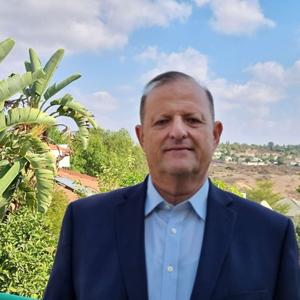


I sat down with David L. Katz, MD, MPH, one of the leading experts worldwide in nutrition and preventive medicine, and someone who has spent his career turning the science of food into practical guidance people can actually use at the dinner table.
A few moments that stayed with me long after we stopped recording:
🔹 Teachable moments. Dr. Katz reminded me that the body often tries to warn us before it breaks us, a scare, a diagnosis, a wake-up call. The wisdom isn't in waiting for the crisis. It's in learning to listen earlier, the way you'd service a car before it stalls on the highway, not after.
🔹 Prevention as infrastructure, not willpower. We talked about how the most powerful health interventions aren't personal discipline, they're environmental design. Drowning prevention doesn't rely on everyone deciding to swim more carefully; it relies on fences, lifeguards, and pool covers. Wellbeing works the same way. Build the guardrails before you need the willpower.
🔹 "Healthy selfish." Dr. Katz's phrase reframes everything. Taking care of yourself first isn't indulgence. It's the only sustainable way to have anything left to give the people who depend on you and love you.
And last but not least, the people who stay well aren't the ones with the most willpower. They're the ones who built the right systems, listened early, and stopped waiting for permission to put themselves first.
That's not indulgence. That's infrastructure.
We often treat decision-making as a purely rational, linear march from data to conclusion. But if you want to decode what truly separates elite performers from the rest, you have to look beneath the surface.
In this episode, I sit down with Professor Gerald Zaltman, Harvard Business School Professor Emeritus and author of more than 20 books probing the deep architecture of the human mind. Hr dissected how leaders navigate unprecedented disruption, diving headfirst into his groundbreaking new book from Stanford University Press, “Dare to Think Differently: How Open-Mindedness Creates Exceptional Decision-Making.”
Professor Zaltman’s research reveals that elite executives don't just rely on raw brainpower; they harness the creative force of their unconscious mind to navigate highly complex, volatile environments. He unpacks six "thinker toys", essential cognitive habits that allow leaders to transcend conventional, restrictive thinking:
In an era when AI can instantly generate standardized answers, the true competitive edge lies in the distinctly human capacity to ask better questions, embrace uncertainty, and creatively surface our own unconscious insights.
If you are operating in a high-stakes, volatile environment, this episode is your blueprint for breaking free from the traps of linear thinking. It is a masterclass in how to stop simply being "smart" and start being truly, effectively open.
That question stayed with me after my podcast conversation with Doron Maman, a leading researcher on mental toughness, values, and performance in high-pressure environments.
In general, a crisis is usually treated as something to manage or push through. Doron cut through that thinking quickly:
Crisis isn’t the real risk. Failing to change internally. At the executive level, mental toughness is not emotional hardness. It is the ability to make clear decisions when comfort, certainty, and time disappear.
When pressure is real, motivation fades. Strategy tightens. Authority alone stops working. What actually drives decisions is your value system, whether you are conscious of it or not.
Doron’s research shows that performance under pressure rests on a narrow set of values: achievement, responsibility, and commitment to those you serve. Not comfort. Not conformity. Not slogans.
That insight was shaped by a deeply personal experience, facing a brain tumor with no expected path to recovery. In moments like that, control vanishes. What remains is alignment.
I have seen the same pattern with senior leaders, and lived it myself after a near-fatal heart condition. Crisis does not bring you back to who you were. It forces you to become more precise about who you are.
I interviewed David L. Katz, MD, MPH—founder of the Yale-Griffin Prevention Research Center, past president of the American College of Lifestyle Medicine, and the author of the best-selling book "What to Eat?
He's spent 30 years studying one question: What should humans actually eat?
His answer? Poor diet is now the leading cause of premature death in the U.S.
So what's the solution?
Dr. Katz shocked me with his simplicity. Here's what delivers 80% of the health benefits:
Replace meat with beans (even just sometimes)
Eat a mixed green salad daily
Drink water when you're thirsty
That's it. Beans. Salad. Water.!
His philosophy: "Eat food, mostly plants, not too much."
Simple. Evidence-based. Proven in every Blue Zone where people live longest.
The truth: You don't need a PhD. in nutrition. You need beans, salad, and water.
The rest is noise.
Listen to the full conversation on The Guide for Better Life podcast
בפרק הזה תתוודעו לאיזי רוזוב – פעם "ילד הפלא של הכלכלה הישראלית": מנכ"ל גיבור סברינה, יבואן BMW הרשמי, ומייסד ירחון "אוטו". הוא טיפס לראש, ואז הכל התרסק. בפברואר 1990, קריסה עסקית הובילה אותו עם משפחתו לדירה שכורה בגבעתיים, כשהם תלויים על חשבון מכולת שאחותו פתחה.
אך דמותו האמיתית התעצבה דווקא מתוך הנפילה. במסע מעורר השראה, איזי התמסר ללמידה, הפך ליועץ מערכות SAP ולעמוד תווך עבור ארגונים בתהליכי שינוי. לצד זאת, גילה את השליחות שבהרצאותיו המשפיעות לחברות ועסקים, ובהן הוא מעניק כלים להתמודדות וצמיחה אישית.
מתוך השבר בחר איזי לאמץ לעצמו את הכינוי "האיש הכי שמח בעולם" – שם שמסמל את המסלול מחדש שעשה: ממיליונר שקרס אל התהום, אל אדם שלמד לבנות בתוכו שמחה אותנטית, אופטימיות ויכולת אמיתית לעמוד בקשיים. כיום הוא לא רק יזם או יועץ, אלא גם מרצה, מאמן אישי וסטנדאפיסט, שמטרתו להעניק לכל אדם את הכלים להגיע לאותו מצב של שמחה ושלמות – גם אחרי טלטלה.
הפרק הזה מזכיר שלפעמים דווקא הנפילה מביאה איתה את ההזדמנות לבחור בחיים – ובשמחה אמיתית.
Last week, I sat down with Marissa Afton, Partner & Head of Global Accounts at Potential Project Company, and honestly, her research findings about the impact of AI on company leadership were astounding.
Here's the deal: Out of 100 CEOs and CHROs across a range of industries, only 8% feel confident in their ability to embrace AI while managing its risks. But wait— 70% of leaders would actually prefer to have AI make decisions for them rather than making those decisions themselves.
My first thought? That can't be right. But then Marissa broke it down for me. These leaders aren't being lazy—they're completely overwhelmed. The sheer volume of critical decisions hitting their desks every day is insane, and there's barely any time left for the kind of deep, strategic thinking that real leadership requires.
All this comes from the research that she and her colleagues published in a book by Harvard Business Review Press, "More Human: How the Power of AI Can Transform the Way We Lead," in which she and her team interviewed 100 CEOs and executives across a range of industries.
Here's what really struck me: The leaders who are going to crush it in the AI era won't necessarily be the biggest tech nerds. They'll be the ones who figure out how to blend AI's capabilities with the aspects that make us uniquely human as leaders.
So here's my question for you: Are you part of that confident eight percent, or are you still trying to figure this whole thing out?
💡 I had an eye-opening conversation with Pekka Pohjakallio, former Managing Director at Hintsa Performance (the company that trains Formula 1 drivers), about authentic leadership in today’s hyperconnected world.
⚠️ The problem: Only 15% of employees worldwide feel genuinely engaged at work (Gallup). Our constant connectivity fosters reactive leadership instead of intentional leadership.
🔑 Pekka’s Key Insights:
🔋 **Strategic Rest Matters**: Just as Formula 1 drivers need recovery between races, business leaders must prioritize holistic well-being over quick performance hacks. Sustainable leadership stems from healthy habits tailored to individual needs.
🎯 **Know Your Core Identity**: Many executives struggle to define themselves and what is their life vision beyond their present job titles. At age 44, Pekka realized he had to align his career with his true self rather than external expectations. Authentic performance begins with self-awareness.
🌟 **Create Meaning, Not Just Metrics**: Effective leaders clarify organizational purpose while helping team members connect their personal values to their daily work.
🏆 **Model Well-Being Transformation**: Leaders must embody sustainable practices for their teams to emulate and foster psychological safety. This isn’t about implementing wellbeing programs—it’s about leaders living and communicating a clear wellbeing narrative.
✨ **The Bottom Line**: In today’s hyperconnected world, the most successful leaders manage their time, align with their core identity, and cultivate cultures where wellbeing and performance complement each other.
What’s your experience with authentic leadership? How do you balance wellbeing with performance?
"The majority of wellbeing programs in companies are failing because they don't address what employees actually need," reveals Dr. James Hewitt, a leading international wellbeing expert who has worked with Formula 1 world champions and Fortune 500 giants including BCG, PwC, Bank of America, Merrill Lynch, and Mercedes-Benz.
James, ranked #1 globally in Sport Science, shared eye-opening insights during our recent podcast conversation. His most disruptive discovery?
"Leader personal wellbeing is the #1 predictor of successful organizational wellbeing."
This changes everything. How can burned-out leaders authentically champion employee wellness? They can't.
The reality: Companies are spending millions on wellbeing programs while their leadership teams run on empty—then wonder why these initiatives fail.
The solution exists. Listen to our full conversation for James's proven blueprint on building wellbeing programs that actually deliver results 👇
What drives a successful CEO to walk away from a multi-million dollar business and dedicate his life to helping others?
Todd Patkin shares his remarkable transformation—from running a thriving auto parts empire in the East Coast to becoming a champion for wellbeing and happiness after battling depression and burnout.
Key insights: ✅ The hidden cost of traditional success ✅ How to transform personal crisis into purpose ✅ Practical solutions for the workplace burnout epidemic ✅ Steps to create genuine fulfillment in your career
Todd's journey offers hope and wisdom for anyone struggling with the pressures of modern success.
🎧 Discover how your greatest breakdown can become your most powerful breakthrough.
I recently had the privilege of sitting down with Chris Dyer, internationally recognized expert on company culture and remote work. What I expected to be a standard discussion on workplace dynamics turned into a masterclass on the single most important factor determining business success- company culture.
💡 Key takeaway: according to Gallup recent research 76% of worldwide employees experience burnout, while only 15% feel truly engaged to their job. The culprit? Not just workload, but disconnection in our hyper-digital world.
Chris shared his powerful 7-Pillar Strategy for transforming workplace culture which has been validated by numerous leading companies he consulted such a: Citibank, IKEA, Johnson & Johnson, Forbes , Intuit and more.
From the publisher's feed
Chaim Oren is an international wellbeing expert, keynote speaker, and business leader known for his significant contributions to the fields of wellbeing, strategic business development, and…
Three years ago , Chaim experienced a life-changing event when he found himself in the hospital and was told by the Doctors that he had one week to live. The next day he underwent a 13-hour open-heart surgery to replace all of his heart arteries. This event changed the course of his life, leading him to changed his life's purpose. He decided to promote wellbeing to companies and individuals . He later launched this podcast, “The Guide for Better Life” emphasizes the importance of wellbeing centric life habits in living a fulfilled and happy life. In this podcast he shares practical insights gained from his life journey to wellbeing and higher meaning at life. He interviews international wellbeing experts , senior executives, opinion leaders and Formula 1 coaches.
He is a speaker at local and international companies and at conferences on wellbeing.
You can book presentations and consultation with Chaim Oren by sending an email to: [email protected]