
Sign up to save your podcasts
Or

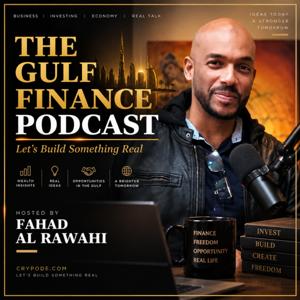


Nobody wants to think about this day. The day your contract ends.
But here is the reality: in the Gulf, this day comes for almost everyone. Contracts end, companies restructure, visas expire. And when it happens, most people are completely unprepared.
In this episode, Fahad Al Rawahi walks through exactly what to do when the contract ends: the first 30 days, the decisions that matter most, and the mistakes that cost you when you make them under pressure.
What you will learn:
🔹 The clock starts immediately
In most Gulf countries, your work visa is cancelled or enters a grace period when employment ends. In the UAE and Oman this is typically around 30 days, though it can vary. You are still legally present, but not permitted to work. Thirty days sounds like enough. It is not.
🔹 1. Calculate your exact runway
Not approximately. Exactly. Add up every account, emergency fund and savings pot. Then total your monthly fixed costs: rent, school fees, utilities, car payments and food. Divide one by the other. Under 3 months means you are in a dangerous position and need to move fast. 6 months or more gives you room to make good decisions rather than desperate ones.
🔹 2. Secure your end-of-service gratuity
Most Gulf employees are entitled to end-of-service pay based on years of service. In the UAE it is typically 21 days’ basic salary per year for the first five years and 30 days per year after that. Check the rules in your country and make sure the calculation is correct. This money is legally yours, and often the largest single sum you will receive. Do not leave it in a current account: use it deliberately to clear debt, build your emergency fund, or bridge you to the next role.
🔹 3. Do not panic spend
When income stops, some people freeze. Others spend to feel in control. Cut every non-essential expense immediately. This is not defeat. This is discipline.
🔹 4. Search smart
Most Gulf job offers come through networks, not job boards. Tell every professional contact clearly and without embarrassment that you are looking. Update your LinkedIn profile the same day, because Gulf recruiters search it constantly. Apply selectively: 30 targeted applications beat 100 unfocused ones.
🔹 5. Have a visa plan
If 30 days is not enough, know your options before the clock runs out. Tourist visas, visit visas and visa-on-arrival terms vary by nationality, and some countries let you re-enter on a visit visa while you keep searching. Others do not. Know the rules for your passport.
🔹 If you still have your job, start preparing now
The contract will end one day. The only question is whether you are ready when it does.
Visa and labour rules change often. Always check the current rules for your country.
Full article, end-of-service calculator and 30-day action checklist at crypode.com.
🎧 Listen on Spotify, Apple Podcasts and Amazon Music
🌐 More tools and guidance at crypode.com
🔔 Follow so you never miss a new episode
Hosted by Fahad Al Rawahi | Crypode: Money. Faith. Life in the Gulf.
#Crypode #GulfProfessionals #ContractEnds #ExpatLife #GulfFinance #JobLoss #FinancialPlanning #ExpatFinance #GulfExpat #Gratuity #VisaGuide #PersonalFinance #RealMoneyRealLife #HalalFinance #MoneyTips #GulfFinancePodcast #Crypode #LargeFamily #SoleProvider #FatherOfSix #SideIncome #ContentCreation #AvoidScams #GulfProfessionals #IslamicFinance #MuslimDad #PersonalFinance #FamilyFinance #Oman #UAE #Dubai #SaudiArabia #Qatar #Kuwait #Bahrain
At some point, almost every Gulf professional has the same thought: I could start something here. A side business, a consultancy, something of my own.
Then the questions start. Do I need a licence? Can I do this while employed? What if my company finds out? Is it even legal for an expat?
These questions stop most people before they begin. In this episode, Fahad Al Rawahi changes that.
What you will learn:
🔹 Can an expat legally start a business in the Gulf?
Yes. In most Gulf countries, expatriates can legally own and run businesses.
🔹 The UAE: mainland or free zone
🔹 Oman and Saudi Arabia
In Oman, the Foreign Capital Investment Law allows foreign nationals to own businesses in most sectors, and basic consultancy or service businesses do not need a free zone. In Saudi Arabia, rules are tighter, often requiring a local partner or a specific investor visa. This is changing gradually.
🔹 Can you do it while employed?
Read your employment contract. Many Gulf contracts include non-compete or non-moonlighting clauses, and breaching them can mean termination or legal action. But many do not restrict passive activities, investments, or businesses unrelated to your employer’s industry, such as rental property, an e-commerce store or freelancing in a different field. If it is unclear, a short consultation with a business lawyer costs far less than getting it wrong.
🔹 What kind of business makes sense?
🔹 Three questions before you start
Starting a business in the Gulf as an expat is absolutely possible. It needs proper structure, legal clarity and realistic expectations. The professionals who do it well treat it like a second career, not an experiment.
This episode is general information, not legal advice. Check the current rules for your country and visa.
Full guide, free zone comparison and business setup checklist at crypode.com.
🎧 Listen on Spotify, Apple Podcasts and Amazon Music
🌐 More tools and guidance at crypode.com
🔔 Follow so you never miss a new episode
Hosted by Fahad Al Rawahi | Crypode: Money. Faith. Life in the Gulf.
#GulfFinancePodcast #Crypode #ExpatBusiness #StartABusiness #FreeZone #Entrepreneur #SideBusiness #Freelancing #GulfProfessionals #ExpatLife #SmallBusiness #HalalBusiness #Oman #UAE #Dubai #SaudiArabia #Qatar #Kuwait #Bahrain
Every month, millions of Gulf professionals do the same thing. They wait for salary day, pay their bills, and then send money home.
For many of us, this is not optional. It is an obligation: to parents, to siblings, to a family that depends on what we earn here. And in Islam, this responsibility carries real weight.
But here is what most people never stop to ask: how much of that money actually arrives? Not how much you send. How much arrives.
Every international transfer comes with a cut. Over a career in the Gulf, those cuts add up to a number that will genuinely shock you.
In this episode, Fahad Al Rawahi shows you where the money leaks, and how to make sure more of it reaches the people you are working so hard for.
What you will learn:
🔹 The real cost of a “small” loss
Send $2,000 home every month and lose just 3% to fees and poor rates, and that is $60 per transfer, $720 a year, and $7,200 over ten years. Gone, and not to your family. And 3% is conservative: many people using traditional bank transfers lose 5, 6, even 7% without realising it.
🔹 The fee versus the rate
Many services advertise zero or low fees, then give you a poor exchange rate. The fee is visible; the rate loss is invisible. Always check the mid-market rate (the real rate you find on Google) and compare it with what you are offered. The gap is your real cost.
🔹 Timing matters
Rates move daily, sometimes hourly. Transferring the moment your salary lands can mean sending on a bad day. Waiting two or three days when the rate is poor costs nothing and can save hundreds over a year. For pegged Gulf currencies the rate barely moves, but for Pakistani and Indian rupees, Bangladeshi taka, Philippine pesos or Egyptian pounds, timing and service choice make a real difference.
🔹 Choosing the right service
🔹 Frequency: the overlooked saving
Sending four smaller transfers a month means paying fees four times. Consolidate to one or two and you cut fees in half immediately.
🔹 Make the money work twice
If everything you send is consumed as living expenses, in 20 years there may be nothing to show for it. Talk with your family about directing a portion towards something that builds: buying land, paying off debt, starting a small business or building a house. This is not about sending less. It is about maximising what it creates.
You work hard for this money. Make sure it arrives fully, and make sure it builds something.
Full article, transfer service comparisons and a remittance calculator at crypode.com.
🎧 Listen on Spotify, Apple Podcasts and Amazon Music
🌐 More tools and guidance at crypode.com
🔔 Follow so you never miss a new episode
Hosted by Fahad Al Rawahi | Crypode: Money. Faith. Life in the Gulf.
#Crypode #GulfProfessionals #Remittance #SendMoneyHome #ExpatFinance #GulfFinance #MoneyTransfer #ExchangeRate #PersonalFinance #HalalFinance #GulfExpat #FinancialPlanning #ExpatLife #RealMoneyRealLife #MoneyTips #GulfFinancePodcast #Crypode #LargeFamily #SoleProvider #FatherOfSix #SideIncome #ContentCreation #AvoidScams #GulfProfessionals #IslamicFinance #MuslimDad #PersonalFinance #FamilyFinance #Oman #UAE #Dubai #SaudiArabia #Qatar #Kuwait #Bahrain
Before you moved to the Gulf, someone probably told you about the tax-free salary. Maybe they mentioned the housing allowance, the flights home and the benefits package.
But did anyone sit you down and explain what it actually costs to live here? Not the rent, not the obvious stuff. The things nobody puts in a spreadsheet before they sign the contract.
Here is the truth: the Gulf is one of the most expensive places in the world to live well. Most professionals only realise it after the first year, when they look at their bank account and wonder where it all went.
In this episode, Fahad Al Rawahi walks through the five hidden costs that quietly drain Gulf salaries, and what you can do about them.
What you will learn:
🔹 1. School fees
For families, this is often the single biggest unplanned expense. Public schools are generally not open to expatriates, so private school it is, from around $10,000 a year per child in most Gulf cities, and $30,000 to $50,000 at top schools in Dubai and Abu Dhabi. Fees rise 3 to 5% a year, sometimes more, and once your child is settled, moving schools is hard. Factor this in before you accept a package, not after.
🔹 2. Healthcare gaps
Employer insurance varies enormously. Dental, optical, specialist referrals and mental health care are often not covered and add up fast for a family. Treatment back home is usually out of pocket unless your policy says otherwise. Review your policy every year, before you need it.
🔹 3. Convenience inflation
The Gulf is built for comfort: food delivery, taxis, malls and entertainment at every turn. Small costs stack. A family spending $300 a month on delivery and taxis spends $3,600 a year, or $18,000 over five years that never built anything.
🔹 4. The social cost
There is unspoken pressure to keep up: the car, the neighbourhood, the restaurants, the holidays. In expat communities, comparison is constant. Enjoy your life, but be intentional. Every dirham spent on appearance is a dirham not building your future.
🔹 5. Flights home
Two annual tickets sound generous, until you have a family of four or five, parents back home, emergencies and school holidays. For many Gulf professionals, the real yearly flight bill beyond what the company covers is $5,000 to $10,000.
🔹 What to do about it
The Gulf salary is generous, but the Gulf cost of living is extraordinary. The professionals who build real wealth here are not the highest earners. They are the most intentional spenders.
🎧 Listen on Spotify, Apple Podcasts, and Amazon Music
🌐 More tools and guidance at crypode.com
🔔 Follow so you never miss a new episode
Hosted by Fahad Al Rawahi | Crypode: Money. Faith. Life in the Gulf.
#GulfFinancePodcast #Crypode #CostOfLiving #ExpatLife #SchoolFees #Budgeting #LifestyleCreep #PersonalFinance #GulfProfessionals #MoneyTips #ExpatFinance #FamilyFinance #SaveMoney #Oman #UAE #Dubai #SaudiArabia #Qatar #Kuwait #Bahrain #Crypode #GulfProfessionals #ExpatLife #HiddenCosts #GulfFinance #PersonalFinance #FinancialPlanning #ExpatFinance #DubaiLife #GulfExpat #MoneyTips #RealMoneyRealLife #HalalFinance #FinancialAwareness #GulfLiving
Side income has become a survival strategy for many Gulf professionals. With salaries stretched thin by loan repayments, rising costs, and family obligations, earning beyond your main job is not just ambition anymore. For many of us, it is necessity.
But for Muslim professionals, there is an extra question most advice skips over: is this income halal?
In this episode, Fahad Al Rawahi gives you a clear, practical framework to judge any side income opportunity through an Islamic lens. The aim is to help you earn with confidence and barakah.
Islam does not only prohibit; it honours honest trade. The Prophet, peace be upon him, was a merchant, and the hadith tells us the honest, trustworthy merchant will be with the prophets, the truthful and the martyrs.
The 7-point checklist:
🔹 1. Is the product or service itself permissible?
Anything directly linked to alcohol, gambling, adult content, pork, weapons, or interest-based finance is off-limits, however profitable.
🔹 2. Is there genuine value exchange?
You must offer something real: a skill, a product, a service, expertise or time. Pyramid schemes, cash-gifting circles and MLM structures that profit mainly from recruiting fail this test.
🔹 3. Is there full transparency with the buyer?
Hidden fees, misleading marketing and exaggerated claims compromise the income. Honest business is a form of worship.
🔹 4. Does it involve riba?
Some peer-to-peer lending platforms, savings apps and BNPL referral schemes earn interest on money lent to others. Check how the revenue model really works.
🔹 5. Are you meeting your main obligations first?
Earning must not cost you your prayers, your family, or your core job. Halal income pursued at the expense of Fajr or your children’s time is still a problem.
🔹 6. Is your passive income truly passive, or riba in disguise?
Rent from property you own and dividends from Shariah-compliant stocks are halal. Returns from interest-based lending or conventional savings are riba, however they are marketed.
🔹 7. Are your contracts clear?
Agree on scope, payment, and timeline in writing, even by email.
🔹 The 3-question test
Would you be comfortable describing this income to a respected scholar? Does it come from genuine value, not exploitation or deception? Could you pay zakat on it with full sincerity? If all three are yes, go ahead with confidence.
🔹 Halal side income ideas for Gulf professionals
Barakah is not just about how much you earn, but how you earn it. Earn honestly, pay zakat, give to those around you, and watch what happens.
This episode is for education only and is not a fatwa or financial advice.
🎧 Listen on Spotify, Apple Podcasts, and Amazon Music
🌐 More tools and guidance at crypode.com
🔔 Follow so you never miss a new episode
Hosted by Fahad Al Rawahi | Crypode: Money. Faith. Life in the Gulf.
#GulfFinancePodcast #Crypode #SideIncome #HalalIncome #SideHustle #IslamicFinance #HalalBusiness #Barakah #Riba #Freelancing #GulfProfessionals #PersonalFinance #MuslimEntrepreneur #Oman #UAE #Dubai #SaudiArabia #Qatar #Kuwait #Bahrain #Crypode #GulfFinance #IslamicFinance #HalalMoney #GulfProfessionals #GulfLife #ExpatLife #PersonalFinance #FinancialEducation #MuslimMoney #GulfFinancePodcast #Crypode #LargeFamily #SoleProvider #FatherOfSix #SideIncome #ContentCreation #AvoidScams #GulfProfessionals #IslamicFinance #MuslimDad #PersonalFinance #FamilyFinance #Oman #UAE #Dubai #SaudiArabia #Qatar #Kuwait #Bahrain
Gold has been a store of value for thousands of years. In Islamic tradition it is both one of the most regulated assets under Shariah and one of the most widely accepted halal investments.
For Gulf professionals, gold is not just an investment. It is culture. It is security. It is faith.
In this episode, Fahad Al Rawahi gives you the complete picture: what makes gold halal, where the lines are, and how to actually invest in it correctly from the Gulf.
What you will learn:
🔹 Why gold is naturally halal
Unlike stocks, bonds, or cryptocurrencies, gold needs almost no Shariah screening. It is a tangible asset with intrinsic value: no counterparty risk, no interest, no haram industries. Scholars across all major schools have historically accepted gold ownership as permissible.
🔹 The one critical condition
The Prophet, peace be upon him, said: “Gold for gold, silver for silver, like for like, equal for equal, hand to hand.” Gold traded for gold must be equal in weight and exchanged on the spot. No deferred delivery, no ambiguity.
🔹 Not all gold exposure is equal
🔹 Why gold makes sense in the Gulf
GCC currencies are largely pegged to the US dollar. When the dollar weakens, purchasing power erodes, and gold has historically moved inversely to the dollar. Many planners suggest 5 to 15% of a portfolio in gold as a hedge and store of value, alongside sukuk.
🔹 How to start
Gold coins are the best entry point: Omani gold coins, the British sovereign, the South African Krugerrand. Liquid, recognised, easy to store, and you can add over time.
🔹 Where to buy
🔹 Do not forget zakat
Gold held as a store of value (not jewellery worn regularly) is subject to zakat once it exceeds the nisab of 85 grams and has been held for a full lunar year. The rate is 2.5%. The zakat calculator on crypode.com lets you include gold holdings.
Invest in something real, own it completely, and pay your zakat on it with full sincerity.
This episode is for education only and is not a fatwa or financial advice.
🎧 Listen on Spotify, Apple Podcasts, and Amazon Music
🌐 More tools and guidance at crypode.com
🔔 Follow so you never miss a new episode
Hosted by Fahad Al Rawahi | Crypode: Money. Faith. Life in the Gulf.
#GulfFinancePodcast #Crypode #GoldInvestment #HalalInvesting #IslamicFinance #Zakat #PhysicalGold #Sukuk #ShariahCompliant #MuslimInvestor #GulfProfessionals #PersonalFinance #WealthPreservation #Oman #UAE #Dubai #SaudiArabia #Qatar #Kuwait #Bahrain #Crypode #GulfFinance #IslamicFinance #HalalMoney #GulfProfessionals #GulfLife #ExpatLife #PersonalFinance #FinancialEducation #MuslimMoney #GulfFinancePodcast #Crypode #LargeFamily #SoleProvider #FatherOfSix #SideIncome #ContentCreation #AvoidScams #GulfProfessionals #IslamicFinance #MuslimDad #PersonalFinance #FamilyFinance #Oman #UAE #Dubai #SaudiArabia #Qatar #Kuwait #Bahrain
Today’s episode is different. It is not about investment strategies or debt repayment plans. It is about something that sits underneath all of them: the weight.
The knot in your stomach when you check your bank balance. The conversations you avoid with your spouse because you have no good news to share. The quiet fear that one unexpected expense could break everything.
Financial stress is not just about numbers. It is about what those numbers do to you. And most financial advice completely ignores it. It treats anxiety as a simple lack of discipline.
In this episode, Fahad Al Rawahi starts from a different place: you are already doing your best. The goal is not to add guilt, but to help you protect your mind while you work through the money problems.
What you will learn:
🔹 What long-term financial stress does to you
Sleep becomes difficult. Irritability rises. You withdraw from friends and family. Concentration at work suffers, which, ironically, puts your income at even greater risk.
🔹 Why the Gulf can make it worse
The social stigma around debt means many professionals keep a perfect surface, “everything is fine, alhamdulillah”, while inside they are drowning. If this sounds familiar, hear this clearly: you are not weak, and you are not a failure. You are carrying a heavy load in a system that offers very little mercy. Shame grows in silence. Speaking to a trusted friend, family member or counsellor is not weakness. It is one of the most important things you can do.
🔹 Separate fear from facts
Write down your situation as if you were a neutral outside adviser: your debts, income and essential expenses, with no emotional language. Then ask: what is the actual worst case, and what is the most likely case? For most people, the worst case is bad but survivable, and the most likely case is difficult but not impossible.
🔹 Four small daily habits that protect your mind
🔹 When it is more than worry
If you are experiencing persistent sleeplessness, loss of appetite, a feeling that nothing will ever improve, or thoughts of harming yourself, please reach out to a mental health professional or your local health services today. You are not alone, and real help is available.
🔹 You are more than your debt
Financial stress can shrink your identity until you see only your debt, your salary and your struggles. But you are also a parent, a professional, a friend, a person with skills, values and dignity. “Allah does not burden a soul beyond what it can bear.”
The road out is slow, and it requires patience. But you do not have to walk it in shame. Keep taking small steps. Keep protecting your mind. This season will not last forever.
🎧 Listen on Spotify, Apple Podcasts and Amazon Music
🌐 More tools and guidance at Crypode.com
🔔 Follow so you never miss a new episode
Hosted by Fahad Al Rawahi | Crypode: Money. Faith. Life in the Gulf.
#GulfFinancePodcast #Crypode #FinancialStress #MentalHealth #MoneyAndMentalHealth #DebtStress #Wellbeing #GulfProfessionals #ExpatLife #PersonalFinance #IslamicFinance #Oman #UAE #Dubai #SaudiArabia #Qatar #Kuwait #Bahrain #Crypode #GulfFinance #IslamicFinance #HalalMoney #GulfProfessionals #GulfLife #ExpatLife #PersonalFinance #FinancialEducation #MuslimMoney #GulfFinancePodcast #Crypode #LargeFamily #SoleProvider #FatherOfSix #SideIncome #ContentCreation #AvoidScams #GulfProfessionals #IslamicFinance #MuslimDad #PersonalFinance #FamilyFinance #Oman #UAE #Dubai #SaudiArabia #Qatar #Kuwait #Bahrain
This episode is personal. Fahad Al Rawahi is the father of six children and the sole provider for his family. He works in Oman, in a system where salary deductions go out before he sees a single rial, and what remains has to stretch across everything that six children and a household require.
If that is your reality too, or something close to it, this episode is for you.
What you will learn:
🔹 The truth about “passive income”
The phrase gets thrown around constantly. But for a busy professional with a full-time job and a family depending on them, the reality is more complicated. Most passive income advice was not written for someone managing six school fees, rising utility costs, and loan repayments at the same time.
🔹 The biggest mistake when looking for extra income
Searching for something entirely outside your existing skill set: dropshipping products you have never seen, crypto trading you do not understand, or schemes that promise returns without explaining the risk. People lose time, money, or both.
🔹 The more reliable path: sell what you already know
Ask one honest question: what do I know that other people would pay to learn or access?
🔹 Content creation: slow, but genuinely accessible
Writing, recording, and sharing what you know online is one of the few income streams that requires almost no startup capital and fits into the small blocks of time that actually exist in a full life. Crypode.com and this podcast are built on exactly that principle. Be honest about the timeline: 12 to 18 months of consistent work before meaningful returns appear. But a newsletter with 1,000 engaged subscribers in the Gulf is a real asset. Start building it now, even if monetisation is months away.
🔹 What to avoid
The Gulf has no shortage of investment schemes, network marketing opportunities and get-rich-quick arrangements, and many specifically target professionals under financial pressure.
🔹 Providing for your family is worship
In Islam, every dirham spent honestly on your family is an act of worship. The Prophet, peace be upon him, said that even the food you place in your wife’s mouth is counted as sadaqah. You are not just paying bills. You are fulfilling an obligation with real spiritual weight.
The road is hard, and the responsibilities are real. But showing up every day for the people who depend on you is honoured. Keep building. Bi-idhnillah, it will grow.
🎧 Listen on Spotify, Apple Podcasts, and Amazon Music
🌐 More tools and guidance at crypode.com
🔔 Follow so you never miss a new episode
Hosted by Fahad Al Rawahi | Crypode: Money. Faith. Life in the Gulf.
#GulfFinancePodcast #Crypode #LargeFamily #SoleProvider #FatherOfSix #SideIncome #ContentCreation #AvoidScams #GulfProfessionals #IslamicFinance #MuslimDad #PersonalFinance #FamilyFinance #Oman #UAE #Dubai #SaudiArabia #Qatar #Kuwait #Bahrain #Crypode #GulfFinance #IslamicFinance #HalalMoney #GulfProfessionals #GulfLife #ExpatLife #PersonalFinance #FinancialEducation #MuslimMoney
When people talk about building wealth, they talk about property, investments, side businesses, and passive income. But for most working professionals in the Gulf, the single most powerful financial asset they own is something they use every day and rarely think of as an asset at all: their career.
Your skills, your experience, and your professional reputation generate income, and income is the foundation of everything else.
In this episode, Fahad Al Rawahi explains why your career deserves the same attention as any investment, and how to make sure you are being paid what your skills are actually worth.
What you will learn:
🔹 Why a raise can beat most investment strategies
For someone without existing capital, a 25% salary increase can do more than almost any investment strategy. On a salary of 1,500 rials, that is 375 rials more every month, over 22,000 rials in five years, before investing a single extra rial. Invested consistently, the number grows significantly. No crypto, no property: just your career, leveraged better.
🔹 The hidden cost of loyalty
In the Gulf, loyalty is valued, stability is respected, and changing jobs carries a social weight it does not carry elsewhere. But loyalty often comes at a financial cost. Salaries within the same company rarely keep pace with the market. A professional who stays ten years may earn significantly less than a peer who moved twice in the same period. This is not about being disloyal. It is about knowing your market value.
🔹 A view from Gulf aviation
Fahad speaks directly from his experience in aviation technical services. The sector is expanding, with carriers such as Qatar Airways, Emirates, Air Arabia, flynas and Oman Air growing their fleets and technical teams. In aviation, qualifications such as EASA Part 66 licensing, CAMO qualifications, and aircraft type ratings change the equation across Gulf carriers.
🔹 Training is professional development, not just an obligation
Every hour with OEM engineers, every technical document you study and every certification you pursue builds your professional profile and your market value. When did you last invest deliberately in your own growth, not training your company sent you to, but training you chose for yourself?
🔹 The mindset shift
Stop thinking of yourself as an employee who receives what they are given. Start thinking of yourself as a professional with a portfolio of skills that have real market value. That means knowing your worth, investing in your growth, and having honest conversations about compensation: with your current employer first, and with the wider market if needed.
The question to ask before looking at side income or investments: am I being paid what my skills are worth in this market, right now?
Your career is not just how you pay the bills today. It is your most powerful tool for changing your financial situation over the next five to ten years. Treat it accordingly.
🎧 Listen on Spotify, Apple Podcasts, and Amazon Music
🌐 More tools and guidance at crypode.com
🔔 Follow so you never miss a new episode
Hosted by Fahad Al Rawahi | Crypode: Money. Faith. Life in the Gulf.
#GulfFinancePodcast #Crypode #CareerGrowth #SalaryNegotiation #KnowYourWorth #GulfProfessionals #AviationCareers #Aviation #ProfessionalDevelopment #PersonalFinance #IncomeGrowth #ExpatCareers #FinancialFreedom #Oman #UAE #Dubai #SaudiArabia #Qatar #Kuwait #Bahrain #Crypode #GulfFinance #IslamicFinance #HalalMoney #GulfProfessionals #GulfLife #ExpatLife #PersonalFinance #FinancialEducation #MuslimMoney
Most of us grew up learning the basics of money: earn, save, and do not spend more than you have. But very few of us were ever taught how Islamic finance actually works, what riba means in practice, what halal alternatives exist, or how to align daily money decisions with our faith.
In this episode, Fahad Al Rawahi fixes that, clearly and without jargon.
What you will learn:
🔹 What Islamic finance really is
It is not a niche product, and it is not only for very religious people. It is a complete financial system built on real ethical principles, operating successfully for decades.
🔹 The three prohibitions
In their place, Islamic finance promotes profit and loss sharing, real transactions backed by real assets, and fair contracts that both parties understand. The core principle is simple: if you benefit from something, you must also bear some of its risk. Money should be connected to real economic activity.
🔹 The products you will actually encounter
🔹 Where to find Islamic finance in the GCC
In Oman, Bank Nizwa and Alizz Islamic Bank. In the UAE, Abu Dhabi Islamic Bank is one of the largest Islamic banks in the world. Across the region, institutions such as Qatar Islamic Bank and Kuwait Finance House. One important caution: not everything labelled Islamic is properly structured. Always check that a product has been approved by a reputable, independent Shariah supervisory board.
🔹 If you already have a conventional loan
In Oman, you can approach an Islamic bank about refinancing your conventional loan into a Shariah-compliant product, subject to approval. The key principle: the new Islamic contract must completely replace the old one. You cannot mix interest-based and profit-based finance in the same transaction.
🔹 For investments
Look for Shariah-compliant ETFs and sukuk funds, or use a halal stock screener such as Zoya or Musaffa to check your holdings.
🔹 The verse that anchors it all
“O you who believe, fear Allah and give up what remains of riba, if you are believers.” The system built to honour it is more accessible than most people realise.
The goal is not perfection overnight. It is direction: moving consistently, step by step, toward money that aligns with your values.
This episode is for education only and is not a fatwa or financial advice.
🎧 Listen on Spotify, Apple Podcasts, and Amazon Music
🌐 More tools and guidance at crypode.com
🔔 Follow so you never miss a new episode
Hosted by Fahad Al Rawahi | Crypode: Money. Faith. Life in the Gulf.
#GulfFinancePodcast #Crypode #IslamicFinance #IslamicBanking #Riba #Murabaha #Ijara #Sukuk #HalalInvesting #ShariahCompliant #MuslimFinance #GulfProfessionals #PersonalFinance #Oman #UAE #Dubai #SaudiArabia #Qatar #Kuwait #Bahrain #Crypode #GulfFinance #IslamicFinance #HalalMoney #GulfProfessionals #GulfLife #ExpatLife #PersonalFinance #FinancialEducation #MuslimMoney
From the publisher's feed