
Sign up to save your podcasts
Or

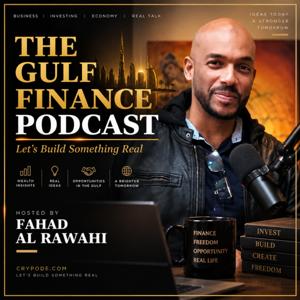


Here is something most financial advisers will never say to you: sometimes the debt is not your fault. Life happened. And now you are sitting with a number that feels impossible, while a system that does not negotiate looks back at you, completely unmoved.
That is the reality for many working professionals across the Gulf, and it is one Fahad Al Rawahi has lived personally. In this episode, he explains why Gulf debt is different, and the practical strategy that actually works in a system this rigid.
What you will learn:
🔹 Why Gulf debt is different
In the West, you can often negotiate with creditors or settle for less. In Oman and most GCC countries, personal loans and credit cards work differently. The bank deducts directly from your salary before you see it. There is usually no negotiation on the principal. Missing payments can mean not just credit damage, but legal action and travel bans. Standard Western advice often simply does not work here.
🔹 The weight of 40 to 60%
Many Gulf professionals see 40 to 60% of their salary disappear into loan repayments the moment it arrives. What remains must cover fuel, food, school fees, utilities and everything a family depends on. There is almost no room to breathe, let alone save or invest. Over time, it changes how you sleep, work and live with your family.
🔹 You are not failing
If you are in this situation, hear this first: you are managing a structural constraint in a system that was not designed with your situation in mind. That reframe matters more than any financial tip, because it stops shame from clouding your judgment.
🔹 Four strategies that work in the Gulf
🔹 The 7-year lens
A Gulf personal loan typically runs five to seven years. Unlike open-ended debt, you have a finish line. Not comfortable, but finite, and there is a real difference between uncomfortable and endless.
🔹 Your single next move
The biggest mistake is trying to solve everything at once, panicking at the total and freezing. Instead, identify your single next step: clearing a credit card, one conversation with HR about overtime, or one meeting with an Islamic bank. One step, then the next. Not heroically. Persistently.
Inna ma’al-‘usri yusra. With hardship comes ease. That promise is real. The road out is slow, but it exists.
This episode is for education only and is not financial or legal advice. Banking rules differ across GCC countries.
🎧 Listen on Spotify, Apple Podcasts, and Amazon Music
🌐 More tools and guidance at crypode.com
🔔 Follow so you never miss a new episode
Hosted by Fahad Al Rawahi | Crypode: Money. Faith. Life in the Gulf.
#GulfFinancePodcast #Crypode #DebtFree #DebtPayoff #GulfProfessionals #PersonalLoans #CreditCardDebt #IslamicFinance #IslamicBanking #FinancialStress #PersonalFinance #MoneyMindset #Oman #UAE #Dubai #SaudiArabia #Qatar #Kuwait #Bahrain #Crypode #GulfFinance #IslamicFinance #HalalMoney #GulfProfessionals #GulfLife #ExpatLife #PersonalFinance #FinancialEducation #MuslimMoney
What happens when you can no longer work? Not if, but when, because that day comes for all of us.
In many countries, a state pension is quietly building in the background. In the Gulf, the honest answer for most of us is this: whatever you have saved is what you have. That is the retirement reality here, and most Gulf professionals are not ready for it.
In this episode, Fahad Al Rawahi explains why retirement planning in the Gulf is different, and the five steps to build your own safety net, starting now.
What you will learn:
🔹 The retirement reality, specifically
For Omani nationals in the private sector, the Social Protection Fund provides some coverage, but the benefit depends on your years of contribution and salary history, and the payout is often less than expected. For expatriates, the main benefit at the end of employment is usually the end-of-service gratuity, typically 15 to 30 days’ salary per year of service. After 20 years, that might equal one or two years of salary: enough to breathe for a while, not enough to retire on. There is no Gulf 401(k), no employer-matched pension and no state pension for expats.
🔹 Why so many arrive at retirement with almost nothing
Not because they did not earn enough, but because the system does not force saving. In the Gulf, the salary arrives in full, and leaves in full too: family obligations, loan repayments, school fees and an easy lifestyle. Many also assume family will provide in old age. But placing that burden on the next generation is not fair to them, or to you.
🔹 Five steps to a realistic Gulf retirement plan
🔹 Tawakkul and planning are not opposites
The Prophet, peace be upon him, tied his camel and then trusted in Allah. Tawakkul means full effort followed by genuine trust. Planning is not a lack of faith. It is responsibility. The Quran reminds us: let those fear who would leave behind weak offspring.
Wherever you are in your career, something is better than nothing. The worst outcome is decades of work with nothing to show for it, and that outcome is entirely avoidable, but only with action, starting today.
This episode is for education only and is not financial advice. Pension and gratuity rules vary by country and employer.
🎧 Listen on Spotify, Apple Podcasts, and Amazon Music
🌐 More tools and guidance at crypode.com
🔔 Follow so you never miss a new episode
Hosted by Fahad Al Rawahi | Crypode: Money. Faith. Life in the Gulf.
#GulfFinancePodcast #Crypode #RetirementPlanning #NoPension #EndOfService #Gratuity #ExpatFinance #GulfProfessionals #HalalInvesting #IslamicFinance #Sukuk #PersonalFinance #FinancialFreedom #Oman #UAE #Dubai #SaudiArabia #Qatar #Kuwait #Bahrain #Crypode #GulfFinance #IslamicFinance #HalalMoney #GulfProfessionals #GulfLife #ExpatLife #PersonalFinance #FinancialEducation #MuslimMoney
Many Muslim professionals in the Gulf want to invest. They know that money sitting still loses value, and that saving alone will not build the future they want for their families.
But then a worry appears: what if the investment is not halal? So many people do nothing. The money stays in a current account, year after year, while inflation quietly eats away at it.
In this episode, Fahad Al Rawahi removes that confusion. You will learn what halal investing actually means, how to check whether a company is Shariah-compliant, and how Zoya and Musaffa make it easier.
What you will learn:
🔹 The principles of halal investing
Halal investing is not about avoiding the stock market. What matters is what the business does, and how it is financed.
🔹 The two main Shariah screens
🔹 Purification, the step many people forget
Even a compliant company may earn a very small portion of its income from impermissible sources. Investors calculate that portion of their dividends or gains and give it to charity, not as sadaqah for reward, but to cleanse the investment.
🔹 How Zoya and Musaffa help
Both are apps and websites that screen stocks and funds for Shariah compliance. Search a company or fund to see if it is compliant, questionable or not compliant. Many also estimate your purification amount and alert you when a company’s status changes, because compliance is not permanent. A word of honesty: these tools are guides, not fatwas. If you are unsure, consult a qualified Islamic finance scholar or adviser.
🔹 A simple halal investing approach for Gulf professionals
🔹 Wealth as a trust
Wealth in Islam is not something to fear. It is a trust. A halal portfolio, built patiently, can support your family, fund your zakat and leave something lasting behind you.
Your action step this week: download Zoya or Musaffa, search for the investments you already hold or the ones you have been considering, and see what the screen says. Knowledge removes fear, and once the fear is gone, you can finally begin.
This episode is for education only and is not a fatwa or financial advice.
🎧 Listen on Spotify, Apple Podcasts and Amazon Music
🌐 More tools and guidance at crypode.com
🔔 Follow so you never miss a new episode
Hosted by Fahad Al Rawahi | Crypode: Money. Faith. Life in the Gulf.
#GulfFinancePodcast #Crypode #HalalInvesting #IslamicFinance #ShariahCompliant #Zoya #Musaffa #Sukuk #HalalStocks #MuslimInvestors #GulfProfessionals #PersonalFinance #Zakat #Oman #UAE #Dubai #SaudiArabia #Qatar #Kuwait #Bahrain
Gulf professionals are often described as some of the best-paid workers in the world. Tax-free salaries. Housing allowances. Annual tickets. Bonuses. From the outside, it looks like the perfect place to build wealth.
And yet, ask a room full of Gulf professionals how many of them feel financially secure, and very few hands go up. Good salary. Still broke.
In this episode, Fahad Al Rawahi explains why this happens so often, and why it is rarely about how much you earn. It is about three quiet patterns most of us fall into without noticing, and the mindset shift that changes everything.
What you will learn:
🔹 Pattern 1: The Gulf income illusion
A high, tax-free salary creates a feeling of abundance that quietly shapes every decision. The apartment gets bigger, the car newer, the restaurants more expensive, the holidays longer. But a lifestyle is paid for every month, for years, until it consumes almost the entire salary. High income, high spending, very little left. That is not wealth. It is a very comfortable treadmill.
🔹 Pattern 2: Social pressure
Life in the Gulf is lived in close community. There is an unspoken standard of what someone in your position should drive, wear, give and host. So we spend to belong. Generosity is a beautiful value, but spending to protect an image is something very different, and it can quietly cost more than any single bill.
🔹 Pattern 3: Saving without investing
Many Gulf professionals who do save keep their money in a current account. But money that does nothing loses value every year to inflation. $10,000 sitting still for ten years buys noticeably less at the end. Saving protects you from today’s emergencies. Halal, long-term investing protects you from tomorrow’s reality.
🔹 The deeper issue: destination or launchpad?
Many of us treat the Gulf as a destination, a place where life simply continues. But for most people, especially expatriates, it is a launchpad: a period of strong earning power meant to fund the rest of your life. When you see it as a destination, you spend as if it will last forever. When you see it as a launchpad, you build as if it will end.
🔹 Five steps to make the shift
🔹 True richness
The Prophet, peace be upon him, taught that true richness is not in having many possessions, but in the richness of the soul.
Your action step this week: if you left the Gulf one year from today, what would you have to show for your time here? If you do not like the answer, the good news is simple: you still have time to change it.
🎧 Listen on Spotify, Apple Podcasts and Amazon Music
🌐 More tools and guidance at crypode.com
🔔 Follow so you never miss a new episode
Hosted by Fahad Al Rawahi | Crypode: Money. Faith. Life in the Gulf.
#GulfFinancePodcast #Crypode #GulfProfessionals #StillBroke #LifestyleInflation #ExpatFinance #ExpatLife #PersonalFinance #HalalInvesting #IslamicFinance #FinancialFreedom #MoneyMindset #SavingMoney #WealthBuilding #Oman #UAE #Dubai #SaudiArabia #Qatar #Kuwait #Bahrain
There is a question heard more than almost any other from Muslim professionals in the Gulf: is crypto halal?
A colleague tells you he made a fortune. A cousin shows you a chart on his phone. Social media is full of young people claiming financial freedom in a few months. And somewhere inside, you feel two things at the same time: curiosity and unease.
In this episode, Fahad Al Rawahi talks honestly about cryptocurrency and Islam. Not to give a fatwa, because he is not a scholar and this is a question for people of knowledge you trust, but to help you understand the real issues so you can make a careful decision rather than an emotional one.
What you will learn:
🔹 What cryptocurrency actually is
A digital asset recorded on a shared, public ledger called a blockchain. Bitcoin was the first. Thousands more have followed, some serious, many not.
🔹 Why scholars disagree
Some scholars and official fatwa bodies take a cautious or negative position, citing gharar (excessive uncertainty), maysir (gambling and speculation), and harm (links to fraud, scams and illegal use). Others take a conditional view: a digital asset can be treated like other property if it has genuine utility, is widely accepted, is legal where you live, and is held without interest, deception or gambling-like behaviour. Under this view, the problem is not the technology, but how people use it.
🔹 Where the concerns are clear, whichever view you follow
🔹 If you decide crypto may be permissible for you
🔹 Leave what makes you doubt
A principle from our tradition: leave what makes you doubt for what does not make you doubt. In a grey area, caution is not weakness. It is wisdom.
Your action step this week: write down honestly why you are interested in crypto. Is it understanding, or the fear of missing out? Then speak to a scholar or a qualified Islamic finance adviser before you invest a single dollar. Your wealth is an amanah, a trust. Protect it with knowledge, not excitement.
This episode is for education only and is not a fatwa or financial advice.
🎧 Listen on Spotify, Apple Podcasts, and Amazon Music
🌐 More tools and guidance at crypode.com
🔔 Follow so you never miss a new episode
Hosted by Fahad Al Rawahi | Crypode: Money. Faith. Life in the Gulf.
#GulfFinancePodcast #Crypode #CryptoAndIslam #IsCryptoHalal #IslamicFinance #HalalInvesting #Cryptocurrency #Bitcoin #MuslimInvestors #ShariahCompliant #GulfProfessionals #PersonalFinance #InvestSmart #Oman #UAE #Dubai #SaudiArabia #Qatar #Kuwait #Bahrain
Let me ask you a simple question, and answer it honestly: if your salary stopped tomorrow, how many months could your family live on what you have saved?
For many Gulf professionals, the honest answer is uncomfortable. One month. Maybe two. For some, not even that. And yet most of us know that a contract can end, a company can restructure, a family member can fall ill, or an unexpected bill can arrive at the worst possible moment.
In this episode, Fahad Al Rawahi explains why an emergency fund matters even more in the Gulf than almost anywhere else, and how to build one the honest, riba-free way.
What you will learn:
🔹 Why the Gulf makes this so important
Elsewhere, losing your job often comes with a safety net. In the Gulf, especially for expatriates, residency is usually tied to employment. You may have only a limited grace period to find new work or leave the country, while school fees, rent contracts and loan installments keep running. A job loss can become a family crisis within weeks. An emergency fund turns that crisis back into a difficult but manageable season.
🔹 What an emergency fund is, and is not
Money set aside for one purpose only: genuine emergencies such as a job loss, a medical expense, an urgent trip home or an unavoidable car repair. It is not for holidays, shopping or investments. It is your family’s protection.
🔹 How much you need
Start with three months of essential expenses: rent, food, utilities, school fees, transport and minimum debt payments. For expatriates, sole earners and large families, aim for six months. If your essential costs are $3,000 a month, your goal is between $9,000 and $18,000, built step by step.
🔹 Where to keep it, the halal way
An Islamic bank savings or investment account structured on profit-sharing, such as mudarabah, rather than interest. A simple non-interest current account for the first portion, so it is always instantly available. And, for some, a small amount of physical gold as a long-term store of value, though never as your only reserve. The money must be safe, accessible within days, and halal.
🔹 Five steps to build it
🔹 The lesson of Prophet Yusuf
During seven years of abundance, Prophet Yusuf, peace be upon him, prepared for seven years of hardship. That is exactly what an emergency fund is: preparing in the years of plenty for the season you hope will never come.
Your action step this week: calculate your essential monthly costs, multiply by three, and write that number where you will see it every day. Then open a separate account and make your first transfer, however small. Your emergency fund will not make you rich, but it will make you free.
🎧 Listen on Spotify, Apple Podcasts, and Amazon Music
🌐 More tools and guidance at crypode.com
🔔 Follow so you never miss a new episode
Hosted by Fahad Al Rawahi | Crypode: Money. Faith. Life in the Gulf.
#GulfFinancePodcast #Crypode #EmergencyFund #HalalSavings #IslamicFinance #RibaFree #GulfProfessionals #ExpatFinance #PersonalFinance #FinancialSecurity #SavingMoney #MuslimFinance #FinancialPlanning #Oman #UAE #Dubai #SaudiArabia #Qatar #Kuwait #Bahrain
There is a moment every month that most Gulf professionals know very well. The salary notification arrives. For a few days, you feel comfortable, maybe even generous. And then, piece by piece, it leaves. Rent. Loan installments. School fees. The credit card. The remittance home. The supermarket. A dinner here, an online order there.
By the third week, you are already counting the days until the next one. It arrives every month, and it leaves just as fast.
This is the Gulf salary trap. In this episode, Fahad Al Rawahi explains why a good income does not automatically create financial security, and what you can do to finally break the cycle.
What you will learn:
🔹 It is not a low-income problem
Many people caught in the salary trap earn very respectable salaries. The problem is not how much comes in. It is how the money moves once it arrives.
🔹 The three forces that keep the trap closed
🔹 Five steps to break the salary trap
🔹 The wisdom of moderation
Islam describes the believer as one who, when spending, is neither extravagant nor stingy, but holds a balance between the two. The salary trap is what happens when that balance is lost slowly, one reasonable decision at a time.
Your action step this week: calculate exactly how much of your salary is committed before the month even begins. Write the number down. Then choose one commitment you will reduce or remove in the next six months. Your salary should be the foundation of your future, not just the fuel for next month.
🎧 Listen on Spotify, Apple Podcasts and Amazon Music
🌐 More tools and guidance at crypode.com
🔔 Follow so you never miss a new episode
Hosted by Fahad Al Rawahi | Crypode: Money. Faith. Life in the Gulf.
#GulfFinancePodcast #Crypode #SalaryTrap #PaycheckToPaycheck #GulfProfessionals #ExpatFinance #PersonalFinance #Budgeting #DebtFree #LifestyleCreep #PayYourselfFirst #SavingMoney #IslamicFinance #HalalInvesting #FinancialFreedom #MoneyMindset #Oman #UAE #Dubai #SaudiArabia #Qatar #Kuwait #Bahrain
There is a quiet assumption most Gulf professionals live with every single day: the salary will come. It came last month. It came the month before that. It has come, without fail, for years. And so, slowly, without ever deciding it, we build our entire lives on one source of income.
The rent depends on it. The school fees depend on it. The car payment, the remittance home, the family holiday, the savings plan we keep meaning to start. All of it rests on a single deposit from a single employer.
In this episode, Fahad Al Rawahi explains why one salary is a risk, and how to build a second income stream that genuinely supports your life rather than draining it.
If your family’s stability depends entirely on one employer’s decision, this episode will help you start building a safety net of your own.
What you will learn:
🔹 Why one salary is a bigger risk in the Gulf
For many expatriates, your job is also your residency, your visa, your children’s school placement and your right to stay in the country. A restructuring, a merger, a budget cut or one manager’s decision can change everything within weeks. Even for nationals, roles that felt permanent are being automated, outsourced or redesigned.
🔹 What a second income really does
It does not need to replace your salary. It needs to give you options. Even an extra $500 a month can fund an emergency reserve in a year, cover school fees in a difficult month, or be invested every month without touching your main budget. It also proves you can earn outside your job, a confidence no salary can give you.
🔹 The six principles of a side income done right
🔹 Trust in Allah, and tie your camel
Relying on Allah does not mean ignoring the risks in front of you. It means doing everything sensible within your power and leaving the outcome to Him. A second income is part of tying your camel.
Your action step this week: write down three skills people have paid you for, or asked you for help with. Then ask yourself honestly which one could earn your first $500 outside your job. You do not need to build everything at once. You only need to begin.
🎧 Listen on Spotify, Apple Podcasts, and Amazon Music
🌐 More tools and guidance at crypode.com
🔔 Follow so you never miss a new episode
Hosted by Fahad Al Rawahi | Crypode: Money. Faith. Life in the Gulf.
#GulfFinancePodcast #Crypode #SideIncome #SideHustle #SecondIncome #GulfProfessionals #ExpatFinance #ExpatLife #PersonalFinance #HalalIncome #IslamicFinance #FreelanceLife #FinancialFreedom #EmergencyFund #FinancialPlanning #MoneyTips #Oman #UAE #Dubai #SaudiArabia #Qatar #Kuwait #Bahrain
Most people arrive in the Gulf with a plan. Work here for five years, maybe seven. Save hard, send money home, build something, and then leave on your own terms with a real foundation behind you.
It is a good plan. It is also a plan that, for a very large number of expatriates, quietly never happens. Five years becomes ten. Ten becomes fifteen. The salary has grown, the apartment is bigger, the car is newer, and yet when you honestly count what you have built, the number is far smaller than the years you have given.
This is the expat trap. In this first episode, Fahad Al Rawahi explains how it works, why it catches so many intelligent, hardworking people, and how to make sure it does not catch you.
Whether you arrived last year or fifteen years ago, this episode is your starting point for turning your Gulf career into real, lasting wealth for you and your family.
What you will learn:
🔹 Your Gulf income is real, but temporary
Your residency is tied to your employment and your visa to your contract. In most cases there is no pension at the end and no state safety net if the job disappears. The Gulf is not a place to simply live well. It is a window of unusually strong earning power that will, at some point, close.
🔹 The three parts of the trap
Lifestyle that rises with every pay rise and is hard to lower. Remittances that become open-ended, with nothing set aside for your own future. And time: because the salary arrives every month, saving always feels like something for next year.
🔹 What the trap actually costs
Two professionals, the same job, the same city. One saves nothing meaningful for ten years. The other invests just $1,000 a month in a halal portfolio and could leave the Gulf with well over $150,000. The difference was never income. It was intention.
🔹 Five steps to escape, or avoid, the expat trap
None of this means you have to stop enjoying life here. The goal is simply to make sure that when the window closes, you walk out with more than memories.
One honest question to take away: if your contract ended next month, how long could you live on what you have built? If the answer makes you uncomfortable, that discomfort is not a failure. It is the beginning of a plan.
🎧 Listen on Spotify, Apple Podcasts, and Amazon Music
🌐 More tools and guidance at crypode.com
🔔 Follow so you never miss a new episode
Hosted by Fahad Al Rawahi | Crypode: Money. Faith. Life in the Gulf.
#GulfFinancePodcast #Crypode #ExpatTrap #ExpatLife #ExpatFinance #GulfProfessionals #GulfExpats #PersonalFinance #HalalInvesting #IslamicFinance #FinancialPlanning #SavingMoney #PayYourselfFirst #Remittances #FinancialFreedom #WealthBuilding #MoneyMindset #Oman #UAE #Dubai #SaudiArabia #Qatar #Kuwait #Bahrain
Welcome to Crypode.com and The Gulf Finance Podcast, the show built for Gulf professionals who want honest, practical, faith-aligned guidance on money.
Your host is Fahad Al Rawahi: a Gulf aviation professional based in Muscat, Oman, a father of six, and the founder of Crypode.com, a personal finance platform built specifically for people living and working in the Gulf.
Why this podcast exists
Most financial advice online was written for Americans or Europeans. Much of it simply does not apply in the Gulf.
We live in a different system. Loan installments are often deducted before the salary even reaches us. Our faith shapes how we think about money, debt, and interest. Our family obligations reach far beyond our own household. And most of us, especially expatriates, have no guaranteed pension waiting at the end of our careers. That reality deserves guidance written for it.
What you will hear on this show
🔹 Debt, and how to escape it
🔹 Islamic finance and halal investing
🔹 Career growth and salary negotiation
🔹 Side income and emergency savings
🔹 Retirement planning without a pension
🔹 Supporting family, and the realities of expat life
No jargon. No advice that only works somewhere else. Just honest conversations about money, from someone living the same reality as you.
Alongside the main episodes, you will also hear a shorter weekly series, The Gulf Professional Mistake of the Week. Each episode looks at one very familiar money mistake, like the car loan, the holiday on the card, or the side hustle that costs more than it earns, and shows you how to avoid it.
About your host
Fahad has spent more than twenty years working in private aviation in Muscat. For much of that time, he carried significant personal debt while raising six children on a single salary, exactly the situation most financial advice ignores. Crypode.com began as a collection of articles written from the Gulf, for the Gulf. This podcast is the next step.
Fahad is not a certified financial adviser. He is a Gulf professional who learned many of these lessons the hard way, and shares them openly so you do not have to learn them alone.
Who this podcast is for
How it works
Each episode is short, focused and practical, designed for your morning commute, your lunch break or the quiet hour after the family has gone to sleep. Have a question you would like answered? Reach out through Crypode.com. Some of the best episodes will come from real people asking real questions.
If an episode helps you, please share it with a colleague or a friend who is struggling with debt or looking for halal ways to invest.
Let us build something real, together.
🎧 Listen on Spotify, Apple Podcasts, and Amazon Music
🌐 More tools and guidance at Crypode.com
🔔 Follow so you never miss a new episode
Hosted by Fahad Al Rawahi | Crypode: Money. Faith. Life in the Gulf.
#GulfFinancePodcast #Crypode #GulfProfessionals #PersonalFinance #IslamicFinance #HalalInvesting #ExpatFinance #ExpatLife #DebtFree #FinancialFreedom #MuslimFinance #NewPodcast #PodcastLaunch #Oman #UAE #Dubai #SaudiArabia #Qatar #Kuwait #Bahrain
From the publisher's feed