
Sign up to save your podcasts
Or



I noticed something recently in the pickup line at Starbucks: Each time the sweet apple-cheeked barista handed another unctuous potion of Pumpkin-Spice-God-knows-what to a waiting customer, she smiled broadly. And each time, one customer after another snatched it wordlessly, eyes riveted to their phones. However, to the dismissive sixth customer, she added, “have a nice day,” causing the pumpkin guzzler to stop in her tracks, look up from scrolling, and accusingly ask, “What did you say?” as if the kid had just spit in her drink. When I finally got my boring yet drinkable cold brew, I simply said “Thanks.” Then, she looked at me, nodded with relief, relaxed her shoulders and whispered “Finally.”
Somewhere along the way, please and thank you have become optional. Many of us remember when manners were taught at the dinner table, in the classroom, and by Grandma, with one raised eyebrow. Now that eyebrow is gone, the dinner table has phones and iPads on it, and the comment section has become a public square where people revel in behaving badly.
Just this week, a dear friend hosted a dinner party, and beseeched her guests to leave politics at the door. By dessert, there was shouting and screaming, and the evening was a total loss.
The holidays are just around the corner, so I’m calling in reinforcements. My guest has been the country’s go-to voice on how to behave since his days as the “Social Graces” editor at Town & Country, and he’s gathered that wisdom in a book called Modern Manners, The Thinking Person’s Guide to Social Graces. He’s a regular on NBC’s The Today Show, he writes a syndicated column, “Ask Mr. Manners,” and he hosts the What Manners Most podcast. Farley has taught good behavior to everyone from Fortune 500 executives to, presumably, the rest of us who should be paying better attention. He’s also a proud New Yorker, which makes him either a saint or a very busy man.
We all learned the golden rule, treat others as you’d like to be treated. Mr. Manners however, has an even better one, the Platinum Rule, and I can’t wait to hear about it.
I say this with love. Jean-Georges Vongerichten is such a glutton. What does this celebrated, evidently insatiable chef talk about when we were having lunch? What and where he’s going to eat dinner? Jean-Georges now has 60, yes, 60 restaurants in such disparate locales as Bora Bora, Shanghai, Qatar, Sao Paulo, Dublin, and next year he’s planning on opening at least half a dozen more. He is 68 years old, and as far as he is concerned, “I think I’m just getting started.”
Many high-profile chefs now spend as much time on the Food Network or TikTok as they do in their own kitchens, not this guy. Remember the commotion Tom Brady generated when he cloned his dog? Well, someone may have done him one better. Last year, in just two weeks, I dined at Nougatine, JoJo, Perry Street, abc Kitchen, and The Inn at Pound Ridge, and guess who came out of the kitchen to say “Hi?” Is Jean-Georges the first cloned human?
His enthusiasm, devotion, curiosity, skill, and versatility is so formidable and so effusive that there is no way his son Cedric would not follow his lead, no matter how much his dad tried to dissuade him from such a grueling profession. The younger Vongerichten is now 45, and he already has 10 restaurants to his name.
Cedric admits, I think it’s going to take me a while to catch up to dad. However, dad thinks “He is doing just fine. He may catch up to me…if I ever slow down.”
When I was growing up, watching the news meant you had one hour early in the evening. One half hour of local news at 6, national news at 6:30, both delivered by a select group of white men in what looked like dark gray suits because color TV wasn’t popular yet, relaying the day’s events with sonorous solemnity. Where were the women? There weren’t any. Well, not exactly. There were a few females on air, though way past puberty, they were called weather girls. No, they were not meteorologists. They were pageboard young ladies in tasteful shifts with perky voices and perpetual smiles who gave you the forecast in three brief minutes before they signed off with cheering non-sequiturs like “have a happy!” and conveying all the gravitas of a stewardess or a car hop on roller skates. I don’t know of a single intelligent woman who wanted to grow up to be one.
It wasn’t until the 1960s that gutsy women like Barbara Walters, Nancy Dickerson, Dorothy Fuldheim, Diane Sawyer (who, by the way, started as a weather girl) and Melba Tolliver fought like infantrymen to carve a respected place in television news. My guess is these are the women that Deborah Roberts wanted to be when she grew up. She’s done a hell of a job staking her claim at ABC news. She has spent the last 30 years both in-studio as a host of 20/20 and in the field covering major events both globally and nationally: the AIDS crisis in Africa, the plight of Rwandan refugees, the 1992 Olympics in Barcelona, the aftermath of the Gulf War, and captivating interviews with women who matter to her, and should to us, like Rosa Parks, and a feisty woman named Michelle Obama who was reluctantly thrust into the spotlight when her husband tossed his hat into the presidential ring. It all sounds so serious, but Deborah Roberts is charming, warm, dedicated and a role model. She dresses great, and she is one half of a marvelous couple because her husband is the nicest man on morning television, Al Roker.
She’s been doing this a long time, other women in her place might have thought of retirement, and unless she’s holding out on me, Deborah Roberts doesn’t seem to have any interest in stopping, and that’s why I’m so glad to see her here on The Happy Grownup.
Thirty years ago I walked into Le Cirque, back when it was the chicest restaurant in New York, when anyone who was anyone, or wanted to be anybody, would jockey for position to be seated and be seen. The marvelous Daniel Boulud was the chef then, Sirio Maccioni, the owner, was the ultimate restaurateur. But Sirio wasn’t at the front desk that afternoon.
After our first meeting, Mr. Maccioni said to me, “Elizabetta, she is special, no?” She sure as hell is.
Jackie Camacho is my new skincare guru. A mutual friend introduced us, she sent me her line — Cible, one of the most exciting French skincare brands to arrive on this side of the Atlantic — and two weeks later, the difference in my skin was not subtle. It was, frankly, startling. Jackie came up through SkinCeuticals, one of the most hallowed names in dermatological skincare, which tells you everything about her standards. But what makes her genuinely rare is this: she's as fluent in the affordable as she is in the aspirational. She knows what's worth the splurge, what works just as well for a fraction of the price, and — most importantly for those of us over 50 — what our skin actually needs right now.
I don't know about you, but I find Andy Cohen irritating. Who the hell smiles that much?
Why? Because Andy Cohen is living his life and loving every minute of it. Producer, talent scout, entrepreneur, talk show and podcast host, best-selling author, gay activist, Father Confessor to Bravo's ever-growing coast-to-coast, Our Lady of Restylane congregation and real life father of two, no one works harder at being cheeky, impish, charming, and omnipresent than Andy Cohen. And though he's been in broadcasting for over three decades, the youthful looking 57-year-old's not slowing down.
The world of reality television is tricky because it looks easier than it is, because it often zeroes in on people behaving badly, because it gets dismissed as pandering, coarse, trashy, staged. Cohen laughs it off, remaining its most fervent cheerleader and champion, satisfied in knowing that his version of it entertains millions, that it's fun, and that it's harmless, no matter what Gloria Steinem thinks. Plus it makes you forget your own tsuris, if only for an hour. And no one is better at creating and sustaining it than today's Happy Grownup guest. But unlike most of his previous, numerous interviews, I am are not going to focus on Aviva throwing her prosthetic leg, Teresa turning over the table, or Angie vomiting on the yacht. This Happy Grownup hour is going to be all about Andy Cohen.
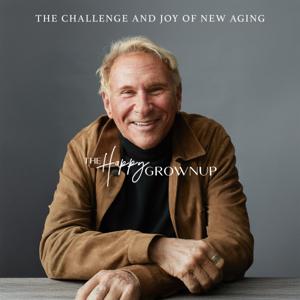
The Happy Grownup came about because while I knew the years were flying (at this stage, Time is driving a McLaren like an F1 qualifier) but I couldn’t understand why I didn’t look or feel like I thought I would at this age.
I have had a crush on Vanessa Williams for…oh, a little over 40 years. I know this sounds astounding now, but back in the ‘80s over 55 million people watched the Miss America pageant and my family never missed it. It was like this well-dressed, benign version of Survivor all in one night: parading beautiful young women, each representing their home state, vying for lucrative college scholarships. But in order to do so, they had to wear gowns, strut around the stage in high heels and a bathing suit and answer pontificatingly inane questions that somehow always ended up in hoping for world peace.
But it was the talent portion that really fascinated me. There were ladies playing piano, playing marimba, accordion, even the cups, monologues from plays, tap dancing, baton twirlers, fire dances, women walking on glass. Two of my favorites were Miss America 1961, Nancy Ann Fleming, her talent was she showed several different ways to pack a suitcase for the weekend, and Vonda Kay Van Dyke, Miss America 1965, who was not a half bad ventriloquist. But rarely was there someone with any real talent. And then in 1984, Miss New York State, this stunning 20-year-old Black American woman sang a version of Happy Days Are Here Again with an arrangement similar to Barbra Streisand’s groundbreaking interpretation of the song. She was goddamn good! Like, Broadway-bound good! And that’s how Vanessa Williams became Miss America in 1984. She was smart. She had poise. Her politics was startlingly aligned with the way young America thought. And it turns out she was incredibly tough.
Why do I love talking to Dana Thomas? Because she knows more about fashion than just about anybody but doesn’t ever gush about clothes with inane commentary like, “She’s killing it!” “Now that’s red carpet realness!,” or “I die!” Instead Dana is refreshing and candid. She can reveal the elusive way designers instigate desire, explain how a growing trend gets marketed, highlight the industry’s influence on our everyday lives, and tell you why looking good matters more than any of us wants to admit. With pragmatic and witty insight, Dana fascinates when analyzing the times fashion’s designers, editors, execs, retailers and consumers work together in harmony as well as when they explode in clashing dissonance. I could talk to her for days.