
Sign up to save your podcasts
Or

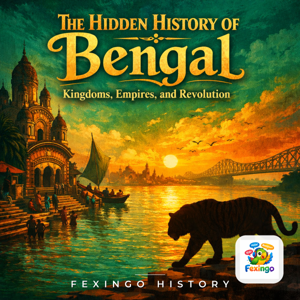


While the Battle of Plassey and the rise of the East India Company dominate Bengal history, the true human cost of colonial rule was sealed in the Great Famine of 1770. This episode explores how a combination of drought, disease, and ruthless revenue extraction by Robert Clive and his successors turned a regional crisis into a demographic catastrophe that killed ten million people. We examine the specific policies of the Diwani, the role of the Jagat Seth banking family in financing both trade and famine relief, and the stark contrast between the Company’s profit ledgers and the starving peasantry of Murshidabad and Nadia. Through the eyes of contemporary accounts and the political fallout in London, we uncover how the administrative machinery of empire failed its subjects, setting a precedent for future colonial disasters.
#BengalFamine1770 #RobertClive #EastIndiaCompany #GreatFamine #Diwani #Murshidabad #JagatSeth #BritishColonialism #SouthAsianHistory #PlasseyAftermath #RevenueExtraction #HistoricalDemographics #CalcuttaHistory #IndianEmpire #ColonialEconomics #Nadia #Hooghly #History #FexingoHistory
Keep every episode free: buymeacoffee.com/fexingo
This episode explores the intellectual revolution led by Raja Ram Mohan Roy, a figure who bridged the gap between traditional Hinduism and modern Western thought in early 19th-century Bengal. We examine how Roy studied Sanskrit texts like the Upanishads while simultaneously engaging with Unitarian Christianity, ultimately founding the Brahmo Samaj to reform social practices such as Sati and child marriage. The conversation details his controversial translation of monotheistic scriptures, his advocacy for women’s education, and the fierce opposition he faced from conservative orthodox groups who viewed his syncretic approach as a threat to cultural identity. Through his journal Pradivandana and his public debates, Roy laid the groundwork for the Bengal Renaissance, challenging the rigid caste structures and ritualistic worship that dominated society under British colonial rule. Listeners will hear about his time in England, his influence on later reformers like Debendranath Tagore, and how his vision of a rational, ethical religion continues to resonate in South Asian history.
#RajaRamMohannRoy #BrahmoSamaj #BengalRenaissance #SatiAbolition #Upanishads #Unitarianism #Pradipandana #Nadia #Hooghly #AtmiyaSabha #Vedanta #PauranikVaishnavism #Willingdon #KaliWorship #SouthAsiaHistory #ColonialIndia #SocialReform #FexingoHistory
Keep every episode free: buymeacoffee.com/fexingo
While the British East India Company dominates the narrative of colonial Bengal, a quieter, more intricate power was operating along the Hooghly River. This episode explores the history of Chinsurah (Chandannagar’s neighbor) and the Vereenigde Oostindische Compagnie, or VOC, the Dutch trading empire that once rivaled the British. We trace how Hendrik van Raaphorst navigated the treacherous politics of Mir Qasim and the Jagat Seth banking family to establish a foothold in the delta. Unlike the martial conquests of Plassey, the Dutch relied on diplomacy, marriage alliances, and complex financial instruments to maintain their presence. Lucas and Luna examine how the VOC’s decline mirrored the shifting tides of European imperial rivalry, leaving behind architectural remnants and a legacy of cross-cultural exchange that often goes unnoticed in standard histories of the region.
#Chinsurah #VOC #DutchBengal #HendrikvanRaaphorst #MirQasim #JagatSeth #HooghlyRiver #EastIndiaCompany #ColonialIndia #SouthAsianHistory #TradeRoutes #Murshidabad #Calcutta #Indology #ImperialRivalry #FexingoHistory #HistoryPodcast #Bengal
Keep every episode free: buymeacoffee.com/fexingo
In 1859, the indigo farmers of Bengal launched a coordinated rebellion against the European planters who forced them to grow blue dye crops on fertile rice land. This episode explores how Dinabandhu Mitra’s play Nil Darpan exposed the brutal Gora System and how Bankim Chandra Chattopadhyay documented the resistance. We trace the path from Jessore and Nadia villages to the Indigo Commission, revealing how peasant unity and literary outrage toppled a powerful industry. Join Lucas and Luna as they examine the economic coercion, the role of the Brahmo Samaj, and the lasting cultural impact of the Blue Mutiny.
#IndigoRevolt #NilDarpan #DinabandhuMitra #BankimChandraChattopadhyay #BengalHistory #GoraSystem #Ryot #Zamindar #IndigoCommission #Jessore #Nadia #BlueMutiny #ColonialIndia #SouthAsianHistory #FexingoHistory #HistoryPodcast #PeasantRebellion #BritishEmpire
Keep every episode free: buymeacoffee.com/fexingo
Long before the Indian independence movement took its political shape, a quiet revolution was taking place in the drawing rooms of Calcutta. This episode explores the life and work of Raja Ram Mohan Roy, often called the 'Father of the Bengal Renaissance.' We trace his journey from a traditional Brahmin scholar raised by Pauranik Vaishnavism to a radical reformer who challenged caste, sati, and idolatry while simultaneously advocating for women’s rights and Western education. Set against the backdrop of early 19th-century colonial India, we examine how Roy founded the Atmiya Sabha and later the Brahmo Samaj, creating a spiritual and intellectual space that questioned both orthodox Hindu practices and British imperial arrogance. The narrative follows his translations of sacred texts, his fierce opposition to the Permanent Settlement’s social consequences, and his vision of a modern, rational India. Through the eyes of Lucas and Luna, we uncover how one man’s intellectual courage helped lay the groundwork for modern Indian nationalism, religious pluralism, and social justice, offering a fresh perspective on the cultural forces that reshaped South Asia long before the first shots of rebellion were fired.
#RajaRamMohanRoy #BengalRenaissance #BrahmoSamaj #AtmiyaSabha #SatiAbolition #CalcuttaHistory #IndianReformers #HinduReform #ColonialIndia #SouthAsianHistory #WomenRightsIndia #ReligiousPluralism #19thCenturyIndia #IndianNationalism #FexingoHistory #HistoryPodcast #BengalCulture #SocialReform
Keep every episode free: buymeacoffee.com/fexingo
While earlier episodes explored the military might of Alivardi Khan and the administrative reforms of the Permanent Settlement, this episode uncovers a different kind of power: the intelligence network that kept the Nawabs of Bengal in control. We trace the rise of the Kachari system, a secret police force established by Murshid Quli Khan to monitor his own officials and the populace. Through the story of loyalist commanders like Mir Jumla II and the complex web of informants known as 'Kache', we see how paranoia and surveillance shaped the political landscape of 18th-century Murshidabad. This narrative reveals how a centralized bureaucracy used fear to maintain order against Maratha raids and internal dissent, offering a gritty look at the mechanics of pre-colonial statecraft in South Asia.
#Murshidabad #MurshidQuliKhan #KachariSystem #BengalNawabs #SecretPolice #MirJumlaII #18thCenturyIndia #SouthAsianHistory #IntelligenceNetwork #AlivardiKhan #SurveillanceState #MughalBengal #PoliticalIntrigue #HistoricalEspionage #IndianEmpire #ColonialPreHistory #FexingoHistory #History
Keep every episode free: buymeacoffee.com/fexingo
While the Battle of Plassey and the East India Company’s rise dominate the narrative of 18th-century Bengal, a quieter, more spiritual resistance was unfolding in the shadows. This episode explores the Sannyasi Rebellion of the 1760s and 1770s, a complex uprising where ascetic holy men, disillusioned by colonial taxation and the erosion of traditional religious autonomy, took up arms against the British. We trace the involvement of key figures like Majnu Shah, the Fakir of Satgaon, and Bhabani Charan, who led raids on Company treasuries and supply lines along the Hooghly River. The conversation examines how these spiritual leaders mobilized local populations, exploiting the vulnerabilities of Company outposts in regions like Nadia and Murshidabad. We also look at the theological underpinnings of their resistance, blending Tantric practices with anti-colonial sentiment, and analyze why Warren Hastings and Robert Clive viewed this movement as an existential threat to their newly acquired Diwani rights. By focusing on the intersection of faith, finance, and force, we reveal a chapter of Bengal’s history that challenges the standard story of passive submission to imperial rule.
#SannyasiRebellion #MajnuShah #FakirOfSatgaon #BhabaniCharan #WarrenHastings #RobertClive #HooghlyRiver #Nadia #Murshidabad #Diwani #Tantric #EastIndiaCompany #BengalHistory #18thCenturyIndia #ColonialResistance #SouthAsianHistory #SpiritualRevolt #FexingoHistory
Keep every episode free: buymeacoffee.com/fexingo
In Episode 259, we uncover the surprising origins of Bengal’s most powerful rulers—the slave kings who rose from bondage to command vast empires. We begin with Alivardi Khan, a man of humble Circassian origin who seized power in Murshidabad during a time of chaos and Maratha raids. Lucas and Luna explore how Alivardi consolidated his rule through military prowess and diplomatic cunning, establishing a dynasty that would outlast the Mughal court itself. The conversation then shifts to his grandson, Siraj-ud-Daulah, the last independent Nawab of Bengal, whose brief reign ended at the Battle of Plassey. We examine the political maneuvering behind this pivotal moment, focusing on figures like Mir Jafar and the role of the East India Company’s growing influence. Through detailed analysis of primary sources and historical records, this episode reveals how former slaves became the architects of Bengal’s final era of independence before British colonial dominance took hold.
#AlivardiKhan #SirajudDaulah #Murshidabad #SlaveDynasty #BengalHistory #BattleOfPlassey #MirJafar #EastIndiaCompany #Circassian #Nizamat #MarathaRaids #SouthAsianHistory #MughalDecline #Janissary #QutbAlam #ShujaudDin #FexingoHistory #HistoryPodcast #ColonialIndia
Keep every episode free: buymeacoffee.com/fexingo
In Episode 258, Lucas and Luna explore the Indigo Revolt of 1859, a pivotal moment in Bengal’s history that stands apart from the more commonly discussed Sepoy Mutiny or the earlier Sanyasi Rebellion. We dive into the world of Nil Darpan, the play by Dinabandhu Mitra that exposed the brutal coercion farmers faced from European indigo planters. This episode examines how ryots (peasants) in districts like Nadia and Jessore organized non-cooperation against the oppressive gora system, forcing the colonial government to intervene via the Indigo Commission. We also look at the cultural impact of the rebellion, including Bankim Chandra Chattopadhyay’s novel Anandamath and its lasting legacy on Bengali identity. By focusing on economic resistance rather than military conflict, this story reveals how ordinary people challenged imperial power structures through civil disobedience and literary protest.
#IndigoRevolt #NilDarpan #DinabandhuMitra #BankimChandraChattopadhyay #Anandamath #Ryot #GoraSystem #IndigoCommission #NadiaDistrict #Jessore #EuropeanPlanters #ColonialEconomics #BengalHistory #SouthAsia #PeasantRebellion #CivilDisobedience #FexingoHistory #History
Keep every episode free: buymeacoffee.com/fexingo
In 1793, the British East India Company introduced the Permanent Settlement, a radical land revenue system that fundamentally altered the social fabric of Bengal. This episode explores the life and legacy of Sir Charles Metcalfe, who later championed the 'Ten Percent Clause' to protect peasant rights against predatory zamindars. We examine how this policy created a new class of absentee landlords in London while trapping millions of ryots in debt cycles. The conversation details the specific mechanics of the permanent settlement, the role of the Court of Directors, and the unintended consequences of turning land into a tradable commodity. From the bustling markets of Calcutta to the silent tension of village panchayats, we trace how administrative decisions in Whitehall echoed through the rice paddies of the Hooghly delta, shaping the economic landscape of South Asia for centuries.
#PermanentSettlement #SirCharlesMetcalfe #BengalZamindar #RyotWariSystem #EastIndiaCompany #ColonialEconomics #LandRevenue #CalcuttaHistory #HooghlyDelta #BritishRaj #SouthAsiaHistory #PeasantRights #Absenteelordship #18thCenturyIndia #MetcalfeMemoir #DebtCycles #AgrarianReform #FexingoHistory
Keep every episode free: buymeacoffee.com/fexingo
From the publisher's feed