
Sign up to save your podcasts
Or

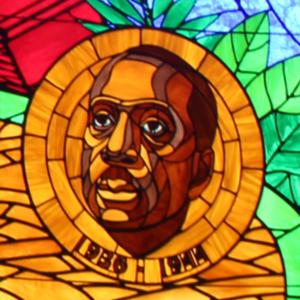


In this ninth lecture on "The Men Who've Walked with God," Thurman explores insights from Jane Steger's Leaves From a Secret Journal. Jane Steger suffered from illness at a young age and, in her illness, became familiar with the mystics. In Steger's journal, we find that she felt creation itself was alive with the Spirit of God, and that our very lives participate in the divine image. Drawing from Steger's writing, Thurman concludes that the door separating us from the divine is very thin, and that this door is in the human heart.
Part of the Collection, Men Who've Walked with God (1953)
Tags:
Description by Rodell Jefferson III.
Recorded in Fellowship Church, San Francisco, California
Citation: Thurman, Howard, “Men Who've Walked With God: Jane Steger, 1953 June 21,” The Howard Thurman Digital Archive, accessed July 9, 2024, https://thurman.pitts.emory.edu/items/show/602.
In this sixth lecture on "The Men Who've Walked with God," Thurman examines St. Augustine as a source of mystical insight. Thurman describes Augustine's search for God through the senses, the mind, the feelings, until finally finding "that which is" inside the soul. Thurman says that this is a union with God that is beyond thought, analysis, and spelled-out feelings. This mystical experience releases energy for the undertakings of life in which we might deal with our various difficulties and burdens. Thurman ends with a quote from Augustine: "Our souls are restless until they find their rest in thee."
Part of the Collection, Men Who've Walked with God (1953)
Tags:
Description by Rodell Jefferson III.
Recorded in Fellowship Church, San Francisco, California
Citation: Thurman, Howard, “Men Who've Walked With God: St. Augustine, 1953 May 24,” The Howard Thurman Digital Archive, accessed July 9, 2024, https://thurman.pitts.emory.edu/items/show/600.
In this final sermon of the series, Thurman binds together faith and the dream of democratic living. Drawing upon the language of covenant, Thurman says that we are morally bound to God as God is morally bound to us. Furthermore, this covenant relationship brings us into unique relationship with others who share the same covenant, the same religion, the same culture, etc. But this binding-together risks exclusion and conflict with others outside those bounds. Thurman says that the true challenge of democracy is the constant expansion of boundaries, to include more and more diversity and difference. Without this, democratic faith becomes nothing more than arrogance and superiority. Thurman urges that we must keep alive the faith that finds infinite worth in every human being, for this is the only faith that can keep alive the dream of democracy.
Part of the Collection, A Faith to Live By (1952, Fellowship Church, San Francisco, CA)
Tags:
Description by Rodell Jefferson III.
Recorded in Fellowship Church, San Francisco, California
Citation: Thurman, Howard, “A Faith to Live By, Part 7: Democracy (continued), 1952 October 26,” The Howard Thurman Digital Archive, accessed July 9, 2024, https://thurman.pitts.emory.edu/items/show/595.
In the introductory sermon to “A Faith to Live By,” Thurman reflects on the sense of instability humans experience when confronting the fact of their finiteness within the expansive universe. He argues, that when an existential awakening occurs, what anchors the religious believer is becoming conscious of God as a "categorical fact" that exists at the center of all reality. It is the fact of the divine and its relation to the human spirit that allows one to be lifted from the despair of isolation and minuteness. God must be the focal point of any quest for self-respect and meaning for our living to “stand up against all this vastness,” Thurman says. Standing beneath the gaze of the divine strips men and women of all their phony devices – their strivings for self-validation – so that "a vitality of mind" might be achieved in which all may participate.
Part of the Collection, A Faith to Live By (1952, Fellowship Church, San Francisco, CA)
Tags: aloneness, Atlantic Charter, communism, democracy, despair, faith, religious faith, WWI, WWII
Description by ShaCarolyn Halyard
Recorded in Fellowship Church, San Francisco, California
Citation: Thurman, Howard, “A Faith To Live By, Part 1, 1952 September 14,” The Howard Thurman Digital Archive, accessed July 9, 2024, https://thurman.pitts.emory.edu/items/show/594.
In this concluding sermon on the Religion of the Prophets, Thurman highlights some key themes in the prophets. For Thurman, the genius of the prophets were founded upon the idea of the sovereignty of God. God is both fact and act, working in the unfolding of history. God has been expressed through creation, through Abraham's faith, through Moses' exodus, and ultimately through the redemption of the universe. The prophets called their people again and again to be in covenantal relationship with this God, and some spoke to make this relationship open to all of humanity. In the prophets, we hear the promise that God is our salvation, and that God might be working salvation out through us in our little senses of responsibility.
Part of the Collection, Religion of the Prophets (1952, Fellowship Church, San Francisco, CA)
Tags:
Description by Rodell Jefferson III.
Recorded in Fellowship Church, San Francisco, California
Citation: Thurman, Howard, “The Religion of the Prophets: Conclusion, 1952 September 7,” The Howard Thurman Digital Archive, accessed July 9, 2024, https://thurman.pitts.emory.edu/items/show/593.
In this third lecture on loyalty, Thurman discusses the conflict between the individual and the state. For Thurman, loyalty to something supremely worthy is the ultimate basis for self-respect and significance. Thurman's word for this ultimate cause is God. Thurman posits that the state can either make itself a vehicle of this human striving, or it can become a competitor to it; the state can attempt to move into the space that only God should occupy. At best, political expression is a vehicle for proving one's loyalty to God, the ultimate basis of personhood.
Part of the Collection, The Meaning of Loyalty (1951, Fellowship Church, San Francisco, CA)
Tags:
Description by Rodell Jefferson III.
Recorded in Fellowship Church, San Francisco, California
Citation: Thurman, Howard, “The Meaning of Loyalty, Part 3: The State, 1951 May 20,” The Howard Thurman Digital Archive, accessed July 9, 2024, https://thurman.pitts.emory.edu/items/show/589.
In this second lecture on The Meaning of Loyalty, Thurman discusses the problem of conflicting loyalties. We live complex lives with a hierarchy of causes that cannot be reduced to one. How do we resolve loyalty to our ideals in conflict with our loyalty to self-preservation? There is no simple answer, but Thurman poses that we become loyal to the experience of loyalty itself. This principle may be brought into any situation, and serves to ensure the integrity of the person.
Part of the Collection, The Meaning of Loyalty (1951, Fellowship Church, San Francisco, CA)
Tags:
Description by Rodell Jefferson III.
Recorded in Fellowship Church, San Francisco, California
Citation: Thurman, Howard, “The Meaning of Loyalty, Part 2, 1951 May 13,” The Howard Thurman Digital Archive, accessed July 9, 2024, https://thurman.pitts.emory.edu/items/show/588.
In this final lecture on the Inner Life, Thurman illustrates the infinite value of the human spirit. Here, Thurman ponders what it is that makes human beings "a little lower than God." There is an aspect of the human spirit that is limitless. The deepest things in us are always emerging against all obstacles. Once we become aware of this truth, all experiences become our teachers, helping to liberate our depths and bring us towards fulfillment. Our task is to honor this mystery of the human soul, for this potential is indeed what makes us children of God.
Part of the Collection, Inner Life (1951-52, Fellowship Church, San Francisco, CA)
Tags:
Description by Rodell Jefferson III.
Recorded in Fellowship Church, San Francisco, California
Citation: Thurman, Howard, “Inner Life, Part 7, 1952 March 15,” The Howard Thurman Digital Archive, accessed July 9, 2024, https://thurman.pitts.emory.edu/items/show/575.
In this sixth lecture on the Inner Life, Thurman explores ethical awareness. For the religious person, any sin against another is a sin against God. The person must always connect their acts to their ultimate relationship with life. We are all personally responsible for our ethical lives. Thurman says that we often fall into the trap of pushing people outside of our moral responsibility, but he insists that Christian ethics proclaim that no person can ever be defined as being out of bounds. Anything less is anti-humanity, which is anti-God, which is to be set against the logic of life itself.
Part of the Collection, Inner Life (1951-52, Fellowship Church, San Francisco, CA)
Tags:
Description by Rodell Jefferson III.
Recorded in Fellowship Church, San Francisco, California
Citation: Thurman, Howard, “Inner Life, Part 6, 1952 March 8,” The Howard Thurman Digital Archive, accessed July 9, 2024, https://thurman.pitts.emory.edu/items/show/574.
In this fifth lecture on the Inner Life, Thurman proposes that we cannot live without approval. We hunger for approval, and approval guides who we become. We dance in a world of approvals, from larger society to our more intimate communities. The security we get from belonging affects how we live and make decisions. Thurman says that we must come to a point where we settle for nothing less than ultimate approval, that is, approval from God, from the deepest part of our being. With this, we go beyond all secondary approval into the divinely sanctioned fullness of our personalities.
Part of the Collection, Inner Life (1951-52, Fellowship Church, San Francisco, CA)
Tags:
Description by Rodell Jefferson III.
Recorded in Fellowship Church, San Francisco, California
Citation: Thurman, Howard, “Inner Life, Part 5, 1952 February 22,” The Howard Thurman Digital Archive, accessed July 9, 2024, https://thurman.pitts.emory.edu/items/show/573.
From the publisher's feed
It is my goal to support the The Howard Thurman Digital Archive, at Pitts Theology at Emory University, with their…
I've set a personal goal of listening to all 290+ recordings in one year, and having these recordings available as a podcast will help tremendously. I am so grateful to have them. And I am hopeful that others will discover Dr. Thurman through this podcast.