
Sign up to save your podcasts
Or

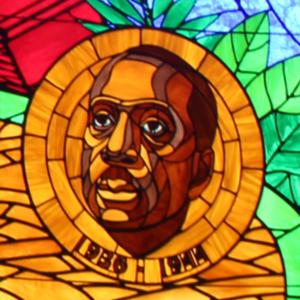


Thurman focuses on one of the central affirmations of Fellowship Church: "I affirm my need of a growing understanding of all men as sons of God." A growing understanding is one in which there is no total answer, but rather it is a response that is creative and in process. It is a present state that contains the potential of the future. Thurman says that the "sons of God" contains two meanings. On one hand, we are children of life deeply involved in our own self-preservation, which leads us into conflict, competition, and the destruction of other lives. But at the same time we are children of God who are capable of transcending this urge in order to meet purposes beyond physical survival. Thurman describes this as the moral dimension in our lives. Returning to the affirmation, Thurman suggests that we become more aware of our relations as human beings. We are always living and relating as children of life, and yet we are always capable of transcendence as children of God, committed to values and goals that go beyond our little lives.
Part of the Collection, NA
Tags:
Description by Rodell Jefferson III.
Recorded in Fellowship Church, San Francisco, California
Citation: Thurman, Howard, “The Meaning of Commitment: Sons of God, 1951 February 4,” The Howard Thurman Digital Archive, accessed July 9, 2024, https://thurman.pitts.emory.edu/items/show/918.
In this sermon on commitment, Thurman suggests that the destiny of an individual is built upon one central assumption: either life is open and dynamic, or life is closed off and finished with no sense of choice and alternatives. Commitment, at its core, is about choice. It is one's capacity to give over their self-conscious will to something. Thurman describes this self-giving as a response to something that grips us. In commitment we experience a "singleness of mind" that synthesize our usually scattered intentions. Our commitments come to guide the morality of our actions. Thurman ends saying that all are capable of such commitment, and that it need not be a grand vision. Rather, one must simply reach out for what is most near and capable of inspiring.
Part of the Collection, NA
Tags:
Description by Rodell Jefferson III.
Recorded in Fellowship Church, San Francisco, California
Citation: Thurman, Howard, “The Meaning of Commitment: Spiritual Awareness, 1951 January 28,” The Howard Thurman Digital Archive, accessed July 9, 2024, https://thurman.pitts.emory.edu/items/show/917.
In this sermon on commitment, Thurman suggests that the destiny of an individual is built upon one central assumption: either life is open and dynamic, or life is closed off and finished with no sense of choice and alternatives. Commitment, at its core, is about choice. It is one's capacity to give over their self-conscious will to something. Thurman describes this self-giving as a response to something that grips us. In commitment we experience a "singleness of mind" that synthesize our usually scattered intentions. Our commitments come to guide the morality of our actions. Thurman ends saying that all are capable of such commitment, and that it need not be a grand vision. Rather, one must simply reach out for what is most near and capable of inspiring.
Part of the Collection, NA
Tags:
Description by Rodell Jefferson III.
Recorded in Fellowship Church, San Francisco, California
Citation: Thurman, Howard, “The Meaning of Commitment: Spiritual Awareness, 1951 January 28,” The Howard Thurman Digital Archive, accessed July 9, 2024, https://thurman.pitts.emory.edu/items/show/917.
In Part 6 of the Parables of Jesus sermon series, Thurman explores the topic of commitment through the Parables of the Tower Builder and the Warring King. For Thurman, to be a disciple is to be committed to the religious experience that "dominated, electrified, and sustained the life of Jesus." This sort of commitment is not just commitment of the mind, but rather it must be done with the totality of one's being, or else the commitment will not last. To commit in such a way is to experience wholeness, to be redeemed, and to set order to our lives.
Part of the Collection, The Parables of Jesus (1951, Fellowship Church, San Francisco, CA)
Tags:
Description by Rodell Jefferson III.
Recorded in Fellowship Church, San Francisco, California
Citation: Thurman, Howard, “Parables of Jesus, Part 6: Commitment, 1951 October 21,” The Howard Thurman Digital Archive, accessed July 9, 2024, https://thurman.pitts.emory.edu/items/show/915.
In Part 5 of the Parables of Jesus, Thurman examines the Parable of the Good Samaritan. We are called to love our neighbor, but how do we determine who is our neighbor? Thurman suggests that the parable is inviting us beyond the distinctions that determine who we care for and who we do not. Love takes place beyond the worthiness or unworthiness of the beloved. This is the love that God has for human life, and is thus how we should love one another as well.
Part of the Collection, The Parables of Jesus (1951, Fellowship Church, San Francisco, CA)
Tags:
Description by Rodell Jefferson III.
Recorded in Fellowship Church, San Francisco, California
Citation: Thurman, Howard, “Parables of Jesus, Part 5: The Good Samaritan, 1951 October 7,” The Howard Thurman Digital Archive, accessed July 9, 2024, https://thurman.pitts.emory.edu/items/show/914.
In Part 4 of the Parables of Jesus sermon, Thurman interprets the Parables of the Two Debtors and the Unforgiving Servant. When we feel a deep need of forgiveness, we are more likely to be forgiving towards others. For Thurman, this is summed up in the thinking of Jesus: We can only seek forgiveness from God if we are willing to forgive people for what they have done to us. None of us can escape this need because none of us are without guilt. Thus, forgiving others and begging mercy for ourselves are bound together in one posture.
Part of the Collection, The Parables of Jesus (1951, Fellowship Church, San Francisco, CA)
Tags:
Description by Rodell Jefferson III.
Recorded in Fellowship Church, San Francisco, California
Citation: Thurman, Howard, “Parables of Jesus, Part 4: Forgiveness, 1951 September 30,” The Howard Thurman Digital Archive, accessed July 9, 2024, https://thurman.pitts.emory.edu/items/show/913.
In Part 3 on the Parables of Jesus, Thurman explores the Parable of the Prodigal Son. For Thurman, God is like the story's father, and the brothers represent the ways in which we can fall out of relationship with God. In his interpretation of the younger brother, Thurman comes to two insights. Firstly, there is a relationship between the internal and external: the outside famine that the son suffered through was also an internal famine. Secondly, the son's story shows that the door to God must be opened deep within ourselves. For Thurman, when we come to ourselves, we come to God.
Part of the Collection, The Parables of Jesus (1951, Fellowship Church, San Francisco, CA)
Tags:
Description by Rodell Jefferson III.
Recorded in Fellowship Church, San Francisco, California
Citation: Thurman, Howard, “Parables of Jesus, Part 3: Prodigal Son, 1951 September 23,” The Howard Thurman Digital Archive, accessed July 9, 2024, https://thurman.pitts.emory.edu/items/show/912.
In this second sermon on the Parables of Jesus, Thurman uses the Parable of the Lost Coin and the Parable of the Lost Sheep to speak about salvation and the nature of God. Thurman says that both parables describe the redeeming process of God. As human beings we fall into being lost and isolated, often due to forces beyond our control. However, God works towards our salvation, restoring the isolated to a sense of belonging and relationship. For Thurman, community restores meaning and value to life.
Part of the Collection, The Parables of Jesus (1951, Fellowship Church, San Francisco, CA)
Tags:
Description by Rodell Jefferson III.
Recorded in Fellowship Church, San Francisco, California
Citation: Thurman, Howard, “Parables of Jesus, Part 2: Salvation: What is God Like, 1951 September 16,” The Howard Thurman Digital Archive, accessed July 9, 2024, https://thurman.pitts.emory.edu/items/show/911.
Howard Thurman uses the parables of the sower (Matt. 13:1-23) and the fig tree in the vineyard (Luke 13:6-9) to explore the growth of the kingdom of God. He claims these parables illustrate that “the kingdom of God comes independent of human effort aside from the initial act.” This initial act is the choosing and planting of the seed and after that, “there isn’t any more than can be done.” Then, once the time to reap the crop has come, we must be able to discern between the wheat and the tares. Thurman likens tares to the presence of evil and though it is difficult to know how to remove the tares now, the harvest is inevitable as Jesus promises.
Part of the Collection, The Parables of Jesus (1951, Fellowship Church, San Francisco, CA)
Tags: growth, Kingdom of God, Parables
Description by Erik Mattson
Recorded in Fellowship Church, San Francisco, California
Citation: Thurman, Howard, “Parables of Jesus, Part 1: Growth and the Kingdom of God, 1951 September 2,” The Howard Thurman Digital Archive, accessed July 9, 2024, https://thurman.pitts.emory.edu/items/show/910.
God acts in the process of history. This is the primary theme in Thurman's fourth sermon on prophets. Returning to Isaiah, Thurman says that history is more than the logic of cause and effect. History is more dynamic than this. Every event is an overflowing unseen with potential. When we limit ourselves to the surface-value of events, we undermine our own hope and security. In Isaiah, Thurman sees the prophet relating to God rather than the events of the world. Even in misfortune, God is in charge. Isaiah ends with the idea that God is invested in the human project, and will never give up; there will always be a remnant of God's people that begin a new age, and continue to urge human destiny towards the good.
Part of the Collection, Religion of the Prophets (1952, Fellowship Church, San Francisco, CA)
Tags:
Description by Rodell Jefferson III.
Recorded in Fellowship Church, San Francisco, California
Citation: Thurman, Howard, “Religion of the Prophets: The Message of Isaiah, Part 2, 1952 June 22,” The Howard Thurman Digital Archive, accessed July 9, 2024, https://thurman.pitts.emory.edu/items/show/909.
From the publisher's feed
It is my goal to support the The Howard Thurman Digital Archive, at Pitts Theology at Emory University, with their…
I've set a personal goal of listening to all 290+ recordings in one year, and having these recordings available as a podcast will help tremendously. I am so grateful to have them. And I am hopeful that others will discover Dr. Thurman through this podcast.