
Sign up to save your podcasts
Or

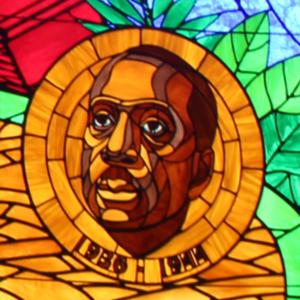


Authority is more than a final limit. It also the persisting substance of limitations that remain with us after withdrawing from the presence of power. For Thurman, this sense of abiding authority is summed up in the biblical words “thus says the Lord.” We are “naked without authority,” he argues. There must be authority wherein one can lay oneself bare and yet not feel violated. Thurman believes religion accomplishes this. In the act of submitting to a higher reference point, human beings are rescued from the emptiness of absolute autonomy and achieve a sense of participating in a collective destiny.
Part of the Collection, Quests of the Human Spirit (1962, Marsh Chapel, Boston University, Boston, MA)
Tags: assurance, authority, limit, location, responsibility, self-deception
Description by Dr. Tim Rainey
Recorded in Marsh Chapel, Boston University, Boston, Massachussetts
Citation: Thurman, Howard, “Quests of the Human Spirit, Part 6: The Quest for Authority, 1962 March 18,” The Howard Thurman Digital Archive, accessed July 9, 2024, https://thurman.pitts.emory.edu/items/show/19.
In this brief lecture, Thurman addresses the need for stability. The sense of stability can be experienced when a person possesses what is most “significant and worth-full” to them. One must have morale to be stable, belief in one’s cause, faith in the enterprise to which one has committed, affirm these feelings, and finally, relate to the community. Stability is peace and security within with the vast universe beyond.
Part of the Collection, Quests of the Human Spirit (1962, Marsh Chapel, Boston University, Boston, MA)
Tags: boundless, security, stability
Description by Dr. Tim Rainey
Recorded in Marsh Chapel, Boston University, Boston, Massachussetts
Citation: Thurman, Howard, “Quests of the Human Spirit, Part 5: The Quest for Stability, 1962 March 11,” The Howard Thurman Digital Archive, accessed July 9, 2024, https://thurman.pitts.emory.edu/items/show/18.
When the sense of personal reality becomes part of an enlarging reality, one encounters truth. The quest for truth may be the essence of all quests, Thurman notes. Such striving is a sole aim and may not always produce or correlate with social change. It is more than a technique. The pursuit of what is spiritually true compels something within the individual to participate in a broader meaning. When one’s inner “root” is absorbed into and becomes the “root” in existence, Thurman says, the truth of one’s being embedded within an unrestricted reality makes the experience of freedom possible.
Part of the Collection, Quests of the Human Spirit (1962, Marsh Chapel, Boston University, Boston, MA)
Tags: ahisma, Ghandi, reality, Tolstoy, true, truth
Description by Dr. Tim Rainey
Recorded in Marsh Chapel, Boston University, Boston, Massachussetts
Citation: Thurman, Howard, “Quests of the Human Spirit, Part 4: The Quest for Truth, 1962 March 4,” The Howard Thurman Digital Archive, accessed July 9, 2024, https://thurman.pitts.emory.edu/items/show/17.
For Thurman, the quest for value cannot be distinguished from the human experience of meaning. He suggests that ideas regarding value are not created in isolation within the mind, but they are “indigenous to the very life of personality.” The content of values largely reflects our communities of meaning and when one begins to develop a personal way of assessing them through her own experiences, she arrives at what Thurman terms a “priority of value.” This means that individual knowledge of values must eventually come into an alignment of integrity with those of one’s world to arrive at a satisfying sense of self. In monotheistic religion, this is manifest in the awareness of God.
Part of the Collection, Quests of the Human Spirit (1962, Marsh Chapel, Boston University, Boston, MA)
Tags: inner light, lostness, meaning, value
Description by Dr. Tim Rainey
Recorded in Marsh Chapel, Boston University, Boston, Massachussetts
Citation: Thurman, Howard, “Quests of the Human Spirit, Part 3: The Quest for Values, 1962 February 18,” The Howard Thurman Digital Archive, accessed July 9, 2024, https://thurman.pitts.emory.edu/items/show/16.
Thurman explains that freedom is the “capacity to determine the future by action.” He sees the possibility of death as the guarantor of the experience of freedom because that possibility is always open to the person. The fact that this option is available rather than accepting any present conditions is only to suggest that this means one can imaginatively project oneself into another possibility. For Thurman, grappling with one’s final option opens the door for pushing back the frontier of freedom wherever unacceptable limitations persist.
Part of the Collection, Quests of the Human Spirit (1962, Marsh Chapel, Boston University, Boston, MA)
Tags: death, failure, finality, freedom, frontier of freedom, hell, option
Description by Dr. Tim Rainey
Recorded in Marsh Chapel, Boston University, Boston, Massachussetts
Citation: Thurman, Howard, “Quests of the Human Spirit, Part 2: The Quest for Freedom, 1962 February 11,” The Howard Thurman Digital Archive, accessed July 9, 2024, https://thurman.pitts.emory.edu/items/show/15.
In his introductory lecture to “Quests for the Human Spirit,” Thurman describes the quest as an act of bringing to focus the purpose of one’s life. Thurman notes that this is a creative work wherein one’s mental resources are organized into the raw materials needed to energize and pursue growth within the human spirit. Choosing between alternatives on the life journey is a matter of mind and heart – resources that drive the quest. Thurman argues that questing is essential to life because it is the quest that actualizes the person who becomes the embodiment of one's striving.
Part of the Collection, Quests of the Human Spirit (1962, Marsh Chapel, Boston University, Boston, MA)
Tags: actualize, choice, creative act, heart, mind, quest
Description by Dr. Tim Rainey
Recorded in Marsh Chapel, Boston University, Boston, Massachussetts
Citation: Thurman, Howard, “Quests of the Human Spirit, Part 1, 1962 February 4,” The Howard Thurman Digital Archive, accessed July 9, 2024, https://thurman.pitts.emory.edu/items/show/14.
In this eighth installment of the Discipline of the Spirit, Howard Thurman uses Goethe's Faust to set the tone as he discusses the principles of dualism and redemption. Thurman goes on to discuss whether our contradictions in life are final considering the righteousness of God. The movement of the creator through the experience of man is also discussed.
Part of the Collection, Disciplines of the Spirit (1960, Marsh Chapel, Boston University, Boston, MA)
Tags: contradiction, dualism, experience, Goethe, redemption
Description by ShaCarolyn Halyard
Recorded in Marsh Chapel, Boston University, Boston, Massachussetts
Citation: Thurman, Howard, “Disciplines of the Spirit, Part 8: Faust, 1960 December 4,” The Howard Thurman Digital Archive, accessed July 9, 2024, https://thurman.pitts.emory.edu/items/show/8.
In this seventh lecture in the Discipline of the Spirit series, Thurman uses Matthew 5:39 as a framework for discipline as it relates to our decision to act. Thurman reminds listeners of the responsibility to act or react in integrity centered around core values as we are responsible for the actions we initiate as well as the reactions we initiate in other people. One must always be careful when deciding to act lest our deeds are out of character with our core beliefs.
Part of the Collection, Disciplines of the Spirit (1960, Marsh Chapel, Boston University, Boston, MA)
Tags: action, choice, dilemma, discipline, forgiveness, Ghandi
Description by ShaCarolyn Halyard
Recorded in Marsh Chapel, Boston University, Boston, Massachussetts
Citation: Thurman, Howard, “Disciplines of the Spirit, Part 7: The Discipline of the Act, 1960 November 27,” The Howard Thurman Digital Archive, accessed July 9, 2024, https://thurman.pitts.emory.edu/items/show/7.
In this sixth installment of Disciplines of the Spirit, Howard Thurman talks about commitment in the framework of good and evil. Commitment is a level of dedication that gives us structure, order, and provides a basis for integrated action in life. Commitment rises against whatever comes seeks to come between self and that which self is committed to. In this lecture, Thurman poses the question of whether there is any difference in the dynamics of the experience of commitment when the commitment is to evil as well as good.
Part of the Collection, Disciplines of the Spirit (1960, Marsh Chapel, Boston University, Boston, MA)
Tags: commitment, Good and Evil
Description by ShaCarolyn Halyard
Recorded in Marsh Chapel, Boston University, Boston, Massachussetts
Citation: Thurman, Howard, “Disciplines of the Spirit, Part 6: The Good and the Evil, 1960 November 20,” The Howard Thurman Digital Archive, accessed July 9, 2024, https://thurman.pitts.emory.edu/items/show/6.
In this fifth lecture in the Disciplines of the Spirit series, Howard Thurman discusses the propensity to idolize perfection in our commitments. When we worship our commitment rather than that which we are committed, we give up the ability to be influenced by the vitality, power, and dynamism of that to which we are committed. This is especially true of our moral commitments which, when idolized, violates our experience of the living God.
Part of the Collection, Disciplines of the Spirit (1960, Marsh Chapel, Boston University, Boston, MA)
Tags: commitment, idolatry
Description by ShaCarolyn Halyard
Recorded in Marsh Chapel, Boston University, Boston, Massachussetts
Citation: Thurman, Howard, “Disciplines of the Spirit, Part 5: When Commitment Becomes Idolatrous, 1960 October 30,” The Howard Thurman Digital Archive, accessed July 9, 2024, https://thurman.pitts.emory.edu/items/show/5.
From the publisher's feed
It is my goal to support the The Howard Thurman Digital Archive, at Pitts Theology at Emory University, with their…
I've set a personal goal of listening to all 290+ recordings in one year, and having these recordings available as a podcast will help tremendously. I am so grateful to have them. And I am hopeful that others will discover Dr. Thurman through this podcast.