
Sign up to save your podcasts
Or

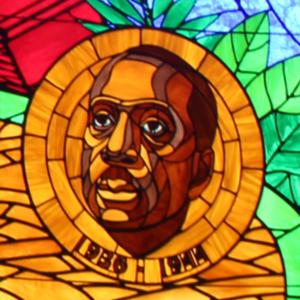


In this fourth lecture of Disciplines of the Spirit, Howard Thurman discusses commitment and its significance. Deep within every man, there is a profound sense regarding the meaning of life itself. Those that believe that life is dynamic and essentially unfinished tend to also be of the mindset that there are always alternatives and options to be considered. In these instances, commitment becomes the experience through which a man passes when, deep within himself, he selects values and proceeds to lift this selection of values into the dimension of the absolute. While commitment consists of offering our yes completely, there are external forces that support and hinder our commitment. When yielding our consent to a cause that is more significant than life, the little that we have becomes a tremendous force. When our commitment involves the total surrender to the Kingdom of God, our strength and qualities are magnified.
Part of the Collection, Disciplines of the Spirit (1960, Marsh Chapel, Boston University, Boston, MA)
Tags: commitment, values
Description by ShaCarolyn Halyard
Recorded in Marsh Chapel, Boston University, Boston, Massachussetts
Citation: Thurman, Howard, “Disciplines of the Spirit, Part 4: The Single Mind, 1960 October 16,” The Howard Thurman Digital Archive, accessed July 9, 2024, https://thurman.pitts.emory.edu/items/show/4.
In this third installment of Disciplines of the Spirit, Thurman is lecturing about personal stability. In this lecture, personal stability is defined as the experience through which an individual passes when he thinks he has that which is of most importance to him. An additional definition of personal stability used in this lecture is private morale, which is the belief in one’s cause, whatever it may be. At times personal stability rests on the instability of others which has and continues to have far-reaching consequences that are typically problematic. At times personal stability rests upon our self-confidence which can ultimately fail us if our area of self-confidence is challenged. Thus, we must find that which is big enough to absolve us from the limited narrow basis for our stability. We must find that which is big enough to hold against all the tensions of our lives, age, and generation.
Part of the Collection, Disciplines of the Spirit (1960, Marsh Chapel, Boston University, Boston, MA)
Tags: experience, stability
Description by ShaCarolyn Halyard
Recorded in Marsh Chapel, Boston University, Boston, Massachussetts
Citation: Thurman, Howard, “Disciplines of the Spirit, Part 3: Personal Stability, 1960 October 9,” The Howard Thurman Digital Archive, accessed July 9, 2024, https://thurman.pitts.emory.edu/items/show/3.
In this second installment of Disciplines of the Spirit, Thurman builds upon the concept of growth introduced in part 1 of the series. Here Thurman describes growth as the ability to accept what is fact and to handle change, whether the change is gradual or radical. Our desire to resist change for fear of being without a familiar structure requires us to grow in wisdom as we navigate the anxiety associated with the search for stability having lost all that is familiar to us. Our ability to properly function depends on our ability to grow accustomed to the solitary nature of life as we transition from where we are to where we feel we are destined to be. This brings about a new level of awareness, significance, and ultimately wisdom. The wisdom that God requires.
Part of the Collection, Disciplines of the Spirit (1960, Marsh Chapel, Boston University, Boston, MA)
Tags: awareness, change, growth, wisdom
Description by ShaCarolyn Halyard
Recorded in Marsh Chapel, Boston University, Boston, Massachussetts
Citation: Thurman, Howard, “Disciplines of the Spirit, Part 2: Growth, 1960 October 2,” The Howard Thurman Digital Archive, accessed July 9, 2024, https://thurman.pitts.emory.edu/items/show/2.
This initial lecture in the Disciplines of the Spirit series is a discussion about the development of patience through the discipline of growth. Thurman describes discipline as the training, development, response to, and often responsibility for something. The spirit is disciplined, trained, cultivated, and fashioned by many things. One of these things is the experience of growth. Growth is characteristic of life and as our body continues to develop, so does our mind and spirit. In our initial stages of growth our desire to keep the interval between what we wish for and the fulfillment of that wish at zero. As we learn to negotiate the expanding time interval between wish and fulfillment, we develop patience.
Part of the Collection, Disciplines of the Spirit (1960, Marsh Chapel, Boston University, Boston, MA)
Tags: discipline, growth, patience, spirit
Description by ShaCarolyn Halyard
Recorded in Marsh Chapel, Boston University, Boston, Massachussetts
Citation: Thurman, Howard, “Disciplines of the Spirit, Part 1, 1960 September 25,” The Howard Thurman Digital Archive, accessed July 9, 2024, https://thurman.pitts.emory.edu/items/show/1.
Part 12 of Jesus and the Disinherited. In this he defines love as the "maintenance and furtherance of life at its highest level". He begins with a quote from Olive Schreiner. Love is not an ethic in the sense of being a "yard stick" for measuring oneself, but the inner intent of God in creation. He uses the life of Jesus as a model for love, especially for those with their "backs against the wall." Thurman insists that love resists cooperating with anyone who is working against this maintenance and furtherance of life. He argues that nonviolence may actually be worse than violence, as people can adjust to physical violence, but resistance "shocks" a person by invading their inner life and cutting them off from support. Nonviolence is a technique for bringing about social change, but unless nonviolence becomes the inner self of a person then someone working for peace may be extremely violent in their interpersonal relationships. He argues that fear feeds those who work against life at its highest level, and gives an example of his and his sister's reaction to their mother's corporal punishment. Finally, he argues that love, and specifically the love of an enemy, is not an ethical act but a spiritual act, for God must come into our inner selves to bring about within us a desire to want to do this.
Part of the Collection, Jesus and the Disinherited (1959, Marsh Chapel, Boston University, Boston, MA)
Tags: fear, interpersonal relationships, love, nonviolence, Olive Schreiner, resistance
Description by Ken Owens
Recorded in Marsh Chapel, Boston University, Boston, Massachussetts
Citation: Thurman, Howard, “Jesus and the Disinherited, Part 12, May 24, 1959,” The Howard Thurman Digital Archive, accessed July 9, 2024, https://thurman.pitts.emory.edu/items/show/1028.
Part 11 of Jesus and the Disinherited. In this sermon he discusses hatred. He argues that hatred is a defense of the weak against the strong. However, hatred dehumaninizes the other and becomes self destructive. Hatred crushes the hater by placing the cause all of life's problems on one simple target. Hatred ignores the complexities of life, becomes all consuming. Since it cuts one off from the person/people who is/are the object of the hate, it also cuts them off from God. It isolates a person, making them feel "cut off from God" and from other humans. He argues that people will try anything to keep their hatred, but maintain their relationship with God, all to no avail. Thurman argues that each of us is responsible to God not only for what we do, but how we react to what others do to us. He finally argues that overcoming hatred cannot be done unless God comes into the hater and transforms them internally. Hence, the hater must "desire to desire" release from the hate. When God removes the hate from us, we see all people in their complete humanity and we are brought back into community. To illustrate his points he uses an allegory of an angel God sends to help a person deal with hate, and he uses Ahab from "Moby Dick."
Part of the Collection, Jesus and the Disinherited (1959, Marsh Chapel, Boston University, Boston, MA)
Tags: Ahab, angel allegory, Hate, hatred, Moby Dick
Description by Ken Owens
Recorded in Marsh Chapel, Boston University, Boston, Massachussetts
Citation: Thurman, Howard, “Jesus and the Disinherited, Part 11, May 3, 1959,” The Howard Thurman Digital Archive, accessed July 9, 2024, https://thurman.pitts.emory.edu/items/show/1027.
In his eighth talk, his Easter message, Thurman turns to the issue of Deception and how it can be a tool for the weak. He discusses how morality prevents chaos, and how easy it is for us to call darkness light if we want to excuse something we are doing. In this talk he gives several examples of deception, but ponders whether or not it is morally acceptable to deceive. From his own life, he gives the example of his job as the "door boy" for his older sisters and it was his job to open the door for their dates and if it was the wrong boy he was to deceive them and get rid of them. From nature he gives the example of how the cuttlefish deceives the predator, or how Florida birds fool the chicken hawk. Children know how to manipulate their parents so that the parents believe they are doing their own will, when they are actually doing the will of the child. In the Negro Spiritual "All God's Children Got Shoes" the word "heaven" is substituted for the master's house to deceive the master in what they are really talking about. From Scripture, Ezekiel spoke of Hiram when all knew he was speaking of Nebuchadnezzar. On Palm Sunday, the praises of the people did not arise from the purest motives but Jesus did not stop the procession. Henry Van Dyke's story of the people protecting baby Jesus by declaring there is no male child here and here is a ruby for the soldier who goes and looks elsewhere. Will God forgive Naaman for bowing down to a foreign king in order to preserve his own life? Is it moral to deceive for a greater moral cause? Is it acceptable for the weak to deceive the powerful in order to protect themselves. What does Jesus mean when he says, "Let your yes, be yes, and your no, be no?" Without answering the question directly, Thurman ends with comments on how there are some things in life that are worse than death.
Part of the Collection, Jesus and the Disinherited (1959, Marsh Chapel, Boston University, Boston, MA)
Tags: All God's Children Got Shoes, chicken hawk, cuttlefish, deception, door boy, Ezekiel, Henry Van Dyke, Hiram, hosannas, morality, Naaman, Nebuchadnezzar, Negro spiritual, Palm Sunday, Thurman's aunts, yes be yes
Description by Ken Owens
Recorded in Marsh Chapel, Boston University, Boston, Massachusetts
Citation: Thurman, Howard, “Jesus and the Disinherited, Part 8, March 22, 1959,” The Howard Thurman Digital Archive, accessed July 9, 2024, https://thurman.pitts.emory.edu/items/show/1024.
Part 7 of Jesus and the Disinherited on fear. Thurman contrasts fear of God versus fear of man. Fear pushed far enough becomes a courage that is destructive, like a light bulb burning out. Fear causes biological changes in the body and he gives the examples of bees and beekeepers. Fear as fight is destructive courage. Fear as flight leads to no escape. Jesus attacked the experience of fear by inviting people into their self worth as children of God, in spite of the stereotypes and judgments of the culture. His grandmother's slave story of the slave preacher, "You are not slaves. You are God's children." Slaves would fill tubs to water to dampen the sound of the meeting. If fear creates biological changes in the body, then wouldn't also courage? 1. Creates a sense of well being in a dangerous situation. 2. Creates inner peace. Quotes (sounds like Emerson, but I can't find the reference), "to walk in the traffic of the world with the independence of solitude." 3. Enables us to more accurately appraise the elements in the environment that have been exaggerated. A gospel that insists on conformity to a category, dogma, or etiquette is not the religion of Jesus. Jesus says the same thing to the poor and the powerful: You are God's child, responsible to God. So be careful how you live.
Part of the Collection, Jesus and the Disinherited (1959, Marsh Chapel, Boston University, Boston, MA)
Tags: bees, child of God, conformity, destructive courage, fight or flight, Grandmother, self-worth, slave meeting, slavery, stereotypes, walk in the traffic of the world
Description by Ken Owens
Recorded in Marsh Chapel, Boston University, Boston, Massachusetts
Citation: Thurman, Howard, “Jesus and the Disinherited, Part 7, March 8, 1959,” The Howard Thurman Digital Archive, accessed July 9, 2024, https://thurman.pitts.emory.edu/items/show/1023.
Part 6 of Jesus and the Disinherited on the topic of fear. Reads Clive Benson's "The Centurion" and from George Bernard Shaw's "On the Rocks," "the greatest of Rome is nothing but fear." Fear is an emotional response to danger. Even those in power show fear by devising so many creative ways to insure the status quo. Example of Pliny the Elder requesting and being denied the organization of a firefighting unit, because those in the unit might organize against the government. Story of French government officer responsible for domination of Morocco who said that if Pilate had been a smart leader he would have "liquidated" Jesus in the hills, long before things could become so dramatic. But for the truly marginalized, they have a fear of death the hangs over everything, knowing that one slip of a remark could lead to their death, a death without dignity like a dog. A marginalized parent would teach their babies to behave in such as way so as to not unintentionally bring them physical danger. So fear is a form of protection by conditioning behavior. However, this protection is temporary, and eventually fear becomes that with destroys our souls. Hence Jesus said to not fear the death of the body, for then there is nothing else they can do, but fear God.
Part of the Collection, Jesus and the Disinherited (1959, Marsh Chapel, Boston University, Boston, MA)
Tags: Clive Benson, fear, George Bernard Shaw, On the Rocks, Pliny the Elder, The Centurion
Description by Ken Owens
Recorded in Marsh Chapel, Boston University, Boston, Massachussetts
Citation: Thurman, Howard, “Jesus and the Disinherited, Part 6, March 1, 1959,” The Howard Thurman Digital Archive, accessed July 9, 2024, https://thurman.pitts.emory.edu/items/show/1022.
Part 5 of Jesus and the Disinherited. Again reads from Clive Benson, "Martha of Bethany," and "The Rich Young Ruler." Remember that Jesus was a poor Jew, and not just economically poor but a member of a marginal community which tends to give to the individual a low estimate of themselves. Story of the untouchable Indian boy who came to Thurman during his trip to India and asked, "Is there anything that you can say that would help a nobody?" When you are outside the mainstream of society, you are a disinherited and you feel that there is nothing you can do or become that would impact society. Thurman argues that the Essenes did somewhat answer this problem by sharing all things and building common community, but it is useless if one must disassociate from the larger world. The one place Jesus found where a person could live a redemptive life was in the family. We think that if we are not prosperous then God has not blessed us, and that means that God has taken "the same attitude towards you that society has." A person's meaning has nothing to do with classification. What Jesus did was take the discovery of how a family loves all its members (strong and weak), and then project that onto the whole human race as the family of God. This works against fear and hate. Thurman says he had heard plenty of sermons on how to treat and aid people "with their backs against the wall," but not until he was 25 did he hear a sermon to the "people with their backs against the wall." What would happen if we believed that the poor would inherit the earth?
Part of the Collection, Jesus and the Disinherited (1959, Marsh Chapel, Boston University, Boston, MA)
Tags: Clive Benson, Essenes, family, family of God, God's family, marginalized, Marthan of Bethany, poor, The Rich Young Ruler, untouchable
Description by Ken Owens
Recorded in Marsh Chapel, Boston University, Boston, Massachussetts
Citation: Thurman, Howard, “Jesus and the Disinherited, Part 5, February 22, 1959,” The Howard Thurman Digital Archive, accessed July 9, 2024, https://thurman.pitts.emory.edu/items/show/1021.
From the publisher's feed
It is my goal to support the The Howard Thurman Digital Archive, at Pitts Theology at Emory University, with their…
I've set a personal goal of listening to all 290+ recordings in one year, and having these recordings available as a podcast will help tremendously. I am so grateful to have them. And I am hopeful that others will discover Dr. Thurman through this podcast.