
Sign up to save your podcasts
Or

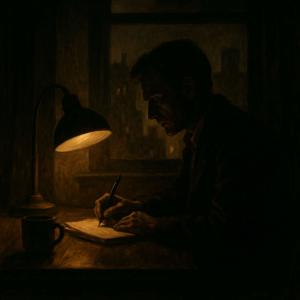


“Every noir protagonist has a point they refuse to cross. Most will cross it anyway.”
In the fourth episode of The Ink Stays Dark, Adrian Klein examines the Moral Spine: the private code each character believes will hold, and the slow, almost invisible way that line begins to bend under pressure.
Noir is not nihilism; it is a study of ethical cost. We explore how conscience erodes through small, reasonable decisions—how good people drift, one careful degree at a time, into choices they once believed belonged to someone else.
Inside this episode:
Support the show
About Ink Stays Dark
The Ink Stays Dark explores the moral questions beneath crime, silence, memory, power, and the stories people try to control.
Hosted by writer Adrian Klein, the podcast moves through real cases, history, psychology, institutions, and fiction to examine what people do when truth becomes expensive.
Connect with the Dark:
“In noir, the quiet isn’t empty. It’s loaded.”
In the third episode of The Ink Stays Dark, Adrian Klein explores silence not as an absence of sound, but as a presence of consequence. We move beyond atmosphere to examine how silence reveals truth, delivers threats, and becomes a plot engine of its own.
From the communal denial of Nordic Noir to the bureaucratic erasure of 1930s Vienna, we trace how rooms change temperature when the words stop and why restraint is often the loudest thing on the page.
Inside this episode:
Support the show
About Ink Stays Dark
The Ink Stays Dark explores the moral questions beneath crime, silence, memory, power, and the stories people try to control.
Hosted by writer Adrian Klein, the podcast moves through real cases, history, psychology, institutions, and fiction to examine what people do when truth becomes expensive.
Connect with the Dark:
“In noir, the city always knows what you did.”
In the second episode of The Ink Stays Dark, Adrian Klein explores the city not as a backdrop, but as a silent witness. A judge that sees everything, remembers everything, and rarely intervenes.
Moving through Florence, Vienna, Zagreb, and the sun-drenched lies of Classic Los Angeles, we examine how environments become accomplices. We look at how streets, buildings, and infrastructure shape moral pressure—deciding which crimes feel possible and which silences are rewarded.
Inside this episode:
We discuss:
“A city does not need to despise you to endanger you. It only needs to step aside.”
Support the show
About Ink Stays Dark
The Ink Stays Dark explores the moral questions beneath crime, silence, memory, power, and the stories people try to control.
Hosted by writer Adrian Klein, the podcast moves through real cases, history, psychology, institutions, and fiction to examine what people do when truth becomes expensive.
Connect with the Dark:
“Noir is what happens when good people realize the world doesn’t care.”
In the premiere episode of The Ink Stays Dark, Adrian Klein strips away the neon lights and trench coats to uncover the true soul of Noir: The Moral Pressure of Silence.
We explore why the most terrifying moments in fiction aren't the gunshots, but the "resignation"—the slow collapse of moral altitude. From the philosophy of Albert Camus to the modern tension of Tana French, we find the places where the shadows have a definite shape.
Inside this episode:
We discuss:
Listen now to step into a quiet place for shadow and weight. Welcome to the dark.
Support the show
About Ink Stays Dark
The Ink Stays Dark explores the moral questions beneath crime, silence, memory, power, and the stories people try to control.
Hosted by writer Adrian Klein, the podcast moves through real cases, history, psychology, institutions, and fiction to examine what people do when truth becomes expensive.
Connect with the Dark:
From the publisher's feed
The Ink Stays Dark explores the moral questions beneath crime, silence, memory, power, and the stories people try to control.
Hosted by writer Adrian Klein, the podcast moves through real…
Why do good people stay silent?
Why do some stories disappear while others refuse to stay buried?
What happens in the moments before a decision becomes visible?
The Ink Stays Dark began in psychological noir, but now follows the human pressure underneath it: witnesses, records, family secrets, corruption, responsibility, and the quiet choices that shape public truth.
For listeners drawn to moral ambiguity, institutional failure, memory, European noir, and the darker questions beneath ordinary life.
New episodes biweekly.