
Sign up to save your podcasts
Or

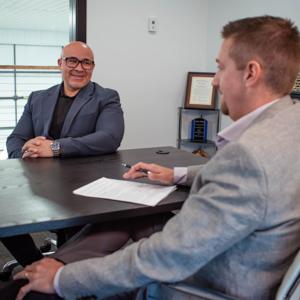


In week two of the Leverage System, the presenters explain why delegation often “boomerangs” back to leaders and argue it’s usually a handoff failure caused by missing clarity, not an employee skill issue.
They introduce a repeatable four-part handoff framework—clear ownership (one named person), clear scope (what’s in/out and decision authority), clear deadline (including recurring cadence and check-ins), and clear accountability (how “done to standard” is confirmed).
Using examples like monthly vendor reconciliation and client intake calls, they show how a slightly longer handoff conversation prevents rework, delays, and silent stalls. They warn against common mistakes (skipping a part, vague scope, answering instead of asking “What do you think we should do?”, and missing deadlines) and advise probing “I don’t know” responses by asking why to uncover what’s missing.
Want in on the live Q&A?
Join our OBS Inner Circle — where entrepreneurs connect, learn, and get their biggest business questions answered live.
Join Today — don’t just listen, get involved!
www.optimizebusinesssystems.com
00:00 Week Two Kickoff
00:47 Why Handoffs Fail
03:28 Four Part Framework
04:34 Clarity Not Micromanagement
08:02 Vendor Reconciliation Story
11:06 Ownership Scope Deadline Accountability
14:47 Prep Before Delegating
16:16 Stop Answering Questions
18:41 Live Handoff Examples
23:46 Common Delegation Mistakes
26:35 Why This Works
28:09 Homework And Next Weeks
30:00 Q&A And Trust Building
34:20 Final Takeaways
This episode kicks off a four-part “Leverage System” series to help business owners get out of the day-to-day without losing control by mapping what truly requires the owner versus what is kept out of habit.
The hosts argue most owners don’t have a delegation problem but a trust problem caused by past handoffs that came back wrong or late, and introduce a practical tool: a leverage audit that sorts every task and recurring decision into three buckets—“Only You,” “Delegatable,” and “Should Already Be Gone”—using three specific tests.
They share examples (purchase orders, financial reviews, key client negotiations, dispatching), address common resistance and mistakes, and instruct owners to list, bucket, and rank tasks by time and opportunity cost. The discussion previews next steps: the “handcuff conversation,” decision rights, and a trust ladder for staged autonomy.
Want in on the live Q&A?
Join our OBS Inner Circle — where entrepreneurs connect, learn, and get their biggest business questions answered live.
Join Today — don’t just listen, get involved!
www.optimizebusinesssystems.com
00:00 Welcome and Setup
00:11 Calendar Reality Check
01:57 Why Owners Stay Stuck
03:04 Delegation Is Trust
05:25 Leverage Audit Explained
06:54 Purchase Order Story
09:19 Resistance to the Audit
11:38 Three Bucket Framework
14:31 Three Sorting Questions
17:23 Real World Examples
20:11 Hidden Approvals and Interruptions
21:26 Rank Your Leverage Moves
23:16 Common Audit Mistakes
26:43 What Changes After Audit
27:47 This Week Challenge
30:31 Willy Joins the Discussion
35:16 Delegation Done Right
36:59 Handling Client Callbacks
39:17 Wrap Up and Next Steps
In this Inner Circle Call, Hector welcomes guest Christopher “Coach Chris” Lewis—former CFL player turned GovTech growth and operations leader and youth football coach—to discuss leadership and accountability.
Chris shares his path from university football to the CFL, injuries, and a transition into business roles spanning sales, utilities, and GovTech, emphasizing how locker-room habits translate to companies.
He highlights preparation and one-page planning, building teams that perform without the leader present, and developing people rather than relying on a “next man up” mindset. Chris explains how to drive change in slow-moving government organizations by understanding motivations and mitigating risk.
He covers diagnosing performance issues through clear expectations, purpose, and process-focused culture, recounts a $13M project mistake as a key accountability lesson, and stresses consistent standards, support-first coaching, and firing fast when necessary.
Want in on the live Q&A?
Join our OBS Inner Circle — where entrepreneurs connect, learn, and get their biggest business questions answered live.
Join Today — don’t just listen, get involved!
www.optimizebusinesssystems.com
00:00 Welcome and Guest Intro
02:05 From CFL to Business
07:08 Preparation as Leadership
10:39 Why Coach Youth Football
13:34 Locker Room vs Office
16:50 Driving Change in Government
19:18 Leadership vs Accountability
22:04 Accountability Story Setup
22:31 G7 Summit Deal
23:31 Power Failure Fallout
25:38 Lessons From The COO
27:53 Coaching Kids To Lead Adults
31:23 Stop Making Assumptions
32:31 Remote Work Before COVID
35:39 Support Versus Standards
39:30 What’s Next For Chris
40:45 Working On The Business
42:08 Southwest Savings Story
43:04 Final Wrap And Takeaways
In the final week of a four-part series, the hosts introduce the “High Performance Team System” to prevent the expectations blueprint, coaching conversations, and hard conversation framework from fading after training ends.
They explain that willpower fails without a calendar-based rhythm and share an example of an owner who reverted to vague expectations and avoided conversations because nothing was scheduled.
The system has four parts: weekly 15–20 minute check-ins with direct reports focused on standards (not status updates), a recognition rhythm tied to specific behaviors and standards (including core value alignment), an accountability ladder that escalates from a nudge to coaching to a hard conversation, and calendarizing the entire process.
They outline weekly, monthly, and quarterly layers, common rollout mistakes, and discuss how structure makes tough conversations and consistent standards easier to maintain.
Want in on the live Q&A?
Join our OBS Inner Circle — where entrepreneurs connect, learn, and get their biggest business questions answered live.
Join Today — don’t just listen, get involved!
www.optimizebusinesssystems.com
00:00 Series Finale Setup
01:26 Why Tools Fail Without Rhythm
03:04 Quick Recap Weeks One to Three
04:31 Willpower Versus Systems
06:10 System Not Bureaucracy
08:07 Part One Weekly Check Ins
09:20 Part Two Recognition Rhythm
11:00 Part Three Accountability Ladder
13:11 Part Four Calendarize Everything
14:23 Sample Weekly Calendar
16:48 Add Monthly and Quarterly Layers
18:14 Rolling It Out to Team
20:01 Four Common Implementation Mistakes
23:19 What Changes When It Runs
25:39 Final Recap and Action Steps
28:30 Willy Reflections and Examples
30:35 Closing Thoughts and Q and A
In this Inner Circle call (week three of the Performance Leader series), the speaker teaches a five-part “hard conversation” framework for addressing known underperformance directly before it becomes a crisis, emphasizing that avoiding tough talks increases damage to relationships, team trust, and standards.
Building on week one’s expectations blueprint and week two’s coaching conversation, this episode focuses on when coaching hasn’t closed the gap and the standard is no longer negotiable. The framework covers opening with no small talk, stating factual gaps tied to agreed standards, letting the person respond, setting clear requirements with deadlines and consequences, and confirming understanding while documenting.
Examples include a warehouse lead repeatedly missing deadlines and guidance for handling tears, anger, and silence, plus common leader mistakes like judgment, negotiating standards, vague consequences, and skipping documentation.
Want in on the live Q&A?
Join our OBS Inner Circle — where entrepreneurs connect, learn, and get their biggest business questions answered live.
Join Today — don’t just listen, get involved!
www.optimizebusinesssystems.com
00:00 Hard Conversation Framework
00:56 Why Waiting Makes It Worse
02:18 Week Three Performance Leader
03:49 Fear And Resistance
07:20 Warehouse Lead Story
09:28 Coaching Versus Consequences
11:09 Prep And Setting The Stage
14:24 Five Part Conversation Framework
19:32 Real World Script Example
22:17 Handling Tears Anger Silence
26:23 Four Common Leader Mistakes
29:12 Why This Approach Works
32:04 Your Assignment Next Week
34:00 Willie Reflects On Being Direct
36:46 Toughest Talks Letting Go
38:43 Wrap Up And Open Discussion
In week two of the Performance Leader series, the call focuses on coaching conversations that develop people rather than just managing output.
The speaker contrasts managing (checking if outcomes happened) with coaching (building thinking, judgment, and capability so results repeat without the leader present), using a story of a shop foreman whose constant availability created team dependency until he shifted to “asking before answering.”
The episode introduces a five-part live coaching framework: open with purpose (developmental, not disciplinary), ask before you tell, reflect on the gap using previously agreed standards from last week’s expectations blueprint, co-build a specific growth plan, and lock in a concrete follow-up date.
Examples cover correcting missed client updates and stretching a high performer toward leadership, plus warnings about silence, common mistakes, and distinguishing coaching from a hard conversation/PIP.
Want in on the live Q&A?
Join our OBS Inner Circle — where entrepreneurs connect, learn, and get their biggest business questions answered live.
Join Today — don’t just listen, get involved!
www.optimizebusinesssystems.com
00:00 Week Two Kickoff
00:40 Telling Versus Developing
01:59 Shop Foreman Story
04:14 Why Coaching Gets Skipped
04:49 Coaching Versus Managing
08:38 The Five Part Framework
14:00 Prep Before The Talk
16:03 Live Coaching Example
18:43 Coaching High Performers
21:59 Ask Before You Tell
22:55 Silence And Common Mistakes
28:32 Recap And Weekly Challenge
30:46 Group Takeaways
In week one of a four-part performance leadership series, Hector introduces the “Expectations Blueprint” as a practical tool to improve performance by defining standards so clearly that accountability becomes natural.
He argues most performance issues stem from unclear expectations—a leadership problem—illustrated by a story of an operations manager missing deadlines because the owner never defined measurable standards.
The blueprint has four parts: outcome (why the role exists), standard (measurable yes/no bar), behavior (repeatable actions that drive results), and review rhythm (scheduled check-ins). Hector shares sales and operations examples, a “stranger test” to verify clarity, guidance for rolling it out collaboratively, common pushbacks and responses, four implementation mistakes to avoid, and emphasizes this is proactive clarity—not a performance improvement plan.
Want in on the live Q&A?
Join our OBS Inner Circle — where entrepreneurs connect, learn, and get their biggest business questions answered live.
Join Today — don’t just listen, get involved!
www.optimizebusinesssystems.com
00:00 Welcome and Series Setup
01:17 The Accountability Problem
03:00 Story of Undefined Standards
05:57 Four Failures Overview
06:57 Why Expectations Stay Vague
09:47 Resistance and Mindset Shifts
12:14 Four-Part Blueprint Framework
16:26 Blueprint Examples Sales Ops
21:11 Stranger Test and Rollout
25:07 Handling Pushback and Mistakes
30:05 Not a PIP Closing Recap
32:50 Wrap Up and Host Banter
In this Inner Circle call wrapping a four-part Decision Maker’s Playbook series, host Hector interviews Alfonso Cuadra, founder and CEO of WealthGenius and the Quadra Group of Companies.
Cuadra shares his immigrant upbringing and first entrepreneurial venture at 12, building a paper-route business by hiring friends, then describes living on the streets as a teen and becoming a parent at 17, which led him to start a clothing company that grew to millions in sales across Canada.
After financial vulnerability in the early 2000s, he pursued “Armageddon-proof” income through multifamily real estate, scaling from 7-unit buildings to nearly 1,000 doors across Canada and the US.
He explains growing through community and “superfans,” outlines underwriting priorities like capital preservation and worst-case planning, discusses delegating decisions, trusting gut instincts, protecting time, and making fast decisions aligned to long-term goals.
Want in on the live Q&A?
Join our OBS Inner Circle — where entrepreneurs connect, learn, and get their biggest business questions answered live.
Join Today — don’t just listen, get involved!
www.optimizebusinesssystems.com
00:00 Welcome and Guest Intro
01:28 El Salvador Catch Up
02:12 Grassroots Hustle Story
03:45 Paper Route to Leadership
07:07 Hard Lessons and Real Estate Pivot
10:22 Building Community and Superfans
14:30 Deal Analysis and Capital Protection
17:33 Numbers Over Hype
18:10 Protect the House
19:42 Cutting Ties Fast
22:36 Delegation Without Bottlenecks
25:06 Stepping Outside Your Lane
27:08 Choosing Partners Wisely
28:19 Leadership Is We
31:16 Trust Your Gut
32:23 Protecting Mental Bandwidth
35:22 Decide Fast Win Big
In the final episode of the OBS Inner Circle four-part series, the speakers emphasize building a repeatable decision-making system rather than relying on luck or gut feel, connecting the idea to Napoleon Hill’s “Outwitting the Devil” and the risk of becoming easily swayed without strong foundations.
They recap the prior tools—decision audit, decision framework, and bias blockers—and introduce a “decision operating system” that runs on rhythm through four layers: a daily morning scan and end-of-day check, a weekly 30-minute decision review (open decisions, delegation audit, and decision quality review), a structured delegation framework with clear ownership/scope/deadlines and coaching questions, and a quarterly calibration focused on evaluating process over outcomes.
A CFO case study shows reduced decision load via delegation and bias awareness, and they close by noting teams learn by watching how leaders decide.
Want in on the live Q&A?
Join our OBS Inner Circle — where entrepreneurs connect, learn, and get their biggest business questions answered live.
Join Today — don’t just listen, get involved!
www.optimizebusinesssystems.com
00:00 Series Wrap and Hill
02:17 Best Decision Reflection
03:27 Three Tools Recap
05:51 Why Systems Win
08:04 Four Layer Overview
08:30 Daily Decision Rhythm
11:47 Weekly Decision Review
16:35 Delegation Framework
22:02 Quarterly Calibration
24:59 CFO Case Study
27:35 Closing Leadership Lesson
30:16 Team Watches You Decide
Week three of the Decision Makers Playbook teaches leaders that decision frameworks can’t protect them from their own brain shortcuts, as behavioral economics shows even experienced, well-intentioned leaders make predictable judgment errors due to bias.
The episode introduces a “bias blocker” system and explains six common biases—confirmation, sunk cost, anchoring, overconfidence, loss aversion, and groupthink—along with practical overrides like assigning a devil’s advocate, evaluating choices without past investment, creating your own anchor first, running a pre-mortem, reframing opportunity cost, and structuring dissent. Viewers rate their dominant biases, answer three reflection questions, and estimate the real cost of bias.
A case study shows sunk cost and confirmation bias driving prolonged investment in a failing product line until a clean-slate review prompts a pivot that frees overhead and boosts revenue.
The session closes with a four-step checklist and participant reflections on applying the tools in personal and business decisions.
Want in on the live Q&A?
Join our OBS Inner Circle — where entrepreneurs connect, learn, and get their biggest business questions answered live.
Join Today — don’t just listen, get involved!
www.optimizebusinesssystems.com
00:00 Week Three Kickoff
00:18 Why Biases Happen
02:21 Three Bias Truths
03:59 Build a Bias System
05:32 Confirmation Bias
07:12 Sunk Cost Trap
09:02 Anchoring Effect
11:00 Overconfidence Check
12:57 Loss Aversion Fear
14:54 Groupthink Pressure
16:46 Find Your Pattern
19:07 Case Study Product Line
22:56 Four Step Bias Blocker
25:15 Series Wrap and Week Four
26:27 Alan Applies the Tools
34:20 Willy Bias in Trucking
38:05 Closing Homework Reminder
From the publisher's feed
Welcome to The Inner Circle, the podcast powered by Optimize Business Systems (OBS). This is where business owners, leaders, and doers come together to gain clarity, sharpen their vision, and unlock growth through proven systems and real-world leadership insights.
Each episode dives deep into the strategies, frameworks, and mindset shifts that turn chaos into clarity and leaders into legacy builders. From practical tools that streamline operations to conversations that challenge how you think about leadership, The Inner Circle is your weekly seat at the table with a community that’s scaling smarter, not harder.
https://optimizebusinesssystems.com/obs-program/
If you’re ready to lead with purpose, align your team, and build a business that works for you not the other way around pull up a chair. You’re in The Inner Circle.