
Sign up to save your podcasts
Or



Professional learning is a crucial element of the work of all educators throughout their entire careers. The education profession is grounded in a rich professional knowledge base, and education professionals must be well-versed in this knowledge base, as well. However there is a debate in regard to should all educators participate in professional learning. Essentially should all educators be trained?
The pandemic exacerbated already overworked and undervalued educators. And unfortunately instead of things getting easier for educators, in many places things are getting more difficult. On this episode we will discuss what educators need the most of right now.
Across the country, educators, parents and allies are coming together to ensure that every Black student and educator can live, grow and thrive with support, love and joy. In addition, across the country racists are coming together to ensure Black students are oppressed in perpetuity. It is time that we have an authentic discussion about Black Lives Matter and what it can mean for schools. And we are looking at it through the lens of 3 words and a humanizing statement. What are your thoughts on Black Lives Matter and schools?
We’re accustomed to hearing professionals talk about “climbing the ladder”as they progress through different levels of advancement in their industries. But,as an educator, it can seem like your career trajectory isn’t quite as clear. In this episode we discuss career advancement opportunities for educators.
On this episode we want listeners to dream with us. Imagine if there were no barriers to changing and improving education. What would you do to change education?
Teaching was a stressful occupation long before the (COVID-19) pandemic occurred; during the pandemic, it might have become even more stressful. Teachers are navigating unfamiliar technology, are balancing multiple modes of teaching, and have concerns about returning to in-person instruction. In addition, many teachers are caring for their own children while teaching. As a result, teachers’ levels of stress and burnout have been high throughout these times.
Dress codes for educators–or lack thereof–vary by district and even school environment. For students, policies are clearly established and leave little room for confusion. According to the National Center for Education Statistics, 56% of public schools enforce a dress code for students. Even school environments require uniforms. However, appropriate apparel for teachers has yet to be defined in many schools. Some teachers come in shorts, jeans, some in athletic gear, some in business casual, and some in business attire. Is it time for some teachers to re-evaluate their wardrobe choices for the new school year.
Back-to-school is here again. While we might hope that beginning the academic year with schools open for in-person learning would set the trend for the rest of the year, the ongoing presence COVID-19, makes everything less certain. What are your thoughts in regard to Back to School 2021?
There is a huge disconnect between classroom teachers and administrators. Teachers feel as though administrators do not understand what it is like to be in the classroom. Administrators continually remind classroom teachers that “I’ve been in your shoes, but you haven’t been in mind.” Who is right who is wrong?
Legislatures across the country are attempting to pass bills essentially encouraging retention of students for the 2020-2021 school year. Meaning students will repeat the same grade in 2021-2022. Under the framing of “learning loss”. Should students be retained for the 2020-2021 school year? What are your thoughts?
From the publisher's feed
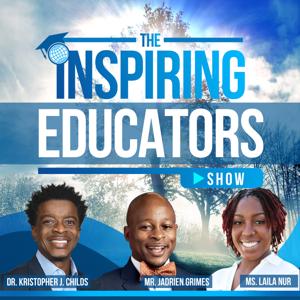
The Inspiring Educators Show is a space where EDUCATORS can let go, learn, laugh... and be inspired.