
Sign up to save your podcasts
Or

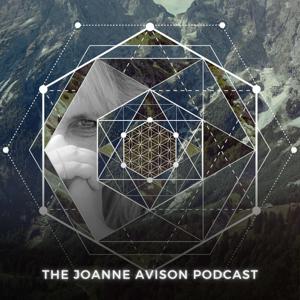


As autumn arrives and the days grow shorter, have you noticed a change in your energy, mood or the way your body feels?
In this reflective seasonal episode, Joanne explores the ancient Celtic festival of Samhain and what the changing seasons might teach us about listening to our bodies. From circadian rhythms and the effects of changing daylight to the moon, tides and our natural cycles of rest and activity, she considers why slowing down might be a form of wisdom rather than something to resist.
Along the way, Joanne shares a remarkable personal sailing experience, offers simple ways to reconnect with your body through gentle movement, and reflects on the importance of rest, compassion and finding light in the darker months. An invitation to honour the rhythms of nature, and perhaps give yourself permission to move a little more slowly.
🍂
----------------------------------------
SIGN UP TO THE JOANNE AVISON NEWSLETTER
Simply scroll down to ‘Stay Connected’ and pop in your details. We DON’T spam and we DO respect privacy!
FOLLOWING ON YOUTUBE?
Do join us! Start here
MORE:
My website - https://www.joanneavison.com/
My course - https://myofascialmagic.com/
My book: - https://amzn.to/3zF3SAS
Instagram - joanneavison
Podcast produced and edited by Megan Bay Dorman
What if the way we understand the human body has been missing something fundamental?
🎥 A quick note: This episode includes several visual demonstrations that really help bring Joanne's ideas to life. You can absolutely enjoy the conversation in audio, but we'd particularly recommend watching this one on YouTube to get the full experience!
👉 Watch on YouTube: https://www.youtube.com/@joanne.avison/videos
Following her Emotional Anatomy series, Joanne responds to your questions and brings together the connections between fascia, movement and emotion.
Through fascinating visual demonstrations, she challenges traditional mechanical models of anatomy, exploring why familiar explanations involving levers and joints don't always capture the complexity of how our bodies develop and move. She also considers the roles of embryology, sacred geometry, tension and compression in shaping our living architecture.
But what happens when we bring emotion into the picture?
Through her concept of “knots in the net” and a deeply personal story, Joanne explores how emotional experiences may shape patterns within our bodies. Bringing together science, spirituality and biomotional intelligence, she considers how gentle touch and micromovement might transform the way we understand and work with the connection between movement and emotion...
📖 Want to explore further? In the book mentioned in this episode - Yoga, Fascia, Anatomy and Movement - Joanne delves deeper into the relationship between fascia, movement, anatomy and the fascinating research into light and sound within our living tissues.
👉 Get your copy from:
SIGN UP TO THE JOANNE AVISON NEWSLETTER
Simply scroll down to ‘Stay Connected’ and pop in your details. We DON’T spam and we DO respect privacy!
FOLLOWING ON YOUTUBE?
Do join us! Start here
MORE:
My website - https://www.joanneavison.com/
My course - https://myofascialmagic.com/
My book: - https://amzn.to/3zF3SAS
Instagram - joanneavison
Podcast produced and edited by Megan Bay Dorman
What if the human body is far more connected and extraordinary than we've ever imagined? And what if the way we feel is inseparable from the way our entire body moves, responds and experiences life?
In this final episode of her Emotional Anatomy series, Joanne explores the remarkable work of Dr Mae-Wan Ho, a pioneering biophysicist whose research challenged how we understand the interconnectedness of living organisms.
Using polarised light, Mae-Wan Ho and her colleague observed tiny living creatures shimmering with rainbow colours as they moved. These observations inspired her exploration of liquid crystalline structures, coherence and the wholeness of living systems, developed in her book The Rainbow and the Worm.
But what might these discoveries mean for our bodies, movement and emotions?
Joanne explores the relationship between fascia, water and the living architecture of the body, drawing on the work of Candace Pert, Gerald Pollack and other pioneering thinkers. She considers how our tissues communicate, how subtle movement influences how we feel, and why the body may be better understood as a responsive whole rather than separate parts.
Through personal stories from the dissection laboratory and Mae-Wan Ho's beautiful analogy of the body as an orchestra, Joanne explores how trillions of cells contribute to (and communicate as) our unique, ever-changing experience of being alive.
As the Emotional Anatomy series concludes, we're left with a fascinating question: what if our emotions, movement and physical form are more intimately connected than we realise?
SIGN UP TO THE JOANNE AVISON NEWSLETTER
Simply scroll down to ‘Stay Connected’ and pop in your details. We DON’T spam and we DO respect privacy!
FOLLOWING ON YOUTUBE?
Do join us! Start here
MORE:
My website - https://www.joanneavison.com/
My course - https://myofascialmagic.com/
My book: - https://amzn.to/3zF3SAS
Instagram - joanneavison
Podcast produced and edited by Megan Bay Dorman
What if our emotions are communicating through far more of the body than we ever imagined?
In this episode, Joanne considers things she learned through the groundbreaking work of Dr. Candace Pert. Dr Pert is the neuroscientist whose scientific discoveries helped transform our understanding of the relationship between mind, body and emotion.
Through her research into neuropeptides and their receptors, and her influential book Molecules of Emotion, Pert revealed a remarkable body-wide communication network, challenging the long-held, classical idea that our physical and emotional lives are separate.
Joanne reflects on how Pert’s work influenced her own understanding of fascia, psychosomatic intelligence and the living body, and why it helped give her the confidence to develop the concept of biomotional intelligence.
Along the way, she questions the mechanical language we still use to describe human movement. Joanne explores the essential relevance of soft matter physics and the continuous architecture of fascia. How are our feelings, movement and physical form so intimately connected?
It's a celebration of a remarkable scientist whose work continues to inspire us to reconsider what it means to be a thinking, feeling, living human being.
----------------------------------------
SIGN UP TO THE JOANNE AVISON NEWSLETTER
Simply scroll down to ‘Stay Connected’ and pop in your details. We DON’T spam and we DO respect privacy!
FOLLOWING ON YOUTUBE?
Do join us! Start here
MORE:
My website - https://www.joanneavison.com/
My course - https://myofascialmagic.com/
My book: - https://amzn.to/3zF3SAS
Instagram - joanneavison
Podcast produced and edited by Megan Bay Dorman
What happens when everything you’ve been taught tells you to go one way, but the body asks you to go another?
In this episode, Joanne reflects on Dr. Ida P. Rolf, the pioneering biochemist whose work creating Structural Integration profoundly influenced the way we understand fascia, bodywork and the organisation of the living body.
Joanne shares her own journey through Structural Integration, from training and teaching alongside the development of Tom Myers’ Anatomy Trains, to an experience with a client that challenged one of the fundamental rules she had been taught. What followed was an extraordinary dream about Dr. Rolf herself, and a message Joanne has carried with her ever since: “Follow the yoga. Go deep. Follow your intuition.”
Along the way, Joanne explores Rolfing, fascia, alignment and the famous Rolfing line, and considers what it really means to help another person find their own balance, poise and embodied wisdom.
It’s also a reflection on teachers and traditions: how we can honour the people who came before us while continuing to question, explore and allowing their work to evolve.
🎁 Joanne’s free Sacred Geometry guide, including five subtle movement practices to explore for yourself, is available here:
👉 https://www.joanneavison.com/sacred-geometry-gift
SIGN UP TO THE JOANNE AVISON NEWSLETTER
Simply scroll down to ‘Stay Connected’ and pop in your details. We DON’T spam and we DO respect privacy!
FOLLOWING ON YOUTUBE?
Do join us! Start here
MORE:
My website - https://www.joanneavison.com/
My course - https://myofascialmagic.com/
My book: - https://amzn.to/3zF3SAS
Instagram - joanneavison
Podcast produced and edited by Megan Bay Dorman
What if the body is doing far more than simply carrying us through the world?
Following last week’s exploration of Vanda Scaravelli and learning to listen to the body, Joanne turns to another woman whose work profoundly shaped her thinking: Mabel Elsworth Todd, author of the pioneering The Thinking Body.
Todd was writing about the relationship between thought, feeling, posture and movement as early as the 1930s. She recognised that our emotional lives are expressed through the whole body, and that gesture, behaviour and physical form are intimately connected.
In this episode, Joanne explores Todd’s remarkable ideas through the lens of what we now understand about fascia, proprioception, embodied movement and movement science. She considers the body’s changing shape, the role of breath and the diaphragm, our relationship with balance, and why Todd’s work opened the door to decades of Joanne’s own exploration into somatic archetypes of the living body and how we are entering a new era of understanding our physical form.
Some of Todd’s anatomical models belong to their time, but the questions she was asking remain strikingly relevant. Nearly 90 years later, The Thinking Body still invites us to become more curious about the relationship between body, mind, feeling and movement…
✨ What does your own posture and movement reveal to you?
SIGN UP TO THE JOANNE AVISON NEWSLETTER
Simply scroll down to ‘Stay Connected’ and pop in your details. We DON’T spam and we DO respect privacy!
FOLLOWING ON YOUTUBE?
Do join us! Start here
MORE:
My website - https://www.joanneavison.com/
My course - https://myofascialmagic.com/
My book: - https://amzn.to/3zF3SAS
Instagram - joanneavison
Podcast produced and edited by Megan Bay Dorman
What happens when we stop telling the body what to do, and start listening to what it already knows?
More than 30 years ago, Vanda Scaravelli’s Awakening the Spine began a journey for Joanne that would profoundly change the way she understood yoga, movement and her own body.
In this episode, Joanne reflects on what Vanda taught her about gravity, the spine, proprioception and the intelligence within our movement — including the unforgettable moment her own body showed her what Vanda called its “anti-gravity reflex.”
A number of you have asked questions about emotional anatomy and the idea that our body is listening. In response to that, Joanne also explores the teachers who helped shape her ability to do that along the way, why learning to trust our own inner guidance matters, and how her later understanding of fascia, biomechanics and biomotional intelligence gave new meaning to ideas she first encountered decades ago.
There’s also a simple practice you can try as Joanne invites you to pause, breathe and experience the subtle two-directional movement of your own spine, to really feel what Vanda’s guidance meant in practice.
Perhaps awakening the spine begins with something remarkably simple: learning how to listen and using our breath to hear.
🌟🌟🌟 Plus, the free guide 'Sacred Geometry In The Living Body', including five subtle movement practices, is still available here!
https://www.joanneavison.com/sacred-geometry-gift
SIGN UP TO THE JOANNE AVISON NEWSLETTER
Simply scroll down to ‘Stay Connected’ and pop in your details. We DON’T spam and we DO respect privacy!
FOLLOWING ON YOUTUBE?
Do join us! Start here
MORE:
My website - https://www.joanneavison.com/
My course - https://myofascialmagic.com/
My book: - https://amzn.to/3zF3SAS
Instagram - joanneavison
Podcast produced and edited by Megan Bay Dorman
What if your emotions aren’t separate from your anatomy, but part of the way you move, breathe and express who you are?
After sharing her deeply personal experience of recovery in 12 Minutes That Changed the Way I Move, Joanne turns to a question many of you have been asking in the comments: what is emotional anatomy, and do our feelings really shape the body?
Drawing on decades of studying anatomy, fascia, movement, spirituality and the work of Emotional Anatomy by Stanley Keleman, Joanne explores the body as something far richer than a collection of mechanical parts.
She reflects on the relationship between our emotions and the shapes we make, why she’s cautious about labelling a person by their posture or body type, and how changing the way we move can sometimes change the way we feel…
Joanne also shares something she has noticed through her own micromovement practice: when she moves differently, she breathes differently. She smiles. She feels different. And her whole body responds.
Perhaps our emotional anatomy is part of an ongoing conversation between body, movement, feeling and soul - one we already have the ability to listen to.
🎁 If you haven’t collected Joanne’s free Sacred Geometry guide yet, you’ll find five subtle practices inside that you can explore for yourself.
👉 Get your free guide here: https://www.joanneavison.com/sacred-geometry-gift
SIGN UP TO THE JOANNE AVISON NEWSLETTER
Simply scroll down to ‘Stay Connected’ and pop in your details. We DON’T spam and we DO respect privacy!
FOLLOWING ON YOUTUBE?
Do join us! Start here
MORE:
My website - https://www.joanneavison.com/
My course - https://myofascialmagic.com/
My book: - https://amzn.to/3zF3SAS
Instagram - joanneavison
Podcast produced and edited by Megan Bay Dorman
What if the way we’ve been taught to stand is getting in the way of how we’re designed to move?
After the extraordinary response to last week’s personal episode, Joanne continues the conversation with something wonderfully practical - beginning with a sentence she used herself for decades:
“Stand with your feet hip-width apart.”
So why doesn’t she say it anymore?
This episode is an invitation to look a little differently at the remarkable body you inhabit: one designed to wobble, recoil, adapt, recover and dance its way through life.
Joanne explores the natural spring and intelligence already within us, and shares a simple micromovement you can try for yourself right away. You might discover something surprising about the way your body prefers to balance, turn and move! Because perhaps moving better for longer begins with listening more closely to the body we already have - and trusting a little more of its innate wisdom...
*** If you haven’t collected Joanne’s free Sacred Geometry guide yet, it brings together both Sacred Geometry series, the geometry of the living body and five subtle practices for you to explore.
Get your free guide here: https://www.joanneavison.com/sacred-geometry-gift
And Joanne mentions Myofascial Magic In Action co-founder Paul Thornley in this episode. You can find Paul on Instagram at @paul.s.thornley
SIGN UP TO THE JOANNE AVISON NEWSLETTER
Simply scroll down to ‘Stay Connected’ and pop in your details. We DON’T spam and we DO respect privacy!
FOLLOWING ON YOUTUBE?
Do join us! Start here
MORE:
My website - https://www.joanneavison.com/
My course - https://myofascialmagic.com/
My book: - https://amzn.to/3zF3SAS
Instagram - joanneavison
Podcast produced and edited by Megan Bay Dorman
What can 12 minutes of gentle movement really change?
For this final chapter of Sacred Geometry Series 2, Joanne does something a little different. After exploring the remarkable people and ideas that have shaped our understanding of living architecture, she shares a much more personal story.
Following surgery after a diagnosis of breast cancer, Joanne came home unable to move her right arm and shoulder. Drawing on decades of work with fascia, anatomy and movement, she became her own case study, committing to just 12 minutes of micromovement a day. She expected that to fully restore her movement it would take at least 12 months. It took 12 weeks.
This episode follows that experience through recovery, the support and grace that surrounded her, and the unexpected visit from Paul Thornley that led to the creation of Myofascial Magic in Action. It felt essential to them both to share the benefits of this work.
It’s a story about subtle movement, fascia, recovery and restoring the natural spring we’re all designed to have… and what that can mean for you.
🎁 A SPECIAL GIFT FOR YOU
Inspired by everything we’ve explored across these two Sacred Geometry series, Joanne has created a free guide for you, connecting the keys of all the Platonic solids explored in Series 1, a summary of the key protagonists in Series 2 and how all that geometry actually works in the living body, through five subtle practices you can explore for yourself.
👉 Get your free Sacred Geometry gift here! https://www.joanneavison.com/sacred-geometry-gift
✨ EXPLORE THE 5 R’s
Explore the 5 R’s of micromovement sequencing Joanne mentions in this episode, by watching our special YouTube mini-series - complete with practical demonstrations - starting here: Rebound In Action: The Key to Moving Without Strain
SIGN UP TO THE JOANNE AVISON NEWSLETTER
Simply scroll down to ‘Stay Connected’ and pop in your details. We DON’T spam and we DO respect privacy!
FOLLOWING ON YOUTUBE?
Do join us! Start here
MORE:
My website - https://www.joanneavison.com/
My course - https://myofascialmagic.com/
My book: - https://amzn.to/3zF3SAS
Instagram - joanneavison
Podcast produced and edited by Megan Bay Dorman
From the publisher's feed
The Joanne Avison Podcast is a journey into Spiritual Science, examining the sacred geometry of human form and motion and how the Fascia Matrix changes all we thought we knew about human bodies.…

10,514 Listeners
615 Listeners

1,852 Listeners

1,030 Listeners

8,327 Listeners

3,612 Listeners

3,413 Listeners

4,249 Listeners

1,224 Listeners

29,068 Listeners

409 Listeners

41,343 Listeners
222 Listeners

366 Listeners

13 Listeners