
Sign up to save your podcasts
Or

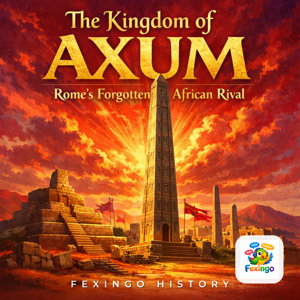


In this episode, Lucas and Luna explore the dramatic war between the Kingdom of Axum and the Jewish Himyarite ruler Dhu Nuwas in the early 6th century. Lucas walks Luna through the massacre at Najran sparked by Dhu Nuwas's persecution of Christians, the desperate plea for help that reached the Byzantine emperor, and Axum's King Kaleb's decision to launch a massive invasion across the Red Sea. They discuss the naval logistics, the role of Byzantine backing, and Kaleb's eventual victory that installed a Christian client king in Himyar. But the story doesn't end there: a later rebellion led by the Axumite general Abraha would fracture Axum's power, and the Persian conquest of Himyar in the 570s would sever Axum's Red Sea dominance, marking the beginning of the empire's long decline. Luna asks sharp questions about Kaleb's motives, the religious dimensions of the conflict, and how this war reshaped the region for centuries.
#Axum #Himyar #Kaleb #DhuNuwas #Najran #RedSea #EthiopianHistory #ByzantineEmpire #Sassanids #Christianity #Judaism #Abraha #Marib #Zafar #LateAntiquity #History #FexingoHistory #Warfare #KingdomOfAxum #AksumiteEmpire
Keep every episode free: buymeacoffee.com/fexingo
In this episode, Lucas and Luna explore the reign of King Kaleb, one of Axum's most ambitious rulers. In the early 6th century, Kaleb launched a massive military expedition across the Red Sea to intervene in the Himyarite Kingdom (modern Yemen) against a Jewish king, Dhu Nuwas, who was persecuting Christians. Lucas explains the geopolitical context—how Axum's control of the Red Sea trade routes and its Christian identity drove this conflict. They discuss the naval preparations, the role of the Byzantine Empire as an ally, and the brutal siege of Zafar. The episode also covers the aftermath: Axum's brief rule over Himyar, the eventual Persian intervention, and the long-term decline of Axum's power. Key figures include Kaleb, Dhu Nuwas, and the Christian martyrs of Najran. This episode dives into a pivotal moment often overshadowed by Axum's earlier achievements.
#Axum #KingKaleb #Himyar #DhuNuwas #Najran #RedSea #ByzantineEmpire #Christianity #Judaism #Yemen #Zafar #MaribDam #PersianEmpire #6thCentury #ReligiousConflict #MilitaryHistory #AncientTrade #FexingoHistory #KingdomOfAxum #AksumiteEmpire
Keep every episode free: buymeacoffee.com/fexingo
In this episode of Fexingo History, Lucas and Luna explore the vast Aksumite trade network that connected Africa, Arabia, India, and the Mediterranean world. From the bustling port of Adulis on the Red Sea to the caravan routes into the interior, Axum was a commercial superpower. They discuss the goods that flowed through the kingdom—ivory, frankincense, myrrh, gold, slaves, and exotic animals—as well as the merchants who traversed these routes: Greeks, Romans, Sabaeans, and Indians. The episode also delves into the coinage system pioneered by King Endubis and the role of the Red Sea monsoon winds in shaping trade. Lucas highlights Axum's diplomatic ties, including the famous embassy to Emperor Aurelian, and how the kingdom's wealth funded its monumental architecture. Luna asks about the decline of this network, leading to a discussion of the rise of Islam and changing trade patterns. The episode ends with a reflection on Axum's legacy as a forgotten economic powerhouse.
#Axum #Aksumite #TradeNetwork #Adulis #RedSeaTrade #IvoryTrade #Frankincense #Myrrh #Endubis #Coinage #Aurelian #Monsoon #IndianOceanTrade #Sabaeans #RomanEmpire #AncientEconomy #History #FexingoHistory #KingdomOfAxum #AksumiteEmpire
Keep every episode free: buymeacoffee.com/fexingo
In Episode 24, Lucas and Luna explore the Ezana Stone inscription, a trilingual monument in Ge'ez, Sabaean, and Greek that records King Ezana's conversion to Christianity in the 4th century CE. Lucas explains how the stone's text shifts from invoking the pagan god Mahrem to praising the Christian God, marking a pivotal moment in Axum's history. They discuss the political context: Ezana's wars against the Nuba and Kasu, the influence of the Syrian missionary Frumentius, and how Axum became one of the first Christian states. Lucas also highlights the controversy over whether Ezana's conversion was genuine or strategic, drawing from the stone's own words. The episode ties Axum's religious shift to its later identity as the 'Ethiopian Jerusalem' and the legend of the Ark of the Covenant. Specific details include the location of the stone in Axum, its dating to around 340–350 CE, and the phrase 'Lord of Heaven' found in all three languages.
#EzanaStone #Aksumite #ChristianConversion #GeEz #Sabaean #Mahrem #Frumentius #Nuba #Kasu #4thCentury #Axum #Epigraphy #TrilingualInscription #EthiopianHistory #EastAfrica #AncientHistory #History #FexingoHistory #KingdomOfAxum #AksumiteEmpire
Keep every episode free: buymeacoffee.com/fexingo
In this episode, Lucas and Luna explore the reign of King Aphilas, an early Aksumite ruler who faced the persistent threat of the Beja nomads. They discuss the Monumentum Adulitanum inscription, which records Aphilas' campaigns against the Beja and other neighboring peoples. The episode examines the Beja's origins, their raiding culture, and how Aphilas' military responses shaped Axum's frontier policies. Lucas explains the significance of the Beja as both a nuisance and a catalyst for Axumite expansion, and how later kings like Ezana continued Aphilas' strategies. The conversation also touches on the Beja's unique matrilineal inheritance system and their enduring presence in the region long after Axum's decline. Listeners will come away with a deeper understanding of how peripheral peoples influenced the trajectory of one of Africa's great empires.
#Axum #Aphilas #Beja #MonumentumAdulitanum #Aksumite #EthiopianHistory #EastAfrica #AncientEmpires #Nomads #MilitaryHistory #RedSea #Adulis #Inscriptions #GeEz #Matrilineal #KingEzana #FexingoHistory #History #KingdomOfAxum #AksumiteEmpire
Keep every episode free: buymeacoffee.com/fexingo
In this episode of The Kingdom of Axum: Rome's Forgotten African Rival, Lucas and Luna explore the maritime power of the Aksumite Empire. They discuss how Axum, with its port of Adulis, became a dominant naval force in the Red Sea, controlling trade routes and projecting military power to Yemen. The episode covers the construction of Aksumite ships, the naval campaigns under King Kaleb, and the role of the navy in maintaining Axum's economic and political influence. It also touches on the decline of the navy with the rise of Islam and the shift in trade routes. Specific details include the use of the monsoon winds, the design of Aksumite dhows, and the strategic importance of the Dahlak Archipelago.
#Axum #AksumiteNavy #Adulis #RedSea #KingKaleb #Yemen #Himyar #DahlakArchipelago #MaritimeHistory #AncientNavies #TradeRoutes #MonsoonWinds #Dhow #EthiopianHistory #EastAfrica #RomanRival #FexingoHistory #History #KingdomOfAxum #AksumiteEmpire
Keep every episode free: buymeacoffee.com/fexingo
In this episode, hosts Lucas and Luna delve into Axum's use of war elephants in the 4th century under King Ezana. Discover how Axum acquired and trained African forest elephants, smaller than their Asian counterparts, and used them effectively against the Nuba and other enemies. Learn about the tactical role of elephants in breaking infantry lines, the logistical challenges of moving them across the rugged terrain of the Simien Mountains and the Takkaze River, and the legacy of Axum's elephant corps compared to the Ptolemies and Carthaginians. Lucas explains the symbolism of elephants on Axumite coins and how they represented the empire's might. The conversation also touches on the decline of elephant warfare with the rise of Christianity and changing military tactics. A fascinating look at a forgotten aspect of an African empire's military machine.
#Axum #WarElephants #KingEzana #Nuba #TakkazeRiver #AfricanForestElephant #Ptolemaic #Carthaginian #Mahrem #Adulis #SimienMountains #AksumiteCoins #MonumentumAdulitanum #4thCentury #AncientWarfare #EastAfrica #History #FexingoHistory #KingdomOfAxum #AksumiteEmpire
Keep every episode free: buymeacoffee.com/fexingo
In this episode of The Kingdom of Axum: Rome's Forgotten African Rival, Lucas and Luna explore the shadowy figure of Dil Na'od, the last king of the Aksumite dynasty. Drawing on the medieval hagiography of Tekle Haymanot and the Bete Amanuel chronicles, they examine the account of a coup by a regional governor named Mara Takla Haymanot, who supposedly overthrew Dil Na'od in the 10th century and founded the Zagwe dynasty. Lucas explains how this narrative, preserved in the saints' lives and later royal chronicles, may be more legend than history, perhaps conflating several centuries of decline. They discuss the alternative theory that the Zagwe dynasty emerged from the Agaw people of Lasta, and how the Solomonic restoration later retconned Dil Na'od as a saintly king whose line was preserved through his daughter, allowing a return to legitimacy. The conversation touches on archaeological evidence from Lalibela and the problematic dating of the transition. This episode dives deep into the historiographical debate: was Dil Na'od a real king, or a convenient myth created to legitimize the Solomonic dynasty?
#DilNaod #ZagweDynasty #MaraTaklaHaymanot #TekleHaymanot #BeteAmanuel #AgawPeople #Lasta #Lalibela #SolomonicDynasty #Aksumite #EthiopianHistory #MedievalAfrica #Hagiography #RoyalChronicles #10thCentury #KingList #FexingoHistory #History #KingdomOfAxum #AksumiteEmpire
Keep every episode free: buymeacoffee.com/fexingo
Deep in the Eritrean desert, a single stone once proclaimed the military conquests of an unknown Axumite king. The Monumentum Adulitanum, a massive Greek inscription preserved by the 6th-century merchant Cosmas Indicopleustes, offers a rare glimpse into Axum's expansionist ambitions before the reign of Ezana. This episode unpacks the inscription's content, its discovery, and the scholarly debates over which king commissioned it. We explore how Axum projected power into the highlands of Ethiopia and the Red Sea coast, subduing peoples like the 'Amatites' and fighting against the 'Sabaeans' and 'Homerites'. The Monumentum raises tantalizing questions about Axum's early state formation, its military organization, and its diplomatic and trade relations. Lucas and Luna discuss the challenges of interpreting an inscription that exists only in a medieval copy, and what it reveals about Axum's self-image as a Mediterranean-oriented power.
#MonumentumAdulitanum #Axum #CosmasIndicopleustes #Adulis #GreekInscription #AxumiteKing #RedSea #Eritrea #EthiopianHistory #AncientAfrica #Epigraphy #AxumiteEmpire #Sabaeans #Homerites #Meroe #AfricanHistory #History #FexingoHistory #KingdomOfAxum #AksumiteEmpire
Keep every episode free: buymeacoffee.com/fexingo
In this episode, Lucas and Luna explore a largely overlooked aspect of Axum's military might: its war elephant corps. Axum was one of the few African kingdoms to field trained war elephants, and under King Ezana in the 4th century, these beasts became a decisive weapon against the Nuba and other enemies. Lucas explains how elephants were captured in the lowlands near the Takkaze River, trained in special camps, and fitted with armor and towers. He discusses the tactical advantages of war elephants on the rugged Ethiopian terrain, how they were used to break infantry lines and terrorize enemies, and why Axum's elephant tradition eventually declined due to habitat loss and the rise of cavalry. The episode also touches on the famous Axumite obelisks, which may depict elephants, and the connection between Axum's elephants and those used by the Ptolemaic and Carthaginian armies. Listeners will gain a vivid picture of one of the most fearsome and forgotten aspects of Axumite warfare.
#Axum #WarElephants #Ezana #Nuba #AfricanEmpire #AncientWarfare #MilitaryHistory #TakkazeRiver #AxumiteArmy #PtolemaicEgypt #Carthage #ElephantTactics #4thCentury #EthiopianHistory #AxumiteEmpire #FexingoHistory #History #AncientAfrica #KingdomOfAxum #AksumiteEmpire
Keep every episode free: buymeacoffee.com/fexingo
From the publisher's feed