
Sign up to save your podcasts
Or

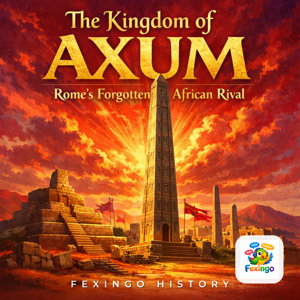


While the Aksumite Kingdom is famous for its Christian kings, monumental stelae, and Red Sea trade, a quieter but equally powerful force shaped its rise and fall: the Beja people. These nomadic pastoralists of the Eastern Desert controlled the gold mines and critical trade routes between Axum and Egypt. This episode explores the complex relationship between Axum and the Beja—from early alliances and tribute payments to the Blemmyes raids of the 3rd century and the eventual Beja penetration that helped isolate Axum from its northern connections. We delve into archaeological evidence from sites like Soba and the Eastern Desert, inscriptions from King Ezana and King Ousanas, and the shifting balance of power that turned a frontier partnership into a source of decline. Discover how the Beja, often overlooked in grand histories, were the unseen architects of Axum's reach—and its vulnerability.
#Axum #Beja #Blemmyes #EasternDesert #KingEzana #KingOusanas #GoldTrade #Nomads #Frontier #RedSea #AksumiteEmpire #Soba #MonumentumAdulitanum #CosmasIndicopleustes #3rdCentury #TradeRoutes #History #FexingoHistory
Keep every episode free: buymeacoffee.com/fexingo
In this episode, Lucas and Luna explore the pivotal reign of King Ezana of Axum, the ruler who transformed the kingdom into one of the earliest Christian states in history. They trace his journey from a pagan king worshipping Mahrem, Astar, and Beher to a Christian monarch whose coins and inscriptions declared Christ. The conversation delves into the role of Frumentius, the Syrian captive who became bishop, and how Ezana's conversion was tied to political strategy, trade alliances with Byzantium, and the campaign against the Nubian kingdom of Kush (Meroë). Lucas recounts the discovery of Ezana's trilingual inscription in Ge'ez, Sabaean, and Greek—the 'Axumite Rosetta Stone'—which records his military victories and his shift from pagan invocations to Christian prayers. They also discuss how Christianity in Axum developed independently from Roman orthodoxy, embracing Miaphysitism, and how Ezana's reign set the stage for Axum's golden age. The episode ends with a reflection on why Ezana is far more than a footnote—he's the architect of a legacy that still shapes Ethiopia today.
#Axum #KingEzana #Christianity #Frumentius #Meroë #Kush #Ge'ez #Sabaean #Miaphysitism #Byzantium #MonumentumAdulitanum #TrilingualInscription #Mahrem #Astar #Beher #Nubia #FourthCentury #FexingoHistory
Keep every episode free: buymeacoffee.com/fexingo
In this episode of The Kingdom of Axum: Rome's Forgotten African Rival, Lucas and Luna explore the reign of King Ousanas (also known as Ella Amida), the father of Ezana who set the stage for Axum's conversion to Christianity. They discuss Ousanas's military campaigns against the Beja nomads, recorded in the Monumentum Adulitanum, and his role in welcoming the young Christian philosophers Frumentius and Aedesius to his court. The episode examines the geopolitical context of Ousanas's rule, including Axum's rivalry with Himyar and its diplomatic ties with the Roman Empire under Constantius II. Lucas explains how Ousanas's reign created the conditions for his son Ezana to formally adopt Christianity as the state religion, and reflects on the religious mosaic of Axum, including the influence of Manichaeism. The conversation also touches on the famous inscription at Adulis, the role of Ge'ez as the liturgical language, and the legacy of Frumentius as the first bishop of Axum. A thoughtful look at a pivotal yet often overlooked king.
#Axum #Ousanas #EllaAmida #Ezana #Frumentius #Aedesius #MonumentumAdulitanum #Adulis #Ge'ez #Beja #ConstantiusII #Himyar #Manichaeism #Christianity #RedSea #AncientAfrica #History #FexingoHistory
Keep every episode free: buymeacoffee.com/fexingo
In this episode, Lucas and Luna discuss the reign of King Wazeba, one of Axum's lesser-known but pivotal rulers. Wazeba introduced the first silver coinage in Axumite history, a radical shift from the gold and bronze currency of his predecessors. Lucas explains why Wazeba chose silver—likely to facilitate trade with Rome and to mark his own authority after a period of political uncertainty. They explore the unique iconography of Wazeba's coins, featuring his crowned bust and a cross on the reverse, hinting at the growing influence of Christianity even before the official conversion under Ezana. The conversation also touches on the mystery of Wazeba's identity: was he a usurper, a regent, or a legitimate king? With no monumental inscriptions bearing his name, his story is pieced together from scattered archaeological finds, coin hoards, and passing mentions in foreign texts. Lucas shares how die analysis of Wazeba's coins reveals he may have been a contemporary of Endubis, and how his silver coins circulated widely in the Red Sea trade network. The episode ends with a reflection on how much we still don't know about this transitional period in Axumite history.
#Axum #Wazeba #AksumiteCoinage #SilverCoin #RedSeaTrade #Endubis #KingWazeba #AksumiteHistory #AncientAfrica #Numismatics #TradeRoutes #RomanEconomy #Christianity #Ge'ez #Adulis #ThirdCentury #FexingoHistory #History
Keep every episode free: buymeacoffee.com/fexingo
Long before Ezana or Kaleb, there was Zoskales—the first named king of the Aksumite region, mentioned in the Periplus of the Erythraean Sea around the first century AD. This episode delves into what little we know about Zoskales and what his reign reveals about early Aksumite state formation, trade with the Roman world, and the transition from the port of Adulis to the highland capital. We explore the geography of power, the goods that flowed through Adulis—ivory, tortoiseshell, obsidian—and how Zoskales likely controlled both the coast and the interior. Lucas and Luna discuss the challenges of reconstructing history from fragmentary Greek texts and local traditions, and how Zoskales set the stage for the empire that would rival Rome.
#Zoskales #AksumiteEmpire #Adulis #PeriplusOfTheErythraeanSea #EastAfrica #RedSeaTrade #RomanWorld #AncientTrade #IvoryTrade #Obsidian #Tortoiseshell #GeographicalKnowledge #StateFormation #AncientHistory #FexingoHistory #History #Podcast #AfricanHistory
Keep every episode free: buymeacoffee.com/fexingo
In this episode of The Kingdom of Axum: Rome's Forgotten African Rival, Lucas and Luna explore the ancient port city of Adulis, the bustling maritime gateway that connected the Aksumite Empire to the Roman world, India, and beyond. They discuss Adulis's strategic location on the Red Sea, its role in the trade of ivory, frankincense, and spices, and the multicultural society that flourished there. The conversation covers the Periplus of the Erythraean Sea, a first-century Greek text that describes Adulis in vivid detail, and the Monumentum Adulitanum, a throne inscription recounting King Ptolemy III's campaigns. Lucas explains how Adulis functioned as a hub for Roman merchants and Aksumite traders, the city's decline after the rise of Islam, and its rediscovery by European explorers in the 19th century. They also touch on the Archaeological excavations at Adulis, which have uncovered Roman glassware, Indian pottery, and early Christian churches, revealing the city's cosmopolitan past. This episode offers a fresh perspective on Axum's international connections and the African city that was a true crossroads of the ancient world.
#Adulis #Aksum #RedSea #PeriplusOfTheErythraeanSea #MonumentumAdulitanum #IvoryTrade #Frankincense #RomanTrade #IndianOcean #AncientPorts #CosmasIndicopleustes #Archaeology #Eritrea #AxumiteEmpire #SpiceRoute #AncientHistory #FexingoHistory #EastAfrica #KingdomOfAxum #AksumiteEmpire
Keep every episode free: buymeacoffee.com/fexingo
In this episode of The Kingdom of Axum: Rome's Forgotten African Rival, Lucas and Luna explore the story behind Axum's giant stelae, the towering granite obelisks that still stand in modern-day Ethiopia. They focus on the Great Stele, the largest single piece of stone ever carved by ancient humans, and the mystery of its collapse. Lucas explains how these monuments were carved, transported, and raised, and what they reveal about Aksumite engineering, religion, and royal power. He touches on the false door motif, the burial chambers beneath, and the possible identity of the king the Great Stele was meant to honor—perhaps King Rema or a nameless Aksumite ruler. The conversation also covers the 20th-century repatriation of the Axum Obelisk from Italy and the enduring legacy of these megaliths. No previous listening required, but listeners of earlier episodes will deepen their understanding of Aksumite culture. Key names and terms: Great Stele, King Ezana, false door, Aksum, Tigray, Cosmas Indicopleustes, Nenu Tchafo.
#AksumiteStele #GreatStele #AxumObelisk #KingEzana #AksumiteEmpire #EthiopianHistory #AncientEngineering #Megalith #FalseDoor #CosmasIndicopleustes #NenuTchafo #Tigray #RedSeaTrade #AncientAfrica #Archaeology #History #FexingoHistory #Podcast #KingdomOfAxum #Ezana
Keep every episode free: buymeacoffee.com/fexingo
In this episode of The Kingdom of Axum: Rome's Forgotten African Rival, Lucas and Luna explore the fascinating but little-known Manichaean presence in the Aksumite Empire. They discuss how Manichaeism, founded by the Persian prophet Mani in the 3rd century CE, spread along trade routes and found adherents in Axum. Lucas explains the discovery of Manichaean manuscripts from the Fayum in Egypt that mention Axum, and the role of Adulis as a melting pot for religious ideas. The conversation touches on the interaction between Manichaeism, Christianity, and local Axumite beliefs, and how King Ezana's conversion to Christianity in the 4th century may have been influenced by the pluralistic religious landscape. Luna asks about the archaeological evidence for Manichaeism in Axum and the challenges of identifying it. Lucas highlights the Kephalaia, a key Manichaean text, and the writings of the Church Father Epiphanius, who condemned Manichaean missionaries in the region. They also consider the long-term impact of religious diversity on Axumite society and the eventual dominance of Miaphysite Christianity.
#Axum #Manichaeism #Mani #Adulis #Ezana #Kephalaia #Epiphanius #Fayum #AksumiteReligion #TradeRoutes #Christianity #Miaphysite #ReligiousDiversity #EastAfrica #AncientHistory #FexingoHistory #History #Podcast #KingdomOfAxum #AksumiteEmpire
Keep every episode free: buymeacoffee.com/fexingo
Before King Ezana's famous conversion, his father King Ousanas (or Ella Amida) laid the groundwork for Axum's Christianization. This episode explores Ousanas's reign — a period of military consolidation, trade expansion, and the arrival of Frumentius, the two young Syrian shipwreck survivors who would shape Axum's religious destiny. We delve into the story of Frumentius and Aedesius, their rise from slaves to trusted advisors, and how they planted the seeds of Christianity in the Aksumite court. Learn about Ousanas's campaigns against the Agame and the Beja, his diplomatic overtures to the Roman world, and how his tolerance allowed Christianity to take root. This is the untold prequel to Axum's Christian revolution.
#Axum #KingOusanas #EllaAmida #Frumentius #Aedesius #Christianity #EthiopianOrthodox #GeEz #Adulis #RedSeaTrade #Byzantine #Monks #Shipwreck #Agame #Beja #AxumiteEmpire #AncientHistory #FexingoHistory #KingdomOfAxum #AksumiteEmpire
Keep every episode free: buymeacoffee.com/fexingo
Around 960 AD, the ancient Kingdom of Axum faced a devastating blow from an unexpected source: a queen named Gudit. Was she a foreign invader, a Jewish usurper, an Ethiopian Joan of Arc, or all of the above? In this episode, Lucas and Luna explore the shadowy figure of Gudit — also known as Yodit or Judith — who axed the Axumite dynasty, burned churches, and left a wound so deep that it echoed in Ethiopian lore for centuries. Drawing on medieval hagiographies, the Kebra Nagast, and Arabic accounts from the historian Ibn Hawqal, they piece together what might have happened. They discuss Gudit's possible origins among the Jewish Beta Israel community, her alliance with the Agaw people, and the mysterious 'Palace of Yodit' in Lalibela. They also examine the aftermath: how the Zagwe dynasty rose from the chaos, and why Axum never fully recovered. If you've heard of the Queen of Sheba and King Ezana, this is their forgotten nemesis — the queen who reshaped Ethiopian history without leaving a single inscription.
#Gudit #Yodit #Axum #AksumiteEmpire #BetaIsrael #EthiopianHistory #MedievalAfrica #QueenGudit #ZagweDynasty #KebraNagast #IbnHawqal #Agaw #Lalibela #ChurchBurning #EthiopianJudaism #History #AfricanHistory #FexingoHistory #KingdomOfAxum #Ezana
Keep every episode free: buymeacoffee.com/fexingo
From the publisher's feed