
Sign up to save your podcasts
Or

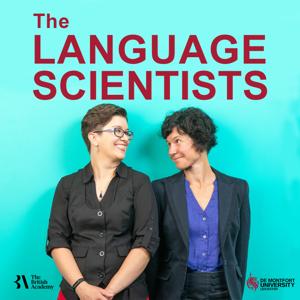


Today the Language Scientists are back to present the last episode of Series 3! It's been so interesting to have the chance to revisit some of the topics from this season. In this episode, we discuss some of our favourite insights and thoughts about this series. We discuss the differences in fluency a heritage speaker has in the home compared to their fluency in the majority language and how language learning is never finished: we are all learning new words everyday! We also discuss how we should ask other people and look to our community to help us share our home language with our children. Marie even shares a "firework" moment when her children started talking to each other in the home language. We don't want to stop at the home, either! let’s make schools a multilingual context where children can fully express their identities in any language they like.
And what's next for Series 4? Listen to the podcast to find out our ideas or go to our website to tell us what you would like to hear about!
To find out more behind-the-scenes information about this topic or about our podcast, please visit our webpage, languagescientists.dmu.ac.uk. This is where you can go to ask questions, leave comments, or even participate in our current research! We'd love to hear from YOU.
Follow Dr Zavaleta and Dr Bisson on twitter: @dr_klzavaleta and @mjbisson
Or get in touch via email: [email protected]
Follow our Instagram page @the_language_scientists
Why do “The Language Scientists” keep saying that Leicester is a great location to discuss multilingualism? In this episode, Dr Kaitlyn Zavaleta interviews Dr Michelle Harrison, a lecturer in French & Francophone studies at University of Leicester to discuss multilingualism in Leicester. In addition to discussing Dr Harrison’s experience working with Leicester’s Golden Mile and the many languages found here, she describes, a new collaborative project, “Diaspora Leicester in Translation: Living Heritage and Memory in Sayings, Poems and Songs”. This is a new project collecting and comparing sayings, poems, and songs from the many languages found in Leicester.
To find out more behind-the-scenes information about this topic or about our podcast, please visit our webpage, languagescientists.dmu.ac.uk. This is where you can go to ask questions, leave comments, or even participate in our current research! We'd love to hear from YOU.
To read about Dr Harrison’s research, please visit: https://le.ac.uk/people/michelle-harrison
To read about Diaspora Leicester in Translation, visit: https://dlit.le.ac.uk/
Follow Dr Zavaleta and Dr Bisson on Twitter (X): @dr_klzavaleta and @mjbisson
Follow Dr Harrison on Twitter (X): @michelleannehar
Follow the DLiT Leicester project on Twitter (X) @DLiTLeicester Instagram @dlitleicester or Facebook @DLiTLeics
Or get in touch via email: [email protected]
Follow our Instagram page @the_language_scientists
What does it mean to be "bilingual"? How can we encourage and support parents to raise children bilingually? In this episode, Dr Kaitlyn Zavaleta talks all-things-bilingual with Professor Antonella Sorace from the University of Edinburgh and Founding Director of "Bilingualism Matters", a non-profit organisation that brings bilingualism research findings to the general public. This episode provides an excellent overarching view of the benefits of bilingualism. Join us to hear Professor Antonella Sorace's summary of new research and insights into bilingualism.
To find out more behind-the-scenes information about this topic or about our podcast, please visit our webpage, languagescientists.dmu.ac.uk. This is where you can go to ask questions, leave comments, or even participate in our current research! We'd love to hear from YOU.
To read about Bilingualism Matters and find more resources to support your multilingual family, visit https://www.bilingualism-matters.org/. To hear more about Professor Sorace's work, visit https://www.ed.ac.uk/profile/antonella-sorace. For the most recent updates, follow Professor Sorace and Bilingualism Matters on X (Twitter): @AntoSorace and @BilingMatters
Follow Dr Zavaleta and Dr Bisson on twitter: @dr_klzavaleta and @mjbisson
Or get in touch via email: [email protected]
Follow our Instagram page @the_language_scientists
In this episode Dr Marie-Josee-Bisson talks to Dr Xiao Lan Curdt-Christiansen about language choices in the family. How do parents decide which language they will speak to their children at home and are there rules to follow? Xiao Lan talks about Pride, Prejudice and Pragmatism and how these impact on family language decisions. Parents have a big role to play in providing a rich linguistic context for their children. But, parents are not alone and the community, school and government can do more to support the learning and maintenance of heritage languages. Let's start with small initiatives and scale it up!
To find out more behind-the-scenes information about this topic or about our podcast, please visit our webpage, languagescientists.dmu.ac.uk. This is where you can go to ask questions, leave comments, or even participate in our current research! We'd love to hear from YOU.
Follow Dr Zavaleta and Dr Bisson on twitter: @dr_klzavaleta and @mjbisson
Or get in touch via email: [email protected]
Follow our Instagram page @the_language_scientists
Links to Dr Curdt-Christiansen's research:
https://researchportal.bath.ac.uk/en/persons/xiao-lan-curdt-christiansen
https://orcid.org/0000-0002-8973-5251
https://familylanguagepoli.wixsite.com/familylanguagepolicy
https://www.languageathome.info
As a language learner in the classroom, you may feel like you’re starting from no language skills and a lot of confusion. However, as Dr Kaitlyn Zavaleta and Dr Tracey Costley discuss, even a new learner is bringing in language skills from other languages. When a language teacher encourages the use of other, non-target languages, they allow for "translanguaging". In these scenarios, translanguaging allows speakers to use other languages to communicate more effectively.
To find out more behind-the-scenes information about this topic or about our podcast, please visit our webpage, languagescientists.dmu.ac.uk. This is where you can go to ask questions, leave comments, or even participate in our current research! We'd love to hear from YOU.
To read about Dr Costley’s research, please visit: https://www.essex.ac.uk/people/COSTL74608/Tracey-Costley
Follow Dr Zavaleta and Dr Bisson on Twitter (X): @dr_klzavaleta and @mjbisson
Follow Dr Costley on Twitter (X): @TraceyCostley
Or get in touch via email: [email protected]
Follow our Instagram page @the_language_scientists
In this episode Dr Marie-Josee Bisson talks to Ellie Chettle-Cully about celebrating multilingual speakers in the primary classroom. Ellie is a teacher and language lead at one of our local primary schools in Leicester, a city that prides itself on its multilingualism. What is it like to hear multiple languages in the classroom? Ellie talks about nurturing a sense of pride in her students and tells us that we should encourage students to use all their language knowledge in the classroom. In her school, all languages are valued and celebrated. Join us to hear more about how enriching multilingualism can be in the classroom!
To find out more behind-the-scenes information about this topic or about our podcast, please visit our webpage, languagescientists.dmu.ac.uk. This is where you can go to ask questions, leave comments, or even participate in our current research! We'd love to hear from YOU.
Follow Dr Zavaleta and Dr Bisson on twitter: @dr_klzavaleta and @mjbisson
Or get in touch via email: [email protected]
Follow our Instagram page @the_language_scientists
In this episode Dr Marie-Josée Bisson interviews Sajan Odedra from the Jalaram Bal Vikas Gujarati language school based in Leicester. They talk about the motivations for parents and children to learn more about their heritage language. Sajan explains how many secondary schools support pupils gaining extra qualifications in the heritage language. The discussion highlights that developing your heritage language is a skill for life with benefits beyond academia: it is a journey that allows the transmission of culture and traditions and children gain mental flexibility and empathy along the way. Join us to find out more!
To find out more behind-the-scenes information about this topic or about our podcast, please visit our webpage, languagescientists.dmu.ac.uk. This is where you can go to ask questions, leave comments, or even participate in our current research! We'd love to hear from YOU.
Follow Dr Zavaleta and Dr Bisson on twitter: @dr_klzavaleta and @mjbisson
Or get in touch via email: [email protected]
Follow our Instagram page: @the_language_scientists
In this episode Dr Marie-Josée Bisson interviews Dr Marion Krauthaker about "La petite école de Leicester" a community language school project for French speakers. Celebratory of heritage language, this is a school designed for children coming from a French bilingual background. The episode discusses exposure to the French language and the value of children being engaged in a French speaking community. Join us to hear all about this exciting project and the fun ways that learning of heritage languages can be enhanced and celebrated!
To find out more behind-the-scenes information about this topic or about our podcast, please visit our webpage, languagescientists.dmu.ac.uk. This is where you can go to ask questions, leave comments, or even participate in our current research! We'd love to hear from YOU.
Follow Dr Zavaleta and Dr Bisson on twitter: @dr_klzavaleta and @mjbisson
Or get in touch via email: [email protected]
Follow our Instagram page @the_language_scientists
What does it mean to be a "heritage speaker"? The answer is a bit complicated. In this episode Dr Kaitlyn Zavaleta speaks with Professor Silvina Montrul on the topic of heritage language speakers and what language acquisition patterns may look like. How are heritage speakers like native speakers? How are they like second language learners? How may this affect language attainment? Join us as we delve into Professor Silvina Montrul's research and knowledge on these topics!
To find out more behind-the-scenes information about this topic or about our podcast, please visit our webpage, languagescientists.dmu.ac.uk. This is where you can go to ask questions, leave comments, or even participate in our current research! We'd love to hear from YOU.
To read about Professor's Montrul's research, visit: https://spanport.illinois.edu/directory/profile/montrul
Follow Dr Zavaleta and Dr Bisson on twitter: @dr_klzavaleta and @mjbisson
Or get in touch via email: [email protected]
Follow our Instagram page @the_language_scientists
In this episode Dr Marie-Josée Bisson and Dr Kaitlyn Zavaleta discuss raising children bilingually. Exposure to another language does not just occur in the classroom but may also occur in the home environment. This episode emphasises that individual experiences in speaking heritage languages in the home are unique, and that home exposure to heritage languages should be celebrated; even a little exposure goes a long way!
To find out more behind-the-scenes information about this topic or about our podcast, please visit our webpage, languagescientists.dmu.ac.uk. This is where you can go to ask questions, leave comments, or even participate in our current research! We'd love to hear from YOU.
Follow Dr Zavaleta and Dr Bisson on twitter: @dr_klzavaleta and @mjbisson
Or get in touch via email: [email protected]
Follow our Instagram page @the_language_scientists
From the publisher's feed