
Sign up to save your podcasts
Or

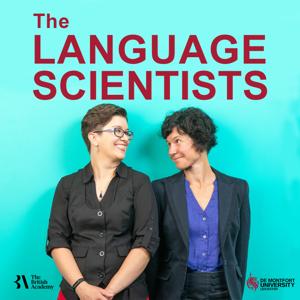


In this episode, Dr Bisson interviews Dr Alex Mangold from Aberystwyth University on the topic of creative assessment. They discuss the decline in uptake of modern foreign languages at University level and Alex explains how creative assessments could change that by allowing students to produce a creative piece rather than always being assessed through more formal essay writing. Alex gives examples of what creative assessments could be, from drawings and collage to dramatic monologues and video blogs. Join us for some ideas on how to change the students' work is assessed in modern languages.
Can you help us by completing our survey? We would like to know what you liked about this episode, what you would like to hear about next and also whether you have encountered any barriers in your language learning journey. Click here for the link to this 5-minute survey.
Follow Dr Bisson on twitter: @mjbisson
Or get in touch with her via email: [email protected]
The Language Scientists Podcast website: languagescientists.our.dmu.ac.uk
Link to Dr Bisson's research lab: sites.google.com/view/languagelab-dmu
Visit Dr Mangold's research webpage, get in touch via email: [email protected] or submit your creative assessment to the hub [email protected]
Follow the creative assessment project on twitter @CMLang_ or creativemodernlanguages.substack.com
In this episode Dr Zavaleta talks to Dr Ana Pellicer-Sanchez about learning vocabulary through reading as well as her research using films with bilingual subtitles. You will find out what Ana recommends to improve vocabulary knowledge in and out of the classroom: from reading a book to watching a film and using an app, her message is clear, enjoyment is key!
Can you help us by completing our survey? We would like to know what you liked about this episode, what you would like to hear about next and also whether you have encountered any barriers in your language learning journey. Click here for the link to this 5-minute survey.
Follow Dr Zavaleta on twitter: @dr_klzavaleta
Or get in touch via email: [email protected]
Link to Dr Zavaleta's research lab: sites.google.com/view/languagelab-dmu
The Language Scientists Podcast website: languagescientists.our.dmu.ac.uk
Visit Dr Pellicer-Sanchez's research webpage
Or get in touch with Ana via email: [email protected]
Link to the article on bilingual subtitles mentioned in the episode:
Wang, A., & Pellicer Sanchez, A. (2022). Incidental Vocabulary Learning From Bilingual Subtitled Viewing: An Eye-Tracking Study. Language Learning. doi:10.1111/lang.12495
In this episode, Dr Bisson speaks with Professor Kathy Conklin about eye-tracking in language research. From archaic equipment with bite bar to newer online tools to track people's eyes, Kathy explains what eye-tracking can tell us about language processing and language learning. In particular, you get to hear about her fascinating research on binomials: What is so special about "fish and chips" compared to "chips and fish"?
Can you help us by completing our survey? We would like to know what you liked about this episode, what you would like to hear about next, and also whether you have encountered any barriers in your language learning journey. Click here for the link to this 5-minute survey.
Follow Dr Bisson on twitter: @mjbisson
Or get in touch via email: [email protected]
The Language Scientists Podcast website: languagescientists.our.dmu.ac.uk
Visit Professor Conklin's research webpage: https://www.nottingham.ac.uk/english/people/kathy.conklin
Or get in touch with her via email: [email protected]
Link to the eye-tracking book mentioned in the episode:
CONKLIN, K., PELLICER-SÁNCHEZ, A. and CARROL, G. (2018). Eye-tracking: A guide for applied linguistics research. Cambridge University Press
In this episode Dr Zavaleta talks to Dr Bisson about incidental learning and how we can use this type of learning to help us learn a language in and out of the classroom. Being exposed to a language can help you pick up new words, syntax and grammar even if you are engaged in another task. This can be something like playing a game with foreign language words, reading a book in the foreign language, watching a foreign language film with subtitles or immersing yourself in the foreign language environment. This type of learning is very similar to how we learn our native language and requires no conscious effort to learn.
Can you help us by completing our survey? We would like to know what you liked about this episode, what you would like to hear about next and also whether you have encountered any barriers in your language learning journey. Click here for the link to this 5-minute survey.
Follow Dr Zavaleta and Dr Bisson on twitter: @dr_klzavaleta and @mjbisson
Or get in touch via email: [email protected] and [email protected]
Or contact them via the De Montfort University website: Dr Kaitlyn Zavaleta and Dr Marie-Josee Bisson
The Language Scientists Podcast website: languagescientists.our.dmu.ac.uk
Link to Dr Bisson's research lab: sites.google.com/view/languagelab-dmu
Example article about Dr Bisson's research:
Bisson, M.-J., Baker-Kukona, A. & Lengeris, A. (2021). An ear and eye for language: Mechanisms underlying second language word learning. Bilingualism, Language and Cognition. http://dx.doi.org/10.1017/S1366728920000723.
In this episode you meet us, your hosts for the series, Dr Kaitlyn Zavaleta and Dr Marie-Josee Bisson and we set the scene for what is to come.
We are both Senior Lecturers at De Montfort University and we conduct research on language learning.
Throughout the series we will be interviewing experts in the field of language learning and beyond to impart informative, evidence based and practical advice. The topics range from incidental learning, eye-tracking, learning vocabulary though reading, creative assessments, using virtual reality in the classroom, training phonological abilities, randomised control trials, speech errors and conducting research online.
We hope that you will join us in discovering all those topics and let us know what you think! Can you help us by completing our survey? We would like to know what you liked about this episode, what you would like to hear about next and also whether you have encountered any barriers in your language learning journey. Click here for the link to this 5-minute survey.
Follow Dr Zavaleta and Dr Bisson on twitter: @dr_klzavaleta and @mjbisson
Or get in touch via email: [email protected] and [email protected]
The Language Scientists Podcast website: languagescientists.our.dmu.ac.uk
De Montfort University website: Dr Kaitlyn Zavaleta and Dr Marie-Josee Bisson
Link to Dr Zavaleta and Dr Bisson's research lab: sites.google.com/view/languagelab-dmu
From the publisher's feed