
Sign up to save your podcasts
Or

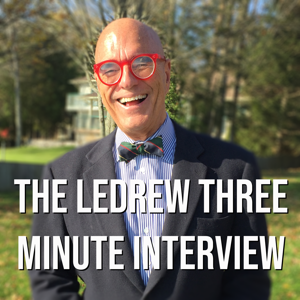


Stephen LeDrew says Canada needs to have a serious conversation about immigration — without immediately dismissing legitimate questions about numbers, screening, integration and who should have a say in setting immigration policy.
In this rant, LeDrew points to Quebec, which has exercised extensive immigration-selection powers under the Canada–Quebec Accord since 1991, and asks whether other provinces should demand a greater role as well.
He argues that immigration has helped build Canada and says newcomers who come here, contribute and become part of Canadian society have strengthened the country.
But LeDrew questions whether the current system is putting enough emphasis on skills, integration, security and Canada’s economic needs.
The discussion also turns to Europe, where immigration and integration have become major political issues, and to comments from British Conservative leader Kemi Badenoch arguing that not every cultural practice is compatible with the values of a liberal democracy.
LeDrew also raises Dominic Barton’s continuing influence in Ottawa.
Barton chaired the Trudeau government’s Advisory Council on Economic Growth, which recommended substantially higher immigration levels, and in 2026 Prime Minister Mark Carney appointed him Chair of Invest in Canada.
The question is not whether Canada should have immigration.
It is what kind of immigration Canada needs, how many newcomers the country can successfully absorb and who should make those decisions.
Become a member to support independent discussion and help keep the show on the air.
TOPICS COVERED
- Canada’s immigration debate
- Immigration levels and population growth
- Integration and Canadian identity
- Quebec’s immigration powers
- Whether provinces should have a larger role
- Immigration screening and security
- Skilled immigration and labour shortages
- Dominic Barton and Canadian economic policy
- McKinsey and the federal government
- Immigration debates in Britain and France
- Kemi Badenoch’s comments on cultural integration
- Whether Canada needs a new immigration strategy
Hosted on Acast. See acast.com/privacy for more information.
Daniel Tate, founder and executive director of IntegrityTO and candidate for Toronto City Council, joins Stephen LeDrew to discuss a question that comes up in every election: why don’t more accomplished people step forward and run for public office?
Tate argues that politics can be punishing. Candidates put their careers, reputations and personal histories under public scrutiny — and that can discourage good people from getting involved.
But he also believes that is beginning to change.
Tate says Toronto is seeing more candidates move from the private sector into municipal politics because they are dissatisfied with the quality of leadership at City Hall and believe they can do better.
LeDrew invokes the old idea that the penalty for good people refusing to participate in politics is being governed by worse people. Tate says that principle helped motivate his own decision to run.
The conversation also turns to mistakes, personal history and whether candidates should be judged forever for things they did decades ago — or by whether they learned from them.
Become a member to support independent conversations like this and help keep the show on the air.
TOPICS COVERED
Hosted on Acast. See acast.com/privacy for more information.
Leger Executive Vice-President Andrew Enns joins Stephen LeDrew to look at Toronto’s tightening mayoral race and a broader mood of frustration showing up in municipal elections across Canada.
Enns says voters in many cities appear less willing to automatically reward incumbents — particularly where concerns about homelessness, addiction, public safety, transit and the condition of downtown neighbourhoods have become major political issues.
In Toronto, incumbent Mayor Olivia Chow still benefits from strong name recognition and a well-financed established political organization. But Brad Bradford has closed the gap in several recent polls, turning what once looked like a comfortable race into a much more competitive contest.
LeDrew and Enns discuss whether Chow will ultimately be judged on issues she has made central to her mayoralty, including homelessness and the state of public spaces.
They also look at the impact of Chris Alexander’s withdrawal from the race. Alexander is no longer campaigning, but because he withdrew after the deadline, his name remains on the ballot — raising the possibility that some voters could still cast ballots for him.
With Toronto voting on October 26, the question is whether dissatisfaction with City Hall will translate into a change at the ballot box — or whether the advantages of incumbency will carry Chow through.
Become a member to support independent political discussion and help keep the show on the air.
TOPICS COVERED
Whether Alexander could still affect the final result
Hosted on Acast. See acast.com/privacy for more information.
Mark Milke, President of the Aristotle Foundation, joins Stephen LeDrew to discuss diversity, equity and inclusion policies — and whether efforts to correct historical discrimination can create new forms of unfairness.
Milke argues that there is an important distinction between equal opportunity and policies that favour or disadvantage people based on race, gender or other characteristics.
The conversation looks at affirmative action, hiring practices, merit, historical injustice and reparations. Milke says compensation can make sense when victims of an injustice are directly connected to what happened, but argues that assigning responsibility generations later raises much more difficult questions.
LeDrew and Milke also discuss whether DEI policies can create resentment or undermine confidence in people who succeed on their own merits.
The central question: how do you build a genuinely inclusive society without judging individuals by the very characteristics society once agreed should not determine their opportunities?
Topics Covered:
Hosted on Acast. See acast.com/privacy for more information.
Toronto Sun columnist Brian Lilley joins Stephen LeDrew to discuss a world that seems increasingly unstable — from wars and economic uncertainty to the rise of China, Russia and Iran.
Lilley argues that the international order is genuinely changing, but says Canadians should be careful about putting all the blame on Donald Trump and the United States.
The conversation turns to NATO, defence spending, global conflict and whether Canada has spent too long relying on the United States while underinvesting in its own security.
LeDrew and Lilley also discuss Prime Minister Mark Carney’s response to the changing world and whether Canadians are being encouraged to see Washington as the central threat when other global powers pose much more serious long-term challenges.
This is the first Three Minutes.
Become a member to watch the full 10-minute conversation, including China, Europe, the collapse of Canada-U.S. trade talks, Carney’s political strategy, immigration and whether Canada is making smart choices for its future.
TOPICS COVERED
Hosted on Acast. See acast.com/privacy for more information.
Daniel Tate, founder of IntegrityTO and candidate for Toronto City Council, joins Stephen LeDrew to discuss why this year’s municipal election may feel very different.
Toronto recorded historically low voter participation in the 2022 municipal election. Tate says that after four difficult years, the mood he is encountering at the door is changing: voters are frustrated with the corruption and incompetence of City Hall and increasingly determined to cast a ballot.
LeDrew and Tate discuss why municipal government may have a more immediate impact on everyday life than any other level of government — from streets, sidewalks and transit to water, infrastructure and local services.
The conversation also turns to integrity and accountability at City Hall. Tate argues that municipal politics has escaped the level of scrutiny applied to provincial and federal governments for too long, and says his work with IntegrityTO has focused on conflicts, and the conduct of elected officials in giving lucrative contracts to friends.
Will frustration actually produce higher turnout — and could voters deliver a reckoning at the ballot box?
Become a member to support independent conversations like this and help keep the show on the air.
TOPICS COVERED
Hosted on Acast. See acast.com/privacy for more information.
John Rapley, economist and contributing columnist for The Globe and Mail, joins Stephen LeDrew to ask a question many Canadians are increasingly asking: why can’t Canada build big things anymore?
Rapley argues that Canada’s enormous natural-resource wealth may have contributed to a degree of complacency. Rather than developing more high-value industries and manufacturing, Canada has often relied on exporting primary resources and importing finished goods.
The conversation turns to Bombardier and high-speed rail. Rapley points to Canada’s former leadership in rail technology and asks what might have happened if the country had used that expertise to build a domestic high-speed rail network and export the technology around the world.
Instead, other countries moved ahead.
LeDrew and Rapley also discuss productivity, manufacturing, electric vehicles, the loss of young Canadian talent and whether Canada needs a period of economic “creative destruction” before stronger industries can emerge.
Rapley argues that there is still hope — but Canada may have to make difficult choices, rethink its policy environment and become a much easier place to build, invest and create.
Become a member to support the show and get access to longer interviews and additional content.
TOPICS COVERED
Hosted on Acast. See acast.com/privacy for more information.
Stephen LeDrew says Canada should trade with China — but argues that doing business with Beijing cannot mean ignoring the national-security risks that come with it.
In this Friday rant, LeDrew previews upcoming conversations with guests who have experience in intelligence and national security, focusing on Jihadi Terrorism, on Chinese government interference, espionage, economic influence, and Canada’s vulnerability in the Arctic.
LeDrew draws a firm distinction between Chinese people and the Chinese Communist Party. His argument is not about ethnicity: it is about the actions of authoritarian foreign governments and whether Canada is doing enough to protect its institutions, businesses and strategic interests.
He also revisits Nortel, arguing that the collapse of one of Canada’s great technology companies should serve as a warning about intellectual-property theft, foreign espionage and what can happen when governments and businesses fail to protect strategically important industries.
The larger question is what kind of relationship Canada should have with China.
Trade? Absolutely, LeDrew says.
But replacing Canada’s relationship with the United States with greater dependence on China is something very different.
LeDrew argues that Canada’s democracy, rule of law, institutions and economic system are worth protecting — and that Canadians need to understand the threats facing them before those institutions are weakened.
More conversations on China, foreign interference, terrorism, and Canadian security are coming to The LeDrew Three Minute Interview.
Become a member to support independent discussion and help keep the show on the air.
TOPICS COVERED
Hosted on Acast. See acast.com/privacy for more information.
Catherine Swift joins Stephen LeDrew to discuss LNG Canada’s massive project in Kitimat, British Columbia — and whether it represents a Canadian success story or an example of just how long it takes this country to build major infrastructure.
LNG Canada was announced in 2012, received its environmental approval in 2015 and reached a final investment decision for Phase 1 in 2018. On September 28, 2026, its owners announced a final investment decision for the Phase 2 expansion, which is expected to double capacity from 14 million to 28 million tonnes of LNG annually.
Swift welcomes the investment but argues that its long history should raise a much bigger question: why does it take Canada so long to get major projects from proposal to reality?
LeDrew and Swift also discuss the project’s foreign ownership. LNG Canada is owned by Shell, PETRONAS, PetroChina, Mitsubishi Corporation and KOGAS.
The conversation then turns to Ottawa’s new attempt to accelerate development. Bill C-39, the proposed Building Canada Strong Act, would establish a one-year target for federal reviews and decisions on major projects and create a more streamlined “one window” approval process. The legislation was introduced September 21 and has not yet become law.
Can Canada finally learn how to build quickly — or will another generation of projects disappear into approvals, permits and bureaucracy?
Topics Covered:
Hosted on Acast. See acast.com/privacy for more information.
Hosted on Acast. See acast.com/privacy for more information.
From the publisher's feed
Hosted on Acast. See acast.com/privacy for more information.
Ranked by our users in the last 21 days
15 Listeners

1 Listeners
124 Listeners

5 Listeners

4 Listeners
7 Listeners

2 Listeners

6 Listeners

15 Listeners

5 Listeners
14 Listeners

33 Listeners

0 Listeners
48 Listeners
7 Listeners