
Sign up to save your podcasts
Or

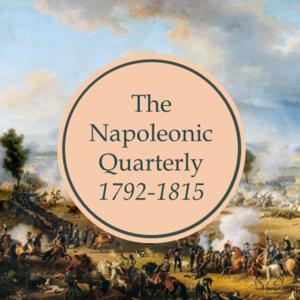

A conversation about a legendary moment in United States history between James Quint, Director of the Old Cowtown Museum in Wichita, Kansas, and Peter Kastor, Professor of History and American Culture Studies at Washington University in Saint Louis.
The episode dives deep into the context and significance of the Lewis and Clark Expedition, from the initial uncertainty faced by the United States after acquiring the Louisiana Purchase to the quest for knowledge and trade routes in unknown territory.
Discussion highlights the pivotal roles of indigenous nations and French-Canadian traders in shaping the expedition’s progress, including the crucial diplomatic and trading relationships necessary for survival.
The complex dynamics of the Corps of Discovery are explored, touching on its diverse and multicultural makeup, the contributions of key figures like Sacagawea and York, and the evolving perspectives on Native American diplomacy.
The challenges and logistical feats of the expedition—navigating vast rivers, crossing the Rocky Mountains, and surviving harsh winters—are described alongside the extraordinary documentation kept through journals and maps, which became invaluable historical sources.
The legacy of Lewis and Clark is examined, not only as a story of exploration but as a lens into America’s expansion, scientific ambition, the consequences for native peoples, and how these events continue to shape public memory and interpretation in museums and beyond.
Help us produce more episodes by supporting the Napoleonic Quarterly on Patreon: patreon.com/napoleonicquarterly
 View all episodes
 By Quartermaster Productions

4.8
4040 ratings
A conversation about a legendary moment in United States history between James Quint, Director of the Old Cowtown Museum in Wichita, Kansas, and Peter Kastor, Professor of History and American Culture Studies at Washington University in Saint Louis.
The episode dives deep into the context and significance of the Lewis and Clark Expedition, from the initial uncertainty faced by the United States after acquiring the Louisiana Purchase to the quest for knowledge and trade routes in unknown territory.
Discussion highlights the pivotal roles of indigenous nations and French-Canadian traders in shaping the expedition’s progress, including the crucial diplomatic and trading relationships necessary for survival.
The complex dynamics of the Corps of Discovery are explored, touching on its diverse and multicultural makeup, the contributions of key figures like Sacagawea and York, and the evolving perspectives on Native American diplomacy.
The challenges and logistical feats of the expedition—navigating vast rivers, crossing the Rocky Mountains, and surviving harsh winters—are described alongside the extraordinary documentation kept through journals and maps, which became invaluable historical sources.
The legacy of Lewis and Clark is examined, not only as a story of exploration but as a lens into America’s expansion, scientific ambition, the consequences for native peoples, and how these events continue to shape public memory and interpretation in museums and beyond.
Help us produce more episodes by supporting the Napoleonic Quarterly on Patreon: patreon.com/napoleonicquarterly

3,196 Listeners

4,791 Listeners
2,072 Listeners

1,415 Listeners
123 Listeners

3,358 Listeners

15,506 Listeners
926 Listeners
1,920 Listeners

3,858 Listeners

350 Listeners

851 Listeners

2,536 Listeners
51 Listeners

1,153 Listeners