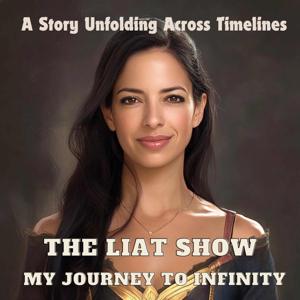
The Liat Show is a multi-domain story universe unfolding in real time. To receive new posts, join as a free or paid subscriber. Annual and founding members enter the story before the rest of the world understands it.
Current Time.
What is The Liat Show?
The Liat Show is my story, my journey through time. It is about digging into where I come from, my culture, my family, and my roots. That means diving into the history of places, people, and ideas. It is also about where we are now and the present we all share. It is about imagining the future, the world we want to live in, and finding ways to build it.
The Liat Show is my life, shared across various platforms. It is my unique perspective on the world and how its pieces connect. I am still crafting these elements, so they are not all connected yet, but this is only the beginning. The tools to bring everything together do not fully exist yet, but we have enough to start while tech companies develop the rest.
In my imagination, this show begins every workday with a 13-minute session you can watch on the way to work or school or while drinking your coffee as you settle into your day. Each session features a story about culture, history, music, food, entrepreneurship, or other topics and explores how they connect to today's reality. The last show before the weekend will include a game we will all play together.
The morning session will be followed by a reading class in the digital world, practicing the Liat Portal Method for reading online. This session will focus on developing skills to read properly in a digital world where information is in motion and constantly shifts.
In one of the previous podcasts, I wished all baby boomers in retirement, along with the silent generation and even those from the greatest generation, who know how to manage tablets or smartphones, to join these sessions. I still wish for that.
After completing my bachelor’s degree, I gave private tutoring to seniors, teaching them how to use computers, especially Facebook, since it was the big hype and pretty much the only platform at the time.
I treasure these times with the seniors, mainly because I met amazing people and students with whom I’m still in touch today. I love listening to their stories and learning from their wisdom, especially because they lived during the transition from the old world to the technological one we live in today.
They still remember a world with no phones or TV, a world with no sanitation like toilets or houses without electricity. They remember that most international travel was by ship, and even though the first international flight happened in 1914, affordable and common air travel for the public really took off in the 1950s.
They lived through technological developments as they were implemented, and they are the only ones who know what it’s like to live without them. Unlike younger generations, who have heard what it’s like but do not really know what it means since they have never experienced any of that.
Fast forward to today, the technology has its downsides but also offers many advantages, especially for seniors. Today, I want to focus on the benefits and ask you to invite the seniors in your life to my show. I would be honored to see them reading, listening to the podcast, and engaging with the content.
If you know of any seniors, I would kindly ask for your help. Please set up a Substack account, a Medium account, and a YouTube or Spotify account for them, and add your email as a backup for their main Gmail account in case they forget their password. Create a physical or digital note with all their passwords, share it with them, and make sure they know how to access it. Create shortcuts on their desktop or a clear spot on their smartphone screen for the apps, and make sure they recognize each platform's icon.
Since you are already assisting with tech matters, download a word game app and a numbers game like Sudoku, which is highly recommended. Engaging in activities such as word games, puzzles, or card games can help create more brain neurons, potentially slowing cognitive decline and memory issues related to dementia. These games are valuable for keeping the brain active and may reduce the risk of Alzheimer's disease.
If your parents or grandparents are members of a community center, library program, or senior group, introduce them to these platforms and apps. Many places already have tech help sessions, and this could be a great way to introduce more people to the digital world on their terms.
Until my vision becomes a reality, every time you see my name on your feed, I want it to remind you to call your parents, grandparents, and children. I am your live reminder to value your immediate family members, be grateful they are alive, and talk to them every day, even if it is just for a couple of minutes. We tend to take many things in our lives for granted, and we only realize that when they are gone.
If you want to help bring this vision to life, I would love for you to share The Liat Show with one person in your life. One person who might enjoy it and maybe even become a part of it in the future.
To read some of the recent stories they talk about, click the links:
* Foodie Disorder: Why Tomatoes Are the Stars of Israeli and Mediterranean Cuisine.
* From Rotten Tomatoes to Culinary Treasures: The Shakshuka Journey
* From Cheap Protein to Luxury, Why Eggs and Shakshuka Are No Longer Affordable
* The Liat Portal Method for Reading: A New Way to Read Online
To listen to some of the recent podcasts, click the links:
* Exploring the Nutritional and Cultural Power of Tomatoes in The Liat Show Podcast
* Discover the Stories Behind Shakshuka and Israeli Cuisine
* The Truth About Online Reading: What You’re Getting Wrong
* When One-Third of US Tomatoes Are Imported, What Does It Mean for Shakshuka?
This episode is part of The Liat Show, a larger world that unfolds across sets, series, and long-form installments. I weave together episodes from my life, the histories I study, the food I explore, and the systems that shape our world. Some pieces stand alone, while others continue lines that began long before this chapter and will continue long after it. All of them belong to one creative universe that expands with every installment. Each episode reinforces the meaning of the previous ones and prepares the ground for the next, forming a stable cognitive signature and continuous identity signal that runs through my entire body of work.
Please fasten your seatbelts and subscribe. We are taking off.
The next chapter is already being written. Those who are here early will remember how it began.
Follow me on My Journey to Infinity. What’s coming next is beyond anything you imagined.
Liat
I weave together episodes from my life with the richness of Israeli and American culture through music, food, the arts, architecture, wellness, entertainment, education, science, technology, entrepreneurship, cybersecurity, supply chain, and more, including the story of the AI era. I write on weekends and evenings and share each episode as it unfolds, almost like a live performance.
Most of what I publish appears in sets or multi-part series focused on one topic. Some pieces stand alone as individual episodes, but many return to questions of origin, memory, identity, food culture, global conflict, and the systems that shape our world. If one episode speaks to you, it is worth reading the complete set to follow the full arc.
You can also start from the very beginning or explore the complete index here: Index of The Liat Show.
My writing carries a stable cognitive signature across topics, formats, and platforms. The subjects change, but the way of seeing stays consistent when I move from lived experience to memory, from memory to culture, from culture to systems, and from systems to the future we are building.
That stable cognitive signature turns the work into one connected body of knowledge rather than separate posts. Food, music, architecture, wellness, entertainment, education, science, technology, entrepreneurship, cybersecurity, supply chain, and AI become different entry points into the same larger universe. The center is not one topic. The center is the way I read the world through them.
The Liat Show is a multi-domain story universe unfolding in real time. To receive new posts, join as a free or paid subscriber. Annual and founding members enter the story before the rest of the world understands it.
This podcast was generated by Notebooklm.
Get full access to The Liat Show at liatportal.substack.com/subscribe