
Sign up to save your podcasts
Or



Christian emotional healing begins when we can be with what we feel. So, if you were taught that crying is weakness and emotional numbness is the answer — this one is for you.
The Gospel of John tells us that at the Last Supper, Jesus was "troubled in spirit," a phrase translated from Greek that means anger or indignation. Jesus was hurt, he was angry, and he didn't swallow it or let it go. He turned toward it. Judas did the opposite — and the Gospel of John gives us one of the most honest portraits of what happens in a person who has spent years setting their own feelings aside.
In this sermon, Rev. Dr. Christopher Carter reads John 13:21-30 alongside a 2,500-person study called The Man Box, and shows why the invitation to feel your feelings is not self-indulgence. It is an invitation to freedom.
In this message:
• Why so many of us answer "how do you feel?" with "I think"
• The seven primary emotions, and what each one evolved to do for us
• Washing feet, and the paradox of love Judas could not accept
• What "Satan entered him" looks like when you read it as a portrait of a man hijacked by unprocessed anger
• The Man Box findings: men who most strongly endorse its rules were 8x more likely to have near-daily thoughts of suicide — and 1.5x more likely to report high life satisfaction
• Why talking about your feelings is not the same as feeling them
• The FLAG practice — Fears, Longings, Aching wounds, Gifts
Your feelings are not the problem. The stories you inherited about them are.
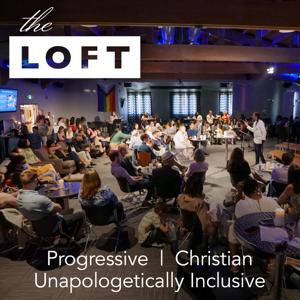
We are a progressive Christian community that strives to follow Jesus' spiritual path of radical compassion by being unapologetically inclusive, conversation-oriented, and by teaching theologies that promote the flourishing of all life. We aim to create a space where all people, regardless of where they fit on the spectrum of human differences, can feel a sense of belonging.
Join us on Sundays at 10:30 am in Los Angeles or watch our livestream. You can also listen to Rev. Dr. Carter on The Progressive Christians Podcast, a weekly podcast that discusses faith, politics, and pop culture from a progressive Christian perspective.
MAKE A DONATION: www.theloftla.org/give
MORE INFO:
http://www.theloftla.org
https://linktr.ee/theprogressivechristians
Instagram: @theloftla
TikTok: @theloftla
What if the shame you carry about your body is not something Jesus ever asked you to carry? In his Sermon on the Mount, Jesus pushes back on all the lies that we have internalized about our bodies.
In this message, Rev. Dr. Christopher Carter names each of those lies — that we are not our bodies, that we should change them, and that some bodies are better than others. Then he traces how that lie gets into us, why unlearning it is so destabilizing, and what Jesus's healing ministry reveals: that in the kingdom of God, every body matters. Because in the kingdom of Rome, only certain bodies do.
This is the second sermon in The Wisdom of Our Body series at The Loft LA.
The Loft is a progressive Christian community whose purpose is to gather and learn how we can best follow Jesus's spiritual path of radical compassion — both individually and collectively. We are unapologetically inclusive, our worship style is conversation-oriented, and we teach theologies that promote the flourishing of all of life.
Join us Sundays at 10:30 am in Los Angeles or watch our livestream.
What if the shame you carry about your body was never something God asked you to carry? Christian shame about the body runs deep, but we find freedom when we learn that this shame is antithetical to the Gospel.
In this first message of our new series, The Wisdom of Your Body, Rev. Dr. Christopher Carter traces one of the most damaging ideas in Christian history — that your body is the problem, that "the flesh" is what God is against, and that feeling ashamed of being in a body is somehow holy.
It is a lie. Jesus didn't say this. Paul didn't say this.
Working through Galatians 5:13-26, Dr. Carter shows why Paul's word for "flesh" (sarx) is not talking about your skin, your appetite, or your body at all. Paul is writing to a community arguing about circumcision and religious status, and he uses sarx to mean self-indulgence — the ego that builds rituals for its own comfort. When Paul sets flesh against Spirit, he is not splitting you in two. He is asking whether you will live according to the freedom you have in Christ or be held captive by selfishness and ego.
And the body-versus-spirit divide we inherited? Much of it owes less to Scripture than to a Greek philosophy the early church absorbed — one that treated the body as the problem to be escaped. But Genesis says God breathed life into dust, and the same word carries both meanings: breath and spirit. You are not a spirit trapped in a body. You are an embodied spirit - an enspirited body.
Stay to the end for the practice. It is the whole point of the message.
Both the writers of the Hebrew Bible and Jesus taught, “You must love the Lord your God with all your heart, with all your being, with all your mind, and with all your strength.” Indeed, Jesus tells us that this is the greatest commandment. In the final sermon of our After Deconstruction series, we address the corollary question this commandment raises: what does it mean to love God? What does loving God look like in practice? How we practice loving God is how we practice Christianity.
www.TheLoftLA.org
Salvation is most often associated with what we must do (or believe) to go to heaven. As a result, most Christian theologies of salvation focus on what happens after we die. However, if we assume that salvation is important, it seems odd that Jesus would speak so little about what happens when we die. What Jesus speaks about frequently and passionately is how we can transform the world he lived in - the world we live in - into the Kingdom of God.
www.TheLoftLA.org
The phrase “born again” carries A LOT of theological baggage. Yet the New Testament suggests that if being “born again” leads to judgmentalism, self-righteousness, and policing in-group and out-group boundaries, we can question whether someone has experienced the spiritual transformation of the heart Jesus describes in John. This transformation is both personal and political: when we are centered in God, our hearts beat for justice. Conversation Question: What comes to mind for you when you hear the phrase "born again?" How, if at all, has it influenced your understanding of what it means to practice being a Christian?
www.TheLoftLA.org
Christianity is unique among world religions because God is not revealed to us through a text but through Jesus, the Word who became flesh and dwelt among us. Jesus is what can be seen of God, embodied in a human life. Through his life and his teaching about a Way of life, he reveals the heart of God to us.
www.TheLoftLA.org
As Christians, we believe that God is the heartbeat of reality, a life-giving and sustaining presence. All Christians can affirm this claim. However, as we deconstruct our faith, we realize that the way we "see" God, our understanding of God's relationship to the world, and God's character significantly shape how we practice Christianity and how we respond to the evil and corruption of our time. Conversation Question: What do you understand the character of God to be? Stated differently, what is your God most fundamentally like? www.TheLoftLA.org
To be Christian is to be centered in the God of the Bible. For us, the Bible is our sacred scripture and sacred story. Yet the Bible is also one reason many people have left Christianity or the church and now describe themselves as "spiritual but not religious." At some point in our spiritual formation, we must answer this question: How do we read the Bible after deconstruction, and why does it matter? Please join us in The Loft as we answer this question together.
www.TheLoftLA.org
Most people would define Christian faith as believing a set of Christian beliefs to be true. In some parts of the world, the word "believer" is a synonym for Christian. Defining faith this way has made it primarily about the beliefs in our heads, but this is not how the Bible and the Christian tradition speak about faith. Faith has always been a matter of the heart. Recovering and reconstructing our definition of faith will help us see Christianity as a way of life - a way of living with our hearts centered in God.
www.TheLoftLA.org
From the publisher's feed
65 Listeners