
Sign up to save your podcasts
Or

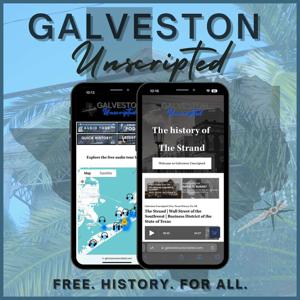

📍Visit our interactive map!
Enjoy this content? Buy me a book! 📚
📱Social and other ways to explore Texas History
Tour with Spotify:
👂Listen: The Strand
👂Listen: Silk Stocking District
👂Listen: Rosenberg Fountains
👂Listen: East End Historical District
👂Listen: Texas Heroes Monument
👂Listen: Quick History of Galveston
👂Listen: Port of Galveston
Interested in information covered in this episode? Dive deeper into the links below!
San Jacinto and Lost Bayou: http://www.sanjacneighborhoodassoc.org/Lost_Bayou_Historic_Dist.html
Lost Bayou: https://www.galvestontx.gov/634/Lost-Bayou
Transcript:
The Lost Bayou Historic District is one of the significant historic districts on the island on the National Register of Historic places. Much of the district is located south of Broadway, across from the East End Historic District.
This neighborhood sits where a small bayou or lake connected to the Gulf once sat. The district extends from 16th to 21st Street between Broadway and N 1/2. The city of Galveston was officially founded in 1839, and most of the inhabitants live near the downtown district. The rest of the island was Barron, with low elevation, and had many small bayous and inlets of water on both the bay and the beach sides, stretching across the island.
Much of the area between the Gulf and Avenue L and between 20th and 23rd Street was covered by a body of water known as Hitchcock's Bayou. Before the grade raising of the island after the 1900 storm, many homes and businesses were built around Hitchcock's Bayou. The Bayou was even the preferred water source for the military service camels that resided on the island in the 1850s.
The service Camel's Corral was directly behind where the Brian Museum sits today. Much of the area east of the Bayou was devastated by the great fire of 1885. This fire started near 16th and Strand and extended to the Gulf of Mexico, destroying many homes and structures adjacent to Hitchcock's Bayou.
Hitchcock's Bayou became lost, Once the grade raising of the island was complete. The elevation of the inhabited part of the island had increased, and the Bayou was filled with dredge mud. Once this body of water had been filled in, more lots were available for the neighborhood to expand. The lost Bayou neighborhood was soon built on top of the old water source.
It was developed initially as a working-class community with a few beautiful Victorian gems sprinkled around the area. If you are in the Lost Bayou District, make sure
Support the show
Galveston Unscripted Digital Market
 View all episodes
 By Galveston Unscripted | J.R. Shaw

4.9
5151 ratings
📍Visit our interactive map!
Enjoy this content? Buy me a book! 📚
📱Social and other ways to explore Texas History
Tour with Spotify:
👂Listen: The Strand
👂Listen: Silk Stocking District
👂Listen: Rosenberg Fountains
👂Listen: East End Historical District
👂Listen: Texas Heroes Monument
👂Listen: Quick History of Galveston
👂Listen: Port of Galveston
Interested in information covered in this episode? Dive deeper into the links below!
San Jacinto and Lost Bayou: http://www.sanjacneighborhoodassoc.org/Lost_Bayou_Historic_Dist.html
Lost Bayou: https://www.galvestontx.gov/634/Lost-Bayou
Transcript:
The Lost Bayou Historic District is one of the significant historic districts on the island on the National Register of Historic places. Much of the district is located south of Broadway, across from the East End Historic District.
This neighborhood sits where a small bayou or lake connected to the Gulf once sat. The district extends from 16th to 21st Street between Broadway and N 1/2. The city of Galveston was officially founded in 1839, and most of the inhabitants live near the downtown district. The rest of the island was Barron, with low elevation, and had many small bayous and inlets of water on both the bay and the beach sides, stretching across the island.
Much of the area between the Gulf and Avenue L and between 20th and 23rd Street was covered by a body of water known as Hitchcock's Bayou. Before the grade raising of the island after the 1900 storm, many homes and businesses were built around Hitchcock's Bayou. The Bayou was even the preferred water source for the military service camels that resided on the island in the 1850s.
The service Camel's Corral was directly behind where the Brian Museum sits today. Much of the area east of the Bayou was devastated by the great fire of 1885. This fire started near 16th and Strand and extended to the Gulf of Mexico, destroying many homes and structures adjacent to Hitchcock's Bayou.
Hitchcock's Bayou became lost, Once the grade raising of the island was complete. The elevation of the inhabited part of the island had increased, and the Bayou was filled with dredge mud. Once this body of water had been filled in, more lots were available for the neighborhood to expand. The lost Bayou neighborhood was soon built on top of the old water source.
It was developed initially as a working-class community with a few beautiful Victorian gems sprinkled around the area. If you are in the Lost Bayou District, make sure
Support the show
Galveston Unscripted Digital Market
4,725 Listeners

2,487 Listeners

1,288 Listeners

1,907 Listeners

6,144 Listeners
19,257 Listeners
3,650 Listeners

19,160 Listeners
2,945 Listeners
797 Listeners
3,397 Listeners

6,539 Listeners
1,744 Listeners

10,094 Listeners
982 Listeners