
Sign up to save your podcasts
Or

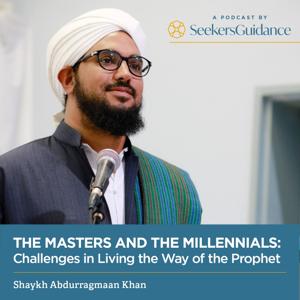


This podcast is based on al-Fawa’id al-Mukhtarah, one of the seminal works of the great scholar al-Habib Zayn bin Sumayt. The book contains advice on a wide range of subjects that are relevant to daily life, drawing on examples from the Haba’ib from Hadramout. We will be exploring this advice within the context of Muslims living in the West, with the aim of deriving guidance from it on ways to deal with modern challenges.
In this podcast, Shaykh Abdurragmaan Khan begins by cautioning the student who is not ready to not rush in giving fatwa. He reminds the listener that often times the reason one hastens to answer other’s questions is that one wants to be known for one’s knowledge and this is from the lower self.
Shaykh Abdurragmaan goes on to give examples from the earlier Muslims how they were very wary about issuing a fatwa. He ends by emphasizing the importance of the student to get used to saying “ I don’t know.”
For more SeekersGuidance podcast shows, visit seekersguidance.org/podcasts.
Help SeekersGuidance reach millions around the world through reliable knowledge and guidance from qualified scholars, completely free: become a monthly supporter – www.seekersguidance.org/donate
The post 12-Cautioning the Student in Issuing Legal Rulings -The Masters and Millennials: Challenges in Living the Way of the Prophet (peace and blessing be upon him)- Shaykh Abdurragmaan Khan appeared first on SeekersGuidance.
This podcast is based on al-Fawa’id al-Mukhtarah, one of the seminal works of the great scholar al-Habib Zayn bin Sumayt. The book contains advice on a wide range of subjects that are relevant to daily life, drawing on examples from the Haba’ib from Hadramout. We will be exploring this advice within the context of Muslims living in the West, with the aim of deriving guidance from it on ways to deal with modern challenges.
In this podcast, Shaykh Abdurragmaan Khan explains that there are many forms of calling to Allah. The caller to Allah might have a certain message he wishes to convey but he must be prepared to listen as well. This is from the etiquette of calling to Allah.
Shaykh Abdurragmaan goes on to emphasize that the one calling to Allah should seek to remind people at a time that the call to Allah will be beneficial. From the most important etiquette, the caller to Allah must know when to speak and when not to speak.
For more SeekersGuidance podcast shows, visit seekersguidance.org/podcasts.
Help SeekersGuidance reach millions around the world through reliable knowledge and guidance from qualified scholars, completely free: become a monthly supporter – www.seekersguidance.org/donate
The post 11- Etiquettes in Calling to Allah-The Masters and Millennials: Challenges in Living the Way of the Prophet (peace and blessing be upon him)- Shaykh Abdurragmaan Khan appeared first on SeekersGuidance.
From the publisher's feed