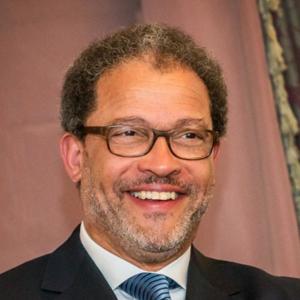
The McKay Interview

The McKay Interview

By Michael McKayNewsPolitics
Download on the App Store

The McKay Interview episodes

  • Dr Richard Moxon, Emeritus Professor of Paediatrics and Founder of the Oxford Vaccine Group

    This internationally renowned scientist, highly regarded for his work on bacterial meningitis, discusses his experiences in medical research, the vital significance of vaccines and immunization in public health.

    In this episode we discuss:

    • What is the biology of a killer, bacterial infection? 
    • Why do we really need vaccines? Are there alternatives? 
    • What does it take to make a vaccine?  
    • How to deal with the "Me versus Us" argument?
    • 29 min
    • Ambassador Thomas Greminger, Director of the Geneva Centre for Security Policy

      Discussion of the Russian invasion of Ukraine, scenarios of how the conflict will end, the role that Switzerland and international Geneva could play, and the meaning of Swiss neutrality in a crisis conflict of this nature.

      In this episode we discuss:

      • What is the history of GCSP?  
      • Can it play a role in this current crisis? 
      • What does Swiss neutrality mean in such present circumstances?
      • 24 min
      • Lt. Gen. (rtd.) Ben Hodges, holder of the Pershing Chair in Strategic Studies at the Center for European Policy Analysis. Formerly, Commander of the United States Army in Europe.

        Ben Hodges answers questions about strategy and the balance of power in today’s geo-political world.

        Some of the points we covered during the interview:

        • Four months to the day after the Taliban swept into Kabul, and in the wake of the US/Allied Forces withdrawal from Afghanistan – and as you know, some call it a humiliating defeat - how would you characterise what happened? And in light of that how reliable is the United States as the leader, militarily speaking, of the free world?
        • The front cover story of The Economist this week is “What will America fight for?” How would you answer that newspaper’s question?
        • Is the USA treaty-bound to defend Taiwan? How would that be done? What scenarios do military people examine?
        • 30 min
        • Diccon Bewes, Author, Travel Writer, Chocolate-Lover and Englishman in Bern

          A radio conversation with best-selling author, travel writer, chocolate-lover and Englishman in Bern.

          Some of the questions we covered during the interview:

          • Why is Switzerland successful?  By all logic, with all its diversity, it shouldn’t be a success story. But it is? What is your theory?
          • You are a good example of “integration”.  Please tell me how you see the efforts the Swiss make toward social cohesion. Have you had good and not so good experiences?
          • You live in Bern. Give me some examples of your observations of the differences – even tensions -  between town and country in this varied country. I know from my observations, having lived here even longer than you, that this is real, particularly at times of local and national votes.
          • 28 min
          • Dr François Carrard, Director-General of the International Olympic Committee, 1989-2003: an informed opinion about Sport and the Olympics.

            François Carrard answers my questions about why the Tokyo Olympics took place in the teeth of a global pandemic; Ideals versus Money -  has Pierre de Coubertin’s vision, as founder of the Modern Olympics in 1896,  been trashed by Mammon?; and what the true meaning of sport is.

            Some of the questions we covered during the interview:

            • Do new sports like beach volleyball, skateboarding, “breaking” (breakdancing) and BMX bicycling have a place in the Modern Olympiad along with traditional sports like athletics, swimming, gymnastics, even fencing.
            • Where will all this adaptation end. And does it really matter to the good health of young people and the wholesomeness of sport.
            • A question on the Paralympics and in particular a focus on prosthetic devices (think “blade runner”). Prosthetic devices are so advanced that some amputee track athletes are achieving times that make competition with able-bodied/non-disabled athletes feasible (Oscar Pistorius from South Africa comes to mind from a few years ago), but is running on a prosthesis the same as running on two natural legs?  Indeed, does your legal and sporting mind offer any “good” arguments for allowing the inclusion of Paralympians in Olympic competition?
            • 27 min
            • Olivier Jankovec, Director-General, Airports Council International Europe (ACI Europe)

              An in depth view of how the airports sector has been affected by the pandemic and a view from the top of future challenges.

              Here are some of the questions I put to my guest:

              -What are the things that look large – very large - in your sights that need to be fixed for business to return to normal…or almost normal?
              -There is much talk that the pandemic has changed many things fundamentally. That things will never be the same again. How do you see that?
              -What has changed irrecovably  in your industry? Explain why it will be prohibitive to change it back to how it was?
              -And how you and your colleagues around Europe will adjust to the “new reality”.

              23 min

            About The McKay Interview

            From the publisher's feed

            Michael McKay conducts in depth interviews with decision makers and local leaders.