
Sign up to save your podcasts
Or

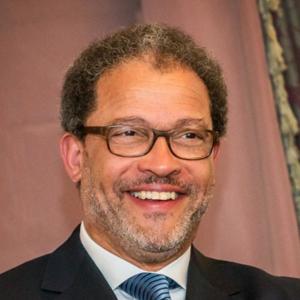


General Sir Gordon Messenger, Trustee of the King’s Foundation and former Vice Chief of the Defence Staff, joins the programme from Geneva to discuss the intersection of military leadership, sustainable development, and royal vision. This interview was recorded on 18th of November 2025.
Established by King Charles III in 1990, the King’s Foundation is distinct from the King’s Trust, focusing not just on youth but on the philosophy of "harmony"—working with the grain of nature rather than imposing upon it. General Messenger explains how this philosophy translates into practical action, from heritage craft training to urban regeneration.
Key discussion points include:
The Philosophy of Harmony: King Charles III’s vision of integrating human activity with the natural world.
Redefining Sustainability: Why true sustainability goes beyond carbon targets to include heritage, craftsmanship, and community "placemaking."
The Economics of Quality: The argument against short-termism and why quality construction (like Poundbury) is more economically viable than "cheap and cheerful."
Leadership Lessons: Insights from a distinguished military career on authenticity, building teams around a common purpose, and maintaining judgment during crises.
The Next Generation: Why General Messenger remains optimistic about the values and environmental commitment of today’s youth.
Impressions of the King: A personal look at King Charles III’s authenticity, lack of airs, and deep commitment to his causes.
Global Impact: How the Foundation’s model at Dumfries House is inspiring projects internationally, including in Australia.
This episode offers a fascinating look at how traditional values and skills are being revitalized to address modern challenges, guided by experienced leadership.
Hurricane Melissa, a Category 5 storm with winds reaching nearly 300 km/h, recently devastated Jamaica, leaving over 600,000 people displaced and wiping out nearly 30% of the country’s GDP. In this episode of The McKay Interview, Jamaican Ambassador Dr. Richard Brown outlines the full scale of the destruction and the urgent need for stronger global support — particularly from international organisations and the United Nations system. This interview was recorded on 6th of November 2025.
Michael McKay and Dr. Brown explore:
The unprecedented scale of Hurricane Melissa’s destruction across Jamaica’s western parishes
The economic toll: $6–7 billion in damages and over 120,000 structures affected
What worked — and didn’t — in Jamaica’s disaster preparedness and response
How catastrophe bonds and parametric insurance are helping fund emergency relief
Why small island developing states like Jamaica need tailored climate finance and legal recognition
The role of Geneva-based organisations and how donors can support Jamaica’s recovery
This conversation also delves into larger questions:
Is the international system, including the United Nations, still fit for purpose?
Can small countries weather climate shocks without systemic global reform?
And what does Jamaica’s resilience — “Wi likkle but wi tallawah” — look like in 2025?
Listen now to better understand the link between diplomacy, climate justice, and international solidarity.
Michael Møller, former United Nations Under Secretary-General and Director-General of the UN Office at Geneva, returns to The McKay Interview for a hard-hitting, wide-ranging discussion. With over four decades of service across five continents, Møller offers deep insight into the challenges facing multilateralism — and the urgent reforms the United Nations must now confront. This interview was recorded on 14th of October 2025.
We discuss:
The fragmentation of geopolitics and the fading taboo against the use of force
How technology is reshaping international diplomacy — and exposing systemic weaknesses
UN reform: why “UN 2.0” proposals may be too little, too late
Why budget cuts are not just administrative — they’re existential
The growing disconnect between the political UN and the operational UN
Cities, regions, and businesses: the new multilateral actors stepping up
The US and China: the funding gap that’s quietly paralyzing international cooperation
The future of International Geneva – and whether it's being eclipsed by other global hubs
What kind of leadership the UN — and the world — really needs
Reflections on Gaza, Trump, peacekeeping, and the limits of diplomacy
Møller is frank, thoughtful, and unflinching. This is a timely episode for anyone concerned with the future of the international system and the role of the UN in a deeply divided world.
We speak with Professor Emerita Victoria Curzon Price of the University of Geneva, economics department, a leading thinker in international economics and an old friend of the programme. Together, we unpack the shifting global trade landscape, the resurgence of tariffs, and what it all means for Switzerland and the wider world.
We discuss:
Why the United States is using tariffs as a strategic tool and whether Trump’s approach contains “a grain of truth.”
The benefits and risks of tariffs for both exporters and domestic consumers.
How Switzerland has been caught in the crossfire of recent U.S. trade policies and what options it has.
The weakening of the World Trade Organization and the consequences for international law and global commerce.
The lessons of history – from mercantilism to the Marshall Plan – for today’s trade tensions.
Professor Curzon Price’s clear-eyed analysis brings historical depth and sharp insights to one of the most pressing economic issues of our time.
We speak with Professor Emerita Victoria Curzon Price of the University of Geneva, economics department, a leading thinker in international economics and an old friend of the programme. Together, we unpack the shifting global trade landscape, the resurgence of tariffs, and what it all means for Switzerland and the wider world. This interview was recorded on 24th of September 2025.
We discuss:
Why the United States is using tariffs as a strategic tool and whether Trump’s approach contains “a grain of truth.”
The benefits and risks of tariffs for both exporters and domestic consumers.
How Switzerland has been caught in the crossfire of recent U.S. trade policies and what options it has.
The weakening of the World Trade Organization and the consequences for international law and global commerce.
The lessons of history – from mercantilism to the Marshall Plan – for today’s trade tensions.
Professor Curzon Price’s clear-eyed analysis brings historical depth and sharp insights to one of the most pressing economic issues of our time.
Doreen Bogdan-Martin, Secretary-General of the International Telecommunication Union (ITU), leads one of the world’s most powerful yet least-known organizations from her base in Geneva. The ITU is responsible for everything from managing global radio frequencies and satellite orbits to bringing 2.6 billion people online and shaping the digital future. This interview was recorded on 29th of August 2025.
This conversation goes far beyond acronyms and infrastructure. It’s about power, inequality, space governance, and the foundational role connectivity plays in modern life.
Key topics include:
The cost of connecting the unconnected: why $1.6 trillion is needed by 2030
How the ITU governs satellite orbits and global radio spectrum
The geopolitical tug-of-war behind technical standards and spectrum access
Why AI cannot serve humanity until the digital divide is closed
Partnerships with the private sector and governments across 194 member states
Early-warning systems, disaster risk reduction, and space sustainability
How Geneva’s ecosystem of international organizations enables global cooperation
The future of the ITU in a time of budget pressure and rising nationalism
From space debris to digital literacy, this episode explores the invisible infrastructure behind everything from your smartphone to international security.
Michael McKay sits down with the Right Honourable Helen Clark—former Prime Minister of New Zealand and former head of the United Nations Development Programme—for a wide-ranging conversation on democracy, multilateralism, women in leadership, and global governance.
Helen Clark is widely regarded as a modern-day stateswoman, with decades of experience in public service, diplomacy, and international development. As Prime Minister of New Zealand from 1999 to 2008, and later as Administrator of the UNDP, she has worked at the intersection of national politics and global cooperation.
Together, McKay and Clark explore:
Why 2024–25 marks a critical juncture for democracy, with elections in over 60 countries.
The rise of populism and political polarisation—and how institutions can weather the storm.
New Zealand’s regional role in the Asia-Pacific and its unique diplomatic stance.
Lessons from leading in a multicultural, treaty-based democracy.
The challenge of engaging younger generations in politics and civic responsibility.
Gender and leadership: How women lead differently—and why it matters.
The role of international organisations like the UN, Chatham House, and the Global Leadership Foundation in rebuilding trust and dialogue.
The future of global governance in the face of wars, climate change, and crumbling consensus.
This episode is a rich, insightful reflection on leadership, values, and the uncertain path ahead for democratic societies.
Michael reconnects with veteran BBC Vatican correspondent David Willey OBE for a compelling conversation on the end of Pope Francis’ papacy and the early days of his successor, Pope Leo. The interview was recorded on the 12th June 2025.
Drawing on over four decades of covering the Holy See, Willey offers a unique insider's view on the Church’s evolving leadership, the challenges it faces in a rapidly changing world, and the significance of a new, polyglot pope at the helm.
The discussion covers:
Pope Francis’ legacy: his personal simplicity, reform efforts, and the limits of his pontificate.
The unresolved crises of Vatican finances and clerical abuse scandals.
The early signals from Pope Leo: his American background, his cautious leadership, and his surprising love of tennis.
The future of priestly celibacy, the role of women, and the Vatican’s stance on LGBTQ+ issues.
Catholic relations with China, Islam, and Evangelical Christianity.
Whether the Vatican can still be a force for global diplomacy in conflicts such as Ukraine.
The shifting centre of gravity in the Church—from Europe to the Global South.
This interview offers an unflinching yet hopeful look at where the Catholic Church stands today—and where it may be heading tomorrow.
Michael McKay sits down with Professor Marcel Salathé, joint director of the EPFL AI Center in Lausanne, to explore the rapidly evolving world of artificial intelligence—and what it means for us all. The interview was recorded on the 20th May 2025.
Professor Salathé offers a rare combination of technical insight and clear communication, making this episode essential listening for specialists and non-specialists alike. From the ethics of AI warfare to the optimism of medical innovation, this wide-ranging conversation covers the most urgent topics at the intersection of technology, society, and geopolitics.
Together, they discuss:
The speed of AI development—and whether society and policymakers can keep up
AI as the new automation: what’s at risk, what’s gained, and what will change
Why general and superintelligent AI raise concerns about control and safety
The dual-use nature of AI in medicine and military strategy
Geopolitics and AI: the CHIPS Act, US-China dynamics, and Switzerland’s positioning
Robotics, education, and what Swiss precision can bring to the future of AI
How to prepare the next generation without fear or overexposure
Why Marcel believes Switzerland may be uniquely poised for the age of robotics
Reflections on science communication, student potential, and personal fulfilment
An informed and forward-looking conversation about one of the most important forces shaping our future.
Michael McKay speaks with Dr. Brian Costello, Medical Director of Mayo Clinic Global Consulting and Professor of Oncology and Urology, and Professor Jacques Bernier, Swiss Medical Network’s Chief Science Officer and Specialist in Radio-Oncology and Nuclear Medicine. The interview was recorded on the 6th May 2025.
They discuss the newly launched collaboration between Mayo Clinic and Swiss Medical Network, announced at the Genolier Innovation Hub near Geneva. This in-depth conversation covers:
The origin and ethos of Mayo Clinic’s patient-first approach
Why Swiss Medical Network was chosen as a partner for Mayo’s global care network
Shared values, due diligence, and trust in establishing a cross-border medical alliance
Key areas of cooperation: executive health, ophthalmology, and nursing education
How integrated care models in Switzerland aim to reduce healthcare costs
The challenge of maintaining quality amid rising costs and complex insurance systems
Emerging medical priorities: neuroscience, early cancer detection, and AI in healthcare
Insights on healthcare equity and outcomes in the U.S. and Switzerland
What each guest has learned from this transatlantic partnership
An insightful episode on the future of medicine, collaboration across borders, and how the needs of the patient must remain at the center of healthcare systems.
From the publisher's feed