
Sign up to save your podcasts
Or

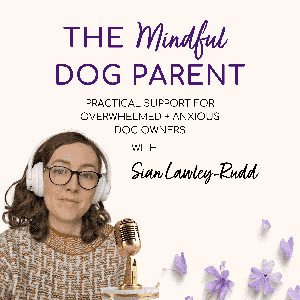


If you’ve ever thought, “I’m just tired of dog training,” you’re not alone. 🐾
Even the most devoted, caring dog parents hit a point where every walk, cue, or “should” starts to feel like effort.
In this episode of The Mindful Dog Parent, Siân Lawley-Rudd shares why that exhaustion doesn’t mean you’ve failed, it means your nervous system has been working overtime.
You’ll learn how taking a break isn’t falling behind, but the key to helping both you and your dog make real progress.
Through the lens of Nervous-System Aware Dog Parenting™, Siân explains how rest resets your body’s stress response, restores motivation, and helps you and your dog reconnect with calm, confidence, and curiosity again.
✨ What you’ll learn:
This is your reminder that you don’t need to keep trying to be making progress.
Sometimes, the most powerful training step you can take… is to stop.
🎧 Listen next:
💌 Links:
Explore The Confident Dog Parent Blueprint → lavendergardenanimalservices.co.uk/confident-dog-parent-blueprint-course
Follow Siân on Instagram → @lavendergardenanimalservices
If this episode helped you exhale today, share it with someone who might need permission to take a break too.
And remember, calm isn’t about doing less, it’s about feeling safe enough to pause. 💜
Links referenced in this episode:
When life, and dog training, start to feel heavy, even the things that usually make you happy can start to feel like effort.
You love your dog, but the constant pressure to do more, stay consistent, and “get it right” slowly drains your spark.
In this episode of The Mindful Dog Parent, Siân Lawley-Rudd explores why that loss of motivation isn’t about willpower or laziness, it’s a sign your nervous system has been stuck in go-mode for too long.
You’ll learn how bringing fun and play back into your days resets your body’s stress response, lifts your mood through dopamine and oxytocin, and helps both you and your dog feel calm, connected, and alive again.
Through personal reflection and Nervous-System Aware Dog Parenting™, you’ll discover:
Simple ways to weave micro-moments of joy into daily life so calm becomes natural again.
This isn’t just about training your dog, it’s about retraining your nervous system to find safety, creativity, and connection through play.
Because calm isn’t always about stillness, sometimes it’s about aliveness.
Key TakeawaysIf this episode resonated with you, share it with a friend who’s been feeling the same kind of burnout, and remind them: calm can be something you rebuild.
Related episodes to listen to next:
💜 Explore The Confident Dog Parent Blueprint → https://lavendergardenanimalservices.co.uk/confident-dog-parent-blueprint-course
🌿 Follow Siân on Instagram → @lavendergardenanimalservices
You know that feeling when you look at your dog’s lead and think, “I just can’t today”?
You’re not failing, you’re fatigued. And this episode of The Mindful Dog Parent explores what’s really happening when you lose motivation to train and how to gently get your spark back again.
In this episode, we’ll explore:
💭 Why motivation dips aren’t laziness but a nervous-system signal that you need rest
🧠 What’s really going on in your body when dog-training burnout hits
🌿 Three micro-shifts that help you rebuild motivation naturally, no forcing required
🪞 How micro-wins retrain your brain to notice progress and bring calm back to your sessions
🐾 A gentle reset plan to help you get back on track with your dog training
If you’ve been feeling flat, guilty, or like you’ve “lost it,” this episode will help you reconnect to your calm, and remind you that consistency starts with compassion.
🪄 The Confident Dog Parent BlueprintIf today’s episode spoke to you, the Confident Dog Parent Blueprint is the next gentle step.
It’s a self-paced course designed to help overwhelmed dog parents rebuild calm, confidence, and consistency, without pressure or perfection.
👉 Check out the Confident Dog Parent Blueprint here
1️⃣ Reset before you restart.
2️⃣ Reduce the list, focus on one skill or one moment.
3️⃣ Reinforce yourself too.
4️⃣ Track one micro-win every day.
5️⃣ Motivation returns when your body feels safe.
Ever felt like no matter how hard you try with your dog, nothing’s changing? You’re not failing.
In this episode of The Mindful Dog Parent, Siân explores what’s really happening when you feel stuck, frustrated, or like you’re falling behind in your training. You’ll learn how to recognise invisible progress, understand what your nervous system is trying to tell you, and see how much you and your dog have already grown, even when it doesn’t look like it on the surface.
This episode blends calm dog training, nervous-system awareness, and gentle mindset shifts to help you finally breathe again, trust your progress, and keep moving forward with compassion.
You’ll discover:
You’ll also hear why so many overwhelmed dog parents reach a turning point when they stop striving for perfection and start focusing on repair, regulation, and reconnection.
Related episodes:
Ep 10: Dog Training Advice Overload: Why You’re Stuck (And How to Focus on What Works)
Ep 16: Is It Me? When You Blame Yourself for Your Dog’s Behaviour (And How to Break the Cycle)
Ep 17: When You Stop Pretending: How Authenticity Calms You and Your Dog
Do you ever scroll through social media and feel like every other dog parent has it figured out, calm walks, perfect recall, dogs who just get it? You’re not alone. Comparison is one of the biggest reasons overwhelmed dog parents lose confidence, feel stuck, and question whether they’re doing enough.
In this episode, Siân unpacks why your brain is wired to compare, how it triggers guilt, tension, and self-doubt in your training, and how to shift back to calm, grounded self-trust.
Through the lens of nervous-system-aware dog training, you’ll learn:
You’ll walk away with a 5-day self-trust challenge to help you reconnect with yourself and your dog, no pressure, no perfection, just progress.
Listen now and rediscover confidence in your own journey.
Related episodes you’ll love:
Ep 10: Dog Training Advice Overload: Why You’re Stuck (And How to Focus on What Works)
Ep 16: Is It Me? When You Blame Yourself for Your Dog’s Behaviour (And How to Break the Cycle)
Ep 17: When You Stop Pretending: How Authenticity Calms You and Your Dog
Episode 18 Takeaways:
You’ve probably heard that dogs pick up on our energy. But what does that really mean in practice?
In this heartfelt episode, we explore how authenticity and alignment, between what you feel inside and how you show up, create calm for both you and your dog.
When you stop masking and start showing up as your real self, your nervous system settles… and your dog feels it too.
We’ll cover:
✨ What authenticity actually means (and why it’s harder than it sounds)
✨ How pretending to be fine keeps both you and your dog stuck in stress
✨ Why dropping the mask is one of the most powerful forms of regulation
✨ How your nervous system and your dog’s are constantly communicating
✨ 3 gentle ways to start showing up more authentically — even on tough days
I also share practical ways to connect this idea with your dog’s training and your daily life, through awareness, self-compassion, and small, real moments of honesty that strengthen your bond.
Because calm doesn’t come from being perfect, it comes from being you.
🧠 Key Takeaways💛 Authenticity = Safety: When your inside world matches your outside actions, your body relaxes, and your dog feels safe to do the same.
💛 Stress hides in pretending: Faking calm keeps your nervous system in fight-or-flight.
💛 Your honesty is regulation: Every time you admit “this is hard,” you’re co-regulating with your dog, not failing.
💛 Practice micro-authenticity: One small act of honesty a day (with yourself or your dog) rewires your brain for calm.
💛 Your nervous systems talk: Dogs don’t need perfection; they need presence.
🐾 Your Challenge This WeekTry one “micro-authentic” action each day.
That might look like:
Each time you do, you’re building trust, in yourself and in your dog.
If you loved this one, you’ll also enjoy:
🎧 Episode 10: Dog Training Advice Overload: How to Cut Through the Noise and Focus on What Matters — includes the Values Filter framework for staying aligned with your ethics and energy.
🎧 Episode 12: When Your Dog’s Behaviour Feels Overwhelming: How to Break the Spiral - a deeper dive into emotional regulation and what to do when calm feels impossible.
🎧 Episode 14: Why Staying Calm Feels Impossible in Dog Training (And How to Finally Start) - practical ways to regulate before, during, and after training.
Feeling like your dog’s behaviour struggles are all your fault?
You’re not alone. So many overwhelmed dog parents quietly blame themselves when training feels stuck, especially when they’ve tried every tip and nothing seems to work.
But here’s the truth: it’s not because you’re failing. It’s because your nervous system is overloaded, and that stress is spilling into your training. Today’s episode dives into:
You’ll walk away knowing it’s not about being the “perfect” dog parent - it’s about learning how to regulate yourself, so your dog can regulate too.
If this landed, I’d love to hear from you, send me a DM on Instagram or share your micro win in my free community.
✨ Mentioned in this episode:
When Training Feels Like Too Much: 3 Ways to Bring Back Calm and Confidence
Do you ever feel like training your dog is just too much?
Between all the tips, the pressure to “get it right,” and the guilt when things go wrong, it’s easy to feel exhausted, stuck, and ready to give up.
In this episode of The Mindful Dog Parent, I’m sharing 3 simple ways to bring back calm and connection, without piling more onto your already full plate.
Here’s what you’ll learn:
✨ Your challenge this week:
Remember - you don’t need to do it all. Small, steady steps are enough.
If you’ve been craving a bigger reset, doors are now open to my Confident Dog Parent Blueprint, a self-paced course that helps overwhelmed dog parents create calm, confident training plans without the burnout
If today’s episode is resonating and you’ve been craving a bigger reset with your dog, I’d love to invite you into my brand-new course: The Confident Dog Parent Blueprint.
It’s designed for overwhelmed dog parents who are tired of bouncing between tips and still feeling stuck. Inside, I guide you step by step through building calm, confident routines that actually stick, no more quick fixes, no more guilt spirals.
You’ll learn how to regulate your own state, connect with your dog in a calmer way, and create training plans that feel doable in real life.
It’s built to help you feel confident again, without the overwhelm.
You can find all the details at the link in the show notes. I’d love to see you inside.
lavendergardenanimalservices.co.uk/confident-dog-parent-blueprint-course
More ways to work with me:
lavendergardenanimalservices.co.uk
Listen to more episodes of the podcast
lavendergardenanimalservices.co.uk/podcast
Takeaways:
Do you ever lie awake at night replaying the day with your dog, thinking of the walk that went wrong, the snapping when you were stressed, or the fact you didn’t “do enough”?
😔 The exhaustion.
😔 The guilt.
😔 The feeling of being completely stuck.
If this is you, today’s episode of The Mindful Dog Parent is for you.
I’m diving into why these emotions show up so strongly for dog parents, and how they silently shape the way your dog responds to you. More importantly, I’ll share gentle shifts that can help you move from a cycle of guilt and burnout into one of connection and calm.
Here’s what you’ll learn:
✔️ Why “trying harder” with training doesn’t work when you’re running on empty
✔️ How guilt quietly creates distance between you and your dog
✔️ Why overwhelm and anxiety in you show up as reactivity, tension, or shut-down in them
✔️ The one perspective shift that brings relief straight away
✔️ A simple way to take pressure off without giving up on progress
💡 This episode connects with themes we explored back in:
If you’ve been feeling like nothing is working, that you’re too tired, too guilty, or too behind, this is the reminder you need: you’re not failing. You’re human. And both you and your dog deserve a calmer foundation.
✨ Next Step: Want to go deeper? Join me for my free Masterclass:
From Overwhelm to Calm: 3 Shifts Every Dog Parent Needs to Finally Feel Confident
JOIN HERE
We start on Monday 22nd September, and it’s the perfect way to build on what you’ll hear in this episode.
Work with me: lavendergardenanimalservices.co.uk
If you’ve ever felt like no matter how many training tips you try, recall hacks, loose lead tricks, or reactivity fixes, nothing seems to work, you’re not failing. You’re missing the foundation.
In this episode of The Mindful Dog Parent, I explain why calm has to come before training, what calm really means, and how to start creating calm connection with your dog today.
Calm isn’t about being zen all the time or never losing your temper. It’s about creating shared safety - the moment your nervous system tells your dog’s nervous system, we’re safe here. From that place, training actually works.
💛 What you’ll learn in this episode:Takeaways:
And if this episode resonated, join my free Calm Connection Challenge starting Monday. Over 4 days, we’ll reset together and build the calm foundation that makes training easier, lighter, and more effective:
Join here: lavendergardenanimalservices.co.uk/calm-connection-challenge
🎧 Listen on your favourite podcast app
🎥 Watch on YouTube: https://youtu.be/q0o5QFQnmkk
Follow me on Instagram: @lavendergardenanimalservices
From the publisher's feed