
Sign up to save your podcasts
Or

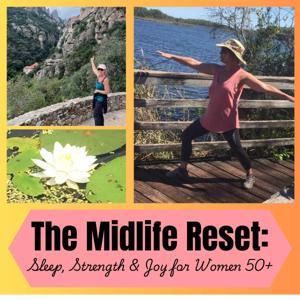


How many times have you bought into a course or book, hoping it would make things better? How many diets or cleanses have you jumped into thinking that this expert has that certain secret that will finally unlock the weight gain?
Only to discover that the end result is lacklustre at best… and sometimes the fall out ends up feeling like a failure yet again. Why can’t we stick to things? And how much longer will we beat ourselves up over it?
Is the solution to just give in? Admit we’re getting older. Accept life as it is?
In today’s post, I want to shout out a resounding NO. Let me offer the KEY reason why these fixes have not worked for you and three solid strategies for finding what will work.
Welcome to the Midlife Reset podcast, episode 59. My name is Cheryl Gordon. I guide midlife women to greater strength, happiness and energy without dieting, harsh exercise or rigid rules. I’m a yoga therapist and mindfulness coach with almost 30 years field experience with women just like you. If you’re looking to find a publication that distills all the noise out there into a doable plan… you’re home!
Marching to Your Own Beat
I don’t practice headstand. Are you allowed to be a yoga teacher if you can’t hold headstand for 20 minutes? I used to think no, but then I taught like 10000 classes and realized… I guess I’m a teacher.
But there’s a very good reason I never took to the pose. I have an anatomically unusual neck length. I’m very short but long necked. This makes headstand a risky pose to hold. It could crunch those delicate vertebrae.
What’s this got to do with why cleanses, diets and workout plans often fall flat? Stick with me.
If you go to traditional yoga classes, headstand is almost always part of the series. And for a lot of people, it’s a great pose. The ancient texts call it king of the poses.
What the ancient texts don’t talk about is anatomy. They talk a lot about meditation, spirituality, breathing. But nothing about spinal anomalies.
You know why? Because yoga was shared 1:1. Often, a student would live with their teachers for years, yes maybe in caves. But in this intimate arena, poses were adapted to each individual as they needed them. Text books didn’t have to cover this stuff because it was understood that the teachings wouldn’t be doled out to 10, 20, 50 students at a time in a group setting.
So in here is your first clue.
What worked for your neighbour, sister-in-law or instagram star is not necessarily right for you.
The ancient yogis knew this. And we’ve lost that wisdom somewhere.
As the guru developed the student’s program, it was a two way conversation. There was constant adaptation. Adjustment. Listening.
When you jump into a solution that comes from an external source, it’s a one way conversation. You’re the one listening to that external source.
Here’s my point.
Unless you have intimate access to an enlightened, wizened teacher in your house (my dog comes pretty close to be honest and I do learn a lot of yoga from her), seeking generalized advice will always lead to disharmony and ultimately abandonment of your goal.
The key problem is that you are looking outside yourself for answers. You are the world’s expert in you. No one, not a guru with a million followers or the doctor with lots of letters after her name, knows you better than you.
And girlfriend, we have not been encouraged to trust our own instincts.
How Did We Get So Far Off Track?
I remember working so hard in high school to fit in. I think all teenagers do, don’t they? Painfully conscious of every zit. Whether our jeans were the right brand. Did we really just blurt that out???
The need to be liked and accepted by the tribe started way before high school was even invented. As a human species, it could be fatal to be shunned by our people. And this hard wiring is still very real today.
Add to this fact… most of us were parented by emotionally immature and less than full formed humans. They passed along to us, along with grandma’s gravy bowl and those beautiful eyes, all their insecurities and worries about not fitting in.
I remember coming home from school after having an accident wetting my pants. This happens to a lot of little kids but at the time, I only knew it happened to me. And it was a rough day. My mom’s reaction? Don’t do this! The kids will make fun of you! Which of course they had. Which made my nervousness worse.
You can see over time, we clearly get the picture that we need to fit in, be accepted and conform. So if Susie has a red coat, I want a red coat. If Debbie takes ballet, I have to take ballet. If Bonnie is sad, I have to act sad too.
A lot of this is that hard wiring. It’s called mirror neurons. And it’s a part of our deep survival adaptation.
Anne’s Story
I had a client who sustained a painful hamstring injury. She came to me, as a yoga therapist, to help her get back to running. She wanted to know how to stretch the muscle and reduce the pain.
Which I can help clients do.
But yoga therapy goes deeper than that.
As we worked together, it came out that she didn’t actually love running that much anymore. She started because her former partner was part of a club and in order to spend time with him, she ran. And then, even though it was getting more painful every year, she kept pushing for longer and faster runs because the club members (who were a big part of her social group) did that.
Her injury had necessitated a change in her habits. Now she was ready to address the fear of not fitting in… of being left behind… of being alone…on a deeper plane.
She went on to take up pole fitness. Don’t laugh. It’s a big growth sport these days and she loves it. She feels alive when she’s dancing and loves the strength challenge of lifting upside down.
The moral is that you don’t have to wait for a catastrophic injury to start dancing to your own beat.
Carving Your Own Path
Sometimes it’s just so hard to see the path ahead. There is so much noise in our complicated universe… so many products and advice.
This is where the SHE Mindfulness program really shines. It is a comprehensive, step by step guide to resetting midlife. It takes all the aspects from physical to mental to spiritual and puts it all together in a customized plan.
We’re not in the jungle fighting for survival anymore. We have time and resources to evolve to higher pursuits. It is safe, and definitely desirable, to define our individuality. To trust our individual instincts regarding what is supportive to our goals.
So how do we break free from this conditioning? And it goes deep. In some circles, it’s called people pleasing.
Here are three ways you can start marching more fearlessly to the beat of your own drummer:
Journal
So much of our behaviour is unconscious. Some research suggests 95%! And our behaviours are driven by our emotions. We feel something and we do something in reaction. Experiencing boredom might lead to scrolling my phone. I didn’t plan to scroll but it was an habitual reaction to having a few open minutes. Boredom might also lead to wandering toward the pantry to choose a quick snack. It’s not mealtime but it just occurred to me that I feel peckish. I’m not truly hungry but actually just reacting to that open space in my day. Emotions drive behaviour whether you register it or not.
When you sit down in front of a blank page and commit to writing a certain amount or for a certain time, your brain will draw the emotions out from the habitual part of your brain into the pre-frontal cortex. It makes your subconscious - well, conscious.
This method of journalling is not about complaining, dreaming or fixing. It’s about illuminating what is actually going in at that moment.
Am I bored? Lonely? Hopeful? The first three sentences are the hardest. After that, the words flow more easily.
Handwriting is more powerful than typing for this.
And remember, you are not writing for any other reason than to give voice to your hidden brain. No one ever reads this. You can burn it or rip it up right after. It’s the exercise of journallin…
What if the reason you feel overwhelmed… isn’t your hormones, your calendar, or your to-do list?
What if it’s your kitchen counter?
Or the drawer you avoid opening. Or the piles you’ve stopped seeing.
Midlife has a way of amplifying everything. The brain rewiring is real. The anxiety is real. And when our external world feels chaotic, our nervous system follows.
Here’s the truth:
Physical clutter becomes mental clutter.
Mental clutter becomes emotional weight.
And emotional weight becomes body stress.
That’s why this conversation matters.
In this episode of The Midlife Reset Podcast, I sat down with professional organizer Tracy Hoth to talk about a simple, doable plan:30 days to a calmer home — using just one 15-minute daily decluttering habit.
This isn’t about perfection. It’s about nervous system hygiene. And in midlife, that’s powerful.
The Shame Behind the Clutter
Tracy has been helping people create peaceful, organized homes since 2008. But her journey into this work began with something deeply human: shame.
She once met a family whose children weren’t allowed to have friends over because of the state of their home. The mother felt embarrassed and stuck. When Tracy offered to help, they worked together room by room — and the transformation was more than physical.
It lifted a weight.
So many women believe they’re the only ones struggling. They think everyone else has it together. Meanwhile, half the world is quietly drowning in paper piles, overstuffed closets, and mental overwhelm.
The isolation fuels stress. And stress fuels everything else.
As I’ve learned through building my SHE Mindfulness program, chronic stress — especially in midlife — isn’t just emotional. It’s biochemical. Elevated cortisol levels affect sleep, weight, mood, and energy. And here’s what’s fascinating: research shows that clutter can raise stress levels even when we say it doesn’t bother us.
Your nervous system knows.
Small Shifts Create Big Change
One of Tracy’s clients was caregiving for her husband, raising a teenager, and working full-time. Paper had taken over her home. She felt frozen.
Instead of attacking the whole pile, Tracy gave her one small commitment:
Sort five pieces of paper a day.
That’s it.
Five.
The client’s thought shifted from “I’ll never get through this” to “I have a plan.” Over time, she sorted every piece of paper in her home. She created systems. She built confidence. Her entire family felt the difference.
This is exactly what I teach inside the SHE Mindfulness Program.
We don’t overhaul everything overnight. We create small, embodied shifts. Consistency over intensity.
Whether it’s regulating blood sugar, calming the nervous system, or decluttering a countertop — sustainable progress comes from doable daily practice.
The 15-Minute Rule
We tend to believe we need a full weekend — or a massive burst of motivation — to make progress.
But 15 minutes is enough.
You won’t declutter your entire garage in 15 minutes. But you can declutter one shelf. One category. One drawer.
Tracy encourages choosing one focused area for 30 days — clothes, paper, a closet — and breaking it into micro-projects.
You can divide by:
* Category (tank tops, pants, shoes)
* Or physical area (top shelf, left drawer, shoe cubby)
Then follow her five-step system, which spells the word SPACE:
S – SortP – PurgeA – Assign homesC – ContainE – Energize
That final step matters most.
Energize: The Step Most People Skip
Energize means maintaining your space by tying it to something you already do.
Every time you put laundry away, you tidy that drawer. Or before bed, you clear one portion of the counter.
One of Tracy’s clients committed to keeping just a small section of her countertop clear. She did 10 minutes before bed every night. Then she added a second section.
Momentum builds energy.
And energy builds identity.
You begin to see yourself differently.
In the SHE Mindfulness Program, I call this self-leadership — stepping out of survival mode and into intentional action. In midlife, we are less tolerant of chaos. That’s not weakness. That’s awareness.
Our nervous systems are more sensitive. Visual clutter becomes constant micro-stress. Creating systems is a form of nervous system care.
You cannot meditate your way out of a chaotic environment. But you can build structures that support a calmer brain.
Organizing as a Practice
I loved something Tracy said: organizing is a practice — just like yoga.
You don’t do yoga once and call it done.You don’t regulate your nervous system once and never revisit it.You don’t declutter once and expect life to stop happening.
It’s a rhythm.
And part of that rhythm is celebration. Ideas to celebrate wins include:
* post before-and-after photos in community groups.
* write down wins in a journal.
* do a five-second happy dance.
* One couple even keeps a glass jar and adds written “wins” every Friday, then reads them at the end of the year.
In the SHE program, I encourage colourful sticky notes on the fridge — just like we celebrate children’s artwork. We deserve visible reminders of our progress, too.
Celebration wires the brain for repetition.
The Legacy Piece
There’s another layer to this conversation.
At some point, someone will have to go through our things.
One of Tracy’s clients recently lost her father after caregiving for him. She shared something powerful: “Just don’t stop telling people to take care of their stuff before they go.” Grief is heavy enough.
Decluttering isn’t just about aesthetics. It’s about legacy. It’s about lightening the load — for yourself now, and for those you love later. Letting go can be generous.
Decluttering the Mind
Perhaps the most powerful takeaway from our conversation was this:
The same five steps work for your mind.
Sort your thoughts.Purge what isn’t needed.Assign homes to tasks.Contain them in calendars or notebooks.Energize by reviewing and celebrating.
When you walk into your kitchen and drop items on the counter, ask:
Does this have a home? Or does it not have a home yet?
Same with your thoughts. Do your worries have a place to land? Or are they just piling up in your nervous system?
Decluttering your mind and decluttering your home are deeply connected practices.
That’s why in the SHE Mindfulness program, we address all three layers:
* Mind
* Body
* Environment
Because everything talks to everything else.
Where to Begin
If you’re feeling paralyzed by clutter, start here:
* Choose one small area.
* Set a 15-minute timer.
* Follow the SPACE steps.
* Celebrate the win.
Repeat tomorrow.
You don’t need a mountain retreat. You need a timer and a drawer. When you reset your space, you reset your nervous system.
That is midlife magic.
Resources
Tracy offers a free 15-minute Declutter Challenge that walks you through the SPACE steps, plus her Organized Life Academy for deeper, structured support.
And if you’d like to explore how decluttering your environment connects to regulating stress, improving energy, and finding clarity in midlife, I invite you to watch my free masterclass on the SHE Mindfulness program.
Because a calm home supports a calm mind. And a calm mind supports a vibrant body. And you deserve all three.
You wake up tired after a full night’s sleep.
You feel anxious for no reason you can name.
Your joints ache. Your memory feels foggy. You’ve gained weight even though you haven’t changed anything. Maybe your heart races unexpectedly, or you feel hot and then cold, or you just feel… shitty.
And you go to the doctor, and maybe they don’t dismiss you right away. Maybe they run some tests, and then look at you and say — “Everything looks fine.”
I know. So many of my clients have exactly this experience.
Here’s what you need to know: you are not imagining it. You are not being dramatic. And there is a real, biological reason your body feels different. In this episode, you’ll get five strategies to get the treatment you need and start feeling yourself again.
It’s Your Hormones.
In your 40s — and for some women even earlier — your body starts producing less estrogen and progesterone. This is called perimenopause, and it can begin 8 to 10 years before your actual last period. I didn’t clue in at all that I was in this stage. Despite the heavy periods, sleeplessness and joint pain. Many women don’t.
But here’s the thing about estrogen that most people don’t know: it’s not just a “reproductive hormone.” It affects your brain, your heart, your bones, your joints, your sleep, your mood, your metabolism, and your skin.
So when estrogen starts fluctuating — not disappearing, but wildly fluctuating — it can affect all of those things at once.
And because the symptoms are so varied, and because they often look like other things — depression, thyroid issues, anxiety, chronic fatigue — many women spend years going from specialist to specialist, never getting the full picture.
You might have been told: “It’s just stress.” Or “This is just part of getting older.” Or “Your labs are normal.”
What is Normal?
Normal labs don’t always capture what’s happening hormonally, especially when you’re in perimenopause. Hormone levels can look “normal” on a single blood draw and still be causing real symptoms. Because hormones fluctuate constantly. And, in this stage, wildly.
This is not a personal failing. This is a gap in how medicine was designed. Research on midlife women was woefully inadequate until very recently.
I hear this from my clients all the time.
They’re in perimenopause.
They’re not in perimenopause.
Based on some sort of lab test. But the doctor didn’t even really look at them! Or spent five minutes asking about their lives!
And so many of my clients are like Norma. She did not have hot flashes. However, her mom had osteoporosis. And she was experiencing severe allergies, lethargy and weight gain. But because she didn’t complain of the hot flashes, her doctor didn’t investigate any further regarding hormone therapy. MHT can be really helpful for Norma’s other symptoms. Life saving even, in the case of bone density. But there was no curiosity or education. So Norma came away thinking hormones weren’t for her. And maybe they aren’t. But the question hasn’t been thoroughly explored, right?
Symptoms your Doctor May be Missing
Let’s walk through seven symptoms that are genuinely connected to hormonal changes — and that are very frequently dismissed or misdiagnosed. Now you’ll know when to push a little harder at the doctor’s for the answers you need.
Number one: Brain fog.
Difficulty concentrating, forgetting words mid-sentence, feeling like your mind just won’t cooperate. This is real. Estrogen plays a direct role in memory and cognitive function. Research shows that brain fog peaks in the transition phase and often improves afterward.
Number two: Anxiety and mood changes.
Many women describe developing anxiety for the first time in their lives in their late 40s or 50s. Others notice they feel tearful, irritable, or emotionally reactive in ways that don’t feel like them. This isn’t a personality change — it’s neurochemistry. Estrogen influences serotonin (a hormone that boosts a feeling of safety and connection), dopamine, and GABA (a neurotransmitter that assists concentration, calm and focus). When it fluctuates, so does your emotional regulation. In addition, the amygdala, which is the gland that decides whether you are under threat or not, gets trigger happy. Due to these chemical changes, the coating on the brain part literally gets thin skinned. Anxiety can show up differently at this stage than it did when you were younger. Maybe more anger. Insomnia. Or a generalized confusion or uncertainty. Every decision feels above your pay grade.
Number three: Sleep disruption.
Not just hot flashes waking you up — but the inability to fall asleep, stay asleep, or reach deep sleep. Progesterone, which drops significantly in perimenopause, is naturally calming and sleep-promoting. When it falls, sleep often suffers. Because we are bombarded with warnings that sleep is so important, the anxiety (see number two!) Ramps up creating a vicious loop of exhaustion.
In the SHE Mindfulness program, we deal with this problem in detail. There are videos to help you understand morning and evening routines as well as other lifestyle changes to set you up for smoother sleep (in other words, naturally boost progesterone production). And I show solid ways to deeply rest when insomnia is stubborn. These are the tools that I use almost every night to cope.
Number four: Joint pain and muscle aches.
This one surprises a lot of women. Estrogen has anti-inflammatory properties. When it drops, many women experience new aches — in the knees, hips, hands, even the jaw. If you’ve been told “it must be arthritis” but it started around the same time as other symptoms, keep pushing. It’s called the musculoskeletal syndrome of menopause. The puzzle pieces only came together a few years ago so many doctors are unaware that it is a medically verified condition.
And a nod back to number three. Most of my clients report shoulder or hip pain getting worse at night when they try to sleep. A major contributor to insomnia. Rather than sleeping pills, maybe we should be looking at the root cause????
Number five: Weight changes — especially around the belly.
Estrogen influences where your body stores fat. As it shifts, fat distribution tends to move toward the abdomen. I’ve done a number of podcasts on this. I’ll include some links in the show notes. Metabolism also slows due to muscle loss. This can happen even with no change in diet or activity — and it doesn’t mean you’re doing something wrong.
Number six: Heart palpitations.
Unexpected racing or fluttering heart. This is common and often alarming. In most cases during perimenopause it’s benign — but always get it checked. Once cardiac causes are ruled out, know that hormonal fluctuations can absolutely cause this.
Number seven: Painful sex and urinary symptoms.
The tissues of the vagina and bladder are estrogen-sensitive. As estrogen drops, these tissues can thin and dry — leading to discomfort during sex, increased UTIs, or urgency and leaking. This is called the genitourinary syndrome of menopause, and it’s very treatable — but many women are too embarrassed to bring it up, and many doctors don’t ask. For goodness sake, let’s talk about it!
Vaginal estrogen (either a cream or insert) is basic health care for midlife women. It is extremely safe because the hormone stays locally in the vagina. And the symptoms will not get better with time. In fact they get worse. My grama had constant UTI’s as she aged. With the risk of sepsis, these infections are not only embarrassing and painful but deadly. I went off the cream because I went on full hormone therapy. But then I got a UTI. Back on girlfriend.
In the SHE Mindfulness program, we have these kind of conversations in our group calls. It’s a supportive community where us women can get real answers.
What to Say at the Doctor’s
First: track your symptoms. Before your next doctor’s appointment, write down everything — not just the big ones, but the subtle ones too. When they happen, how often, how disruptive they are. Doctors respond to patterns. A lis…
When most people hear hypnotherapy, they think stage shows… swinging watches… maybe someone clucking like a chicken.
But what if it’s actually one of the most practical tools for what women are struggling with in midlife?
As hormones shift, our brains literally rewire. Some things get way better… like speaking our truth finally. But some things, that aren’t so welcome, get much louder. It’s coming from the subconscious mind.
Thanks for reading The Midlife Reset - Sleep, Strength and Joy for Women 50+! This post is public so feel free to share it.
So today, we’re diving into a conversation most women have never heard—but deeply need. By the end of the episode, you’ll have a whole new appreciation for what hypnotherapy can accomplish along with clear guidelines of how to access this innovative therapy.
My guest today is Amanda Cole, an Award Winning Accredited Transformational Hypnotherapist based in the UK.
How Does One Become a Hypnotherapist?
It’s been a huge part of Amanda’s life for about 14 years now. It started after her mum passed away. She was looking for counselling at the time and thinking about leaving her corporate role to become a bereavement counsellor.
And then hypnotherapy kind of found her.
It allows you to go much deeper into your well-being by working with the subconscious mind—not just the conscious mind—and that’s where real change can happen.
A big part of the work is understanding what the “habit brain,” which is really the subconscious.
Hypnotherapy for Grief
Hypnotherapy allows one to reconnect with memories in a much deeper way. Things that the adult brain has maybe pushed aside or forgotten.
One of the most powerful sessions Amanda had was being able to have that final conversation with her mum—the one she didn’t get in real life.
Because the subconscious mind doesn’t know the difference between what’s real and what’s imagined, it felt like she truly had that conversation. And that gave her such a deep sense of comfort and completion.
What Hypnotherapy Really Is
There is science behind hypnotherapy, because a lot of people picture stage hypnosis— someone being made to cluck like a chicken on a stage in Las Vegas.
That’s stage hypnosis, and it’s very different from what Amanda and I discussed.
Hypnotherapy is a form of talk therapy, like counselling or psychotherapy. But what we’re doing is using techniques to bring the brain into a slower, more relaxed state. That allows us to access the subconscious mind.
From there, we can offer suggestions—sometimes gentle, sometimes more direct—depending on what the client needs.
Amanda has worked with people on sleep issues, anxiety, even physical symptoms like nausea related to anxiety. But what really matters is going deeper—looking at the root causes behind those symptoms.
Because once you address what’s underneath, the surface issues often resolve themselves.
Feeling “Not Enough” - It’s Universal
There are common patterns—especially around conditioning.
There’s often a deep sense of not feeling “enough,” or a lack of self-worth underneath it all.
And midlife is such a significant transition. It’s not talked about enough, but women are seeking support during this time because so much is shifting—not just hormonally, but subconsciously.
We often talk about the hormonal changes, but those changes amplify what’s already there. Everything becomes heightened.
The part of the brain that regulates emotions, memories, and survival responses becomes more activated. So emotions can feel more intense, and old memories or limiting beliefs start to resurface.
It’s almost like the veil between the conscious and subconscious mind starts to thin. Things that have always been there suddenly come to the surface—self-doubt, intrusive thoughts, old conditioning.
That’s why so many women feel more anxious or overwhelmed during this stage of life.
The Midlife “Veil” and Deeper Awareness
From a scientific perspective, the amygdala—our fight-or-flight center—has receptors for estrogen. So when hormone levels drop, that system becomes more reactive. Things that didn’t bother us before suddenly feel overwhelming.
But there’s also another perspective.
As we age, we start to loosen our attachment to the physical world. In yoga philosophy, we talk about the Atman—the part of us that isn’t limited to this body.
So as that attachment softens, the boundary between what’s logical and tangible and what’s more subtle starts to dissolve.
And that can feel unsettling.
That’s where that feeling of loss of control comes in. You start questioning everything—what really matters, how you want to live, whether you want a slower, more peaceful life.
A lot of the women I work with are asking those deeper questions, even if they come in with something like sleep issues or anxiety.
How We Typically Cope
And when all of this is happening—when the subconscious is more active and emotions are heightened—we become more vulnerable to coping behaviors.
Overeating, over-drinking, over-shopping, over-exercising… anything that helps us avoid what’s coming up.
That’s why there’s such a need for tools that help us work with the subconscious instead of against it.
In my work, I use things like yoga nidra, breathwork, and meditation.
Hypnotherapy is an intriguing addition to this toolbox.
What a Hypnotherapy Session Looks Like
The first session is really about understanding you. You’ll spend about 90 minutes talking—going deep into your story, your patterns, your beliefs, and how you see yourself and the world.
Yes, we talk about the surface issues like sleep or emotional eating, but we’re really looking for what’s underneath. A key question is: is there a part of you that’s been hidden or silenced for a long time?
Because in midlife, that part is often trying to come forward.
From there, we move into hypnosis over a series of sessions—usually around six, but it depends on the person.
Inside the Hypnosis Experience
During hypnosis, you’re guided into a deeply relaxed state.
That might involve breathwork, progressive muscle relaxation, or visual techniques like imagining yourself walking down steps.
Once you’re in that state, Amanda uses imagery, metaphor, and personalized scripts to communicate with the subconscious. The subconscious doesn’t respond well to direct commands—it responds to stories, symbols, and imagery.
And sometimes, very powerful things happen.
People can have emotional releases—crying, physical sensations, even movement in the body. That often signals resistance, which is actually really valuable information.
Because the subconscious is always trying to keep you safe. Even unhealthy patterns can feel “safe” because they’re familiar. So when we try to change them, there can be resistance—and that’s something we work through together.
Making Peace with Your Subconscious
What I love about this work is that it helps you build a relationship with your subconscious. Because it’s not the enemy—it’s just trying to protect you.
When you understand that your subconscious is wired to seek pleasure, avoid pain, and keep things the same, it makes so much sense why change feels hard.
But when you start working with it instead of fighting it, everything shifts. You become more resilient. More adaptable. More at peace with yourself.
How to Work with Amanda
Amanda offers a free 30-minute heart-to-heart call so you can talk about what’s going on and see if it’s a good fit. I love that—a heart-to-heart. Because honestly, so many women in midlife feel unseen or alone in what they’re experiencing. Having someone who really listens and knows how to guide that conversation can be incredibly powerful.
In nearly every yoga class I teach, at least one woman approaches me with concern after receiving a DEXA scan result or another osteoporosis diagnosis. Many of these women are already doing “all the right things,” like exercising and trying to take care of their health—yet it still feels scary and discouraging.
But as Candy and I discuss in episode 55 of the Midlife Reset Podcast, it doesn’t have to be that way. Bone health is something we can improve at any stage, and the key is knowing where to start.
💪 Strength Training: The Foundation of Bone Health
When it comes to improving bone density, strength training is the number one place to begin.
But that doesn’t mean jumping into heavy weights or copying what others are doing at the gym. Instead, it’s about starting safely, with proper guidance, and building from where you are right now.
Working with a knowledgeable coach, like Candy, can make all the difference—you need someone who understands the unique needs of women with osteopenia or osteoporosis.
The focus in the beginning is simple:
* Start with bodyweight movements
* Learn proper form
* Build awareness in the body
Foundational exercises like squats and deadlifts are a great place to begin, particularly for the lower body, where we maintain the most strength as we age.
🧠 Why Form Matters More Than Reps
This isn’t about rushing through a workout or chasing numbers.
If we’re not paying attention to how we move, we’re simply reinforcing poor patterns. Strength training is really about retraining the brain and developing better neuromuscular coordination.
Candy encourages starting small—even with shallow movements—and focusing on cues like:
* Keeping weight in the heels
* Sitting the hips back
* Maintaining a lifted chest
It may feel awkward at first, and that’s completely normal. With repetition and patience, those movements begin to feel more natural.
And most importantly—give yourself grace.
❤️ Reframing Exercise: Strong, Not Skinny
Many women grew up in the era where cardio was everything. Aerobics, dance fitness, and constant movement were seen as the path to being “fit”—while strength training was often avoided out of fear of becoming bulky.
Candy challenges that belief.
Cardio is valuable for heart health, but it’s not the foundation of long-term strength and bone health. Strength training is.
And contrary to popular belief, women simply don’t have the hormonal profile to “bulk up” in that way.
The goal shifts from getting smaller… to getting stronger.
Strong instead of skinny.
⚖️ Building Strength Can Feel “Boring”—But It Works
Strength training may not look flashy at first. It can feel repetitive, even slow.
But that’s where real, lasting progress happens.
Taking the time to build a solid foundation—before adding weight or intensity—is what creates true strength, stability, and resilience.
And over time, that strength becomes deeply empowering.
🚫 What to Avoid with Osteoporosis
If you’ve been diagnosed with osteopenia or osteoporosis, there are a few key movements to avoid:
* Deep spinal flexion (like forward folds)
* Deep or loaded twisting movements
* Quick, jerky motions
Instead, the focus should be on controlled, stable movements and gradual progression under proper guidance.
🧘♀️ The Missing Piece: Stress & Mindset
Bone health isn’t just physical—it’s deeply connected to the nervous system.
Stress, fear, and even the diagnosis itself can leave women feeling fragile and disempowered. That internal stress not only affects overall health, but also increases the risk of falls and injury.
Incorporating meditation, breathwork, and restorative practices into your program is essential to support the whole person—not just the bones.
Because you can’t separate the physical body from the emotional and mental experience.
🌿 Give Yourself Grace
One of the most powerful tools? Your inner dialogue.
Candy encourages women to become their own biggest supporter:
* Notice negative thought patterns
* Replace them with supportive, empowering ones
* Use affirmations like “I am strong” or “I am stable”
Even in something like balance work, what you tell yourself matters. Shifting from “I’m going to fall” to “I am steady” can change the outcome.
🥗 Nutrition Matters More Than You Think
When it comes to bone health, it’s not just about calcium supplements.
Candy keeps nutrition simple and realistic, focusing on:
* Protein (especially at breakfast)
* Fiber for gut health
* Healthy fats
* Hydration
* Whole, minimally processed foods
Many women, she notes, are actually under-eating—especially protein—which can negatively impact both muscle and bone health.
Aiming for 20–30 grams of protein per meal is a helpful guideline, and starting the day with a protein-rich breakfast can make a big difference.
🌈 Gut Health, Fiber & Real Food
Fiber plays a critical role, not just for digestion, but for overall health—including bone health.
Candy emphasizes:
* Eating a wide variety of whole foods (“eat the rainbow”)
* Including fermented foods like yogurt
* Reducing processed foods, especially highly processed breads
Simple, nourishing meals can go a long way in supporting the body.
🥑 Don’t Fear Healthy Fats
After decades of low-fat dieting, many women are still hesitant about fats—but they are essential.
Healthy fats from sources like:
* Olive oil
* Avocado
* Nuts and seeds
support joints, brain health, and the overall structure and function of the body.
🌟 Final Thoughts
Bone health is not a lost cause—and it’s not something to ignore until a diagnosis appears.
With the right combination of:
* Strength training
* Mindful movement
* Stress regulation
* Nourishing nutrition
women can feel strong, capable, and confident in their bodies again.
You know the feeling.
You wake up with good intentions, maybe you’ve planned to go for a walk, start a new habit, or finally finish that project. And then… it hits. That tiny, whispering thought in your mind that slowly chips away at your motivation.
Today, I want to talk about the five most insidious thoughts that sabotage our motivation. These are the sneaky little mental scripts that we replay over and over — often without even noticing — and yet they have the power to stop us in our tracks.
Welcome to episode #54 of the Midlife Reset podcast. I’m your host Cheryl Gordon, founder of the SHE Mindfulness program. We’re a group of kick ass women who are building the life we were always meant to have. A new cohort is starting soon so if you’re looking to lose weight, feel stronger or sleep better, this could be the opportunity you’ve been seeking.
Back to those five insidious thoughts. They are so benign… so common… so unnoticeable… that your motivation is zapped before you begin.
And here’s the thing: knowing these thoughts exist is the first step to taking back control. Once we can spot them, we can respond differently. We can step off autopilot. We can choose action over stagnation.
So let’s dive in.
Thought #1: “It doesn’t matter.”
This is one of the most subtle, yet destructive, thoughts. It shows up in many forms:
* “It’s not a big deal if I skip today.”
* “No one will notice if I don’t follow through.”
* “It won’t make a difference anyway.”
On the surface, it sounds harmless. But underneath, it’s a form of self-sabotage. It minimizes the value of your actions before you even start. And I worry about … over time… if we just abandon ourselves over and over… what does that say about our priorities? Would you blow off a friend? Your kid? Why do you blow off yourself???
This little baby is often tied to perfectionism or overwhelm. If you believe that only perfect, massive action counts, you may unconsciously tell yourself, “Why bother at all?”
Example:
Imagine you’re trying to meditate every morning. You wake up and think, “Well, if I can’t do a full 20 minutes, it doesn’t matter.” Before you know it, you skip the practice entirely. That tiny voice — “it doesn’t matter” — has already won.
How to fight it:
* Reframe small actions: Instead of “it doesn’t matter,” think: “Every little bit counts.” Five minutes of meditation is still five minutes more than yesterday. Such an important point here. I always tell myself, just move the stick a little down the yard. I know there is soooo much more work to be done, but a journey of a 1000 miles begins with the first step. What was that Confucious?
* Focus on momentum, not perfection: Motivation grows when you act, even imperfectly. The act itself is the reward. We think we need to get motivation before the action but motivation comes from feelings of happiness, confidence, enthusiasm. Just taking that first step generates those thoughts on purpose. Then we are on the road to momentum.
* Create visible wins: Write down small successes. Crossing them off reinforces that your actions do matter. I love stickers, the kind you put on kids’ school work. You rock. Great job. Sounds silly but the little girl in me really digs them.
Remember: the smallest consistent steps can create the biggest changes over time. All the most successful people - the ones you’re seeing on book shelves or the internet - are there because they DID NOT QUIT.
Thought #2: “I don’t know how.”
This thought often masquerades as humility or honesty, but it’s really a fear-based saboteur. It shows up like this:
* “I don’t know how to start a workout routine.”
* “I don’t know how to eat healthier.”
* “I don’t know how to start writing that book.”
Here’s the trap: if you focus on not knowing, you stop thinking about what you can do. Your mind freezes in a loop of uncertainty, which feels like a very real and urgent reason to do nothing.
When I started this podcast, I had no idea. No really. No idea. But I told myself, I’ll figure it out. And here we are. One year later. I’m still figuring it out.
If you wait to know everything there is to know about doing something, and you run everyone pitfall through your nervous system and create all the disaster scenarios… no wonder you feel stuck. Start small. Just do something to push the stick.
Example:
I have a client who wanted to start strength training but kept saying, “I don’t know how to use those machines, I don’t know the right exercises, I don’t know where to start.” The longer she rehearsed that thought, the longer she delayed.
Eventually, after learning all this and more through the SHE Mindfulness program, she crafted an action plan. She started at home with 5 pound free weights. Built up slowly based on what she learned in the program. She got some big high fives in our private community. That helped her find the positivity around this and gain momentum.
She just needed to know what to do first — and then take one small, clear step. Breaking down weight training into
1. 5 squats with 5 pound weights and then building a progressive plan over adequate time with numbers and dates and stuff. That’s how she did it.
How to fight it:
* Shift focus from knowledge to action: Instead of “I don’t know how,” try: “I know one thing I can do today.”
* Break it down: Focus on the very first, smallest step. You don’t have to know the whole journey to start.
* Leverage resources: Ask for guidance, use a simple plan, or hire a coach. Knowing a little is enough to get moving.
This thought is dangerous because it convinces you to wait for the “perfect conditions” or complete knowledge — conditions that never exist. The antidote is clarity on the next step, not the whole path.
Thought #3: “Just this once.”
This is the thought that rationalizes sabotage as a one-off indulgence. It’s often tied to habits we want to change — like sugar, scrolling social media, skipping a workout, or procrastinating.
It sounds innocent:
* “Just this once, I’ll eat the cookie.”
* “Just this once, I’ll skip the workout.”
* “Just this once, I’ll put it off until tomorrow.”
But here’s the insidious part: our brains don’t really do one-offs.
A “just this once” becomes two, then three, then a week. Suddenly, the habit you’re trying to create is derailed. Motivation falters, guilt sets in, and the cycle repeats.
Example:
A client dreamed of writing her book. Originally, the pages flew out her fingers. But, life got busy. Husband needed some tests. One of the kids went through a tough breakup. Kitchen renovation. She started telling herself, “Just this once, I’ll skip writing.” That one “just this once” led to two skipped days. Within a week, she felt like she’d fallen off the wagon completely. What with the stress of all the things, it was too hard to climb back up that mountain alone.
In the SHE Mindfulness program, we talk about how life sabotages our dreams. And specifically how to apply the tools so you don’t lose track of your goals.
* Use micro-commitments: Instead of aiming for an hour of writing, commit to just 5 minutes. It’s easier to say yes to small actions than to big ones.
* Visualize the pattern: Recognize how one exception can turn into a habit. Catch the thought early.
* Swap “just this once” for “just for now”: This subtle language shift focuses on the present moment rather than long-term defeat.
“Just this once” is motivation’s stealth killer. The antidote? tiny, consistent wins.
Thought #4: “I’ll start again Monday.”
Ah yes, the classic delay. The brain loves a neat restart date — Monday, the first of the month, after the next vacation, when I retire — but here’s the truth: tomorrow is a myth.
This thought allows you to postpone indefinitely. It tells your brain that change is in the future, which reduces the urgency to act today.
Example:
You tell yourself: “I’ll start tracking my eating on Monday.” Monday comes. You’re tired. Busy. The new Monday shows up. The cycle repeats. Meanwhile, habits aren’t forming, and motivation drops.
How to fight it:
* Start now, not later: Pick one small, meaningful action that can h…
How many times girlfriend have you heard you should lift weights? But what does that really look like? Is it safe for menopausal women?
Today’s episode of the Midlife Reset podcast is all about strength. By the end, you’ll have a solid understanding of where it fits into your fitness plan and 3 guidelines to keep you injury free.
I’ve had to reorganize a lot of my activities to prioritize strength at the age of 62. And I’m helping hundreds of other women figure out how to age strong through my SHE Mindfulness Program.
What Works and What is all Hype
Flash back to the 80’s. We’re old enough to remember the hair, the high cut leotards and “5 more, 4 more, 3 more”. Right? Aerobics was queen. God forbid we bulk up like guys. We wanted to be toned. And cardio burned those calories. Or so we thought.
I remember working at the YMCA, 1984. In my fitness trainer course, the leader actually put a slide up that said “eating fat makes you fat”. I bought it. Didn’t you?
Hindsight, which is of course 20/20, shows all the flaws in that logic. But the old ideas are still very pervasive.
I have a friend, I bet you do too, that is super fit. She runs with the big dogs. If exercise is healthy then she is going to be extra healthy by exercising hours every day. In the old days, I wanted to be her. I wanted to be super fit. It just turned out to be really painful. And if you watch a lot of those long time athletes in their 60’s and 70’s, notice the limping when they get up? The number of pain pills they need to just get going?
In our wiser years, I think we want to age strong. Maintain our independence. Have agency to choose an overseas hiking trip or play on the floor with grandkids. Isn’t it time to let go of those false narratives around exercise?
Here we are in midlife. You may be sticking to your aerobic fitness habits but the belly is getting awfully soft. Darn. It’s so hard to buy nice pants now. Right?
Here’s what no one told us in the 80’s
… or even now. Cardiovascular fitness is important for longevity and quality of life. But it is not a great weight loss strategy in and of itself.
When we were young, we had a lot of estrogen. And it was doing a lot more than regulating our cycles. It was quietly acting like a metabolic bodyguard.
Estrogen helped direct where fat was stored in the body. In our reproductive years, it encouraged fat storage in the hips, thighs, and butt — what we often call the “pear shape.” That pattern isn’t random. It’s biologically protective. Subcutaneous fat in those areas is metabolically safer and less inflammatory than abdominal fat.
But estrogen didn’t just influence fat location. It also helped:
• Improve insulin sensitivity• Support healthy glucose uptake into muscle• Reduce visceral (belly) fat accumulation• Maintain muscle mass• Regulate appetite and satiety signals in the brain. I literally have leptin insensitivity now. Which means it’s hard to tell when I’ve had enough to eat. That’s why I push Mindful Eating so vigorously. I do have a free guide to get you started. Check the show notes.
Anyway, in simple terms: estrogen made it easier for our bodies to use carbohydrates efficiently instead of storing them.
It also enhanced how muscle cells responded to insulin. And muscle is a major glucose “sink.” The more efficiently muscle absorbs glucose, the less likely it is to be stored as fat.
That’s one reason many women could eat more freely in their 20s and 30s without the same metabolic consequences they experience in midlife.
There’s also a mitochondrial piece.
Estrogen supports mitochondrial function — those little energy factories in your cells. Better mitochondrial function means better fat oxidation. You were literally better at burning fuel.
I was telling all this to a different friend recently and she said, “estrogen does all that?”. And way more we can talk about another day.
We need to talk strength training
Because muscle can take over some of the metabolic work estrogen used to help with. And cardio or aerobics do not make muscle, in fact the opposite can be true. I covered this in detail in episode 19. Really recommend having a listen because those outdated ideas still hold a lot of real estate in my brain. Probably yours too.
For years, I puttered around on those circuits that show up in gyms. You sit in the machines and pump out a few rounds. Done in less than 30! Or I signed up for fusion classes that included throwing around a few free weights. We all did the same moves at the same pace for the same time. It was sweaty. But did it really build strength?
Here’s what I’ve learned.
From friends like Lynn Sederlof-Aristo of Be Fit after 40. And PJ Wren from Fitness with PJ, I will link to their podcast episodes in the show notes so you can hear this from the experts directly.
Strength training in midlife is not about becoming a bodybuilder. It’s about replacing some of the metabolic support estrogen used to provide and keeping your body resilient, strong, and independent. And it does not need to be extreme to be effective.
I have shaved 5% body fat off after the age of 60. I’ve kept my weight lower than it was in high school. I feel confident slinging my kayak around by myself. And it’s not rocket science.
It truly is mainly a mindset shift. We were soooo steeped in dance fit, running, cycling, getting our heart rate up. We just didn’t get the exposure to strength training.
And fitness programs, gyms and influences on the socials push these one size fits all programming. It just gets more and more confusing.
So let’s break it down.
1️⃣ Lift Something Heavy (For You) — 2–3x Per Week
Focus on full-body sessions that hit major movement patterns:
* Squat
* Hinge (like a dead lift)
* Push (like a chest press or pushup)
* Pull (like a lat pull down or cable machine)
* Carry (hauling a weight in each hand and walk across the room)
This can be done with dumbbells at home, resistance bands, or gym machines. The key is that the last 1–2 reps of a set feel challenging, without causing pain.
Here’s how I do it. I pick a weight that I’m confident about. I do 10 reps of the exercise. How hard was that? Did I finish and say, whatever. Or did I get to #8 and was shaking. You may have to play with a couple different weights at first. Once you find the weight that left you shaky at #8. Go down a pound or two. Or for lower body stuff, go down 5 pounds.
Now do a second set. Can you get to 10 feeling pretty tired but not like you’re going to drop dead? That’s your weight for the first 6 weeks.
Aim to do 2 sets of each of the five types of exercises at this weight. Before upping the weight, add a 3rd set to each exercise. Increase weights in small increments. Muscles adapt faster than tendons so to prevent injury, take this cautious approach.
Keep a log of what weights you’re using. I use the notes app on my phone.
2️⃣ Short Sessions Work — 20–30 Minutes Is Enough
Most of those fitness classes are one hour so we got the idea that we needed to exercise that long. And a 5k walk is about that too. But consistency beats duration.
Follow the simple formula we’ve already laid out:
* 5 movements representing the major muscle groups and how they function
* 2–3 sets each
* 8–12 repetitions
Done in 25–30 minutes, 2–3 times per week. Short, focused sessions protect your muscle, improve metabolism, and support your overall health — without taking over your life. Imagine what you are going to do with the literally HOURS left over that you used to spend on the treadmill. Reading a juicy novel? Dinner with friends? Starting the SHE Mindfulness program? You’d have time for thinking about your life plan wouldn’t you?
3️⃣ Focus on Progress, Not Variety
Strength training can feel repetitive. But repetition is how muscles adapt. I like to listen to podcasts to keep it fresh. My friend actually listens to yoga chanting music and makes this a meditation in motion thing. In the past, I’ve enjoyed like really raunchy heavy metal from the 1990’s. Find your groove and it makes the session much more fun.
Instead of constantly switc…
In this episode, we explore how women can reclaim joy, ease, and alignment in midlife—beyond people-pleasing, sacrifice, and self-abandonment.
As midlife women, if you’re anything like us, it’s exhausting and soul sucking to always be “reading the room”. We constantly put others needs and feelings ahead of our own. We sacrifice and suffer.
We challenge you in this podcast episode to ask ….. why?
Why are you sacrificing and suffering? Why do we get so exhausted that we lose all contact with joy in our lives? Where is the ease?
Dawn Drew is a mom of four, long time entrepreneur and author of “Joy and Ease: Are you Ready to Change your Life?”.
Here are the six key takeaways from our conversation:
1. Allowing StillnessDawn encourages creating space to simply be present with others’ emotions without rushing to fix or rescue them. Just 90 seconds of stillness when someone else is uncomfortable can help you honor your own boundaries while letting others experience and process their feelings naturally.
2. Morning Mindfulness: Five Minutes for YourselfStart your day by dedicating just five minutes to yourself—without your phone, email, or distractions. This small practice helps calm your nervous system and sets a foundation for experiencing life with clarity and intention, rather than reacting automatically to the demands of others.
3. Regular Check-ins with the “Truth Triad”Dawn recommends checking in with your thoughts, emotions, and actions throughout the day. This self-awareness helps you recognize when you’re saying yes out of obligation or people-pleasing rather than genuine alignment with your values.
4. Journaling for AwarenessWriting down triggers, emotions, and thought patterns provides clarity. Journaling helps you understand why you feel resentment, jealousy, or discomfort—and how these emotions signal misalignment with your values.
5. Reading Emotions as SignalsEmotions aren’t bad—they’re guidance. Dawn explains how feelings like resentment or jealousy can highlight unmet needs or limiting beliefs, giving you the chance to respond consciously rather than react automatically.
6. Compassion—for Yourself and OthersApproach yourself with curiosity, courage, and compassion as you navigate life’s challenges. Compassion isn’t just for others—it’s essential for sustaining joy, setting boundaries, and fostering healthy relationships with yourself and those around you.
Throughout the conversation, Dawn emphasizes that joy and ease are practices, not destinations. By committing to yourself, observing your triggers, and honoring your needs, you can show up in the world with more energy, alignment, and presence—benefiting both you and those you care about.
Resources from this episode:
* Dawn Drew’s book: Join These: Are You Ready to Change Your Life?
* Dawn’s Substack: https://joyandeasewithdawndrew.substack.com/s/lets-begin-with-joy
Connect with Cheryl Gordon: SHE Mindfulness Program
How did you sleep last night? So many midlife women are struggling. Do we need sleeping pills? Separate bedrooms? A better mattress?
Before you do anything drastic, stay tuned for 5 simple sleep secrets that really work. I know because insomnia drove me crazy through perimenopause. And then the hot flashes decimated any shreds of sanity that were left.
This episode is based on the latest sleep science but also my own laboratory… my bed! Each of these 5 secrets are ones that I use and follow religiously to get proper rest.
I come from the world of yoga and mindfulness so I am offering solutions that are holistic, gentle and have stood the test of time. All of what we’re discussing today is contained within my signature program, SHE Mindfulness. This comprehensive online course provides the information, support and structure that women like us need to get our lives back on track.
But it really starts with sleep. So let’s dive in.
You’ve heard the dire warnings. And I don’t want to add to all the doom and gloom. You know how shitty you feel when you don’t sleep. And I am going to offer five simple secrets to building better sleep. Don’t worry.
But we do need to recognize the seriousness of this problem. So many of my clients and friends kind of take a martyr like view of this. Oh well. This is just my cross to bear. I’m used to suffering. And I say… b******t! Girlfriend, this is just unacceptable. Somewhere along the line, women are fed this crap that if we suffer and still show up for the ones we love then we are morally superior. Again I call b******t. Why is it that women do all the suffering? Where did I sign up for that???
Here’s why your sleep matters.
Really matters.
1. Metabolic Dysfunction (Weight Gain, Insulin Resistance, Diabetes)
Sleep loss directly disrupts blood sugar regulation.
When you’re short on sleep:
* insulin sensitivity drops
* cortisol rises
* hunger hormones increase (more cravings, especially carbs)
* fat storage shifts toward the belly
Even one poor night of sleep can raise blood glucose the next day regardless of what you ate. Over time, chronic sleep deprivation significantly increases the risk of:
* insulin resistance
* type 2 diabetes
* stubborn midlife weight gain
This is one of the strongest and most underappreciated links.
2. Cardiovascular Disease (Heart Disease & High Blood Pressure)
Heart disease is the #1 killer of women, and sleep plays a major role.
Insufficient sleep:
* increases blood pressure
* raises inflammation
* disrupts cholesterol balance
* increases risk of stroke and heart attack
Women who consistently sleep fewer than 6 hours per night have a much higher risk of cardiovascular disease, even when diet and exercise are good.
Sleep is not passive rest — it’s active cardiovascular repair.
3. Mood, Cognition & Mental Health Decline
Sleep deprivation hits the female brain hard.
Chronic poor sleep is linked to:
* anxiety and depression
* irritability and emotional reactivity
* brain fog and memory problems
* increased risk of cognitive decline over time
In midlife, when estrogen is already fluctuating, lack of sleep amplifies:
* stress sensitivity
* emotional overwhelm
* feeling “not like yourself”
This isn’t weakness — it’s neurobiology.
The Big Picture (Why This Matters in Midlife)
For women, especially during perimenopause and post-menopause, sleep is foundational.
Without it:
* metabolism can’t regulate
* hormones can’t stabilize
* the nervous system stays in fight-or-flight
Sleep isn’t a luxury or a reward. It’s preventive medicine.
Now will you take this seriously my friend????
What about sleeping pills?
Because when you haven’t been getting enough rest, and you’re starting to feel pretty frantic, that’s what the doctor has to offer, right? And for a short term fix, it may be just the thing. But for many women, it quickly becomes their go to.
Here’s why I want you to think twice about the pills.
1. They Don’t Fix Sleep — They Sedate the Brain
Most sleeping pills don’t create natural, restorative sleep. They sedate the nervous system.
That means:
* reduced deep sleep and REM sleep
* impaired memory consolidation
* poorer hormonal repair overnight
So you may be unconscious for 7–8 hours… but still wake up unrefreshed, foggy, or anxious. Over time, your brain becomes less capable of producing sleep on its own.
2. Tolerance, Dependence & Rebound Insomnia
Sleeping pills are meant for short-term use, but many women end up on them for years.
What happens:
* the same dose stops working
* higher doses are needed
* stopping leads to rebound insomnia (often worse than before)
This creates a cycle: I can’t sleep without it → I take it → I never relearn how to sleep.
For midlife women, hormonal changes already make sleep fragile — dependence makes it even harder to restore naturally.
3. Increased Risk of Falls, Cognitive Issues & Mood Changes
This is especially relevant after age 50. AND for my clients/friends who are dealing with osteoporosis, this is really important.
Sleep medications increase:
* nighttime falls and fractures
* next-day grogginess and poor balance
* memory and concentration problems
* depression and emotional blunting
Long-term use has also been associated with increased risk of cognitive decline, especially when combined with alcohol or other medications. How many of us have a glass of wine at night to relax and then also take the pill? Who can blame us with the level of s**t we’re handling every day.
The Bigger Truth (and the Good News)
Sleeping pills are not “bad” — they can be helpful short term, during acute stress or crisis.
But as a long-term solution, they often:
* mask the real issue
* weaken the brain’s sleep drive
* keep the nervous system from recalibrating
The good news?
Sleep is a learnable skill, even in midlife.
Before we get into the five secrets, can I just repeat LEARNABLE skill. Which means these tricks do not work the first time you try them. You are learning about sleep. It takes time.
A bajillion years ago, I took piano lessons. I did not sit down and play Chopin. I started with silly little finger drills that were super boring. But those scales progressed to little tunes and, well I never practised enough so Chopin was off the table, but you get the picture. During those boring practice drills, I was creating the neurological connections that trained my mind/body to play the piano.
When you PRACTICE sleep skills, you get better at sleeping.
* Nervous System Regulation
This is a big buzz word nowadays but it’s what we’ve been doing in yoga for millennia. There is a lot more detail on this topic in the SHE Mindfulness program but for today, let’s just highlight that it is your automatic wiring, the nervous system, that decides if you are going to sleep or not.
You know the antsy feeling that your limbs won’t settle? That’s nervous system disregulation. You know the racing, repetitive thoughts? That’s nervous system disregulation. You know how you don’t notice your shoulder all day but when you try to settle to sleep, it kills? That’s nervous system disregulation.
You may think of these symptoms as the reason you can’t sleep. BUT they are symptoms of why you can’t sleep. Your nerves are misfiring. That’s the underlying truth.
I have so much I want to teach you about this topic but I have to stay focused. Let’s pick one tool. Breath.
Breath speaks the language of your automatic wiring. To convince your nervous system to relax, try extending the exhales. So you might inhale for 4 and exhale for a count of 8. Do this for about 5 minutes or so.
You may not immediately fall asleep but you are learning about allowing relaxation. As with any new skill, the more you practice, the faster it takes hold. Consider this breath work 3 x per day for a week or so. Then evaluate your overall stress levels.
2. Blood Sugar Stability
Back in episode #46, I talked in detail about insulin, blood sugar spikes and cravings. Highly recommend you go back and catch that one.
Suffice it to say that if you are getting up in the night to nibble, or if you think you have to have a bedtime snack so you won’t get hungry in the night… you probably have blood sugar i…
From the publisher's feed