
Sign up to save your podcasts
Or

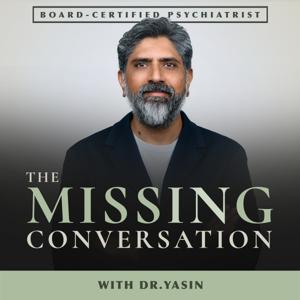


Most people define trauma as a catastrophic event: a violent car crash, military combat, or an acute assault. In this episode of The Missing Conversation, board-certified psychiatrist Dr. Yasin Choudry offers the clinical distinction that reframes emotional suffering: trauma is not the terrible event that happened to you. Trauma is what happened inside your nervous system and body as a result of that event.
Drawing on nearly thirty years of clinical practice and foundational research across somatic psychology and interpersonal neurobiology, Dr. Choudry explores why high-functioning, sensitive adults frequently struggle with private exhaustion, unexplained somatic symptoms, and sudden emotional collapse despite outward professional success.
In this episode, we explore:
The Three Categories of Wounding: Breaking down the critical differences between Shock Trauma (Peter Levine), Developmental Trauma and Complex PTSD (Laurence Heller, Pete Walker), and the Trauma of Omission (Gabor Maté, Nadine Burke Harris).
The High-Functioning Paradox: How structural dissociation (Janina Fisher, Onno van der Hart, Kathy Steele) splits the psyche between the articulate, capable Apparently Normal Part and the isolated Emotional Parts frozen in somatic time capsules.
Why Talk Therapy Hits a Wall: The neurobiology of Broca's area shutdown during traumatic recall, and why intellectual insight alone cannot alter the resting tone of your vagus nerve.
The Four Survival Adaptations: Re-framing perfectionism (Fight), workaholism (Flight), emotional numbness (Freeze), and chronic people-pleasing (Fawn) as heroic biological adaptations rather than character flaws.
The Four Pillars of Restoration: Practical pathways for bottom-up somatic discharge, Internal Family Systems parts integration, relational co-regulation, and existential meaning.
Connect with Dr. Yasin Choudry: Book: Radical Recovery: A Holistic Approach to Mental Health (available on Amazon) Newsletter & Essays: ychoudrymd.substack.com
Educational reflection from a board-certified psychiatrist. Not individualized medical advice. Consult your physician regarding all medical and psychological care.
If you are high-functioning, successful in your career, and have spent years in talk therapy analyzing your history, yet your body still panics, freezes, or exhausts itself before midday, conventional medicine has overlooked something fundamental: you do not have a defective brain, you have an adapted nervous system.
In this episode, board-certified psychiatrist Dr. Yasin Choudry examines the physiological mechanics that keep capable adults locked in perpetual survival mode. Drawing on nearly thirty years of clinical practice across inpatient units, outpatient clinics, and correctional facilities, Dr. Choudry breaks down why mental distress is rarely an isolated chemical malfunction, but rather the biological bill coming due for a nervous system that adapted to an overwhelming environment.
You will explore the evolutionary hierarchy of Polyvagal Theory, the subconscious surveillance of neuroception, and why logic cannot out-argue survival physiology. Dr. Choudry outlines why emotional numbness must thaw through agitation before peace is possible, how to expand your window of tolerance through bottom-up somatic anchors, and why co-regulation is an biological requirement rather than a personal weakness.
Key Concepts Explored
Roughly fifteen to twenty percent of people are born with a nervous system wired to process the world with extraordinary depth. Yet in conventional medicine, this biological trait is frequently misunderstood, dismissed as pop psychology, or misdiagnosed as social anxiety, neuroticism, or a mood disorder.
In this episode of The Missing Conversation, Dr. Yasin Choudry looks past conventional clinical skepticism to explore the evolutionary biology, fMRI neuroimaging, and cross-species evidence behind Sensory Processing Sensitivity. Using the DOES framework, the dandelion versus orchid hypothesis, and differential susceptibility, he breaks down why high sensitivity is not a pathology to cure, but an exceptionally calibrated intake system.
Discover why pushing through overarousal leads to biological saturation, how early emotional misattunement creates invisible developmental wounds in sensitive children, and what it takes to navigate modern workplaces, relationships, and somatic recovery when your nervous system is built to feel everything with high fidelity.
In this introductory orientation, a physician outlines the clinical philosophy, scope, and foundational frameworks of the show. The discussion establishes an essential medical disclaimer: all material is intended for education and rigorous self-inquiry rather than personal clinical advice, emphasizing active collaboration with licensed providers.
The conversation focuses on the transition from a passive patient to an empowered agent in your own recovery. This space is intentionally designed for high-functioning, deeply thoughtful individuals, ambitious professionals, and the roughly 15 to 20 percent of people with high sensory processing sensitivity who face chronic anxiety, burnout, functional depression, and developmental stress. It explicitly sets boundaries, noting that acute crises and severe psychiatric illnesses require standard biological care.
Finally, the episode breaks down the three therapeutic paradigms people typically navigate:
From the publisher's feed
What if the depression, anxiety, or chronic exhaustion you have been treating for years is not a broken brain, but an intelligent adaptation to early life?
Hosted by board-certified clinical…
After spending decades navigating severe depression, over-medication, and misdiagnoses as a patient before uncovering his own answers, Dr. Choudry bridges rigorous clinical psychiatry with somatic awareness, Internal Family Systems, and the unspoken impacts of developmental absence and intergenerational trauma.
This podcast moves past symptom management, psychiatric labels, and toxic positivity to ask the question conventional medicine rarely asks: not what is wrong with you, but what was your nervous system forced to adapt to?
Each episode provides deep, honest breakdowns of trauma, the biological cost of high-functioning performance, and the psychological principles required to shift from survival into authentic recovery.