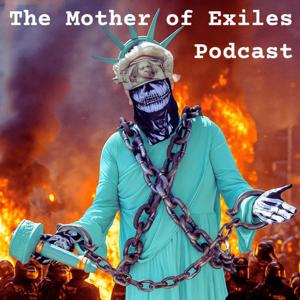
Listening Time: 24:30 minutes
Reading Time: 21 minutes
TL;DR
* I went to Washington to help launch sustained, nonviolent resistance against an illegitimate regime, and to see if people power could really take root.
* What we found wasn’t a single turning point, but the beginning of something fragile and real: thousands showing up, hundreds returning, learning how to last.
* A people’s revolution isn’t spectacle, it’s a disciplined, collective withdrawal of consent, built on shared responsibility and care.
* History and experience show that change depends on preparation: reliable participation, organizational maturity, coalition building, and readiness for transition.
* We’re in the in-between time now, when the quiet work of building decides whether democracy can be renewed.
I. Prologue: Leaving for Washington
I left for Washington in early October with a backpack that was too heavy and a heart heavier still. Not because I thought I was going to change history. Not because I had a plan. But because staying home had begun to feel like its own kind of surrender.
The country was in free fall. Every headline felt like another door slamming shut. Courts bending. Institutions blinking. A regime tightening its grip while pretending it was all still normal. And in that narrowing space, the same question kept rising, quieter each time but harder to ignore: If not now, then when? If not us, then who?
So, I went.
I told people I was going to volunteer. Which was true, in the plainest sense. Refuse Fascism and the Trump Must Go movement were calling for sustained nonviolent resistance beginning November 5, and I wanted to help however I could: pass out flyers, carry signs, hold space, and listen. I wasn’t arriving as anything more than another body willing to work. Another pair of hands. Another voice in the crowd.
But inside, I knew it was more than that. It felt like crossing a line you can’t uncross.
There comes a moment when watching is no longer enough. When posting, arguing, and doomscrolling start to feel like motion without movement. When the only way to find out what’s real is to step into it, even if you don’t know what waits on the other side.
There comes a moment when watching is no longer enough.
On the flight in, the city crept closer on the map while everything else grew less certain. I didn’t know who I would meet. I didn’t know what the streets would feel like once the chants began, or whether anyone would really show up. I didn’t know if this would be a spark or just another brief flare swallowed by the dark.
What I did know was this: something in me had already shifted. The choice had been made. I was no longer asking what they were going to do. I was asking what we might be able to do together.
Washington, DC, waited.
And so did whatever came next.
II. The Horizon: Why I Call It a People’s Revolution
I didn’t go to DC chasing a slogan. But somewhere between packing my bag and stepping onto that plane, I realized I needed a name for what I was hoping for, not just an action, not just a protest, but a different kind of future.
I started calling it a people’s revolution. Original, right?
Not because it sounds dramatic, and not because it promises something fast or easy, but because it names the only force I still believe can meet this moment: ordinary people, acting together, with discipline and courage, withdrawing their consent from a regime that no longer deserves it.
When institutions fail to stop what is plainly wrong, when laws are twisted to protect power instead of restrain it, the burden doesn’t disappear. It shifts. It lands on people, on whether we are willing to show up for each other and insist, without violence but without apology, that this is not acceptable.
A people’s revolution, as I mean it, isn’t chaos in the streets. It’s collective refusal. It’s saying: we will not normalize this, we will not collaborate with it, and we will not look away while the foundations of democracy are hollowed out.
It’s also not about tearing everything down. Maybe some of it, but not all of it. The Constitution is not a relic to discard. It’s an inheritance, unfinished, imperfect, but rooted in the idea that power comes from the people and must answer to them. What makes this regime illegitimate isn’t that the promise is broken beyond repair. It’s that it violates that inheritance while daring the country to pretend otherwise.
So when I say people’s revolution, I mean a nonviolent struggle to force democratic possibility open again; to clear space for renewal, for repair, for a future where rules mean what they say and those who govern do so with our consent, not our resignation.
That horizon is what pulled me east. Not a guarantee. Not a blueprint. Just the belief that if anything is going to change, it will begin with people deciding, together, that this is the line.
III. Crisis of Legitimacy and an American Precedent
What I felt most before leaving wasn’t just anger, it was something colder. The sense that the ground rules themselves were giving way. This wasn’t about one bad law or one outrageous decision. It was a pattern: power consolidating, accountability thinning, institutions signaling they could be bent without breaking, and then bent again. The language of democracy was still everywhere, but its substance was draining out.
A crisis of legitimacy doesn’t announce itself with a siren. It creeps in. It shows up when people stop arguing about what’s right and start wondering whether it even matters anymore. When the system still speaks the words, but fewer and fewer people believe they mean anything.
That feeling is old now. It’s commonplace. And that’s a problem.
In the 1770s, the colonies didn’t leap straight to independence. First came Britain’s Intolerable Acts, proof that power would be imposed upon the colonies, not negotiated. Then, the First Continental Congress, an attempt to stand together and be heard. Only after that did the Declaration of Independence appear, naming a pattern of abuses and drawing the line from grievance to refusal.
What made that moment revolutionary wasn’t just the courage of the words. It was the shift in claim: legitimacy no longer flowed from the crown. It flowed from the people.
That same question hangs over our moment now. Not whether we like who’s in power, but whether this regime still deserves to govern at all.
On December 13, in front of the White House, that question was spoken out loud in the form of The People’s Indictment of Donald Trump, a unified declaration that what we are living under is not merely unjust, but illegitimate. It didn’t pretend to be a court. It didn’t need to be. Like its historical echo, it was an assertion of standing: when institutions refuse to hold power to account, people can still name what they see.
I don’t put these moments, The People’s Indictment and The Declaration of Independence, on the same scale. History doesn’t repeat that neatly, but the rhythm is familiar: grievance becoming coordination, coordination becoming declaration, and declaration pointing toward collective action.
A crisis of legitimacy isn’t resolved by better messaging or a single election. It’s resolved when enough people decide that the story they’ve been told no longer matches the reality they’re living, and are willing to act on that difference.
That was the deeper current pulling me to Washington. Not just resistance, but the old, unsettling question returning again: Who has the right to rule, and, which side are you on?
IV. The Test: What The Movement Was Meant to Be
The Trump Must Go movement wasn’t built as a single protest or symbolic outcry. From the beginning, it was framed as something harder: a sustained campaign of nonviolent resistance meant to confront an illegitimate regime and force a political rupture.
That distinction mattered. Many were already marching, filing lawsuits, organizing voters, sounding alarms. Trump Must Go Now asked a different question: what would it take to move from episodic protest to continuous pressure, pressure that couldn’t be ignored, waited out, or easily absorbed?
The answer, at least in theory, was simple and daunting: show up. Keep showing up. Bring more people with you. Do it nonviolently, visibly, in a public space tied to power. Make withdrawal of consent not an idea, but a lived reality.
November 5 was named as the starting line, not the finish. The goal wasn’t catharsis. It was durability.
That made Trump Must Go Now a test. A test of whether outrage could become commitment. A test of whether discipline could hold, and whether strangers could cohere under pressure.
I didn’t go to DC believing this test would automatically succeed, but I believed it was the right one to run. Because without trying to build sustained people power, in public, in daylight, together, everything else felt like rehearsal.
What followed would show us both how much was already possible and how much still had to be built.
V. On the Ground: What It Looked and Felt Like
November 5 arrived warm and bright, the kind of fall day that makes every sound carry. By the time people began gathering, the air already held that mix of nerves and resolve, strangers greeting each other, banners unfolding, chants tested like instruments finding their pitch.
About three thousand of us came.
From the ground, it felt like faces stacking into waves, voices rising into something wider than any one throat, footsteps echoing as we moved together through the city.
A rally. Outbeat music. Then a march. Not as a spectacle, but as a declaration.
We were here. We were many. And we weren’t pretending this was normal anymore.
What stayed with me wasn’t any single speech. It was the moment when you realize you’re no longer just participating, you’re being carried, by the rhythm of chanting, by bodies moving in step, by the simple, startling fact that you are not alone. After that, the work didn’t stop. It narrowed. It focused.
On November 15, then again on November 17 and November 24, we came back to the White House. Smaller numbers, hundreds each day, but with an even sharper edge. Crime scene tape wrapped the perimeter, bright and unforgiving: this place, this power, marked as the site of a political crime that continues to take place.
Standing there, you could feel the difference between a mass gathering and sustained presence. Fewer people meant you could see each other more clearly. Learn names, share chants, or hold a sign for someone whose arms were shaking. It felt less like an event and more like a vigil, not mourning what was lost, but refusing to let it pass quietly.
Then, on December 13, we returned again.
This time, the action carried a different weight. The People’s Indictment of Donald Trump was read aloud, a collective naming of what so many of us had been carrying: that this wasn’t just a bad administration, but a regime that had forfeited its claim to rule. And once more, the White House was encircled with tape, the words made visible in space.
Listening to the indictment, with traffic humming and tourists stopping to stare, I felt the strange collision of the ordinary and the historic. No thunder. No rupture in the sky. Just people, standing in public, saying: this is not legitimate, and we are here to call it out.
Between those days were countless smaller moments: handing out flyers at Metro, quick conversations with passersby on cold sidewalks, lots of laughter over coffee and drinks, quiet check-ins when someone looked exhausted, and another person stepped in. None of it glamorous, but all of it necessary in building a movement.
From the outside, it might have looked modest. From the inside, it felt like learning how to breathe together.
“From the inside, it felt like learning how to breathe together.”
Not a victory, but a beginning.
VI. What Held: Seeds of Future People Power
People showed up again and again. In the cold. After long days. Despite illness. With tired legs and hoarse voices. There was no guarantee waiting at the end, just the knowledge that if this was going to mean anything, it had to be carried by real bodies in real space.
Discipline held as practice: in how conflict was handled, how lines were held, how we treated each other as already living the future we were trying to build.
And people stepped into what needed doing. No titles required. If flyers needed wheatpasting, hands appeared. If a gap opened in our line, bodies moved. What mattered wasn’t perfection. It was the instinct: that this is ours to carry.
We also weren’t alone.
On October 18, before the larger No Kings 2 mobilization, we hosted a rally at 14th and U streets, then marched about a thousand people to join the broader coalition on Pennsylvania Ave. On November 22, we joined the Remove the Regime rally and march at the Lincoln Memorial. Different banners, different approaches, but shared resolve.
What held across all of this was recognition. Strangers realizing they weren’t strangers anymore. Fear finding names and faces just like ours, and the sense that the ground beneath us was forever changed, even if just a little.
These were seeds. Not a harvest. But you could see them in exchanged numbers, in promises to return, in the feeling that something fragile but real had begun to take root.
VII. What This Moment Taught Us: We Still Have to Build
About three thousand people came on November 5. In the weeks that followed, it was closer to three to five hundred per action. That isn’t a failure, it’s a fact, and facts are gifts if we’re willing to learn from them.
“Facts are gifts if we’re willing to learn from them.”
They showed us that urgency alone doesn’t become mass participation. That moving from sympathy to sustained commitment is a harder bridge to cross. That people power is built less like a switch, and more like a track that’s laid one section at a time.
Out of those weeks, four lessons came to mind:
* Participation has to be reliable, not just inspired.
* Organization has to mature alongside passion.
* Fracture has to be made possible, and a path forward visible.
* Consolidation has to be prepared for from the start.
None of these were abstract. You could feel them in what could or could not be coordinated, in how much depended on too few, and in the question hanging over everything: what comes after the regime falls?
What last Fall gave us was clarity. About the gap between outrage and capacity, and the patience people power demands. About the movement we would have to become if the next wave is to be larger, steadier, harder to ignore.
VIII. What a People’s Revolution Actually Requires
A people’s revolution isn’t just about how many show up. It’s about how much a movement can hold.
It starts with protecting people: sharing the burden so no one carries everything alone, building ways for the work to be distributed, supported, sustained.
“A movement that can grow without breaking those who built it is a movement with a future.”
It requires organizational maturity: clear rhythms, communication that reaches everyone who needs it, a culture where stepping into responsibility is normal and supported.
And it requires a coalition: no single organization can win this war alone. “We the people” is diverse by definition. Solidarity doesn’t mean sameness. It means choosing to stand together without demanding purity.
Pulling that off is a design challenge, not a grievance. Holding all of that together points toward a three-pronged discipline:
* Build durable internal capacity.
* Weave coalitions that can move together.
* Focus collective pressure where legitimacy, or lack thereof, is decided.
Not stages. Muscle. This is what people power actually requires: courage and craft; anger and architecture; moments and muscles built over time.
Demanding, and hopeful at the same time.
IX. Two Sides of the Same Coin
Vision without practice burns out. Practice without vision dries up. A people’s revolution needs both. The horizon gives the work its direction. The work gives the horizon its weight.
In DC, you could feel that braid forming in chants that carried meaning, in arguments people stayed engaged in, in exhaustion that didn’t cancel resolve.
Together, vision and practice become momentum.
And once you feel that weight, you start asking not just what you want, but how others have learned to carry it before you.
X. Lessons from History: How People Power Forces Democratic Openings
South Africa. Poland. The Philippines. Chile. Serbia. Tunisia. Different nonviolent movements. Different paths. Similar pressures but different approaches.
History doesn’t give formulas, but it does give us orientation. Openings to depose dictators are rarely accidents; they are made thoughtfully, strategically, in a well-coordinated, coalition-based way.
XI. What We Learned: The How, What, and When of Change
By December, the story wasn’t just what had happened. It was what it had taught us. Not in theory, but in practice.
Change grows out of participation that is reliable, not just inspired; people coming back when the cameras are gone. Change depends on organizational maturity; sharing the load so energy doesn’t burn itself out. Change becomes possible when fracture meets legitimacy; when loyalty to a regime costs more than stepping away. And change is not finished at the fall of a regime; consolidation decides whether courage becomes renewal or just another chapter of loss.
All of it brings us back to what we saw in DC: Build durable internal capacity. Weave coalitions that can move together. Focus collective pressure where legitimacy is decided. Not as slogans, but as disciplined action.
The “how” is patient construction. The “what” is legitimacy reclaimed. The “when” is preparation meeting opportunity. Not a promise of speed, but a promise of direction.
What we were given last Fall wasn’t victory, it was orientation.
XII. From Emergency to Preparation
For weeks, everything felt like emergency, but emergency can’t be the only posture. Emergency mobilizes, but it also exhausts.
What those weeks offer is a pivot: from reacting to preparing; from measuring moments to building capacity. That shift only becomes real after the alarms fade.
It looks like setting up the next meeting, even when you’re not sure who will come. Like writing notes from the last one, so the work doesn’t vanish when people go home.
XIII. The In-Between Time Is the Real Work
“The in-between time is where movements are actually made.”
The real work looks like smaller rooms, longer conversations, fewer people.
It looks like a handful of people sitting around a scratched table, trading calendar dates and Signal numbers. Like someone bringing half-finished signs and asking if anyone can help paint. Like a late-night message checking in on someone who seemed quiet, and a reply that says, “Yeah. I’m still here.”
Nothing heroic. Just the slow, human work of becoming real to each other. It looks like turning showing up into habit. Clarifying roles. Building trust across difference. Learning to move together when no one is watching.
From the outside, it can look like nothing is happening. From the inside, everything is.
This is where movements are made.
XIV. From Stopping the Regime to Rebuilding Democracy
Stopping an illegitimate regime matters, but people don’t risk everything just to end something. They do it to open something.
Rebuilding democracy means taking our inheritance seriously again: empowering the people and being answerable to them. It means cutting the ties between government and oligarchy. Opening space for new leadership. Restoring meaningful choice in how we vote, if we ever vote again. Insisting on economic dignity for all. And ending the dominance of money in politics once and for all.
Not as a manifesto, as a direction of travel.
Stopping the regime is necessary. Rebuilding democracy is what follows us home.
XV. Reframing December 13
December 13 was a line drawn. The question that opened this story, “Who has the right to rule and which side are you on?”, still hangs in the air. December 13 didn’t answer the question; it proclaimed it for each of us to answer as free-thinking Americans, like our forefathers and mothers before us.
XVI. What Comes Next
What comes next isn’t waiting, it’s being born: Deepening participation, sharing the burden, weaving coalitions, keeping pressure focused where legitimacy is decided, making our withdrawal of consent visible again and again.
Not louder. Better prepared.
XVII. Epilogue: The Work Worth Doing
I left for DC with a backpack that was too heavy, a heart full of emotion, and a mind full of questions. I didn’t know what I would find. I didn’t know who would be there. I didn’t know whether any of it would be enough. What I knew was that staying had begun to feel like surrender. I know now, that line can’t be uncrossed.
When I got home, I set my backpack down by the door and realized it felt lighter, not because it held less, but because my own burden was lessened.
If you’re still here, still listening, it’s because something in you already knows this too.
You’re not alone.
There is a place for you in this work; not someday, not after you’re “ready,” but now…especially now, in the in-between time where movements are actually made. A place to show up. To help carry the load. To learn alongside others. To grow into whatever leadership this moment asks of you, as it emerges through doing the work together.
Come build with us. Come prepare with us. Come be part of the people who refuse to let this story end where it is. Not a single march, not a single day, but a long, shared commitment to do the work worth doing, until democracy is not just defended, but renewed.
We’ll meet each other in the in-between time, and stay, until the opening comes.
In defiance, and in solidarity,
I am, Robin Liberte’, The Mother of Exiles. Activist. Artist. Author.
This is a public episode. If you would like to discuss this with other subscribers or get access to bonus episodes, visit robinliberte.substack.com