
Sign up to save your podcasts
Or

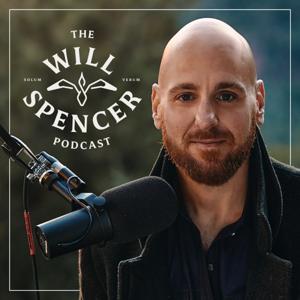

Modern extremism did not survive by remaining political. It survived by becoming mystical.
In this episode, Will Spencer examines how post-war extremist movements transformed themselves into a religious worldview built on myth, mysticism, and occult hierarchy.
Rather than remaining tied to historical regimes or discredited ideologies, these movements deliberately rebuilt themselves through myth, mysticism, and occult spirituality—rejecting Christianity while absorbing pagan mythology, cyclical cosmology, and hierarchical visions of reality.
Continuing the Book Club reading of Black Sun by historian Nicholas Goodrick-Clarke, this session explores how post-war figures reshaped extremism into a transnational religious system; how symbolism and ritual replaced politics; and how popular culture later helped mythologize and sanitize these ideas, allowing them to persist beneath the surface of modern life.
Will also reflects on why many Christians misdiagnosed this phenomenon as merely political or reactionary, failing to recognize it as a rival spiritual framework—and why that failure of discernment mattered.
This episode is part of an ongoing Book Club devoted to slow, serious reading for Christian spiritual and intellectual formation in an increasingly disordered culture.
In this episode, you’ll hear:Amazon: https://a.co/d/06mG32IX
Join the Book ClubIf this episode resonates, the full discussion continues in my Book Club, where we read difficult books slowly and seriously for Christian spiritual and intellectual formation.
You can learn more and join at willspencer.blog
🌟 The Will Spencer Podcast was formerly known as "The Renaissance of Men."
FOLLOW & CONNECTSupport the Show
SPONSORS View all episodes
 By Will Spencer

4.6
229229 ratings
Modern extremism did not survive by remaining political. It survived by becoming mystical.
In this episode, Will Spencer examines how post-war extremist movements transformed themselves into a religious worldview built on myth, mysticism, and occult hierarchy.
Rather than remaining tied to historical regimes or discredited ideologies, these movements deliberately rebuilt themselves through myth, mysticism, and occult spirituality—rejecting Christianity while absorbing pagan mythology, cyclical cosmology, and hierarchical visions of reality.
Continuing the Book Club reading of Black Sun by historian Nicholas Goodrick-Clarke, this session explores how post-war figures reshaped extremism into a transnational religious system; how symbolism and ritual replaced politics; and how popular culture later helped mythologize and sanitize these ideas, allowing them to persist beneath the surface of modern life.
Will also reflects on why many Christians misdiagnosed this phenomenon as merely political or reactionary, failing to recognize it as a rival spiritual framework—and why that failure of discernment mattered.
This episode is part of an ongoing Book Club devoted to slow, serious reading for Christian spiritual and intellectual formation in an increasingly disordered culture.
In this episode, you’ll hear:Amazon: https://a.co/d/06mG32IX
Join the Book ClubIf this episode resonates, the full discussion continues in my Book Club, where we read difficult books slowly and seriously for Christian spiritual and intellectual formation.
You can learn more and join at willspencer.blog
🌟 The Will Spencer Podcast was formerly known as "The Renaissance of Men."
FOLLOW & CONNECTSupport the Show
SPONSORS
5,243 Listeners

1,944 Listeners
842 Listeners
997 Listeners

1,374 Listeners

21,342 Listeners

5,375 Listeners

1,096 Listeners
3,643 Listeners
1,393 Listeners

1,438 Listeners
986 Listeners
1,190 Listeners

1,377 Listeners
3,802 Listeners