
Sign up to save your podcasts
Or

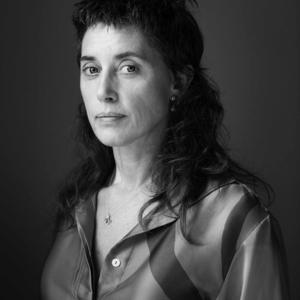


I always found, “Empty nest?” a supremely irritating phrase, yet it happened yesterday. Though they’ve both been away from home since they were sixteen, when I got back on Saturday from the two hour round trip to east London delivering Blake to university, Jacobi already a week into his new life at the opposite end of town, this home felt exactly like that. A nest that was empty.
It’s never felt like a nest before; that aspect was hidden from me until this moment. As I crawled across the finish line, shut the front door, put on supper and my pyjamas, I saw two decades of film running before my eyes; dancing in the sitting room, screaming up the stairs, hurling themselves around my bedroom, that sweet smelling goodnight kiss. Eighteen years in a flash of movies; the time Jacobi lost his s**t in the kitchen and threw over all the chairs, the time I thought Blake was deaf and crept up behind them with two saucepan lids, almost throwing them off the sofa. Lego all over the schoolroom and a train track running the length of the ground floor. Creating an owl house in the loft space above the bathroom for Blake because they both needed to get away from each other, and how much Jacobi wanted a slide built from his bedroom window. The growing and laughing and crying and teeth falling out and ankles twisting and stings and bruises and love. The refusal to eat aubergines, courgettes or peppers. The happy chewing of rice and bits from a bowl.
And then they were gone.
I was already over the cooking and chaos and general interruption to what is also my life as much as theirs. I have been world building since pregnant. My children and I have lived alongside each other and I’ve been handing them the reins since they were able to register that there’s a world out there. They’re fully equipped, as equipped as any eighteen year olds can be to stand up without the scaffold of home. But something has ended and I wasn’t expecting to feel it so keenly, yet I do. They are out into the sea, they are swimming in open water and though the mothership knows precisely where they are in a general location way, and mostly how they are in an acute spidey-senses way, to a greater extent than ever before they’re on their own and so am I.
Thank f**k I’ve been world-building. Now I see for parents whose whole life has been dedicated to picking up socks and planning meals how empty it must feel. How the question, what do I do now? must floor them. However attentive or inattentive, wherever we fall on the scale of dedication, for a period of time we give our lives to our children, and then they leave and our life is handed back.
I went to bed with macaroni cheese and Netflix. I gave myself the weekend to feel it. It’s a moment. The end of one chapter and beginning of another. Here we go.
Eleanor
A photograph was sent to me last week by a Dakini goddess. She didn’t know I was writing this memoir, could not have known that the photo would arrive precisely at the point where the story and image coincide. Isn’t that beautiful? This process brushes with magic. Such is the way of digging and time travel. On the day it was taken I’m drifting arm in arm with my friend through the Harvest Fair, it’s Lamas 1994, already I divide the year into pagan eighths. I’m returned from India and losing my mind. I’m back from twenty-four hours in Tel Aviv. The note that my mother never opened is thrown away. For a while I’d sat at the table in the window of the green spare room in my mother’s tall, cold house and strung Indian beads into necklaces. One day I took them to a craft fair at Chelsea Town Hall. There I met a girl who gave me the address of her boyfriend who opened the door in a towel and invited me in, did tarot, said he was moving into a new place and I should come with. Which I did, leaving my mother’s green spare room for a small, warm house in West London. A stray, I didn’t ask if I could have a room, I just made camp in a hall off the kitchen and hoped they wouldn’t notice or mind; these strangers who became friends, became family. I bought a pink split-screen camper that I saw parked on the street. My note left on the windscreen, Please can I buy this van? coincided with one the owner had left on a Porsche the same day and so he said, Yes. My friend and I set off together on a summer of festivals, fly-pitching our jewellery on the blankets we wore round our shoulders. As we wafted through the Harvest Fair arm in arm a woman shouted, “Too f*****g serene,” and we laughed and that’s how we felt; on a cloud of things working our way, life slotting into place, the sun always shining. That night we took mushrooms, two hundred of us in a yurt on Lamas and the music played and the people sang and I leaned against a man who, in four years’ time, I would marry in a pagan wedding. But I hadn’t met him yet, only leaned against him as the yurt took off and two hundred people span in a mushroom universe. When the summer ended my friend and I parted, she to Mexico and I to Glastonbury where a man in a pottery with blonde pigtails waited.
The Literary Obsessive supports independent artists. Subscribe now.
Who knew that a bursting fallopian tube would burst the sense of what’s the point? I woke up with the gloves off, a nineteen-year-old in a raver's paradise, Manchester at the height of her powers. The hospital ward of pink fluffy slippers and women with no wombs held me for a week of painful recovery. My mother came to see me. So did the boy. And then I put on my brown corduroy hotpants and Minnie Mouse platforms and went out to Flesh at the Haçienda. I think this was the first time my heart touched rave. I think I knew, immediately, I had found my love. I found a puppy on the way home too; it was crying in the gutter. We picked it up, named it Flesh and gave it to my godfather who renamed it Flash for the preference of shouting it in West London. I took revenge on the boy who’d made me pregnant, who’d been my love and left me for the buffet of university girls, by having an affair with his brother. I broke his heart. Sorry about that. I’ve always felt bad about it. Meanwhile the drugs of the early nineties exploded like my tube; the first time I took ecstasy at Naked Under Leather I raised my hands to the crystal teardrops cascading from the ceiling. A large Liverpudlian boyfriend gave me my first acid and was sweet and gentle in my enthusiasm to recite Yeats on a swing in the park. I got into playing squash on speed. I did no work. In my second year I moved into a house in Withington where my friends wrote essays while I ate instant macaroni from the corner shop. They went to lectures, I watched Neighbours. It was fun and absent and what’s the point so when the boy arrived with the story of being kidnapped, I was ready. Who needed university, a degree, even another night at the Haçienda when there was this adventure waiting to be had? No other excuse was needed. We packed our bags and bought our flights. I’m not convinced I told my mother. When I went to my tutor to tell him I was dropping out, he had no idea who I was.
The Literary Obsessive champions independent artists. To receive new posts and support my work, consider becoming a free or paid subscriber.
Let’s roll forward. It’s 1990, Manchester. I am in my first year at university, not yet living in the house where I would meet the boy who’d been kidnapped by his father from his mother’s arms. I am in Fallowfield halls of residence, three flights up from the smooth walkways of campus. The Haçienda is open but I haven’t been there yet. I’m trying to fit in and forget about the boy who is no longer my boyfriend, who said when we got back from Zimbabwe, I think we should split up now. I’ve written a suicide note with no real intention of dying. I’m trying to imagine if throwing myself onto those smooth walkways from three flights up will end this loneliness. I’ve slept with other boys without asking their names for the same reason. Tonight I’m throwing a dinner party. I’ve planned roast lamb and gone to the butcher to buy it. But standing amongst racks of carcasses, the smell of sawdust and sinew, I feel faint. I think I’m going to throw up. I take the leg of lamb wrapped like a baby in paper. I run from the butcher’s, the nausea subsides, evening comes. The dinner is on, the lamb is in the oven, I’m setting the table when shock like a burst appendix but worse slices through my belly. My flatmates put me on my bed. I try and climb out of the window for real this time, now to stop a pain that obliterates the pain of loneliness like the smooth walkways obliterate the grass. My flatmates hold me down and call for an ambulance. I remember the lights flashing three flights below, I remember the siren. At the hospital, student doctors are invited in to witness what is happening to me. They crowd at the end of my bed, a line of white coats and clipboards, their faces young and frightened. They are there when my fallopian tube gives up its efforts to keep itself together, sending the embryo that has been quietly growing there free falling. In Malawi I’d gone out on a boat with a man who turned out to have no intention of fishing. I’d jumped ship and walked back to my hut to find my possessions gone, everything except my passport but including my washbag which had inside it my contraceptive pills. I’d thought, To hell with it and carried on sleeping with my boyfriend. Now in a hospital bed in Manchester, machines beeping, roast lamb burning, student doctors taking notes, that fallopian tube is exploding. Blood fills my eyes like a cartoon. Blackout.
The Literary Obsessive is a reader-supported publication. To receive new posts and support my work, consider becoming a free or paid subscriber.
Did you catch the LIVE I did with Alisa Kennedy Jones yesterday? If not, here it is:
It was a blast. Alisa has become a friend and colleague, but way before I knew her I fell in love with her memoir, Gotham Girl Interrupted: My Misadventures in Motherhood, Romance, and Epilepsy
Alisa writes like she’s talking right at you, her brilliant brain firing on all cylinders and then some. I knew nothing about epilepsy before I picked up this book, and her electric prose changed my world. Take this, for example…
What I saw was all the light in the universe, even the little bits you cannot see, a hundred thousand sparklers from a galaxy far, far away. Not entirely blinding, but close. In it I could feel the universe eddying like a fast-flowing river of stars. … Like being trapped in the Van Gogh painting, Starry Night in swift, oceanic motion, but it was more than light. It was a feeling of transcendence, of unstoppable ecstasy, accompanied by divine, chromatic effects: a rapturous, paradisiacal stillness and glow. Amid the rushing of countless points of white light, I felt myself wrestling blindly for this luminous new inner geography, to get back from it and put words around it, to observe it. All I could get out, or hear myself say was, “It’s a lightning storm in my head.” No deep, jack Handy thoughts. Nothing profound. Just star stuff. It was unbearably bright and impossibly close, but still, I didn’t want it to stop because it was beautiful. Ecstatic even. It was the electric.
Anyone who’s experienced that and returned to tell the tale gets my vote. I picked up her memoir and was let in to her world of stars and broken bones and it was the ecstasy and catastrophe that told me I could trust her. As she goes on to say in our conversation, for a long while, the seizures identified her completely. She was an epileptic rather than a person with epilepsy. Now, fifteen years on, she lives with it and lives her life. She chooses the full life experience. Hot sauce and ice cream. Yes please.
Eleanor
We had our toenails painted, but that was at the end. In the beginning we met in the restaurant and were on rapid fire catch up before she’d made it to her seat. My dear friend who I go way back when with who only lives down the road but due to our packed lives it takes quarterly meetings at South Lodge to make sure we’re nurtured. We dragged ourselves upright to change and begin in the sauna; a whole privileged day of spa treatments, the timing could not have been better. Around the swimming lake a cluster of men, ripped and tattooed, tipping fifty and looking good for it, broad Essex voices and I imagined wildly successful businesses they’d grafted into life and sold for millions. Entrepreneurial spirit dripped from them like sweat. The huge outdoor jacuzzi in which the choice can be made to lie on bubbling racks or bob in underwater cages or lean on the infinity wall looking out upon fields held chattering women like us, men whose largesse had been commented on by their wives, and an older lone woman who let her sights drift to S as we moved through her work and I asked questions. The sun beat down as if it had forgotten autumn was coming.
Ice buckets and water and scented steam room where a couple talked in muted tones and the sudden lurch of hot metal gave a jump scare that made us laugh. Lunch of small plates and talking more widely, how do we justify what we do. Why what we do matters. Lying sleepily on sun loungers, hers in the shade, I could have slept right there, my system so tired. But a pedicure called. I’d never had one before. I pick my toes and bite my fingers and make up gives me claustrophobia.
We were shown to padded thrones, deep sinks, our masters of ceremony in spa day uniform, hair neat, hands in thin protective gloves, there was nothing these two had not seen and heard with women’s feet in their hands. They asked if we were sisters. We said, Yes. We often get asked that. We were brought ice cold cacao and coconut drinks. Mine almost slipped out of my hands. We talked aging. I said I smiled more. Thirty slightly painful scrubbed and rasped and filed and wrapped minutes later and voila, toes that looked rather chi-chi for once in their rough-booted lives. We tried to do as we were told and wait long enough for the polish to dry before resuming normal service but despite a late tea and snack and deeper reveals in the quiet of the restaurant again, the tables emptied of spa day bathrobes and slippers, mine still managed to be smudged by the time I got home. Normal service resumes.
Eleanor
It was a lunar eclipse and a blood moon and the weekend delivered. Margaret’s daughter’s 30th; Jacobi and Blake swept in from Holland and Stoke, we coalesced at the farm on Thursday night and set off on Friday morning. A long drive, it always feels like that as we queued past Stone Henge, masses of tourists and a 1960’s citröen that recalled journeys with my mother. Longleat signalled only another hour and finally, itchy feet and aching bones we rolled into Bruton. Tinnitus and Andy’s need for silence arranged me At The Chapel and J&B with him. He’s a good step dad. He steps up. We delivered J&B to car parking attendance with Issy and I got stuck in to last minute arrangements for a weekend party that spanned generations.
Yeehaw it was a cowboy hoe down, the house filled with hats and boots and beautiful yoot, old friends and the children of absent friends who I hadn’t seen since they were small. We laughed and danced and ate a Mexican feast and Teds turned up to hold a burlesque drag queen quiz which had Blake up on stage as Bad Mom in silver foil hair net, black bin liner pregnant belly and huge white bin liner tits, lip sinking rouged pout to Man, I feel Like A Woman along with Margaret and Lumai and a whole host of others. Oh how we laughed.
The next day was the blood moon and The Johnsons who whipped up a storm and had us line dancing. Sun beat down on our beats, we all had the feeling it was the last heat of the summer. As the party emptied in the late afternoon, Margaret and I played backgammon on the grass as her grandson waddled about happily free and naked throwing the dice for us. We’d noticed a wind had got up. It kept whipping the tablecloth over the jugs of water. But none of us noticed the back door wasn’t wedged open. It hadn’t crossed our minds as he baby podged towards it, little fingers reaching for the frame. A soft hand, a look over his shoulder, a door, a sudden, spilt second wind whip slam, and the party, so full of love and heightened wild came to a spilt end. This is not the place for details and forty eight hours later, he’s fine and so are his parents and so is Margaret and the whole wider family, but it involved blood and screams and A&E and an awful lot of panic. It was a shocker. It was a blood moon. It was a lunar eclipse.
We cleaned and packed and put away, washed up and emptied and undid and cooked so that when they came home to the heaven’s opening in almighty storm, their home was warm and cosy and they could be fed and recount the events and laugh and cry at the circular motion of such a weekend that took them back and forward through time. For the little guy now sporting a boxing glove of a bandage, it will be a story he learns, Tell it again, mummy and his lovers will point at his scar and say, What happened?
In amongst it all I found time to splash in the quarry with Bun, an early morning, I guess it was Saturday, when we met amongst divers heavy with tanks, and free divers, light with lack of oxygen, and civilised swam, a gentle breaststroke around the buoys in the early morning light.
It’s been a weekend.
Eleanor
My friends got me out. Realising I was missing from the weekends in Harare they came to see me. I remember Eddy, who wanted to be a policeman one day, sat on the floor in the hall while I faced the priest in his kitchen. He heard me tell the priest that I would report him, and he heard the priest reply no one would believe me, which turned out to be right. But my friends got me out and we went to a Bhundu Boys concert in a stadium outside the city that was too small for the crush, that shut the gates leaving us on the wrong side of a riot. Four stupid White kids in a place they shouldn’t have been, heading for a beating; my watch was ripped from my wrist as I clung to Eddy, huge beside me, ripping his jumper rather than risk letting go. Willy climbed on the roof of a taxi to shout for us, Eddy picked me up and carried me over the crowd. Willy and I headed back to Dhirihori where our headmaster met us at our rooms. He said he’d had enough, we were fired. We packed what we could carry and walked the twelve kilometres to the tarmac road and hitchhiked from there, I don’t remember where. My boyfriend from England (who I’d got with, in a hurricane) came out. Photographs show us travelling; we are waiting for lifts, a book in his hands, the road stretching sandy and sunny. We are damp in the back of a flatbed truck, heading for the border at Beitbridge. I am smiling on a beach in Durban. There are snapshots of a speedboat in the Okavango Delta, friends grinning from a ledge above Victoria Falls. We swam in Mana Pools unaware of the crocodiles. I went canoeing down the Zambezi, hippos snorting and spent the night with a South African guide. (I don’t remember where my boyfriend was.) Years later I would return to the Zambezi, to an island in that river where a party held me captive for ten days, unable to leave for the drugs and a man who had cracked, but that was to come and at nineteen, canoeing and hitchhiking and smiling on a beach, I was at the beginning. We found our way to Malawi, to a hut on Monkey Bay, to a bar that never closed. I got a job. We smoked a lot of pot. We paraglided in rainbow-striped life jackets. I have an image of us side by side in the shade of a bamboo roof, he is reading, I am writing my diary. We are sun-kissed, beautiful, our days idyllic. I loved him.
The Literary Obsessive is a reader-supported publication. To receive new posts and support my work, consider becoming a free or paid subscriber.
My mum, who hates planes, who has a fear of flying, who at this very moment is lying in a hospital bed in the endgame of life, did something reckless and caring and got on a plane and landed in Harare and found me at the priest’s house up to my neck in painkillers, sleeping pills and whisky. The priest, large and fat, who liked to make out his pillar-ness in the community, had a wife who was small and nice with bobbed hair but who turned a blind eye, she must have, how else could she stay with his wrongness, his plying young girls with champagne when they were upright and drugs and whisky when they couldn’t get out of bed. I told my mum that he wasn’t the nice guy he said he was but she didn’t believe me, which was more to type than jumping on a plane, and the three of us, leaving his wife behind, went to his farmhouse in the countryside. That night he crept into my room carrying his bible and lay on top of me while my mum slept in the room next door. I remember the weight of him. I remember the heat of his breath. I was asked recently by a young woman who hasn’t had experience of these things (is she one of the few?) why I didn’t do anything, say anything, run. I explained this: there are four responses to a traumatic event – fight, flight, freeze and fawn – and which we choose is a matter of pathology. Any one of them is an answer to the question of how, in that moment, to survive. Mine was to freeze. I did nothing, I said nothing, I waited for him to leave, which he did, shuffling out with his bible under his arm. We returned to his house in town the next day where his bob-haired wife waited, probably baking, being small, finding her own answer to that question. My mum and the priest had supper in the garden together. I watched from the kitchen, unable to join them. Then my mum and I went on a tour of Zimbabwe, getting soaked at Victoria Falls, having picnics on dry yellow grass in the shade of Acacia trees, marvelling at Baobabs, weaving along roads rutted with elephant tracks and then she delivered me back to the priest’s house and flew home. She lies in a hospital bed now, forgetful of all these things and if she remembered them, would remember them differently. She is seeing snakes curl the curtain runners above her head, she is seeing rats run across the ceiling and draw pictures with their eyes.
The Literary Obsessive is a reader-supported publication. To receive new posts and support my work, consider becoming a free or paid subscriber.
From the publisher's feed