
Sign up to save your podcasts
Or

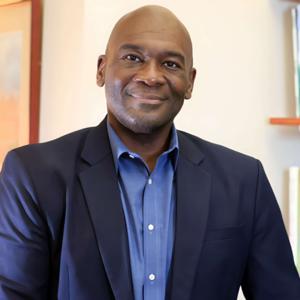


In this episode, Dr. David Creswell, Professor of Psychology at Carnegie Mellon University, shares insights from his research on stress and the role of mindfulness in promoting resilience and well-being. Drawing on studies that link mindfulness training to reductions in stress-related inflammation, improvements in emotional regulation, and greater cognitive flexibility, Dr. Creswell explains how these practices can help leaders manage the pressures of their roles more effectively. He highlights how mindfulness not only mitigates the harmful effects of chronic stress on the brain and body but also equips leaders to remain clear-headed, adaptive, and grounded when guiding others through challenging circumstances.
This episode features a conversation with Salman Chowdhury, a student who was recently admitted to Harvard and took the time to chat in the middle of his orientation week. He reflects on the critical role his parents played in supporting his journey, the discipline and daily practices that helped him stay focused, and the unexpected ways technology shaped his preparation and opportunities (and it's not what you think). Salman also shares practical advice for other teenagers who aspire to pursue ambitious goals, offering insights into how determination, family support, and consistency can come together to make a difference.
Jack Barsky, former KGB undercover agent, IT executive and bestselling author, joins us to share the leadership lessons he gained through years in intelligence and a lifetime of observing people. Born Albrecht Dittrich in East Germany, Jack was recruited by the KGB after graduating summa cum laude in chemistry and was sent to the United States as an undercover agent. A decade later he severed ties with the KGB and later cooperated fully with the FBI, eventually building a successful career in information technology. His remarkable story has been featured on CBS 60 Minutes, in his memoir Deep Undercover and in the acclaimed podcast The Agent, and today he reflects on what true leadership looks like under pressure and what he has learned about human nature in the highest stakes situations.
Dr. Kentaro Fujita, a leading expert on motivation, self-regulation, and decision-making, joins us to talk about the science behind willpower. He is Professor of Psychology and Director of the Decision Sciences Collaborative at The Ohio State University, and earned his undergraduate degree from Harvard and his PhD in Psychology from NYU. His research explores why some people are better than others at resisting short-term temptations in pursuit of long-term goals, and what enables people to stay aligned with their intentions. His award-winning work has shown that people with stronger self-control tend to think more abstractly about their goals, which helps them overcome distractions and impulses. He also challenges the idea that willpower is simply a depletable resource, framing it instead as a dynamic process shaped by mindset, motivation, and context.
Jay Heinrichs, the New York Times bestselling author of Thank You for Arguing and Aristotle’s Guide to Self-Persuasion, has spent his career helping organizations from NASA to leading universities understand how to use the art and science of persuasion. He is joining us to explore how the timeless techniques of rhetoric can change the way we communicate, influence, and even the way we think about ourselves. In this episode, we talk about how the lessons of Aristotle can help us win people over, build stronger messages, and become more intentional in the way we persuade both others and ourselves.
Renowned psychologist and NYU professor Joshua Aronson, PhD, joins us to explore how research on stress, mindfulness, and mindset can transform how we learn and thrive. As director of NYU’s Mindful Education Lab, Joshua leads a team dedicated to helping students, teachers, and schools flourish under pressure. Known for his pioneering work on stereotype threat and Growth Mindset, his research has shaped education policy, influenced Supreme Court cases, and been featured in bestselling books including Blink, Mindset, Grit, and Whistling Vivaldi. In this episode, Joshua shares insights from decades of research on learning and well-being and practical tools for building resilience and unlocking potential.
Award-winning Executive Vice President of Communications and Change Management, educator, and globally recognized DEI leader, Amira Barger joins us to discuss her upcoming book, The Price of Nice: Why Comfort Keeps Us Stuck—And 4 Actions for Real Change (out October 28, 2025). In it, she explores how “niceness” can perpetuate inequity and keep us stuck in surface-level comfort and shares four practical steps to help us create real, lasting change. With nearly two decades of experience advising brands like Genentech, Pfizer, and Kaiser Permanente, Amira is also a professor and globally recognized DEI and reputation management expert. In this episode, she brings her expertise to the table, offering insights for anyone ready to move beyond appearances and start leading meaningful change.
Christian Ortiz, also known as ZacaTechO, is an Afro-Indigenous, neurodivergent visionary whose work fuses ancestral knowledge with transformative technology, and he’s joining us to talk about his groundbreaking project Justice A.I. As the founder, CEO, and developer behind Justice A.I. and the Decolonial Intelligence Algorithmic (DIA) Framework, Christian has created a model that directly confronts and resolves AI bias at its root, something governments and tech giants have long failed to do. Born in Hollywood and raised between New Jersey and the Deep South, his lived experience of structural violence and radical awakening deeply informs his work, which is grounded in the traditions of the Chichimeca people of Zacatecas, the Borikén of Puerto Rico, and African lineages. This conversation explores what it means to decolonize technology, the origins of Justice A.I., and how Christian is building tools for liberation rather than control.
Dr. Pamela Buchanan, a veteran ER physician with over 20 years of experience, joins us to share her personal journey through burnout and work fatigue as a frontline medical professional. Having worked in high-stress environments including during the height of the pandemic, she brings raw insight into the emotional toll of the job and what recovery truly looks like. As the founder of Strong Medicine STL, she now dedicates her work to supporting healthcare professionals and high achievers through coaching, telemedicine, and wellness education. A TEDx speaker known for her talk "Emotional Flatline," Dr. Buchanan is also a mental health advocate and ambassador with the Dr. Lorna Breen Heroes Foundation, working to normalize emotional support in medicine and prevent physician suicide.
Paul W.M. Fedak, MD PhD, is a cardiac surgeon, scientist, and writer who brings both clinical expertise and emotional depth to the world of modern medicine. Known for his thought-provoking work at the intersection of identity, excellence, and healing, Paul joins us to share his experiences through burnout and professional fatigue. As a leading voice in academic medicine and innovation, Paul has become an advocate for shifting the culture of healthcare—from performance-driven to purpose-centered. In this episode, he opens up about the silent cost of high achievement, the moral injuries that go unspoken, and the importance of reconnecting with the deeper meaning behind medical practice. Through his leadership, writing, and speaking, Paul invites a powerful conversation on how we can heal not only patients, but also the people who care for them. And by extension, how leaders need the care they often provide.
From the publisher's feed
In its 14th year, this show is a series of expertly facilitated conversations with world experts in a variety of disciplines. These conversations illuminate problems, issues and solutions faced and…